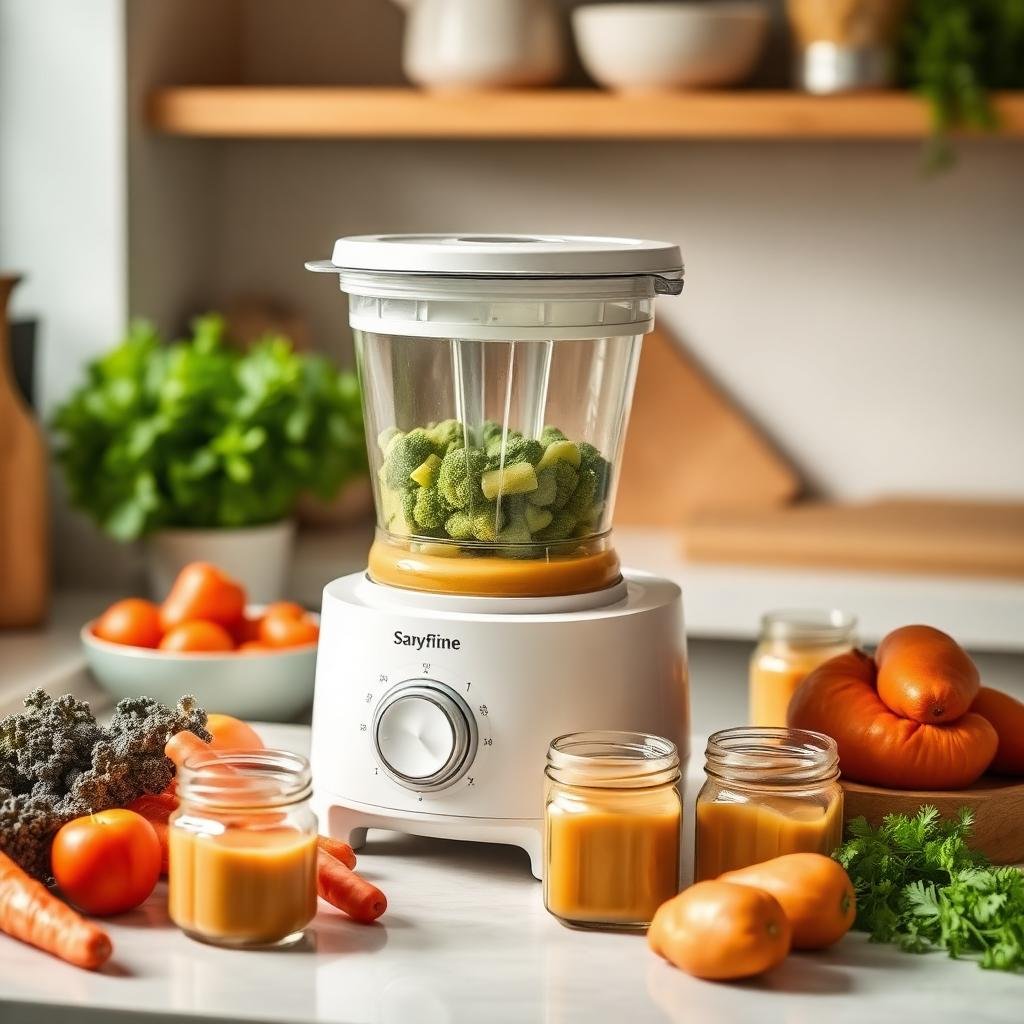
Best Baby Food Makers & Storage Solutions for Homemade Meals
Medically reviewed by Dr. Ahmad Raza, MD (Pediatrics) — ChildBloom Medical Review Panel. Last updated: September 27, 2026.
Editorial & affiliate disclosure: our guidance is written and reviewed by clinicians. ChildBloom may earn a commission from qualifying purchases made through links on this page, which never changes what our pediatric reviewers recommend. As an Amazon Associate, we earn from qualifying purchases.
A pediatrician reviews the best baby food makers and storage solutions for homemade baby food. Compare steam-and-blend combos, freezing systems, and containers by nutrient retention, convenience, and safety.
📋 TL;DR — if you read nothing else
Short answer: A steam-and-blend machine plus a simple storage system covers almost every homemade baby food routine — the machine matters less than how you cook, cool, and store each batch.
- Steaming beats boiling. It preserves more water-soluble vitamins, and a separate blend bowl keeps flavors from crossing between batches.
- Two machines cover most families. The Béaba Babycook Solo for an all-in-one; the NutriBullet Baby Turbo for a budget start.
- Storage is simple. BPA-free silicone trays for single portions and 4 oz glass jars for the fridge.
- Safety rules are short. Cook meats to 165°F (74°C), cool quickly, refrigerate within two hours, and never refreeze thawed portions.
- Consistency beats features. The routine you repeat every day matters more than the machine’s extra functions.
Why Homemade Baby Food Still Wins in 2026
Making your own baby food gives you full control over ingredients, texture, and allergens — and a good baby food maker makes the steam-and-blend routine almost effortless. In this pediatrician-reviewed guide we cover the best machines for every budget, the features that actually matter, and how to store batches safely.
Part 1: Why Steaming Is the Gold Standard
Steaming preserves more water-soluble vitamins (especially folate and vitamin C) than boiling. A combined steam-and-blend cycle means fewer dishes and less oxidation. Look for a unit that reaches a true steam temperature and has a separate blend bowl so flavors don’t cross-contaminate between batches.
Part 2: Top Picks — Best Baby Food Makers
1. BEST OVERALL: Béaba Babycook Solo
The Béaba Babycook Solo remains the benchmark: one jug steams, blends, defrosts, and reheats up to 4.7 cups. It’s bulky but genuinely multi-function, and replacement bowls are easy to source. Check Price on Amazon
2. BEST BUDGET PICK: NutriBullet Baby Turbo Food Steamer
A lightweight, no-fuss steamer-and-blender that punches above its price — ideal if you mostly steam veggies and finish with a separate immersion blender. Check Price on Amazon
Part 3: Storage & Freezing Solutions
Batch-cook once, feed all week. The safest storage uses BPA-free silicone trays for single portions and 4 oz glass jars for the fridge.
- WeeSprout Silicone Trays — WeeSprout Silicone Trays.
- WeeSprout Reusable Pouches — Reusable Food Pouches.
- Glass Baby Food Jars (4 oz, Set of 12) — Check Price on Amazon.
Food Safety Guidelines
Steam meats to an internal temperature of 165°F (74°C), cool quickly, and refrigerate within two hours. Never refreeze thawed portions.
Pros & Cons
| Pros | Cons |
|---|---|
| Full control over ingredients and allergens | Upfront cost of a dedicated maker |
| Steaming retains more nutrients than boiling | Extra counter space and cleaning |
| Batch storage saves time across the week | Some units are single-function only |
Common mistakes parents make
- Buying for the baby your child will be in six months rather than the baby in front of you today.
- Adding extra padding, inserts or accessories the manufacturer did not test.
- Skipping the manual — most safety failures we see are correct products used incorrectly.
- Reusing older hand-me-downs that predate current safety standards or have been recalled.
Frequently Asked Questions
Parents ask us these two questions when they start making food at home — here are our answers.
When can I start making my own baby food? Once your pediatrician clears solids (typically ~6 months) and your baby can sit with support.
Can I use frozen produce? Yes — steam straight from frozen; it’s often more nutrient-dense than week-old fresh.
The Bottom Line
For most families the Béaba Babycook Solo is worth the counter space; budget-conscious parents will be happy with the NutriBullet Baby steamer-plus-blender. Pair either with silicone trays and glass jars for a complete homemade system.
If you read nothing else: choose the option that meets current safety standards and that you can use correctly every single time without shortcuts. Consistency beats features. When two products are close, pick the simpler one — fewer parts means fewer ways to use a food maker unsafely.
References & further reading
- CDC – Infant and Toddler Nutrition
- American Academy of Pediatrics policy statement on breastfeeding and the use of human milk (cited by name; link not accessible)
- FDA – Questions and Answers for Consumers Concerning Infant Formula
- AAP HealthyChildren – Safety and prevention guidance for families
🩺 Doctor’s Take
If you remember one thing: the machine matters less than the routine. Steam meats to 165°F (74°C), cool batches quickly, refrigerate within two hours, and never refreeze a thawed portion. Rinse the blend bowl between batches so flavors stay separate. And remember — solids start when your pediatrician clears them, usually around 6 months, once your baby can sit with support. If your baby reacts to a new food, or feeding stalls altogether, bring it up at your next well-child visit.
This article is for general education and is not a substitute for individual medical advice, diagnosis or treatment. Every baby is different – talk to your own pediatrician about your child’s feeding, sleep, growth or development, and seek urgent care for breathing difficulty, poor feeding, dehydration, fever in an infant under 3 months, or any sudden change in your baby’s condition.
Medical review
Reviewed by Dr. Ahmad Raza, MD, Pediatrics. Last reviewed September 27, 2026. This article provides general education and does not replace individualized advice from your child’s pediatrician. Learn about our physicians on the About page.


60 Comments