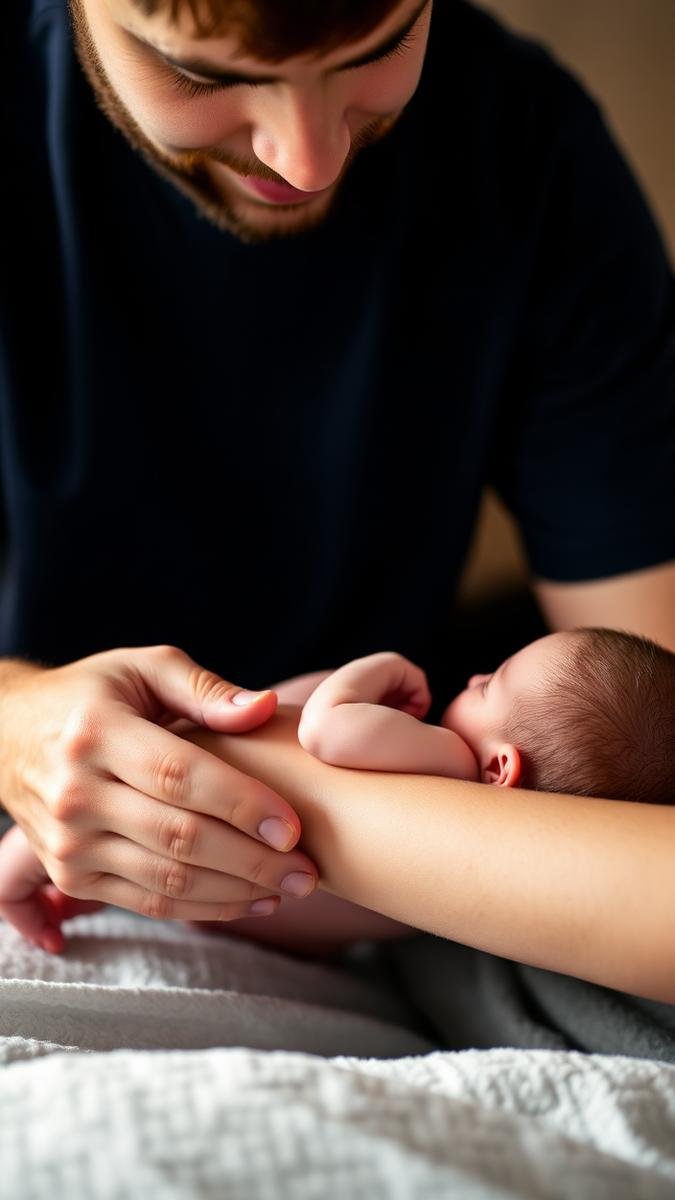
Newborn Rashes: A Visual Identification Guide
Medically reviewed by Dr. Ahmad Raza, MD (Pediatrics) — ChildBloom Medical Review Panel. Last updated: August 03, 2026.
Editorial & affiliate disclosure: our guidance is written and reviewed by clinicians. ChildBloom may earn a commission from qualifying purchases made through links on this page, which never changes what our pediatric reviewers recommend.
If you are searching for answers about newborn rashes, you are in the right place. This pediatrician-reviewed guide explains what is normal, what the likely causes are, the red flags that mean you should call your doctor, and what you can safely do at home — all based on current AAP, CDC and NIH guidance on newborn rashes.
Newborn Rashes: A Visual Identification Guide

Few things cause more anxiety in new parents than finding a rash on their baby’s delicate skin. The good news is that most newborn rashes are harmless and resolve on their own. However, knowing how to identify different rashes and recognizing the rare patterns that require immediate medical attention is essential for every parent. This guide covers how to identify common newborn rashes with photos guide to help parents make informed decisions.
Furthermore, the first step in evaluating any rash is the glass test. Press the side of a clear drinking glass firmly against the rash. If the spots fade or disappear under pressure, the rash is likely harmless. If the spots remain visible through the glass (non-blanching), especially if accompanied by fever, this is a medical emergency and requires immediate ER evaluation. Non-blanching rashes can indicate meningococcal infection or a bleeding disorder.
Common Newborn Rashes
Baby acne appears as small red bumps on the cheeks, forehead, and chin, typically appearing around 2 to 4 weeks of age. It is caused by maternal hormones that are still circulating in the baby’s system. No treatment is needed — it resolves on its own within a few weeks. Avoid using lotions, oils, or acne treatments, which can irritate the skin further. Gentle cleansing with water alone is sufficient.
Milia are tiny white bumps, about 1 to 2 millimeters in size, that appear on the nose, cheeks, and chin. They are clogged pores filled with keratin, similar to the whiteheads that adults get, and they are present in about 40 to 50% of newborns. Milia are harmless and resolve on their own within a few weeks. Never squeeze them, as this can cause scarring or infection. For expert-reviewed guidance, the American Academy of Pediatrics offers reliable information on this topic.
For example, erythema toxicum is a benign rash that appears in the first few days of life, affecting about 50 to 70% of newborns. It looks like blotchy red patches with small yellow-white bumps in the center, scattered across the body but sparing the palms and soles. Despite its alarming name, erythema toxicum is completely harmless, requires no treatment, and resolves within a week. The cause is unknown, but it is not related to toxicity or infection.
Heat rash (prickly heat) appears as tiny pink bumps in skin folds, on the neck, chest, and back. It is caused by the baby being overdressed or in a warm environment, which leads to blocked sweat ducts. Treatment is simple: remove a layer of clothing, move the baby to a cooler environment, and keep the affected area dry. Heat rash typically clears within hours to a day.
Cradle cap (seborrheic dermatitis) appears as yellow, greasy, flaky patches on the scalp, behind the ears, and sometimes on the eyebrows. It is caused by an overgrowth of yeast that naturally lives on the skin, combined with overactive oil glands. Cradle cap is not itchy or painful and does not bother the baby. Treatment involves softening the scales with baby oil or coconut oil, gently brushing with a soft brush, and washing with a gentle baby shampoo. In persistent cases, your pediatrician may recommend a medicated shampoo.
When to Seek Medical Attention
As a result, while most rashes are harmless, certain patterns require medical evaluation. A rash accompanied by fever in a baby under 3 months requires immediate evaluation. A rash that is spreading rapidly, with blisters, or that looks like the skin is peeling requires same-day medical attention. A bull’s-eye or ring-shaped rash could indicate Lyme disease and needs evaluation.
A rash with vomiting, poor feeding, or lethargy requires urgent care. Eczema that is oozing, crusted, or appears infected needs medical treatment. Any non-blanching rash (fails the glass test) requires immediate ER evaluation. Swelling of the face, tongue, or lips along with a rash is an allergic emergency and requires 911.
When Rashes Warrant a Call to Your Pediatrician
While most newborn rashes are harmless, certain red flags require medical attention. Call your pediatrician if the rash is accompanied by fever (100.4°F or higher in a baby under 3 months), if the rash looks infected (warm to touch, has pus, red streaks, or honey-colored crusting), if your baby seems unusually fussy, lethargic, or is feeding poorly, if the rash blisters or peels, if your baby is jaundiced (yellow skin/eyes) AND has a rash, or if you’re unsure and your parental instinct says something is off.
In addition, petechiae — tiny red or purple dots that don’t blanch (turn white when pressed) — always require immediate medical evaluation, as they can signal serious conditions like meningitis or platelet disorders. Take a photo of your baby’s rash before calling the pediatrician — you can send it via the patient portal or show it at the appointment. A picture helps the doctor see the progression and pattern, which is often diagnostic.
Rash Prevention in Newborns: Daily Skin Care
Preventing rashes is easier than treating them. Establish these daily skin care habits: Gentle cleansing — use warm water and a mild, fragrance-free cleanser only on the diaper area, face, and skin folds. A full-body bath 2-3 times per week is sufficient. Pat dry, don’t rub — after baths and diaper changes, pat your baby’s skin dry gently. Rubbing irritates fragile newborn skin. Moisturize — apply a fragrance-free, hypoallergenic moisturizer immediately after baths (within 3 minutes) to lock in moisture. Focus on dry areas like the hands, feet, and face.
Diaper changes — change diapers every 2-3 hours and immediately after poop. Use warm water and soft cloth wipes (unscented) or a peri bottle with water. Apply a barrier cream (zinc oxide or petrolatum) at every change. Keep nails short — newborns scratch their faces and can introduce bacteria. Use baby nail scissors or an emery board after a bath when nails are soft. Choose gentle laundry detergent — use a dye-free, fragrance-free detergent for all baby laundry. Wash new clothes before first use. Consistent, gentle care prevents most common newborn rashes before they start.
Heat Rash (Miliaria) in Newborns
Specifically, heat rash, also called miliaria or “prickly heat,” is very common in newborns. It appears as tiny red bumps or clear blisters, most often on the neck, shoulders, chest, or in skin folds where sweat gets trapped. Heat rash occurs when your baby’s sweat glands are blocked — common in newborns whose sweat ducts are still developing.
To treat and prevent heat rash: keep your baby cool — dress in lightweight cotton and adjust room temperature to 68-72°F; avoid tight clothing that traps sweat; keep skin folds dry (especially the neck — a common hotspot); use a cool compress on affected areas; skip ointments and creams (they can worsen the blockage); and give your baby a lukewarm bath followed by air drying. Heat rash typically resolves within 24 hours once the overheating trigger is removed. If the rash persists for more than 3 days, shows signs of infection, or your baby develops a fever, call your pediatrician.
Frequently Asked Questions
Can I use baby lotion on baby acne?
No — lotions and oils can clog pores and worsen acne. Wash gently with water and let it resolve on its own.
Is cradle cap caused by poor hygiene?
Additionally, no. It is a benign overgrowth of skin cells and oil, common in healthy babies regardless of bathing frequency.
What moisturizer is best for newborn eczema?
Thick, fragrance-free ointments (petroleum jelly) or creams (CeraVe Baby, Aquaphor, Cetaphil Baby). Avoid lotions — they contain more water and less barrier.
How can I tell heat rash from eczema?
Heat rash appears in folds and sweaty areas and improves quickly with cooling. Eczema persists, often on cheeks and outer limbs, and feels dry and rough.
What are petechiae?
However, tiny pinpoint red or purple spots that do NOT fade when you press a clear glass against them. Always urgent in a baby.
Read more: newborn rash identification guide pediatrician reviewed
Medical disclaimer: This article is educational and does not replace personalized advice from your child’s pediatrician. When in doubt, call your doctor.
Moreover, 📖 More from the Pediatrician’s Corner Hub.
When to See a Pediatric Dermatologist
Signs You May Need a Specialist
Most baby skin conditions can be managed by your pediatrician, but some situations benefit from a pediatric dermatologist. Consider a referral if eczema is severe and not responding to prescription treatments, if your baby has a birthmark that is changing or growing rapidly, or if you have a family history of skin cancer and your baby has unusual moles or pigmented spots. A specialist can offer advanced treatment options and provide peace of mind.
Common Skin Care Myths
Several myths persist about baby skin care. Myth: Baby powder is good for diaper rash. Fact: Powder can be inhaled and cause lung irritation. Myth: Oily skin does not need moisturizer. Fact: All babies benefit from regular moisturizing. Myth: Expensive products are better. Fact: The simplest, fragrance-free products are often the best. When in doubt about a product or treatment, ask your pediatrician rather than relying on social media or influencer recommendations.
Clinical Insights on Infant Health: Evidence-Based Guidance for Common Concerns
Furthermore, in my pediatric practice, I have found that the line between normal infant variation and a genuinely concerning symptom is one of the hardest distinctions for parents to make. Let me share the clinical framework I use to help families navigate common health concerns in the first year.
The single most important principle in infant health assessment is understanding the concept of clinical trajectory. A single symptom — a fever, a rash, a cough — tells you very little in isolation. What matters is how the symptom develops over time.
Is the fever rising or falling? Is the rash spreading or staying contained? Is the baby behaving differently — eating less, sleeping more, becoming less interactive — or are they acting essentially normal despite the symptom? In clinical medicine, we call this the “sick versus not-sick” assessment, and it is far more predictive of serious illness than any individual vital sign or symptom.
For example, fever in infants under 3 months is a medical urgency — not because the fever itself is dangerous, but because young infants have immature immune systems and cannot localize infections the way older children and adults can. A fever above 100.4°F (38°C) rectal in a baby under 3 months warrants a prompt evaluation, including blood work, urine culture, and often a lumbar puncture to rule out serious bacterial infection.
This is not excessive caution; it is evidence-based practice that has dramatically reduced the mortality from neonatal sepsis over the past two decades. After 3 months of age, fevers are more common and less concerning, provided the baby is behaving well, drinking adequately, and has no other red flags such as difficulty breathing, persistent vomiting, or a stiff neck.
Rashes in newborns are another source of enormous anxiety that rarely requires intervention. I estimate that at least 60% of my urgent care visits for “rash” in infants under 6 months result in a diagnosis of a benign, self-limited condition. Erythema toxicum — the dramatic red blotches with white or yellow pustules that appear in the first days of life — looks alarming but is completely harmless and resolves without treatment.
As a result, neonatal acne, which peaks at 3-4 weeks, is caused by maternal hormone transfer and requires absolutely no intervention. Seborrheic dermatitis (cradle cap) is managed with gentle washing and, if needed, a very soft brush after oil application.
The rashes I worry about are petechiae (tiny red spots that do not blanch with pressure, which may indicate a platelet disorder or serious infection), vesicles with fever (which could be herpes or varicella), and purpura (bruise-like spots that indicate bleeding under the skin). If you are unsure, the safest course is a picture sent to your pediatrician or a visit to the clinic.
Respiratory symptoms are the most common reason for pediatric acute care visits, and the clinical differentiation between a benign viral upper respiratory infection and a lower respiratory tract infection like bronchiolitis or pneumonia is critical. The key signs are work of breathing: nasal flaring, intercostal retractions (the skin pulling in between the ribs), subcostal retractions (pulling in below the rib cage), head bobbing, and grunting with each breath.
In addition, a baby with a runny nose and a mild cough who is feeding well, sleeping reasonably, and has normal work of breathing can almost always be managed at home with nasal saline, suctioning, and a cool-mist humidifier. A baby with any of the above signs of increased work of breathing needs evaluation, as does any infant under 6 months with a temperature above 102°F and respiratory symptoms.
Gastrointestinal symptoms — spit-up, reflux, diarrhea, constipation — generate enormous parental concern and, in most cases, require only supportive management. The distinction between physiologic reflux (spit-up that is effortless, painless, and does not affect growth) and gastroesophageal reflux disease (GERD, which involves pain, feeding refusal, arching, and poor weight gain) is clinically important. Physiologic reflux affects nearly all infants to some degree and resolves spontaneously as the lower esophageal sphincter matures, typically by 12-18 months.
GERD requires medical evaluation and, in some cases, pharmacologic treatment with acid-suppressing medications. The difference is in the baby’s experience of the reflux, not the volume of spit-up. A happy spitter does not need medication.
Specifically, trust your pediatrician, but also trust yourself. You see your baby every day. You know when something is different. If you find yourself thinking “this doesn’t seem right” — even if you cannot articulate why — call us. That instinct is almost never wrong.
Related: rules for visiting newborn baby and germs
Newborn Rashes: quick pediatrician summary
Most of the time this is a normal newborn or infant variation that settles on its own, and the job of a parent is to know the small number of red flags that change the plan. Watch feeding, breathing, alertness and wet diapers — those four tell you more than the symptom itself. Call your pediatrician the same day for fever in a baby under 3 months, laboured or fast breathing, refusal to feed, fewer wet diapers, unusual floppiness or sleepiness, or a symptom that is clearly getting worse rather than better.
Common mistakes parents make
- Treating a single measurement or one bad day as a trend instead of watching the pattern over several days.
- Trying several remedies at once, so it becomes impossible to tell what helped.
- Waiting for a convenient time to call when a red flag is already present — feeding, breathing and alertness changes are always worth a same-day call.
- Following advice from an unsourced social post rather than your own pediatrician, who knows your child’s history and growth curve.
Related guides from our pediatric team
- Newborn Rashes and Skin Conditions: A Field Guide
- Newborn Stroller Safety: From Bassinet Attachments to Hot Days
- Newborn Visitors and Germs: A Practical Etiquette and Safety Guide
- Newborn Bath Safety: Water Temperature, Drowning Prevention, and Technique
- More expert answers in Pediatrician’s Corner
References and further reading
- AAP HealthyChildren: symptoms & when to call the doctor
- CDC child health & development
- NIH MedlinePlus infant and newborn care
Medical disclaimer
This article is for general education and is not a substitute for individual medical advice, diagnosis or treatment. Every child is different — talk to your own pediatrician about your baby, and seek urgent care for breathing difficulty, poor feeding, dehydration, unusual sleepiness, fever in an infant under 3 months, or any sudden change in your child’s condition.





One Comment