Pair Foods to Boost Iron Absorption in Babies
Pair Foods to Boost Iron Absorption for Baby
You’ve seen the posts — iron matters, iron matters, iron matters — and now every meal feels like a math problem you weren’t given the formula for. You’re right that iron matters for your baby’s brain and blood, but “eat iron-rich foods” is not the same as “help that iron actually get absorbed.” This article is about pair foods boost iron absorption baby in plain terms: what to serve together, what to avoid serving together, and when to pick up the phone instead of Googling at 1 a.m.
You’ll walk away knowing the one plate trick — vitamin C next to iron — plus age-specific food examples for 6–24 months, what blocks absorption, and the difference between fortified cereals and whole-food iron. I’ll also flag the signs that mean it’s time for a pediatrician visit and a blood test, not just worry. No dosing advice, no supplement protocols — just one practical next step you can try at tonight’s dinner.
This information is for educational purposes only and does not replace medical advice. Always consult your pediatrician before starting supplements or if you’re concerned about iron deficiency.
Looking for expert guidance on pair foods boost iron absorption baby? This comprehensive guide covers everything you need to know, from understanding the basics to making informed decisions for your family.
How much iron does my baby need by age?
Babies need 11 mg of iron daily from 6–12 months and 7 mg from 12–24 months, per AAP guidelines. That’s the starting number — but whether your baby actually hits it depends on feeding mode and what’s on the plate.
RDA quick reference by age
| Age | Daily iron need |
|---|---|
| 6–12 months | 11 mg |
| 12–24 months | 7 mg |
These ranges come from AAP and CDC screening recommendations. Think of them as guardrails, not a gram-counting chore — the goal is consistent iron rich foods for babies across meals, not perfection at every sitting.
Breastfed vs formula-fed iron context
Breastmilk iron is well absorbed but low in total supply, so exclusively breastfed babies often rely more on iron-rich solids after 6 months. Formula-fed babies get iron-fortified liquid, which smooths the math — but still needs varied whole-food sources as diet expands.
If you’re exclusively breastfeeding, talk to your pediatrician about whether a supplement fits your baby — symptoms alone can’t confirm deficiency, and baby iron deficiency signs (persistent pallor, extreme fatigue, delayed milestones) warrant a blood test, not guesswork.
If you’re juggling feeding with older-kid logistics, Age Baby New Older covers readiness by age. And if mealtime chaos is the real enemy, After Baby Boundaries Bringing has visitor-boundary tips that free up space for actually sitting down to eat.
This information is for educational purposes only and does not replace medical advice. Always consult your pediatrician before starting supplements or if you’re concerned about iron deficiency.
Which foods should I pair with iron-rich foods to boost absorption?
Does vitamin C actually help iron absorb at the same meal?
What blocks iron absorption at a baby’s meal?
Calcium, tannins, and excess fiber can dampen iron uptake when they share the plate — but you don’t need to eliminate them, just time them wisely.
The main blockers at a baby’s meal:
- Calcium — milk, cheese, yogurt. Serve these a half-hour apart from iron-rich foods rather than on the same plate.
- Tannins — tea, chocolate, some herbal infusions. None belong in a baby’s cup before 12 months anyway; older toddlers get the same timing advice.
- High-fiber supplements — bran, large fiber doses. Whole-food fiber in fruits/veg is fine; supplement-level fiber is the issue. Any supplement should be pediatrician-directed, not parent-timed.
Practical timing: iron food at the start of the meal, calcium-rich food later. This single shift is one of the simplest foods that increase iron absorption baby strategies you can try without overhauling the menu. A plate that pairs vitamin C with iron still wins even if calcium arrives minutes later.
If you’re also wondering whether fortified cereal or whole food wins, the next section covers iron-fortified foods vs whole food. And if baby shows persistent pallor, extreme fatigue, or poor feeding — especially under 6 months — call your pediatrician; deficiency needs a blood test, not guesswork.
This information is for educational purposes only and does not replace medical advice. Always consult your pediatrician before starting supplements or if you’re concerned about iron deficiency.
Iron-fortified foods vs whole food — which is enough?
A mix of heme and non-heme iron rich foods for babies covers more ground than either category alone — fortified foods and whole foods both earn a place on the plate.
Heme vs non-heme absorption comparison
Heme iron (meat, poultry, fish) absorbs roughly 2–3× better than non-heme. Non-heme sources include beans, lentils, tofu, and iron fortified baby foods like single-grain cereals.
| Source type | Examples | Absorption |
|---|---|---|
| Heme | Beef, chicken, turkey | Higher |
| Non-heme | Beans, fortified cereal, spinach | Lower |
When each makes sense
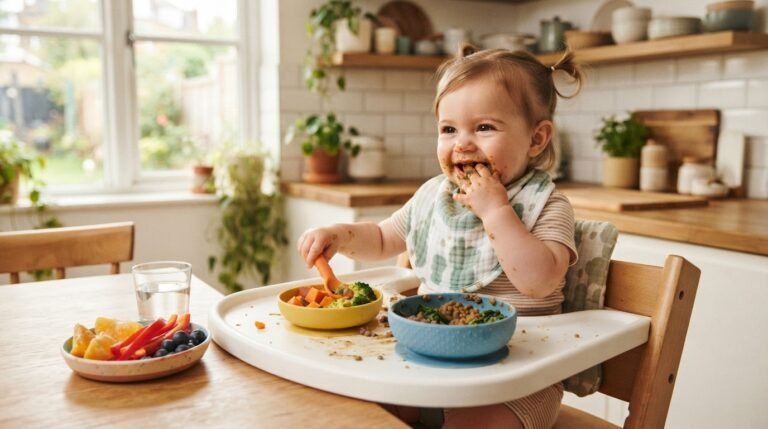
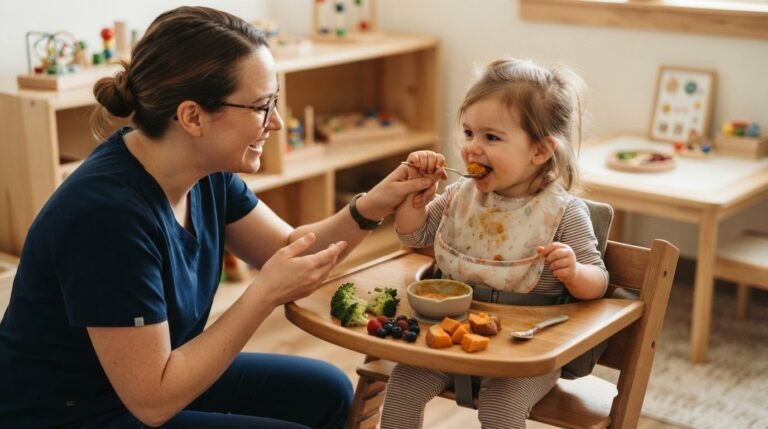
Purée families: iron fortified baby foods give a consistent baseline; stir in tomato puree for vitamin C. Finger-food families: soft meat strips or shredded poultry deliver heme iron plus zinc.
Whole food alone can work if the plate is varied, but iron fortified baby foods help fill gaps on picky-days. You don’t need to pick a camp. If you’re navigating allergies or texture hesitations, the next section covers earliest signs to watch for — and when to ask for an iron test.
Call your pediatrician if baby under 6 months has poor feeding, or if you see persistent pallor, extreme fatigue, or delayed milestones — deficiency needs a blood test, not guesswork.
This information is for educational purposes only and does not replace medical advice. Always consult your pediatrician before starting supplements or if you’re concerned about iron deficiency.
What are the earliest signs of iron deficiency in babies?
Baby iron deficiency signs include pale skin or inner eyelids, unusual fatigue, slowed growth, and pica—craving ice or dirt—but these overlap with normal tiredness, so they’re not diagnostic alone. Only a blood test confirms iron deficiency anemia.
When to call the pediatrician
- Infant under 6 months with poor feeding
- Persistent pallor or extreme fatigue
- Delayed motor or growth milestones
- Picky eating plus any symptoms above
You don’t need to guess or start supplements on your own—iron toxicity is a real risk, and dosing is strictly a pediatrician conversation. If baby seems washed out, lethargic, or you’re seeing the pallor-plus-fatigue combo, call sooner rather than later. Keep a photo of skin color if it helps you describe changes at the appointment.
What to expect at the visit
The pediatrician will likely check growth curves and may order a hemoglobin or ferritin test. Bring a 3-day food log if you have one—finger-food days versus purée days both matter. Mention any family history of anemia or restricted diets.
This information is for educational purposes only and does not replace medical advice. Always consult your pediatrician before starting supplements or if you’re concerned about iron deficiency.
When to ask the pediatrician about an iron test + when to seek care
Call your pediatrician about an iron test if you notice baby iron deficiency signs alongside feeding changes, or if baby is under 6 months with poor feeding. [FACT – standard clinical threshold]
When to call
- Persistent pallor, especially inside lower eyelids or nail beds [FACT]
- Extreme fatigue or lethargy beyond normal baby tiredness [FACT]
- Delayed motor or growth milestones [FACT]
- Picky eating plus any symptoms above [FACT]
- Infant under
The bottom line
One practical step: put a vitamin-C food on the same plate as a non-heme iron source — berries with fortified cereal, tomatoes with beans. Heme iron from meat and poultry absorbs more readily, so include those when you can. Space out calcium-rich snacks and tannin-containing drinks away from iron meals; they blunt absorption. Check labels for the AAP targets — roughly 11 mg/day for 6–12 months, 7 mg/day for 12–24 months.
Watch for persistent pallor, extreme fatigue, or slowed growth — those are reasons to call your pediatrician for a blood test, not to guess. If your infant is under 6 months and feeding poorly, reach out sooner.
You’ve got this — one thoughtful plate at a time.
Related Reading on ChildBloom
- Plant-based infant nutrition 6-24 months
- Baby feeding log track solids allergens
- Read baby food labels heavy metals
References and Resources
Frequently asked questions
Can too much iron be dangerous for a baby?
Iron overload from food alone is very unlikely, but unsupervised supplements can cause serious problems. Keep iron supplements locked up and out of reach. If your baby gets into a bottle of iron drops, call poison control or your pediatrician immediately.
Best iron-rich finger foods for baby-led weaning?
Soft-cooked lentils, mashed beans, finely shredded meat, tofu strips, and iron-fortified toast strips are all practical options. Pair any of these with a vitamin C food like mashed berries or steamed broccoli to boost absorption. Always supervise and match serving size to your baby’s chewing ability.
How do I serve an iron + vitamin C combo in one practical meal?
Try shredded chicken with mashed bell peppers, or oatmeal topped with strawberries. Both foods in the same sitting is the goal — you don’t need precise ratios, just a recognizable pair on the plate. These combos give the absorption boost without extra prep.
Do I need to give iron supplements if my baby eats fortified cereal?
Not automatically — fortified cereal helps, but your baby may or may not need a supplement based on overall intake, growth, and risk factors. Bring a few days of food notes to the pediatrician so the decision is based on real data. Don’t start iron drops without that conversation.
What if my baby refuses meat entirely?
Beans, lentils, tofu, iron-fortified cereals, and well-cooked dark leafy greens can fill the gap. Pair them with vitamin C at each meal to maximize the non-heme iron from plants. If refusal persists and intake seems low, ask your pediatrician about an iron check rather than guessing.
This information is for general education and does not replace personalized medical advice. If you’re worried about your baby’s iron status, growth, or feeding, contact your pediatrician — especially for infants under 3 months or any baby showing pale skin, extreme fussiness, or poor feeding.