Co-Sleeping vs Room-Sharing: The Safety Guide Every Parent Needs
Medically reviewed by Dr. Ahmad Raza, MD (Pediatrics) — ChildBloom Medical Review Panel. Last updated: August 03, 2026.
Editorial & affiliate disclosure: our guidance is written and reviewed by clinicians. ChildBloom may earn a commission from qualifying purchases made through links on this page, which never changes what our pediatric reviewers recommend.
If you are searching for answers about co-sleeping vs room-sharing, you are in the right place. This pediatrician-reviewed guide explains what is normal, what the likely causes are, the red flags that mean you should call your doctor, and what you can safely do at home — all based on current AAP, CDC and NIH guidance on co-sleeping vs room-sharing.
Quick Answer
The AAP recommends room-sharing without bed-sharing for at least the first 6 months — baby on a separate firm, flat sleep surface in the parents’ room, which lowers SIDS risk by up to 50%. Bed-sharing is never recommended, and is highest risk with babies under 4 months, preterm infants, soft bedding, sofas or armchairs, and any parent who smokes, has been drinking, or is taking sedating medication.
Co-Sleeping vs Room-Sharing: What Every Parent Needs to Know About Safe Infant Sleep

The terminology around infant sleep can be confusing. Many parents use the terms “co-sleeping” and “room-sharing” interchangeably, but they mean very different things — and they carry very different safety profiles. Understanding the difference is one of the most important things you can do to keep your baby safe during sleep. This guide covers at what age is room sharing with baby no longer recommended to help parents make informed decisions.
Furthermore, as a pediatrician, I understand how concerning these moments can be for parents. My goal is to provide you with evidence-based guidance that helps you make informed decisions for your child, while also knowing exactly when to seek medical attention. This guide draws on current AAP recommendations and clinical experience to give you the clarity you need.
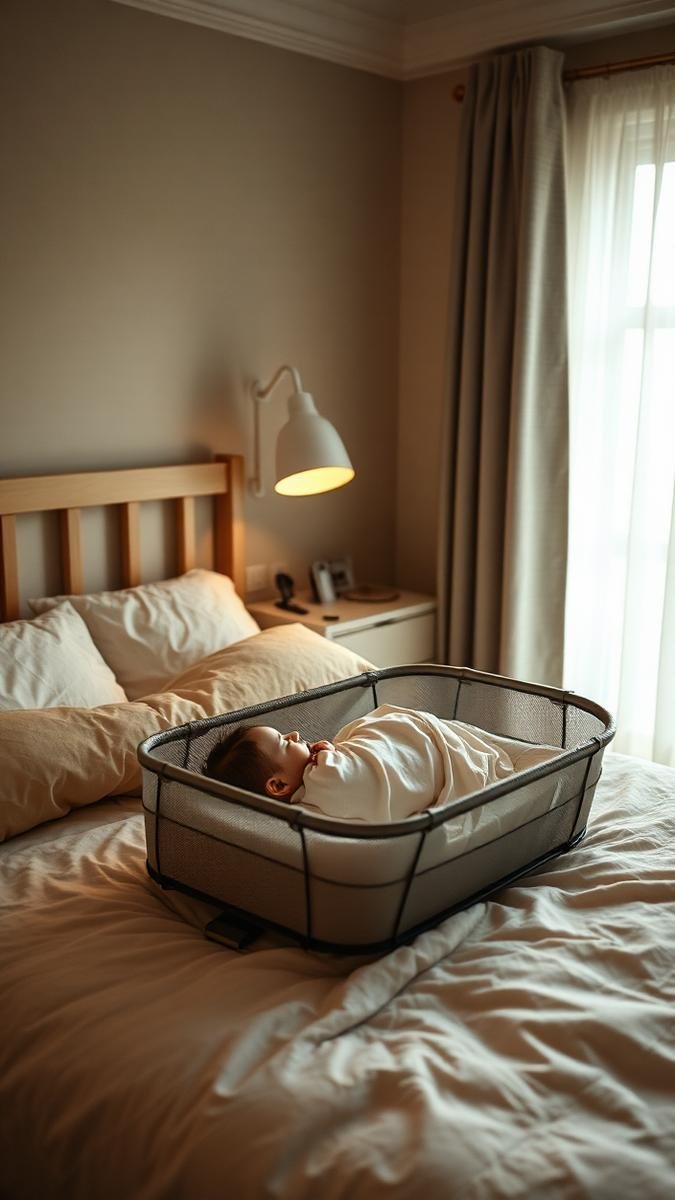
Room-sharing means your baby sleeps in the same room as you, but on a separate sleep surface designed for infants — a crib, bassinet, or play yard. The American Academy of Pediatrics (AAP) recommends room-sharing for at least the first 6 months, and ideally for the first year.
Room-sharing reduces the risk of SIDS by as much as 50% compared to babies who sleep in a separate room. The reasons are not fully understood, but likely include the parent’s presence providing auditory and olfactory cues that keep the baby in a lighter stage of sleep, easier access for breastfeeding, and closer monitoring of the baby’s breathing and temperature. For expert-reviewed guidance, the American Academy of Pediatrics offers reliable information on this topic.
For example, bed-sharing (also sometimes called co-sleeping) means your baby sleeps on the same sleep surface as you — typically the same bed. This practice carries significantly higher risks. The AAP and the CDC recommend against bed-sharing for any infant. The risk of SIDS and accidental suffocation is significantly higher for bed-sharing infants, especially under 4 months of age, even when parents take precautions. The risk is highest when the parent smokes, has used alcohol or medications that cause drowsiness, or when the bed surface is soft (memory foam, waterbed, pillow-top mattress).
The Science of SIDS Risk Reduction
Room-sharing reduces SIDS risk through several mechanisms. Parents who room-share are more likely to notice if their baby’s breathing becomes irregular or if the baby’s face becomes covered by bedding. The baby’s sleep is lighter in the parent’s presence, which may help them arouse more easily if they experience a breathing pause. Room-sharing also makes nighttime breastfeeding easier, and breastfeeding itself is protective against SIDS. The AAP’s recommendation for room-sharing on a separate sleep surface is based on strong evidence that this arrangement provides the optimal balance of safety and accessibility.
Bed-sharing, by contrast, introduces multiple risk factors. Soft bedding, pillows, and adult mattresses can create pockets where the baby’s face becomes trapped, leading to rebreathing of exhaled carbon dioxide and suffocation. The parent can accidentally roll onto the baby, especially if the parent is sleep-deprived, under the influence of alcohol or sedating medications, or simply a deep sleeper. The baby can become trapped between the mattress and the wall, headboard, or bed frame. Even a baby who is positioned on their back for bed-sharing can roll into a hazardous position during the night.
When Parents Intend to Bed-Share
As a result, despite the recommendations, many parents end up bed-sharing at some point, whether by plan or by accident due to exhaustion. If you know you are likely to bed-share, it is important to make the arrangement as safe as possible, even while understanding that no bed-sharing arrangement is completely safe.
The safest possible bed-sharing scenario includes: a firm mattress (no memory foam or pillow-top), no pillows or blankets near the baby, the baby placed on their back, no smoking in the household, no alcohol or sedating medication use by the parent, and the baby over 4 months old. The breastfeeding mother’s natural “C” curl position, where she curls her body around the baby with her arm above the baby’s head and her knees tucked under the baby’s feet, provides some additional protection.
However, the sofa and the armchair are never safe for sleep with a baby — not even for a nap. Sofa-sharing carries the highest risk of infant death of any sleep arrangement, and the risk is present even if the parent is awake. The cushions, crevices, and soft surfaces of sofas create multiple suffocation hazards. If you are exhausted and worried about falling asleep while holding your baby on the sofa, move your baby to a safe sleep space, set a timer, or ask for help from another adult.
Safe Alternatives: Room-Sharing Setups
In addition, there are several safe room-sharing setups that make nighttime parenting easier while keeping your baby safe. A bedside sleeper is a bassinet that attaches securely to the side of your bed, with one side that drops down for easy access. This keeps your baby on a firm, flat surface designed for infant sleep while giving you immediate access for feeding and comforting.
A standard bassinet placed next to the bed is the simplest option and works well for the first few months. A pack-and-play or play yard with a bassinet insert can also be placed next to the bed. The key requirement for any setup is that the sleep surface is firm, flat, and specifically designed for infant sleep. The mattress should be tight-fitting with a fitted sheet, and there should be no loose items in the sleep space.
Transitioning to the Nursery
The AAP recommends room-sharing for at least 6 months, but many parents choose to room-share longer. There is no set age at which a baby must move to their own room. The right time depends on your family’s sleep situation, your baby’s temperament, and your own comfort level. When you do decide to transition, do it gradually.
Specifically, start with daytime naps in the nursery, then move to the first stretch of nighttime sleep in the nursery while keeping the baby in your room for the rest of the night. A video monitor can provide reassurance. Maintain consistent bedtime routines in both locations. Some babies adjust easily; others need a week or two to get used to the new space. Patience and consistency are key.
Frequently Asked Questions
Is room-sharing the same as co-sleeping?
Often used interchangeably, but they are different. Room-sharing means baby has their own sleep surface in your room. Bed-sharing means same mattress. Only the first is broadly recommended.
Is bed-sharing safer if I am breastfeeding?
Breastfeeding mothers tend to adopt a protective “C” curl around baby, which lowers risk somewhat. But baby still needs a firm flat surface, no smoking/alcohol, and to be over 4 months old to meaningfully reduce risk.
What about co-sleeping bassinets in the bed?
Additionally, in-bed sleepers (like DockATot) are not endorsed by the AAP and have been linked to deaths. Use a bedside sleeper that sits beside the bed instead.
Can I nap with my baby on the couch?
No. Sofa and armchair sleeping carries one of the highest SIDS risks. If you are exhausted, place baby in a safe sleep space and set a timer to check on them.
When can I move my baby to their own room?
AAP recommends room-sharing for at least 6 months, ideally 12. After that, a safety-checked nursery with a firm crib and no loose bedding is appropriate.
However, Read more: room by room babyproofing checklist for
Medical disclaimer: This article is for informational purposes only. Always consult your pediatrician for guidance on safe sleep for your baby.
📖 More from the Pediatrician’s Corner Hub: your complete pediatrician-reviewed guide to your baby’s first year.
When to Call Your Pediatrician
Moreover, while most fevers in children are harmless and resolve on their own, you should contact your pediatrician if:
- Your infant is under 3 months old with a rectal temperature of 100.4°F (38°C) or higher
- Fever persists beyond 3 days
- Your child is unusually irritable, confused, or difficult to wake
- There are signs of dehydration (dry mouth, no tears, fewer wet diapers than usual)
- The fever is accompanied by a stiff neck, severe headache, or rash
- Your child has a seizure (febrile seizure)
- You simply feel something is wrong — trust your instincts
When in doubt, call your pediatrician. It is always better to err on the side of caution.
Safety Considerations and Red Flags
Parents should be aware of the following safety considerations when managing their child’s health at home:
- Never ignore persistent or worsening symptoms
- Keep emergency numbers (pediatrician, poison control, emergency services) readily accessible
- Follow medication dosing instructions precisely — never estimate or use household spoons
- Trust your gut: if you feel something is seriously wrong, seek medical attention immediately
Understanding Baby Sleep Patterns
Furthermore, newborn sleep is fundamentally different from adult sleep. Babies spend more time in REM (active) sleep, which is why they often seem restless, twitch, or make sounds during sleep. This is normal and protective, as REM sleep supports brain development.
Sleep Cycles and Wake Windows
Baby sleep cycles are shorter than adult cycles, lasting approximately 45-60 minutes. Wake windows — the amount of time a baby can comfortably stay awake between naps — vary by age. Newborns can manage only 45-60 minutes, while 6-month-olds may stay awake for 2-2.5 hours. Following age-appropriate wake windows prevents overtiredness, which paradoxically makes it harder for babies to fall and stay asleep.
Creating a Sleep-Friendly Environment
A dark, cool, and quiet room supports better sleep. White noise machines can help mask household sounds and mimic the whooshing sounds of the womb. The nursery temperature should be kept between 68-72°F (20-22°C), and your baby should be dressed in one more layer than an adult would wear comfortably.
Building Healthy Sleep Habits
Consistent Bedtime Routines
For example, a predictable bedtime routine signals to your baby’s brain that sleep is coming. A good routine lasts 20-30 minutes and includes 3-5 calming activities: a warm bath, gentle massage, changing into pajamas and a sleep sack, reading a book, singing a lullaby, and a final feed with lights dimmed. Consistency matters more than the specific activities — performing the same sequence in the same order every night helps your baby transition from wakefulness to sleep more easily.
Self-Soothing and Sleep Independence
Babies who learn to fall asleep independently at bedtime are more likely to self-soothe when they wake during the night. You can support this by putting your baby down drowsy but awake rather than fully asleep, giving them a chance to practice settling. This does not mean leaving them to cry — you can offer comfort through gentle touch, shushing, or patting while encouraging them to find their own path to sleep. Gradually reduce the level of support as your baby develops this skill.
Common Sleep Scenarios and Solutions
What If My Baby Only Naps for 20 Minutes?
Short naps (20-30 minutes) are common in young infants and often resolve as the sleep cycle matures around 5-6 months. Ensure the sleep environment is dark and quiet. Try extending the wake window by 15 minutes — an undertired baby may not connect sleep cycles. For older babies, a consistent pre-nap routine (similar to bedtime but shorter) can signal that more sleep is expected. Most babies naturally lengthen naps as they grow.
How to Handle Early Morning Wakings
As a result, babies waking before 6 AM is one of the most frustrating sleep challenges. Check the room temperature — a too-cold room can cause early waking. Ensure the room is completely dark (blackout curtains) as early morning light can trigger waking. Keep the morning response calm and boring — no play, no bright lights, no feeding unless genuinely hungry. Adjust bedtime — sometimes a slightly later bedtime (15-30 minutes) paradoxically leads to a later waking.
The Bottom Line
Co-Sleeping vs Room-Sharing Safety is a common concern for parents, and most of the time it resolves with simple home care and patience. As a pediatrician, I encourage parents to trust their instincts, stay informed with evidence-based resources, and maintain open communication with their healthcare provider. You know your child best — if something does not feel right, speak up. Every question you ask is valid, and every concern you raise helps us provide better care for your little one.
Clinical Pearl: The Role of Consistency in Infant Sleep
One of the most evidence-supported yet underutilized interventions for infant sleep problems is consistency — not just of bedtime, but of the entire sleep environment. Research published in the journal Sleep Medicine Reviews has demonstrated that infants whose parents maintain consistent sleep schedules, routines, and environments show more mature sleep architecture and fewer night wakings by 6 months of age.
In addition, in my clinical practice, I recommend families choose a 20-30 minute bedtime routine — bath, book, feed, bed in that order — and repeat it identically every night. The predictability, not the specific activities, is what makes the intervention effective. If your baby is still struggling after 2 weeks of consistent routines, revisit your pediatrician to rule out medical contributors like reflux or sleep-disordered breathing.
Related: swaddling newborn safety risks and when to stop
Related Reading on ChildBloom
Authoritative Sources
- American Academy of Pediatrics (HealthyChildren.org)
- Centers for Disease Control and Prevention
- Cleveland Clinic
Medically reviewed by the ChildBloom Pediatric Review Board. Last updated August 2026. This article is for general education and does not replace advice from your child’s pediatrician.
Co-Sleeping vs Room-Sharing: quick pediatrician summary
Safe sleep comes first, then schedule. Your baby belongs alone, on the back, on a firm flat surface with nothing else in the space — no pillows, bumpers, positioners or loose bedding — for every sleep including naps. Once that is fixed, most night-waking problems are age-appropriate wake windows, hunger, or an over- or under-tired baby rather than a sleep disorder. Talk to your pediatrician about pauses in breathing, loud persistent noisy breathing, or sleepiness so deep your baby will not wake to feed.
Common mistakes parents make
- Treating a single measurement or one bad day as a trend instead of watching the pattern over several days.
- Trying several remedies at once, so it becomes impossible to tell what helped.
- Waiting for a convenient time to call when a red flag is already present — feeding, breathing and alertness changes are always worth a same-day call.
- Following advice from an unsourced social post rather than your own pediatrician, who knows your child’s history and growth curve.
Related guides from our pediatric team
- Baby Rolling Eyes Back When Sleeping: Is It Normal or a Seizure?
- Newborn Sleeping Too Much and Not Eating: Should I Worry?
- Baby Breathing Fast While Sleeping No Fever | When to Worry
- Baby Fever at Night Only | Should I Go to ER?
- More expert answers in Pediatrician’s Corner
References and further reading
Medical disclaimer
This article is for general education and is not a substitute for individual medical advice, diagnosis or treatment. Every child is different — talk to your own pediatrician about your baby, and seek urgent care for breathing difficulty, poor feeding, dehydration, unusual sleepiness, fever in an infant under 3 months, or any sudden change in your child’s condition.



2 Comments