Baby Suddenly Refusing Bottle But Wants to Breastfeed: What to Do (2026 Pediatrician’s Guide)
Medically reviewed by Dr. Ahmad Raza, MD (Pediatrics) — ChildBloom Medical Review Panel. Last updated: September 27, 2026.
Editorial & affiliate disclosure: our guidance is written and reviewed by clinicians. ChildBloom may earn a commission from qualifying purchases made through links on this page, which never changes what our pediatric reviewers recommend. As an Amazon Associate, we earn from qualifying purchases.
Bottle refusal is almost always a phase with a reason behind it: nipple flow, milk temperature, timing, or a three-month strike. The seven-step protocol, what to avoid, and the signs that need a call.
📋 TL;DR — if you read nothing else
Short answer: Bottle refusal is almost always a phase with a fixable cause. Work the causes in order: flow, temperature, timing, teething, illness.
- Change one variable at a time: feeder, position, flow, or temperature.
- The scoreboard: wet diapers and steady weight gain, not the bottle.
- Both breast and bottle refused past 6-8 hours: call today.
- 25-50% of breastfed babies hit this between 2 and 6 months.
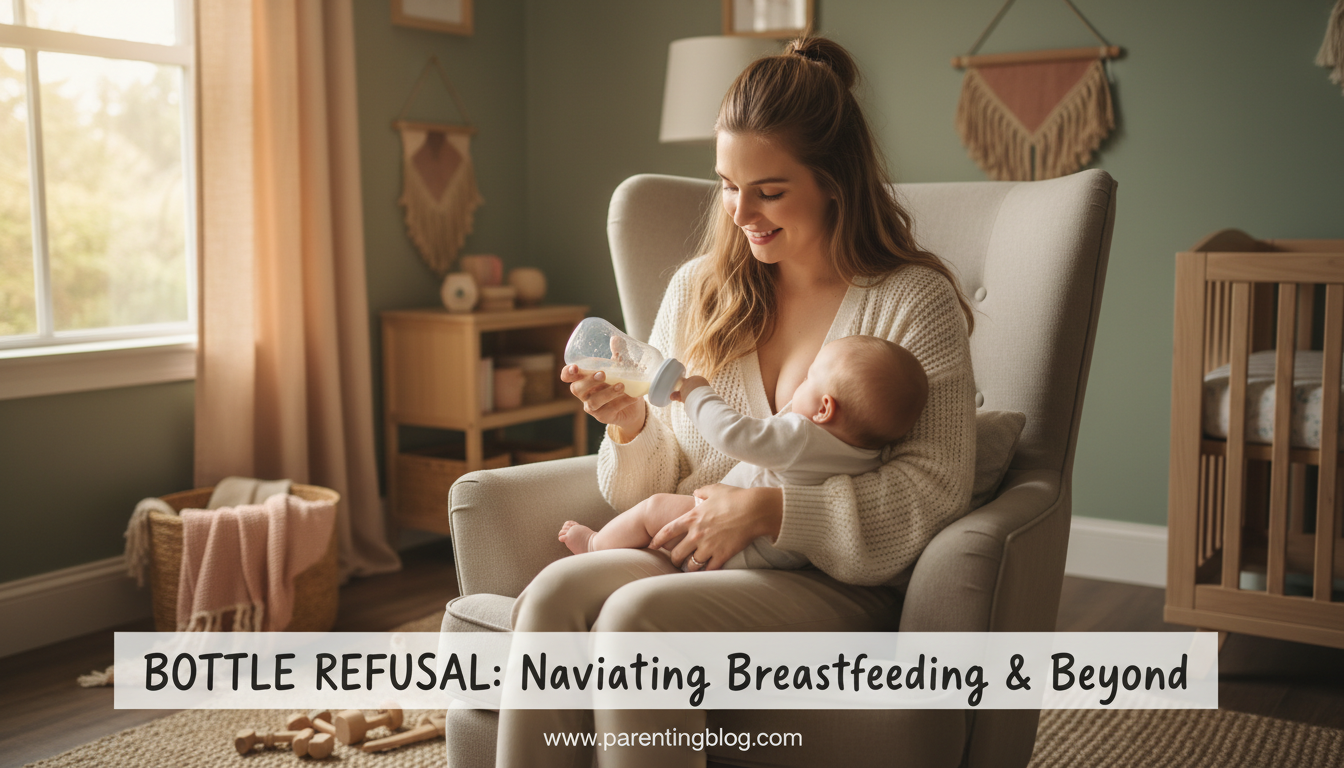
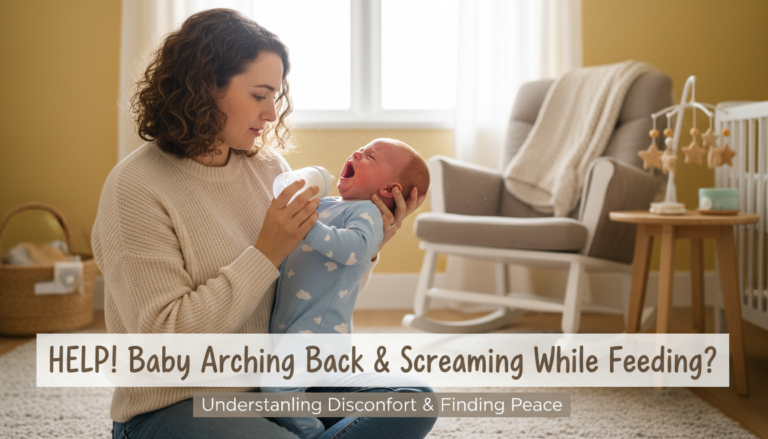
Your baby took a bottle perfectly for weeks or months. Then suddenly, they refuse. They push the nipple away with their tongue, turn their head, arch their back, or scream the moment the bottle comes near their mouth. But they will happily breastfeed.
You are frustrated, confused, and worried they are not getting enough to eat. This is called bottle refusal, and it is one of the most common feeding challenges parents face. The good news: there is always a reason, and there is almost always a solution.
This guide was written and reviewed by pediatricians. It ranks the seven causes of bottle refusal by how often each one explains this picture. It then walks through the seven-step protocol that works through them, the mistakes that make refusal worse, and the signs that mean your baby should be seen.
Bottle refusal is a phase, not a permanent problem. It is extremely common, affecting approximately 25-50% of breastfed babies at some point between 2 and 6 months of age. It is rarely a sign that something is medically wrong. Most cases resolve within 1-3 weeks with consistent techniques. The key is identifying the root cause. Is it the bottle? The milk? The timing? The baby’s development? Or something else entirely? Work through the causes below in order. The one that fits your baby usually becomes obvious once you look.
The 7 Causes of Bottle Refusal (Ranked by Likelihood)
1. The 3-Month Breastfeeding Strike (Most Common — 35% of Cases)
Around 3-4 months of age, breastfed babies often go through a developmental phase where they prefer the breast and actively refuse the bottle. The baby is becoming more aware of their environment, and the breast is what they know. They have also developed a stronger preference for the taste and temperature of fresh breast milk over refrigerated or thawed milk. Some babies are entering the 4-month sleep regression and are more irritable overall. Teething discomfort can make bottle nipples feel different too.
This phase typically lasts 1-3 weeks and resolves as the baby adjusts. Consistency and patience are what get you through it. The strategies below are for exactly this situation.
2. Nipple Flow Rate Mismatch (20% of Cases)
If the bottle nipple flow is too slow, the baby has to work harder than at the breast, and that defeats the purpose of the bottle. If the flow is too fast, the baby may gag or choke. Key clues: the baby takes a few sucks, then pulls away and cries. Milk drips from the baby’s mouth, which means too fast. The baby chews on the nipple instead of sucking, which means too slow. Or the baby takes the bottle initially but gives up after a few minutes.
Solution: try a different flow rate. For newborns, a slow-flow (level 1) nipple is appropriate. For older babies, a medium-flow (level 2) or fast-flow (level 3) nipple may be needed. Some babies also prefer a specific nipple shape: wide-base nipples that mimic the breast, or standard narrow ones.
3. Milk Temperature or Taste Issues (15% of Cases)
Breast milk that has been refrigerated develops a different taste than fresh breast milk. The cause is lipase activity, an enzyme that breaks down fats. Some babies are sensitive to that difference. Key clues: the baby takes the bottle when the milk is freshly expressed but refuses it after refrigeration. Or the baby takes the bottle from one parent but not the other, because milk composition and lipase activity differ between people. Or the baby takes formula from the bottle but refuses breast milk.
Solutions: warm the milk to body temperature (98-100°F), and do not microwave it. If lipase is the issue, scald the milk before refrigerating: heat it to just below boiling, then cool it. That deactivates the lipase enzyme. Expressing milk at the same time of day the baby will drink it also helps, since milk composition varies throughout the day.
4. Developmental Leap / Distraction (10% of Cases)
Around 3-5 months, babies become much more aware of their surroundings. They may refuse the bottle because they are too distracted to focus on feeding. Key clues: the baby takes the bottle in a quiet, dark room but refuses it in a bright, noisy room. The baby looks around and pulls off the bottle frequently. Or the baby only refuses during certain times of day, often the evening when tired.
Solution: feed in a quiet, dimly lit room with no distractions. Turn off the TV, put away your phone, and close the curtains. Some babies need white noise to block out household sounds.
5. Teething Pain (10% of Cases)
Teething makes the gums tender, and the pressure of a bottle nipple against sore gums can be painful. Key clues: the baby takes the bottle at the beginning of the feed when hungry, then refuses as the feed continues and the nipple rubs against sore gums. The baby is drooling more than usual, chewing on hands and toys, and may have visible gum swelling.
Solution: offer a cold teething toy 10-15 minutes before the bottle feed to numb the gums. If teething pain seems significant and the baby is over 2 months old, acetaminophen 30 minutes before feeding can help.
6. Illness or Ear Infection (5% of Cases)
Sudden bottle refusal can be a sign that feeding is causing pain. Ear infections are the most common culprit, because sucking and swallowing change pressure in the middle ear. Key clues: the baby refuses both breast and bottle, not just the bottle. The baby pulls away and cries during feeding. The baby has other signs of illness, such as fever, congestion, runny nose, or fussiness. Ear pulling or fussiness when lying flat may also point to an ear infection.
Solution: check for fever and other illness signs. If you suspect an ear infection, call your pediatrician for an evaluation.
7. Nipple Confusion or Preference (5% of Cases)
Some babies develop a strong preference for one type of nipple over another. This is less about confusion, which is more common in the first few weeks, and more about preference. Key clues: the baby takes the bottle from one person but not another, often because that person uses a different technique. Or the baby will only take the bottle in one specific position.
Solution: try different bottle shapes and nipple types until you find one your baby accepts. Wide-base nipples that mimic the breast work for some babies. Standard narrow nipples work for others. Often the preference is with the person offering the bottle, not the bottle itself, so have your partner or another caregiver try.
The Complete Bottle Refusal Solution Protocol
Work through these steps in order. Change one variable at a time. If you change everything at once, you will never know what fixed it. Give each change a few days before you judge it.
- Step 1: Rule out illness. Check for fever, ear pulling, congestion, and other signs of illness. If the baby is sick, treat the illness first. The bottle refusal will often resolve on its own.
- Step 2: Check the basics. Warm the milk to body temperature. Use a fresh nipple. Check the flow rate. Feed in a quiet, dark room. Try a different bottle shape if you have one.
- Step 3: Change the feeder. If the baby associates a specific person with breastfeeding, have another person offer the bottle. The baby may accept the bottle from a partner, grandparent, or babysitter when they would not take it from the breastfeeding parent.
- Step 4: Change the position. Do not hold the baby in the breastfeeding position when offering a bottle. Instead, hold the baby facing outward, sitting upright, or lying in a cradle hold on the opposite side. The change in position signals that this is a different feeding experience.
- Step 5: Try the bait-and-switch. Start the feed with breastfeeding, then gently switch to the bottle after 1-2 minutes when the baby is actively sucking. The baby may not notice the switch.
- Step 6: Try the walk-and-feed. Some babies will take a bottle while being walked, swayed, or bounced. The motion distracts them from the refusal.
- Step 7: Offer the bottle when the baby is drowsy. A sleepy baby has fewer defenses and may accept the bottle more readily. Offer it during a dream feed: a late-evening feed when the baby is still half-asleep.
Most families see a breakthrough within a few days of starting the sequence. If nothing has changed after two weeks of consistent effort, ask your pediatrician. An oral motor issue, a tongue-tie, or an ear infection can keep the refusal going no matter how good the technique.
What NOT to Do During Bottle Refusal
- Do not force the bottle into the baby’s mouth. That reinforces the negative association and makes the refusal worse.
- Do not starve the baby into taking the bottle. A baby who refuses the bottle for 12+ hours and is not breastfeeding enough may become dehydrated. If the baby has fewer than 4 wet diapers in 24 hours, call your pediatrician.
- Do not add cereal, sugar, or flavorings to the milk without your pediatrician’s approval.
- Do not switch back and forth between breast and bottle multiple times in one feed. That confuses the baby and prolongs the refusal.
- Do not get discouraged and give up. Bottle refusal is a phase, and most babies return to accepting the bottle within 1-3 weeks.
Bottle Refusal by Age
0-2 Months
True bottle refusal is less common. If a newborn refuses the bottle, check the nipple flow first: use a preemie or slow-flow nipple. Check the milk temperature. Then rule out medical issues such as tongue-tie or reflux.
2-4 Months
This is the most common age for bottle refusal in breastfed babies. The baby is becoming more aware, preferences are forming, and the breastfeeding strike is common. Use the strategies above.
4-6 Months
Bottle refusal at this age often relates to teething, distraction, or the approach of solid food introduction. Offer the bottle in a quiet room and consider whether the baby is ready for solids.
6+ Months
Bottle refusal at this age may be a sign that the baby is ready to transition to a sippy cup or straw cup. Some babies naturally lose interest in bottles around 6-9 months.
Pediatrician’s Take
“Bottle refusal is almost always a phase with a reason behind it. Work the causes in order: flow, temperature, timing, teething, illness. Change one variable at a time, and keep score with wet diapers and weight gain, not with the bottle. Never starve a baby into taking it.” — Dr. Sophia Martinez, MD
When to Call the Doctor
Most bottle refusal is behavioral or developmental. Certain situations still need medical attention. Call your pediatrician for:
- refusal of all feeds, both breast and bottle, for more than 6 to 8 hours;
- taking less than half the usual amount for more than 12 hours;
- signs of dehydration: fewer than 4 wet diapers in 24 hours, dry mouth, no tears, or a sunken soft spot;
- a fever over 100.4 degrees Fahrenheit along with bottle refusal, which can mean an ear infection, strep throat, or a viral illness that makes swallowing painful;
- weight loss or poor weight gain, which requires evaluation for conditions like reflux, food allergy, or oral motor dysfunction;
- crying and arching when you offer the bottle, then calming when you stop, which can point to oral thrush, teething pain, or reflux esophagitis.
For isolated bottle refusal in an otherwise healthy, growing baby, the strategies above should resolve the issue within 1-3 weeks. Persistent refusal lasting more than 3-4 days, or refusal where the baby also rejects the breast, warrants a call. Trust your instincts. You know your baby best, and no concern is too small to raise.
Common Feeding Questions Answered
Can bottle refusal cause dehydration? Only if the baby is also refusing the breast. If the baby is breastfeeding well and having 6+ wet diapers per day, they are getting enough fluids even if they refuse the bottle. If the baby is refusing both breast and bottle, call your pediatrician.
How long does bottle refusal last? Most cases resolve within 1-3 weeks. Some babies go through multiple phases of bottle refusal as they hit different developmental milestones. Consistency and patience are key.
Should I switch to a sippy cup if my baby refuses the bottle? If your baby is 6 months or older and refusing the bottle, you can try offering expressed milk in a sippy cup, straw cup, or open cup. Some babies who refuse bottles will happily drink from a cup.
The Bottom Line
Bottle refusal is a phase with a reason behind it. Start with the basics: check the flow rate, warm the milk, move to a quiet room, and change the feeder or the position. Work one change at a time and give it a few days. Do not force it, do not starve the baby into it, and do not add cereal or flavorings to the milk. Watch the scoreboard that matters: wet diapers and weight gain. If both breast and bottle are refused past 6-8 hours, if there is a fever, or if weight gain stalls, call your pediatrician. Most babies are back on the bottle within 1-3 weeks.
References
- CDC infant and toddler nutrition
- American Academy of Pediatrics policy statement on breastfeeding and the use of human milk
- FDA: infant formula guidance for parents
?? Doctor’s Take
Bottle refusal is a phase with a reason: flow, temperature, timing, teething, or illness. Work the protocol one variable at a time. Wet diapers and steady weight gain are the scoreboard, and refusing both breast and bottle past 6-8 hours means call.
This article is general information, not individual medical advice. Every baby is different – talk to your own pediatrician about your child’s feeding, sleep, growth or development, and seek urgent care for breathing difficulty, poor feeding, dehydration, fever in an infant under 3 months, or any sudden change in your baby’s behaviour. When in doubt, call your doctor.
Medical review
Reviewed by Dr. Ahmad Raza, MD, Pediatrics. Last reviewed September 27, 2026. This article provides general education and does not replace individualized advice from your child’s pediatrician. Learn about our physicians on the About page.