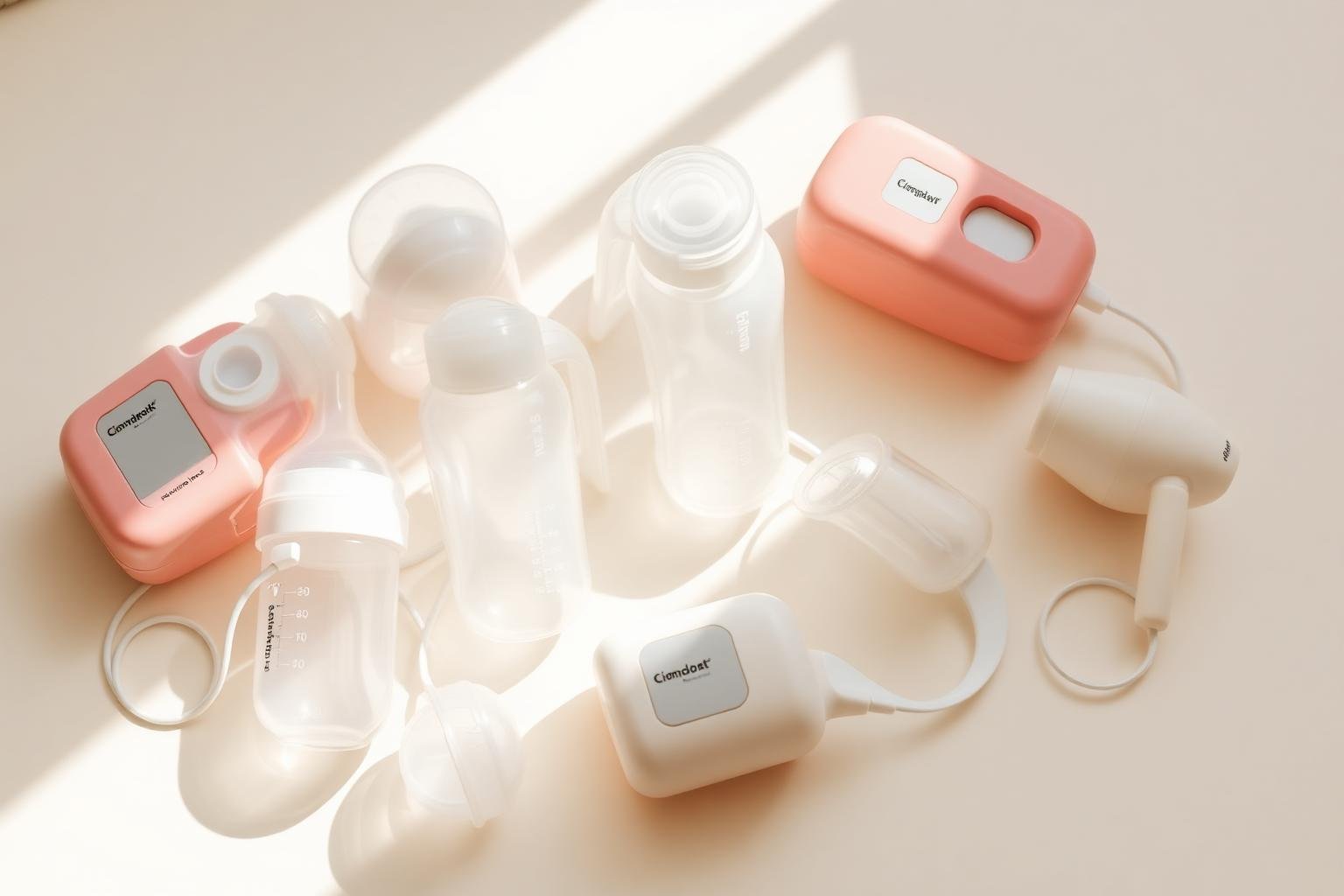
Best Breast Pumps of 2025: A Pediatrician’s Guide
Medically reviewed by Dr. Ahmad Raza, MD (Pediatrics) — ChildBloom Medical Review Panel. Last updated: August 4, 2026.
Editorial & affiliate disclosure: our guidance is written and reviewed by clinicians. ChildBloom may earn a commission from qualifying purchases made through links on this page, which never changes what our pediatric reviewers recommend.
Looking for clear answers about breast pumps of 2025? This pediatrician-reviewed guide covers what matters, what to skip, the safety checks that count, and exactly when to involve your doctor — based on current AAP, CDC and CPSC guidance on breast pumps of 2025.
Quick pediatrician summary: breast pumps of 2025
Short answer: A pediatrician reviews breast pumps of 2025: what actually matters, our tested picks, safety checks and the mistakes to avoid before you buy.
As an Amazon Associate, we earn from qualifying purchases. This helps support our free pediatric content at no extra cost to you.
Welcome, new parent. You’re likely reading this on your phone, possibly at 3 a.m., feeling a mix of overwhelming love for your new baby and sheer exhaustion. Now, you’re faced with a new challenge: choosing a breast pump. The wall of options—wearable, hospital-grade, portable, manual—can feel like another impossible task when you’re already sleep-deprived and just trying to do what’s best for your little one.
You’re not alone in feeling this way. Every day in my practice, I talk to parents who are confused and stressed by the pressure to choose the “perfect” pump. They worry about their milk supply, comfort, and whether they can ever leave the house again.
Let me reassure you: we can figure this out together. This guide is designed to be the calm, expert voice you need. We’ll cut through the noise and focus on what truly matters for you and your baby’s feeding journey. We will walk through the different types of pumps, help you find the right fit (literally!), and give you the confidence to provide for your baby, however that looks for your family.
Key Section: Choosing Your Pump – The 3 Main Types
Think of breast pumps like cars: they all get you from point A to point B, but the right one for you depends on your lifestyle, budget, and needs. Let’s break down the main categories.
1. Double Electric & Hospital-Grade Pumps
These are the powerful workhorses of the pumping world. They plug into the wall (though many now have rechargeable batteries) and use strong, efficient motors to empty both breasts at once. Hospital-grade pumps are the highest-quality version, designed for multiple users (with separate sterile parts, of course!) and are essential for establishing supply, especially for preemies or if you are exclusively pumping.
- Best for: Exclusively pumping parents, moms working to build or maintain supply, and those with a baby in the NICU.
- Parent Pain Point: They are powerful, but traditionally less portable. You’re often tethered to a chair near an outlet. The newer portable models are changing this game.
2. Wearable In-Bra Pumps
This is the category that has transformed pumping for so many parents. These are small, quiet, all-in-one units that fit right inside your nursing bra. No tubes, no dangling bottles—just freedom. You can pump while on a work call, making dinner, or commuting.
- Best for: Working parents, parents of multiple children, or anyone who needs true hands-free mobility.
- Parent Pain Point: They can be pricier, and some parents find the suction isn’t quite as powerful as a traditional double electric, making them better for maintaining supply rather than building it from scratch.
3. Manual Pumps & Silicone Collectors
Don’t underestimate the power of these simple, inexpensive tools! A manual pump is operated by hand and is perfect for occasional use, relieving engorgement, or pumping on the go without worrying about batteries. A silicone collector (like the popular Haakaa) uses gentle suction to catch let-down from the opposite breast while you’re nursing—it’s ‘free’ milk you’d otherwise lose to a nursing pad!
- Best for: Catching let-down, occasional pumping for a night out, relieving pressure, and as a travel backup. Every nursing parent should have one.
- Parent Pain Point: They require manual effort and are not efficient for building a freezer stash or exclusive pumping.
Practical Tips: The Details That Make a Difference
The pump itself is only half the story. Your comfort, milk output, and sanity depend on getting the details right. Let’s focus on the things that have the biggest impact.
Flange Fit: The 90% Rule Most Parents Skip
If you learn only one thing from this guide, let it be this: flange fit is more important than the pump itself. An incorrect flange size is the #1 cause of pain, nipple damage, and low milk output.
Most pumps come with standard 24mm or 27mm flanges, but most parents don’t fit those sizes! Here’s how to find your fit:
- Measure: Using a ruler or a printable sizing tool, measure the diameter of your nipple at the base (in millimeters). Do not include your areola.
- Add a Little Room: Add 2-4 mm to your measurement. This is your ideal flange size. For example, a 19mm nipple needs a 21-23mm flange.
- Check the Fit: When you pump, your nipple should move freely in the flange tunnel without rubbing. Very little of your areola should be pulled in. If it hurts, the size is wrong.
It’s worth investing in different flange sizes or inserts. This small change can double your output and make pumping a pain-free experience.
Cleaning & Milk Storage Made Simple
The thought of washing pump parts multiple times a day can feel daunting. Let’s simplify. According to the CDC:
- After Each Use: Rinse parts that touch milk in cool water, then wash with hot, soapy water. Air dry on a clean paper towel or dedicated rack.
- The Fridge Hack: If you’re pumping again within 4 hours, you can place your unwashed pump parts in a sealed bag in the refrigerator. This is a lifesaver, but make sure to do a full wash at least once every 4 sessions.
- Sanitize Daily: For the first 3 months, or for any baby with health concerns, sanitize parts once daily. You can boil them for 5 minutes, use a microwave steam bag, or run them through a dishwasher on a sanitizing cycle.
For storing milk, remember the simple “Rule of 4s” for healthy, full-term babies:
- 4 hours at room temperature.
- 4 days in the refrigerator.
- Up to 12 months in a deep freezer (best used within 6 months).
Expert Insights: A Pediatrician’s Pumping Playbook
After years of guiding parents, I’ve learned a few things that aren’t always in the instruction manual. These are the tips I share in the clinic.
Embrace Hands-On Pumping
Don’t just sit there! Use your hands. While the pump is running, gently massage and compress your breasts, working from the outside in towards the nipple. This technique, called “hands-on pumping,” has been shown to increase milk output by nearly 50%. It helps empty the breast more fully, which signals your body to make more milk—a key part of healthy 1-month-old infant development and feeding.
The Power of the Prolactin Peak
Your milk-making hormone, prolactin, naturally peaks in the early morning hours (typically between 1 a.m. and 5 a.m.). This is why many parents notice their highest milk output with their first pump of the day. If you are struggling with supply, adding one short 15-20 minute pumping session during this window for a few days can make a huge difference. It’s tough, but it’s effective.
Understanding Your Insurance Benefits
Under the Affordable Care Act, most health insurance plans are required to cover the cost of a breast pump. However, the process can be confusing. Call the number on the back of your insurance card and ask:
- Which specific pumps are covered at 100%?
- What is your process for covering a “hospital-grade” rental if medically necessary?
- Which Durable Medical Equipment (DME) suppliers do you partner with?
Often, you’ll order your pump through a third-party supplier like Aeroflow or Edgepark, who will handle the insurance billing for you.
Common Mistakes: What to Avoid on Your Pumping Journey
- Using the wrong flange size. (We’ve covered this, but it’s so important it’s worth repeating!)
- Cranking suction to the max. More suction does not equal more milk. Pumping should never be painful. Find your “comfort vacuum” level and stay there.
- Pumping for too long. A good session should be 15-25 minutes. Pumping for 45 minutes won’t yield more milk and can cause tissue damage. If milk stops flowing, stop pumping.
- Forgetting to replace parts. Tiny parts like duckbill valves and membranes wear out. They lose suction over time. Replace them every 1-3 months, depending on how often you pump. This is a cheap and easy way to fix a sudden drop in output!
- Comparing your output to others. Your milk production is unique. Whether you pump half an ounce or six ounces, what matters is that your baby is growing and thriving.
Frequently Asked Questions About Breast Pumps
How do I get a breast pump through my insurance?
Most insurance plans in the U.S. cover one breast pump per pregnancy. The best first step is to call the member services number on your insurance card and ask about their ‘Durable Medical Equipment’ (DME) benefits for breast pumps. They will tell you which pumps are covered and direct you to approved suppliers who will handle the billing.
How do I know if my flange fits correctly?
A good flange fit is crucial for comfort and milk output. Your nipple should move freely in the center of the flange tunnel without rubbing. Very little of the areola (the darker skin around the nipple) should be pulled into the tunnel. You should feel a gentle pulling, but no pinching or pain.
Can I combine milk from different pumping sessions?
Yes, you can! The golden rule is to cool the fresh milk in the refrigerator before adding it to already chilled or frozen milk. Never add warm, freshly pumped milk directly to cold milk, as this can create a breeding ground for bacteria and affect the longevity of your stored milk, which can eventually be used in recipes for healthy toddler snacks.
My milk supply seems low. What can I do?
First, ensure you are using correctly sized flanges and that your pump parts are in good working order. Try ‘hands-on pumping’ (massaging while you pump). Pumping more frequently, even for shorter durations, tells your body to produce more. A session between 1-5 a.m. can also be very effective. If you’re concerned, please speak with a lactation consultant (IBCLC) or your pediatrician.
Wearable vs. Traditional Pump: Which is better?
Neither is “better”—they are just different tools for different jobs. Traditional double-electric pumps are often more powerful and are excellent for establishing and maintaining supply. Wearable pumps offer incredible freedom and discretion, making them ideal for working parents or multitasking. Many parents use a combination of both.
How often should I replace my pump parts?
This is a common cause of reduced suction! Duckbill valves and membranes should be replaced every 1-2 months for exclusive pumpers (or every 3-4 months for occasional pumpers). Tubing and flanges only need replacement if they are damaged.
A Final Word of Encouragement
Please remember, your worth as a parent is not measured in ounces. Whether you pump exclusively, supplement with formula, or nurse directly, feeding your baby is an act of love. This part of the journey can be challenging, but it is also temporary.
Choose the tools that make your life easier, give yourself grace on the hard days, and never hesitate to ask for help. You are doing a wonderful job. If you have any concerns about your baby’s feeding or your milk supply, please reach out to our team or your pediatrician. We are here to support you.
Common mistakes parents make with breast pumps of 2025
- Assuming a higher price means a safer or better-performing option — certification and correct fit matter far more.
- Skipping the instruction manual, weight limits and product registration, which is how recall notices reach you.
- Changing several things at once, so you cannot tell what actually helped your baby.
- Relying on advice from social media instead of your pediatrician when something feels off.
Related pediatrician-reviewed reading
- Best Breast Pumps of 2026
- Best Wearable Breast Pumps 2026
- Best Breast Pump 2026
- Best Hospital Grade Breast Pumps
- ChildBloom product reviews
References & further reading
- CPSC nursery product safety center
- AAP HealthyChildren safety guidance
- ASTM juvenile product standards
Medical disclaimer: this article is for general education and does not replace individual medical advice. Always follow your own pediatrician’s guidance for your child.
For more clinical guidance, see our comprehensive Breast Pump Guide.


2 Comments