Starting Solids: Iron-Rich First Foods to Prevent Anemia — A Pediatrician’s Week-by-Week Plan
Medically reviewed by Dr. Ahmad Raza, MD (Pediatrics) — ChildBloom Medical Review Panel. Last updated: September 27, 2026.
Editorial & affiliate disclosure: our guidance is written and reviewed by clinicians. ChildBloom may earn a commission from qualifying purchases made through links on this page, which never changes what our pediatric reviewers recommend. As an Amazon Associate, we earn from qualifying purchases.
Iron is the most critical nutrient when starting solids. A pediatrician provides a week-by-week introduction plan with the best iron-rich first foods, absorption tips, and a complete allergen introduction guide.
📋 TL;DR — if you read nothing else
Short answer: At 6 months a baby’s iron stores are running out, and breast milk alone can no longer supply what is needed (11 mg/day). Iron-rich foods should therefore be among the very first solids — ideally heme iron from meat, paired with vitamin C.
- Best first foods: iron-fortified oat or multigrain cereal, pureed beef or lamb, dark meat chicken, lentils, tofu — all of it paired with vitamin C-rich foods for absorption.
- The 12-week plan: weeks 1-2 iron foundation, weeks 3-4 variety plus vitamin C pairing, weeks 5-8 texture and fish, weeks 9-12 finger foods and self-feeding.
- Allergens: introduce peanut, egg, dairy, wheat, soy, fish and tree nuts from 6 months — one at a time, small amount, watch 2 hours.
- Watch-outs: constipation (water with meals, fiber foods), arsenic in rice (do not rely on rice cereal alone), and refusal (offer a new food 10-15 times before deciding).
Your baby is 6 months old. They are sitting up, watching you eat, reaching for your plate. It is time to start solids.
But what should the first foods be? Rice cereal? Bananas? Avocado?
If you ask ten people, you will get ten different answers. Grandparents will say rice cereal. Bloggers will say avocado. Your pediatrician (if they are following the evidence) will say: iron-rich foods first.
Here is why.
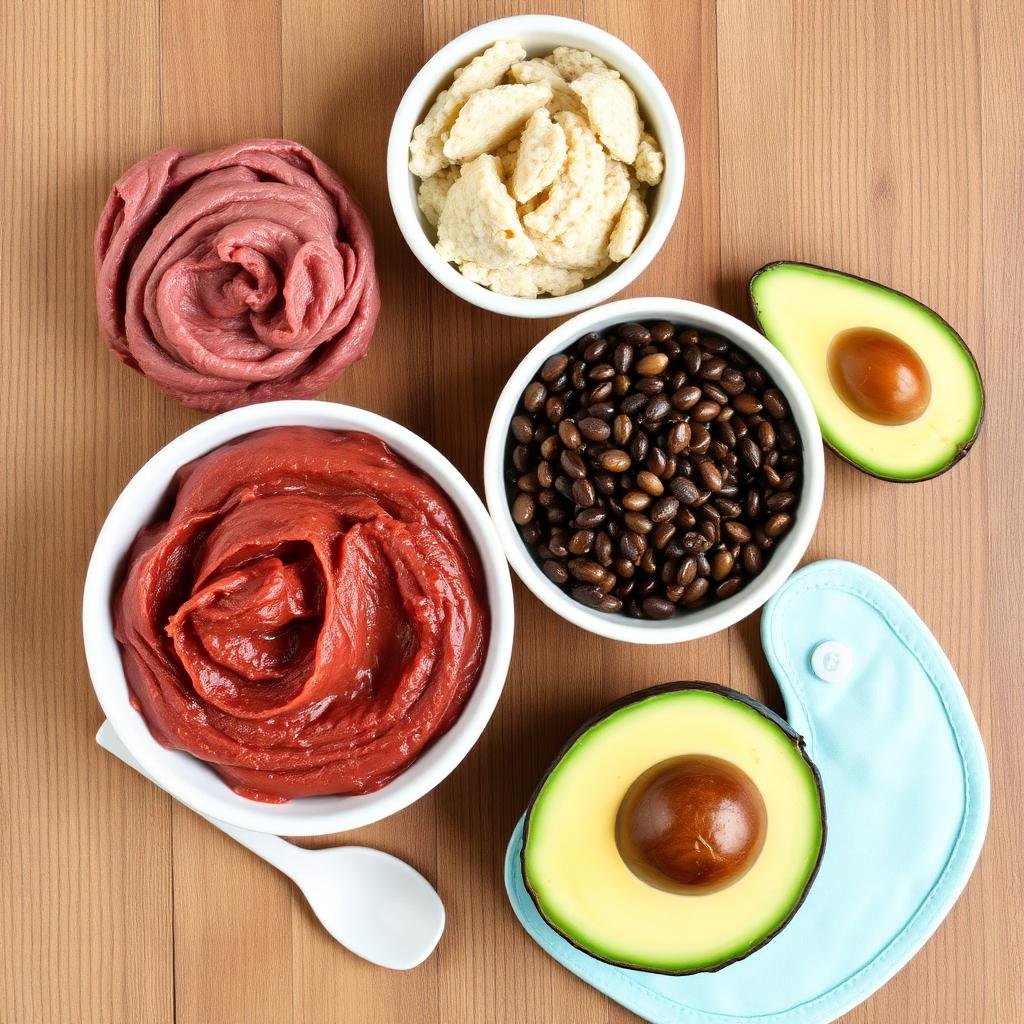
Start solids at about 6 months with iron first: iron-fortified oat cereal, pureed meat, lentils or tofu, each paired with a vitamin C food. Introduce one allergen at a time from 6 months and watch for 2 hours. Offer a new food 10-15 times before concluding your baby refuses it, and never force-feed.
Part 1: The Iron Imperative — Why It Matters at 6 Months
1.1 The Iron Store Countdown
During the third trimester of pregnancy, the mother transfers a significant amount of iron to the fetus. This iron is stored in the baby’s liver and serves as the baby’s iron supply for the first months of life.
This iron store has a countdown clock:
- At birth: Iron stores are full.
- 4-5 months: Iron stores begin to deplete.
- 6 months: Iron stores are significantly depleted. The baby now NEEDS dietary iron.
Breast milk contains very little iron — approximately 0.3 mg per liter. The iron it does contain is highly bioavailable: about 50% is absorbed, versus 10-15% from plant sources. Even so, the total amount cannot meet the baby’s needs after 6 months.
The recommended daily iron intake for infants 6-12 months is 11 mg per day. This is the highest iron requirement (relative to body weight) of any life stage.
1.2 What Happens Without Enough Iron
Iron deficiency in infancy is not just about low hemoglobin. Iron is critical for:
- Brain development (iron is required for myelination, neurotransmitter synthesis, and hippocampal function)
- Cognitive development (iron deficiency in infancy is associated with lasting cognitive and behavioral deficits, even if the deficiency is later corrected)
- Immune function (iron deficiency increases susceptibility to infections)
- Motor development (iron deficiency can delay motor milestones)
Iron deficiency anemia (IDA) is the most common nutritional deficiency in children worldwide. In the United States, approximately 9% of infants and toddlers (1-2 years) have iron deficiency, and approximately 1% have iron deficiency anemia.
The consequences of iron deficiency in infancy can be long-lasting. Children who were iron deficient as infants score lower on cognitive tests. They have more behavioral problems. Studies even show differences in brain function years after the deficiency was corrected.
This is why iron-rich foods should be among the FIRST complementary foods introduced.
1.3 Heme vs. Non-Heme Iron
Not all iron is created equal:
Heme iron (from animal sources):
- Found in: Meat (beef, lamb, dark meat chicken), poultry, fish
- Absorption rate: 15-35% (highly bioavailable)
- Not significantly affected by other dietary factors
Non-heme iron (from plant sources):
- Found in: Iron-fortified cereals, legumes (lentils, beans), tofu, dark leafy greens, dried fruits
- Absorption rate: 2-20% (less bioavailable)
- Enhanced by: Vitamin C (ascorbic acid) — consuming vitamin C-rich foods alongside non-heme iron significantly increases absorption
- Inhibited by: Calcium (dairy), phytates (whole grains, legumes), polyphenols (tea, coffee — not relevant for babies, but worth noting)
The practical implication: include BOTH heme and non-heme iron sources in the baby’s diet. Pair non-heme iron sources with vitamin C-rich foods to maximize absorption.
Part 2: The Best Iron-Rich First Foods
Here are the best first foods for iron, ranked by bioavailability and practicality:
Tier 1: Highest Bioavailability (Heme Iron)
Pureed red meat (beef, lamb)
- Iron content: Approximately 1.5-2 mg per 2 oz serving
- Absorption: 15-35%
- How to serve: Slow-cook until very tender, then puree with breast milk, formula, or water to a smooth consistency. Start thin and gradually thicken.
- Tip: The taste and texture can be challenging for babies accustomed to milk. Mix with a familiar food (sweet potato, squash) to ease the transition.
Pureed dark meat chicken or turkey
- Iron content: Approximately 0.8-1.2 mg per 2 oz serving
- Absorption: 15-35%
- How to serve: Slow-cook, remove skin and bones, puree with liquid.
Pureed fish (low-mercury options: salmon, cod, trout)
- Iron content: Approximately 0.3-0.8 mg per 2 oz serving
- Absorption: 15-35%
- How to serve: Bake or steam, check carefully for bones, flake and mash.
- Bonus: Fish also provides DHA (omega-3 fatty acid), which is critical for brain development.
Tier 2: Moderate Bioavailability (Fortified + Non-Heme Iron)
Iron-fortified infant cereal (rice, oat, multigrain)
- Iron content: Approximately 4-10 mg per serving (check the label — this varies significantly by brand)
- Absorption: Approximately 10-15% (non-heme, but fortified)
- How to serve: Mix with breast milk, formula, or water to a thin, runny consistency for the first few feedings. Gradually thicken.
- Note: Rice cereal was traditionally recommended as a first food partly because it is iron-fortified and hypoallergenic. Rice does carry arsenic concerns (see below). Oat or multigrain cereals are good alternatives.
Pureed lentils and beans
- Iron content: Approximately 1-2 mg per 2 oz serving
- Absorption: 2-10% (enhanced significantly by pairing with vitamin C)
- How to serve: Cook until very soft, puree or mash. Red lentils cook quickly and have a mild, sweet flavor that babies tend to accept.
Pureed tofu
- Iron content: Approximately 1-2 mg per 2 oz serving
- Absorption: 2-10%
- How to serve: Mash soft or silken tofu. It has a mild flavor and smooth texture that is easy for babies to accept.
Tier 3: Supportive Iron Sources (Pair With Vitamin C)
Sweet potato
- Iron content: Approximately 0.3-0.5 mg per serving
- Also provides: Vitamin C (enhances iron absorption from other foods), beta-carotene
- How to serve: Bake or steam until soft, mash or puree.
Broccoli
- Iron content: Approximately 0.3-0.5 mg per serving
- Also provides: Vitamin C, fiber
- How to serve: Steam until very soft, puree or mash. The flavor can be strong — mix with a familiar food.
Spinach
- Iron content: Approximately 0.5-1 mg per serving (but high in oxalates, which inhibit absorption)
- How to serve: Steam and puree. The iron in spinach is poorly absorbed due to oxalates, but it is still a nutritious food.
Prunes / prune puree
- Iron content: Approximately 0.5 mg per serving
- Also provides: Fiber (helpful for constipation, which can occur when starting iron-rich foods)
- How to serve: Pureed prunes or prune juice diluted with water (small amounts).
Part 3: A Week-by-Week Introduction Plan
Week 1-2: Iron-Rich Foundation
- Goal: Establish iron intake from day one of solids.
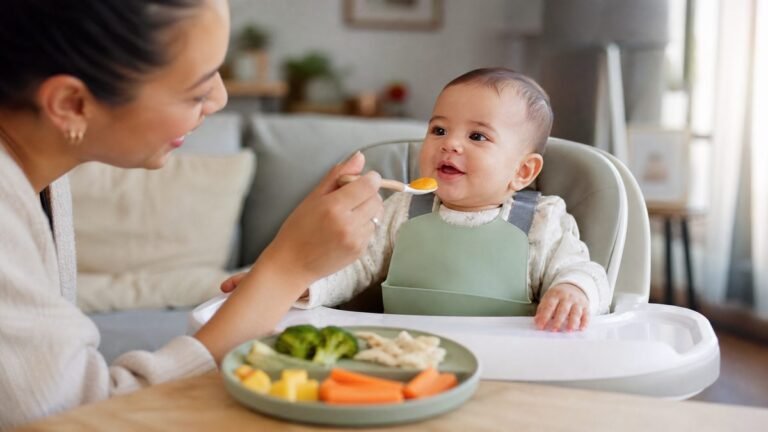
- Foods: Iron-fortified infant cereal (oat or multigrain) mixed with breast milk or formula. Once the baby is accepting cereal, introduce pureed red meat (beef or lamb).
- Frequency: 1-2 meals per day.
- Amount: Start with 1-2 teaspoons per meal. Gradually increase to 2-4 tablespoons.
- Texture: Very smooth, thin puree.
Week 3-4: Expand the Iron Portfolio
- Goal: Introduce a variety of iron sources and begin pairing with vitamin C.
- Foods: Continue iron-fortified cereal and meat. Add pureed lentils, dark meat chicken, and iron-rich vegetables (sweet potato, broccoli).
- Pairing: Serve iron-rich foods with vitamin C sources (pureed strawberries, orange segments with the membrane removed, bell pepper puree).
- Frequency: 2 meals per day.
Week 5-8: Build Variety and Texture
- Goal: Expand the food repertoire and introduce slightly thicker textures.
- Foods: Add fish (salmon, cod), tofu, avocado, banana, squash, peas, green beans.
- Texture: Transition from smooth purees to mashed textures (small soft lumps).
- Frequency: 2-3 meals per day.
Week 9-12: Finger Foods and Self-Feeding
- Goal: Introduce soft finger foods and encourage self-feeding.
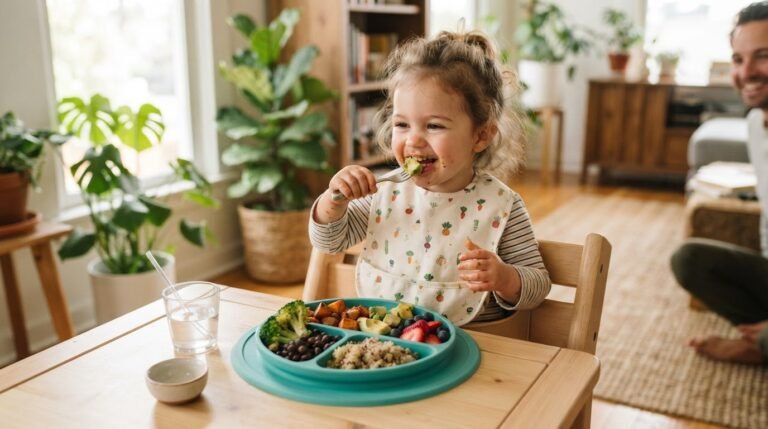
- Foods: Soft-cooked vegetable sticks (carrot, zucchini), soft fruit pieces (banana, avocado, peeled peach), small pieces of toast, scrambled egg, shredded cheese, small pieces of well-cooked pasta.
- Texture: Soft, dissolvable finger foods that the baby can pick up with a pincer grasp.
- Frequency: 3 meals per day plus 1 snack.
Note on allergenic foods: introduce allergenic foods (egg, peanut, dairy, wheat, soy, fish, tree nuts) alongside other foods, starting at 6 months. Introduce one allergen at a time, in a small amount, and observe for 2 hours. Our complete allergen introduction guide walks through each food in detail.
Part 4: Practical Tips
4.1 Dealing with Constipation
Iron-rich foods (especially iron-fortified cereal and meat) can cause constipation in some babies. Strategies:
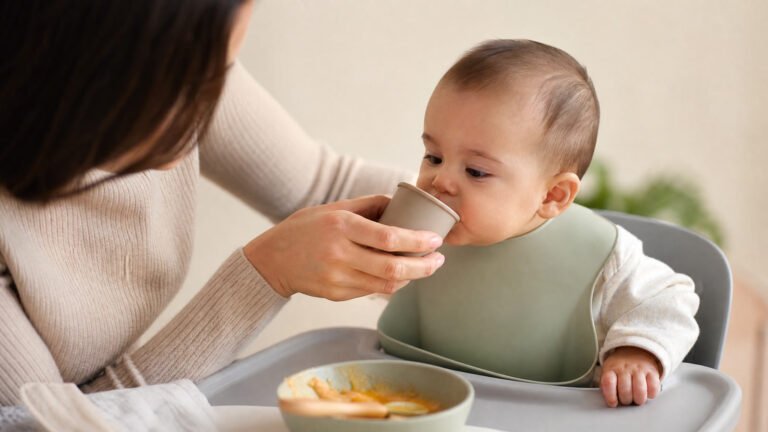
- Offer water with meals (2-4 oz per day at 6 months).
- Include fiber-rich foods (prunes, pears, peas, broccoli).
- Avoid excessive rice cereal (rice is binding).
- Bicycle legs and tummy massage can help.
- If constipation is persistent, consult your pediatrician.
4.2 Dealing with Food Refusal
It is normal for babies to reject new foods initially. Strategies:
- Offer the food 10-15 times before concluding the baby does not like it.
- Do not force-feed.
- Model eating the food yourself.
- Offer the food at a time when the baby is hungry but not starving (mid-morning is often better than late afternoon).
- Mix new foods with familiar foods.
4.3 Arsenic in Rice
Rice can contain inorganic arsenic (a contaminant from soil and water). The AAP recommends:
- Do not rely exclusively on rice cereal for iron. Offer a variety of iron-rich foods.
- Consider oat, barley, or multigrain infant cereals as alternatives.
- If serving rice, cook it in excess water (like pasta) and drain — this reduces arsenic content by 40-60%.
4.4 Baby-Led Weaning vs. Purees
Both approaches are valid. Baby-led weaning (offering soft finger foods from the start, skipping purees) and traditional purees can both provide adequate nutrition. The key requirements are:
- Iron-rich foods are prioritized regardless of approach.
- Foods are offered in safe textures (no choking hazards).
- The baby is supervised during all eating.
- The baby is sitting upright.
Many families use a combination approach: purees for iron-rich foods (meat, cereal) that are difficult to serve as finger foods, and finger foods for fruits, vegetables, and other soft items.
Pediatrician’s Take
“The single most important principle for starting solids is: iron first. At 6 months, the baby’s iron stores are depleting, and breast milk alone cannot meet their needs. Iron deficiency in infancy can have lasting effects on brain development. Introduce iron-rich foods — especially heme iron sources like meat — from the very beginning of the solids journey. Rice cereal is fine, but it should not be the only iron source. Offer meat, fortified cereals, legumes, and pair plant-based iron with vitamin C for maximum absorption. And remember: starting solids is about more than nutrition. It is about teaching the baby to chew, swallow, and explore food. Make it positive, make it varied, and make it fun.”
When to Call the Doctor
- The baby is not gaining weight after starting solids
- The baby shows signs of an allergic reaction to a food (hives, facial swelling, vomiting, difficulty breathing — call 911 for breathing difficulty)
- The baby has persistent constipation or diarrhea after starting solids
- The baby refuses all foods consistently (not just one meal — consistent refusal over days)
- You are concerned about iron intake or the baby’s nutritional status
- The baby is pale, lethargic, or seems unwell (possible anemia — your pediatrician can check hemoglobin)
Frequently Asked Questions
When should I start solids? The AAP and WHO recommend starting complementary foods at approximately 6 months. Starting before 4 months is not recommended (the digestive system is not ready). Starting after 6 months is not recommended (iron stores deplete, and the baby needs complementary sources of iron).
What are the best first foods? Iron-rich foods should be among the first: iron-fortified infant cereal, pureed meats (beef, lamb, dark meat chicken), pureed legumes (lentils, beans), pureed tofu, and iron-fortified baby food pouches. Pair with vitamin C sources (sweet potato, broccoli, strawberries) to enhance iron absorption.
How do I introduce allergenic foods? Introduce allergenic foods (peanut, egg, dairy, wheat, soy, fish, tree nuts) alongside other complementary foods, starting at approximately 6 months. Introduce one allergenic food at a time, in a small amount, and observe for 2 hours for any reaction. If no reaction occurs, continue to include that food regularly.
Should I puree or do baby-led weaning? Both approaches are valid. Pureeing allows you to control texture and make sure the baby eats. Baby-led weaning (offering soft, graspable pieces) encourages self-feeding and exploration. Many families use a combination of both. The most important factor is offering a variety of nutrient-rich foods.
The Bottom Line
Iron first, from the very first spoon. A baby’s stores run out around 6 months, so lead with meat, fortified cereal, lentils and tofu — always paired with a vitamin C food — and keep breast milk or formula as the main nutrition source until 12 months. Work through the week-by-week plan, introduce allergens early and one at a time, and give each new food 10-15 tries. If growth, stool or energy concern you, call your pediatrician and ask about a hemoglobin check.
References
- CDC infant and toddler nutrition
- FDA: infant formula guidance for parents
- American Academy of Pediatrics
- HealthyChildren.org (AAP)
- AAP policy: breastfeeding and use of human milk (cited by name; link not accessible)
- World Health Organization — maternal and child health (cited by name; link not accessible)
🩺 Doctor’s Take
Iron first — that is the whole game at 6 months. Meat and fortified cereal do the heavy lifting; vitamin C helps the plant-based iron along. Start allergens early, keep portions tiny, and judge new foods over 10-15 tries rather than one suspicious mouthful.
This article is general information, not individual medical advice. Every baby is different — talk to your own pediatrician about your child’s feeding, sleep, growth or development, and seek urgent care for breathing difficulty, poor feeding, dehydration, fever in an infant under 3 months, or any sudden change in your baby’s behaviour. When in doubt, call your doctor.
Medical review
Reviewed by Dr. Ahmad Raza, MD, Pediatrics. Last reviewed September 27, 2026. This article provides general education and does not replace individualized advice from your child’s pediatrician. Learn about our physicians on the About page.


19 Comments