Introducing Solids at 6 Months: A Parent’s Guide
Medically reviewed by Dr. Ahmad Raza, MD (Pediatrics) — ChildBloom Medical Review Panel. Last updated: September 27, 2026.
Editorial & affiliate disclosure: our guidance is written and reviewed by clinicians. ChildBloom may earn a commission from qualifying purchases made through links on this page, which never changes what our pediatric reviewers recommend. As an Amazon Associate, we earn from qualifying purchases.
Introducing solids at 6 months: readiness signs, iron-rich first foods, texture progression, and safety. Get a calm day-by-day start.
📋 TL;DR — if you read nothing else
Short answer: Most babies start solids at around 6 months, when they can sit with support and have lost the reflex that pushes food out. Begin with iron-rich foods — a teaspoon or two, once a day, after a milk feed. Milk stays the main nutrition until the first birthday.
- Readiness first: sits with support, good head control, interested in food, turns away when full.
- Iron-rich first foods: iron-fortified infant cereal, pureed meat, or cooked pureed beans.
- Wait 3-5 days between each new food to watch for any reaction.
- Grow the meals slowly: 1-2 teaspoons once daily at 6 months, up to 2-3 meals by 8-9 months.
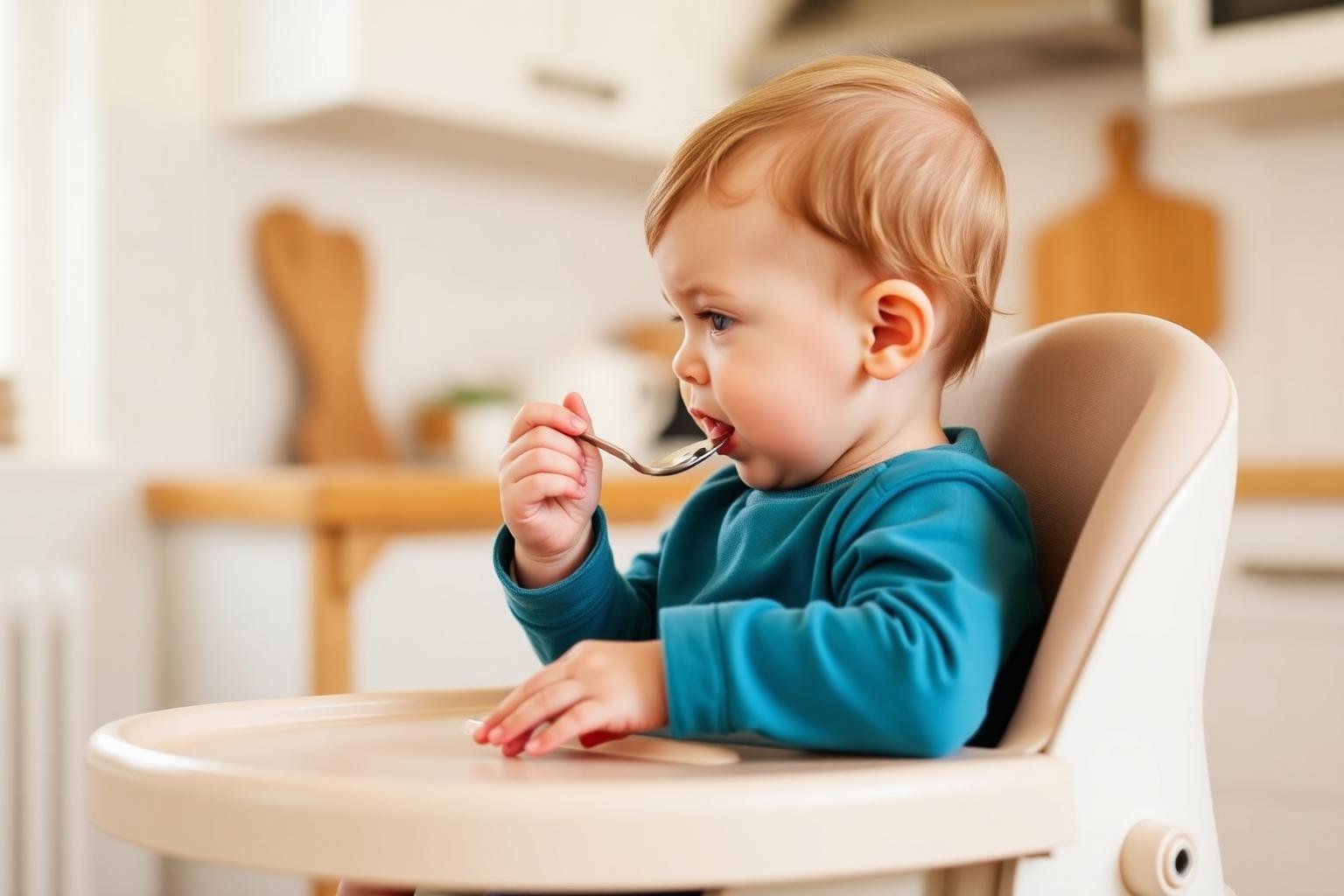
Most babies are ready to start solids at around 6 months. They can sit with support, hold their head steady, and have lost the reflex that pushes food back out. This guide walks you through those readiness signs, the first iron-rich foods, how textures change month by month, and a day-by-day plan for week one.
Two rules hold everything together. Milk — breast milk or formula — stays the main source of nutrition until the first birthday. And solids begin small: a teaspoon or two, once a day, offered after a milk feed. Everything else, from smooth purees to finger foods, builds from there.
Start around 6 months, once your baby sits with support and shows interest in food. Offer 1-2 teaspoons of an iron-rich food once a day, after a milk feed. Wait 3-5 days before the next new food to watch for reactions. Keep milk the main meal until 12 months. Leave honey and cow’s milk as a drink for after the first birthday.
Why 6 Months Is the Best Time to Start Solids
The American Academy of Pediatrics, the World Health Organization, and the Centers for Disease Control and Prevention all point to the same plan: exclusive breastfeeding or formula feeding for the first 6 months of life, then complementary solids while milk feeds continue. Four things line up at 6 months.
- Digestive readiness: by 6 months the gut has matured. Protective barriers are in place, and digestive enzymes can handle starches, proteins, and fats.
- Oral motor development: most babies at this age hold their head steady, sit with support, and have lost the tongue-thrust reflex that pushes food out. These skills make swallowing safe.
- Iron stores run low: babies are born with enough iron for about 4-6 months. After that, breast milk alone cannot supply what they need, so iron-rich foods become important for brain development.
- Interest peaks: a 6-month-old watches you eat, reaches for your plate, and may open the mouth when food comes close. That curiosity makes the first tastes easier.
Waiting much past this window has a cost. A baby who meets food late can become more cautious about new textures. The 6-month mark balances readiness with curiosity.
Readiness Signs: Is Your Baby Ready?
Six months is the general guideline, and every baby develops at their own pace. Before the first spoonful, look for these signs. Most babies show all or most of them by 6 months:
Sitting with minimal support. Your baby should hold their head steady and sit upright in a high chair without much slouching. A baby who cannot sit well is at higher risk of choking, because swallowing and breathing are not yet coordinated.
Loss of the tongue-thrust reflex. This reflex makes babies push food out with the tongue. It typically fades between 4 and 6 months. If a spoon comes in and gets pushed straight out every time, wait.
Interest in food. Your baby watches you eat, reaches for your plate, or opens the mouth when food approaches. Some babies grab food and bring it up themselves. This is a strong developmental cue.
Ability to turn away. A ready baby can turn the head or lean back when full. That small skill is the foundation of responsive feeding — you follow the cues instead of pushing extra bites.
Not ready if: your baby is under 4 months, cannot hold the head up well, still pushes food out with the tongue every time, or shows no interest at all. Wait a few weeks and try again.
Iron: The First Priority Nutrient
Iron deficiency is the most common nutritional deficiency in infants and young children worldwide, and it can affect cognitive development. The stores a baby is born with last about 4-6 months. After that, food has to carry some of the load. These are the strongest iron-rich first foods:
- Iron-fortified infant cereal: single-grain oat, rice, or barley cereal fortified with iron. Mix it thin with breast milk, formula, or water. Oat is the usual first choice over rice, because of concerns about arsenic in rice products.
- Pureed meats: chicken, turkey, beef, or lamb blended smooth. Meat provides heme iron, which the body absorbs more easily than the iron in plants.
- Pureed beans and lentils: cooked and blended beans, lentils, or chickpeas bring plant iron together with protein.
- Egg yolk: cooked and mashed, egg yolk is rich in iron. Current evidence also supports introducing whole eggs early, which lowers the chance of an egg allergy later.
- Iron-fortified baby foods: many commercial jars and pouches are fortified. Check the label for iron-fortified options.
Vitamin C helps the body absorb iron. Pair iron-rich foods with sweet potato, squash, or berries. A squeeze of orange or apple juice stirred into iron-fortified cereal does the same job.
Texture Progression: From Purees to Finger Foods
Starting solids is a gradual climb through textures. Most babies move through four stages in the first year.
Stage 1: Smooth purees (6 months)
Begin thin and smooth — the consistency of thin yogurt or heavy cream. Offer 1-2 teaspoons once a day, ideally after a milk feed, when your baby is calm but not starving. Use a soft-tipped baby spoon, and let your baby handle the spoon too. Never put food in a bottle: it is a choking hazard and it teaches nothing about eating.
Stage 2: Thicker purees and mashed foods (7-8 months)
Thicken gradually to the texture of thick yogurt or oatmeal, and add small soft lumps — mashed avocado, well-mashed banana, thick vegetable purees. By now most babies manage 2-3 meals a day, each around 2-4 tablespoons.
Stage 3: Soft finger foods (8-10 months)
Offer soft, dissolvable pieces: steamed carrot sticks that squish between your fingers, ripe banana spears, well-cooked pasta, soft cheese cubes, and teething biscuits that dissolve fast. Cut everything no larger than ½ inch to lower choking risk. Most babies sit independently by this stage and begin to self-feed.
Stage 4: Minced and diced foods (10-12 months)
By 10-12 months, your baby can handle minced or finely diced versions of the family meal. Expect 3 meals plus 1-2 snacks a day. Keep offering breast milk or formula between meals. Solids stay complementary until after the first birthday.
Day-by-Day: Your First Week of Solids
The first week is about exposure, not volume. Keep it low-pressure and follow your baby’s lead.
- Day 1: offer 1-2 teaspoons of iron-fortified oat cereal, mixed thin with breast milk or formula, after a milk feed. Let your baby touch and smell it. How much goes in does not matter today — exposure is the goal.
- Day 2: offer the same cereal, again 1-2 teaspoons. Watch for a reaction: rash, hives, vomiting, diarrhea, or unusual fussiness.
- Day 3: if all is well, add a second food at a separate meal — pureed avocado or pureed sweet potato, 1 teaspoon of each.
- Day 4: keep both foods. Try the new one in the morning and the familiar cereal in the afternoon. Keep watching.
- Day 5: if both foods agree with your baby, add a third — pureed chicken or pureed pear. Remember the 3-5 day wait rule between each new single food.
- Day 6-7: move to two meals if your baby is interested — morning and afternoon. Milk still comes first. Rotate between the foods already tried.
By the end of week one, your baby has tasted several foods, and you have a feel for what passes and what does not. That is the whole assignment.
Foods to Avoid in the First Year
Some foods are not safe or appropriate before 12 months:
- Honey: risk of infant botulism, even in cooked food. Wait until the first birthday.
- Cow’s milk as a drink: fine in cooking, but not as a beverage until 12 months — it is low in iron and can irritate the gut. Small amounts on cereal are fine.
- Whole nuts and hard candies: choking hazards. Thinly spread nut butter is fine.
- Pasteurized only: unpasteurized foods raise the risk of foodborne illness.
- Added salt and sugar: young kidneys handle sodium poorly, and early sweet tastes shape preferences.
- High-mercury fish: avoid shark, swordfish, king mackerel, and tilefish.
- Large, round, or hard foods: hot dogs, grapes, cherry tomatoes, and raw carrots need cutting first — quarter grapes and cherry tomatoes lengthwise.
Common Concerns and Solutions
“My baby gags on purees”
Gagging is normal when babies first learn to eat. The gag reflex sits farther forward in infants than in adults, so they gag more easily. Gagging sounds like coughing, sputtering, and noise. Choking is silent: the baby cannot breathe and may turn blue. If your baby gags, stay calm and let them work it out. If gagging keeps happening, thin the puree or change the texture.
“My baby refuses to open their mouth”
A clamped mouth or a turned head is communication. Do not force it. Put the spoon down, offer milk, and try again at the next meal. Some babies need 10-15 exposures to a new food before they accept it. If refusal lasts more than a week, wait a few days and restart — many babies simply need more time.
“How do I know if my baby is allergic to a food?”
Watch for signs within 2 hours of eating: hives or raised red bumps, facial swelling around the lips, eyes, or tongue, vomiting, diarrhea, or unusual fussiness. Severe reactions include difficulty breathing, wheezing, or lethargy, and these need emergency medical attention right away. With a mild reaction, stop that food and talk with your pediatrician before trying it again.
Pediatrician’s Take
“Starting solids at 6 months is one of the most exciting milestones of the first year. Remember that this is about exploration and learning, not just nutrition. Go at your baby’s pace, follow their cues, and do not compare your journey to what you see on social media. Every baby discovers food on their own timeline.” — Dr. Sarah Williams, MD
For more detail, the American Academy of Pediatrics and the CDC’s Infant and Toddler Health page both publish current guidance on the first year of feeding.
When to Call the Doctor
- hives, facial swelling, vomiting, or diarrhea after a new food — stop that food and call your pediatrician
- difficulty breathing, wheezing, or lethargy after eating — seek emergency care now
- frequent gagging even with soft, safe textures — worth a check for a feeding issue
- a week or more of consistent refusal with no interest in solids
- any time your baby seems unwell after starting a new food
Trust your instincts. You know your baby best, and a quick call is always reasonable. Notes on what was eaten, and when, turn a vague worry into a useful conversation at the next visit.
Frequently Asked Questions
Is exactly 6 months required? Not to the day. The window is roughly 4-6 months for signs of readiness, with 6 months the typical target. Starting a little before or after is fine if your baby shows readiness and your pediatrician agrees. Do not start before 4 months.
Can I start with finger foods at 6 months? Yes, if they are soft and small — a steamed carrot stick or a banana spear works. This is baby-led weaning. Keep pieces ½ inch or smaller, keep your baby seated, and stay nearby. Many families combine purees and finger foods.
Do I still breastfeed or formula-feed at 6 months? Yes. Milk stays the main source of nutrition until about 12 months. Solids at 6 months are complementary, not a replacement. Expect just 1-2 teaspoons at first, and let the volume grow over the next weeks.
What if my baby gags a lot? Gagging — pushing food forward, coughing, sputtering — is normal, and it is different from choking. Keep textures appropriate and keep watch. If gagging is frequent even with safe textures, or if a true choking episode happens, check with your pediatrician to rule out a feeding issue.
What is baby-led weaning, and is it safe? Baby-led weaning skips purees and offers soft finger foods from the start. It is safe when it is done correctly, with appropriate foods and close supervision. Talk with your pediatrician about whether it suits your baby.
The Bottom Line
Start solids at around 6 months, when your baby can sit, shows interest, and has lost the tongue-thrust reflex. Lead with iron-rich foods, offer them in teaspoons after milk feeds, and wait 3-5 days between new foods. Keep textures moving from smooth to soft pieces as the months pass. Milk remains the main nutrition until the first birthday. When your baby turns away, the answer is no — follow the cues, and let curiosity do the rest.
References
- CDC infant and toddler nutrition
- AAP policy statement on breastfeeding and the use of human milk (Pediatrics, 2022)
- FDA: infant formula guidance for parents
?? Doctor’s Take
Readiness, iron, and patience. Start when baby can sit and shows interest, offer iron-rich food by the teaspoon after milk feeds, wait between new foods, and let milk stay the main meal until the first birthday.
This article is general information, not individual medical advice. Every baby is different – talk to your own pediatrician about your child’s feeding, sleep, growth or development, and seek urgent care for breathing difficulty, poor feeding, dehydration, fever in an infant under 3 months, or any sudden change in your baby’s behaviour. When in doubt, call your doctor.
Medical review
Reviewed by Dr. Ahmad Raza, MD, Pediatrics. Last reviewed September 27, 2026. This article provides general education and does not replace individualized advice from your child’s pediatrician. Learn about our physicians on the About page.





8 Comments