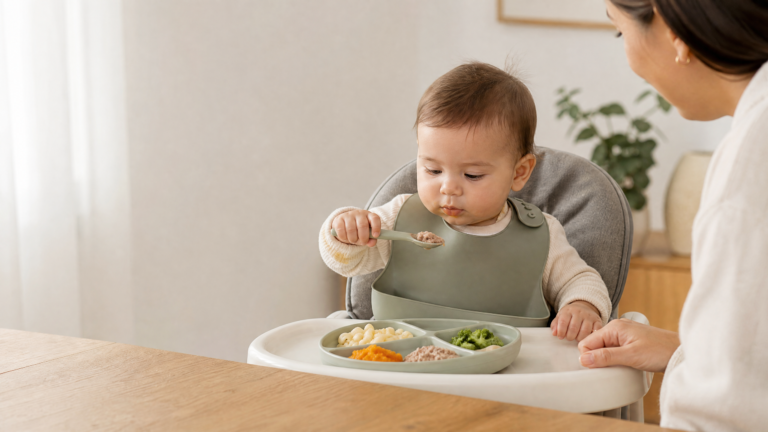
Solids & Reflux: When Baby Refuses Textured Foods
Solids Reflux Baby Refuses Textured Foods — Problem-Solving Guide
You’ve been blending, spooning, and cleaning up purées for weeks, and now your solids reflux baby refuses textured foods — and you’re exhausted, scared, and wondering if you’ve done something wrong. That frustration is real and common, and it doesn’t mean you’re failing.
This article explains why reflux babies often resist textures, how gagging differs from choking, and gives you a concrete texture-progression ladder tied to reflux timing. You’ll learn feeding strategies that reduce gagging and reflux triggers, plus clear red-flag thresholds for when to call your pediatrician or a feeding therapist. By the end, you’ll have specific next steps — not generic advice — and a clearer sense of when this phase passes and when it needs professional help.
Medical disclaimer: This information is for general education and does not replace individualized medical advice. Always consult your pediatrician or feeding therapist for guidance tailored to your baby’s specific condition.
Looking for expert guidance on solids reflux baby refuses textured foods? This comprehensive guide covers everything you need to know, from understanding the basics to making informed decisions for your family.
Why Do Reflux Babies Resuse Textured Foods?
Solids reflux baby refuses textured foods often happens because esophageal discomfort rewires how your baby experiences anything beyond a smooth flow. Swallowing new textures can trigger transient pressure changes in an already-irritated esophagus, so your baby’s brain treats lumpiness as a threat. You didn’t cause this — it’s a protective reflex gone a bit overzealous.
The discomfort–aversion loop
When swallowing feels uncomfortable, babies naturally avoid what hurt them last. That avoidance gets labeled “texture aversion” or “oral aversion,” but it’s often just your baby’s nervous system trying to prevent repeat pain. The loop tightens if smooth purées are the only safe option for weeks, making thickening feel like a leap into danger.
Gag reflex and oral sensitivity
Reflux babies frequently have a heightened gag response because the airway and esophagus share nerve pathways. What looks like choking is often a cautious gag — but it scares you, and that stress tightens your baby’s jaw, making acceptance harder.
When this is normal vs. needs help: Occasional gagging with new textures is common; persistent vomiting, arching, or weight loss needs a clinician. Mention it at the next pediatric visit — or sooner if you see red-flag symptoms.
- Offer one new texture per week, thick-smoothie consistency first
- Stop if you see pain cues: rigid body, crying, turning away
If you want broader food-introduction frameworks, see Foods Introducing New Toddlers — but texture progression for a reflux baby often needs individual tailoring.
Requires verification: specific causality between reflux pain and texture refusal needs individual clinical assessment.
Medical disclaimer: This information is for general education and does not replace individualized medical advice. Always consult your pediatrician or feeding therapist for guidance tailored to your baby’s specific condition.
Is Gagging or Vomiting with New Textures Normal?
Gagging is common when a baby refuses lumpy foods and reflux makes new textures feel threatening, but vomiting and choking need different responses — knowing the difference keeps your baby safe.
Gagging vs choking — what to watch for
Gagging is noisy: eyes water, tongue pushes forward, baby may cough or sputter. Choking is silent — lips pucker, face reddens then pales, no sound. If choking happens, call 911 and start infant first-aid back blows/chest thrusts immediately. Do a finger-sweep only if you see the object.
When vomiting signals something more
Small spit-ups after a new texture can be normal reflux. Seek care if vomiting is projectile, green or bloody, paired with arching, fever, or lethargy. One choking episode with color change needs same-day evaluation.
Action steps
- Offer thicker-smoothie textures on a spoon, not a bottle
- Sit baby upright 20–30 minutes after feeds
- Stop at pain cues: rigid body, crying, turning away
- Log textures tried, timing, and vomiting episodes for your pediatrician
Requires verification: causality between reflux pain and texture refusal needs individual clinical assessment.
Medical disclaimer: This information is for general education and does not replace individualized medical advice. Always consult your pediatrician or feeding therapist for guidance tailored to your baby’s specific condition.
Texture Progression Ladder for a Reflux Baby
A reflux baby can progress through textures safely when you follow a 4-step ladder matched to their readiness and reflux timing, making introducing solids to reflux baby less stressful.
Step 1 — Thicker smooth purées
Thick smoothie consistency is the first upgrade from thin purées. Your baby is ready when they keep the spoon in their mouth and don’t push it out with their tongue. Offer these at the start of a meal when hunger is highest, not right after a full milk feed that could trigger reflux. Stay upright during and 20–30 minutes after.
Step 2 — Mashed and fork-mashable
Move to mashed foods that break apart easily on the roof of your mouth. Good reflux-safe examples include ripe banana, avocado, and well-cooked sweet potato. Introduce one new texture per 3–5 days so you can spot a reaction. This fits the AAP solids-introduction timeline for 4–6 months and up.
Step 3 — Soft lumps and minced
Add soft lumps and minced proteins like finely shredded chicken or mashed lentils. Pace by offering small spoonfuls and pausing if your baby grimaces or coughs. Gagging is common here; watch for true choking signs — silence, color change, inability to cry. If coughing persists, stop and support their airway.
Step 4 — Family-style soft pieces
Offer soft finger foods like steamed carrot sticks or pasta shapes once your baby sits well and brings food to their mouth. Watch for reflux triggers: acidic tomato, citrus, or spicy family foods may worsen spit-up. Stop if your baby arches, cries, or turns away repeatedly.
If texture refusal persists more than 2 weeks with poor weight gain, or if you see blood in vomit, projectile vomiting, or a choking episode with color change, contact your pediatrician same-day. A feeding therapist (SLP/OT) can evaluate oral-motor delay if aversion continues.
Medical disclaimer: This information is for general education and does not replace individualized medical advice. Always consult your pediatrician or feeding therapist for guidance tailored to your baby’s specific condition.
Feeding Strategies That Reduce Gagging and Reflux Triggers
You can reduce gagging and reflux triggers by pairing upright positioning with a slow pace and small volumes at each meal. These reflux baby feeding tips textures help your baby manage new textures without overwhelming their stomach or their oral-motor skills.
Positioning and pace
- Keep your baby upright in a supportive high chair or seated position for at least 20–30 minutes after eating.
- Use a small soft spoon and offer one bite at a time, waiting for swallowing before the next.
- Pause if your baby arches, coughs, or turns away—try again in a few minutes rather than pushing through.
- Avoid reclined or semi-reclined positions during feeds; gravity helps keep food down when reflux is active.
Volume and timing relative to reflux meds
- Coordinate solid feeds with your pediatrician’s medication windows; do not change dose or schedule without checking.
- Offer 1–2 teaspoons of textured food initially, increasing only if your baby tolerates it without increased spit-up or distress.
- Avoid large volumes right before lying down; a small pre-feed check for hunger cues helps prevent overfilling.
- If medication causes drowsiness or feeding resistance, note the timing and discuss alternatives with your pediatrician.
If your baby consistently gags, vomits, or refuses textures despite these tactics, a feeding therapist (SLP/OT) can assess oral-motor function. For parent support while managing feeding schedules, see Parents Postpartum Sleep Strategies and Build Feeding Milk Night.
Medical disclaimer: This information is for general education and does not replace individualized medical advice. Always consult your pediatrician or feeding therapist for guidance tailored to your baby’s specific condition.
When to Worry — Red-Flag Thresholds for Refusing Solids
You should call your pediatrician when texture refusal comes with weight loss, dehydration, choking, or pain — or when your baby stays on smooth purées past 9 months without advancing.
Staying on purées too long — is it risky?
Staying on purées alone past 9 months can delay oral-motor development and increase texture aversion later. Smooth purées are fine for weeks, but by 9 months most babies need some mashed or soft finger foods to practice chewing and swallowing coordination. If your baby refuses all textures beyond this window, it’s not an emergency, but it is a reason to ask your pediatrician about a feeding evaluation.
Red-flag symptom combos by age
Call your pediatrician now for these combinations:
- Under 6 months: refusal of all solids after 2+ weeks of attempts, plus poor weight gain or fewer than 6 wet diapers/day
- 6–9 months: gagging that turns into choking, color change during feeding, or arching/back-arching with every meal
- Any age: blood in vomit, dehydration signs (sunken eyes, dry mouth, no tears), or a single choking episode with color change
Oral aversion vs texture aversion
Texture aversion means your baby gags or spits out lumps but still eats smooth foods. Oral aversion is broader — your baby refuses the spoon, cries at mealtime, or won’t open the mouth. Oral aversion needs a professional eval; it can signal oral-motor delay, sensory issues, or medical pain. If you’re unsure which your baby shows, a feeding therapist (SLP/OT) can tell the difference.
When to seek care: any choking episode with color change, weight loss, dehydration, or refusal lasting >2 weeks with poor intake — call your pediatrician same day.
Medical disclaimer: This information is for general education and does not replace individualized medical advice. Always consult your pediatrician or feeding therapist for guidance tailored to your baby’s specific condition.
Who to Involve: Pediatrician, Feeding Therapist, and ENT
If your reflux baby consistently refuses textured foods, a pediatrician, feeding therapist (SLP/OT), or ENT can each rule out different causes — and knowing who does what helps you skip the guessing.
What to expect at each visit:
- Pediatrician: checks weight curve, reflux severity, swallowing signs, and rules out tongue-tie, allergy, or infection
- Feeding therapist (SLP/OT): watches a full feeding, assesses tongue movement, lip seal, gagging patterns, and sensory response to texture
- ENT: evaluates airway anatomy, laryngeal tone, or structural issues if choking or arching is prominent
How to prepare:
- Bring a 3-day log: foods offered, gagging/vomit timing, stool output, and sleep
- Note whether refusal happens at the spoon, the texture, or the feeding environment
- List any reflux medications and dosing
Does tongue-tie contribute to texture refusal?
Evidence is limited. Some babies with tongue-tie manage smooth purées but choke on lumps because the tongue can’t elevate or lateralize enough to mash food. A lactation consultant or SLP can assess — don’t assume tongue-tie is the cause without an in-person eval.
Can baby-led weaning work for a reflux baby?
BLW modifications for reflux: offer thick, mashable shapes (not hard raw sticks), stay upright 20-30 minutes after eating, and avoid acidic trigger foods early on. Start with one new texture per week so you can spot reactions.
What a feeding therapist actually does (SLP/OT role demystified)
An SLP or OT trained in infant feeding will:
- Observe oral motor patterns during chewing and swallowing
- Grade texture progression up from smooth to lumpy to soft finger foods
- Build a sensory plan if your baby gags at new textures
If you’re exploring therapist options, you may also find the After Ask Childbirth Choosing resource helpful for questions to ask any specialist.
When to seek care: any choking with color change, weight loss, dehydration, or refusal lasting >2 weeks with poor intake — call your pediatrician same day.
Medical disclaimer: This information is for general education and does not replace individualized medical advice. Always consult your pediatrician or feeding therapist for guidance tailored to your baby’s specific condition.
Medication, Nutrition, and Realistic Expectations
The bottom line
Reflux babies resist textures because esophageal discomfort raises oral sensitivity — it’s not “picky eating.” A 4-step texture ladder paced to your baby’s cues, not the calendar, gives the safest path forward. Gagging is common; choking, projectile vomiting, and pain are not. Positioning, pace, and timing feeds around medication can reduce triggers.
Call your pediatrician if refusal comes with weight loss, dehydration signs, or breathing changes. You’ve been reading cues all along — trust what you’re seeing, and get support when something feels off. A feeding therapist can help you build a sensory plan if gagging is holding your baby back.
Medical disclaimer: This information is for general education and does not replace individualized medical advice. Always consult your pediatrician or feeding therapist for guidance tailored to your baby’s specific condition.
Related Reading on ChildBloom
- Bottle refusal teething quick fixes
- Blood streaked stools breastfed baby
- Baby feeding log track solids allergens