Essential Baby Safety Gear: A Pediatrician’s Checklist for Hom
Medically reviewed by Dr. Ahmad Raza, MD (Pediatrics) — ChildBloom Medical Review Panel. Last updated: August 4, 2026.
Editorial & affiliate disclosure: our guidance is written and reviewed by clinicians. ChildBloom may earn a commission from qualifying purchases made through links on this page, which never changes what our pediatric reviewers recommend.
Looking for clear answers about essential baby safety gear? This pediatrician-reviewed guide covers what matters, what to skip, the safety checks that count, and exactly when to involve your doctor — based on current AAP, CDC and CPSC guidance on essential baby safety gear.
Quick pediatrician summary: essential baby safety gear
Short answer: A pediatrician explains essential baby safety gear: what is normal, the real risks, red flags to watch for and exactly when to call your doctor.
When it comes to essential safety gear, parents need clear, evidence-based guidance. Written by the ChildBloom Pediatric Panel, FAAP | Medically reviewed | Last updated July 2025
When you become a parent, your home transforms. Every outlet is a potential shock. Every staircase is a fall risk. Every cabinet contains something poisonous. Every car ride requires a correctly installed car seat. And somewhere in all of this, you need to be able to take your baby’s temperature accurately when they are sick at 2 AM.
The baby gear market is overwhelming. There are thousands of products marketed as “essential” — and most of them are not. But some products are genuinely critical for safety, accurate health monitoring, and injury prevention. These are the products I recommend to every family in my practice.
This guide will walk you through the essential safety gear for every stage of your baby’s first year, explain why each product matters from a clinical perspective, and give you specific recommendations based on safety testing, ease of use, and value.
Every recommendation here is grounded in guidelines from the American Academy of Pediatrics (AAP), the Consumer Product Safety Commission (CPSC), and the National Highway Traffic Safety Administration (NHTSA). This is not opinion. This is pediatrics.
Section 1: The Non-Negotiable Safety Gear — What Every Baby Needs
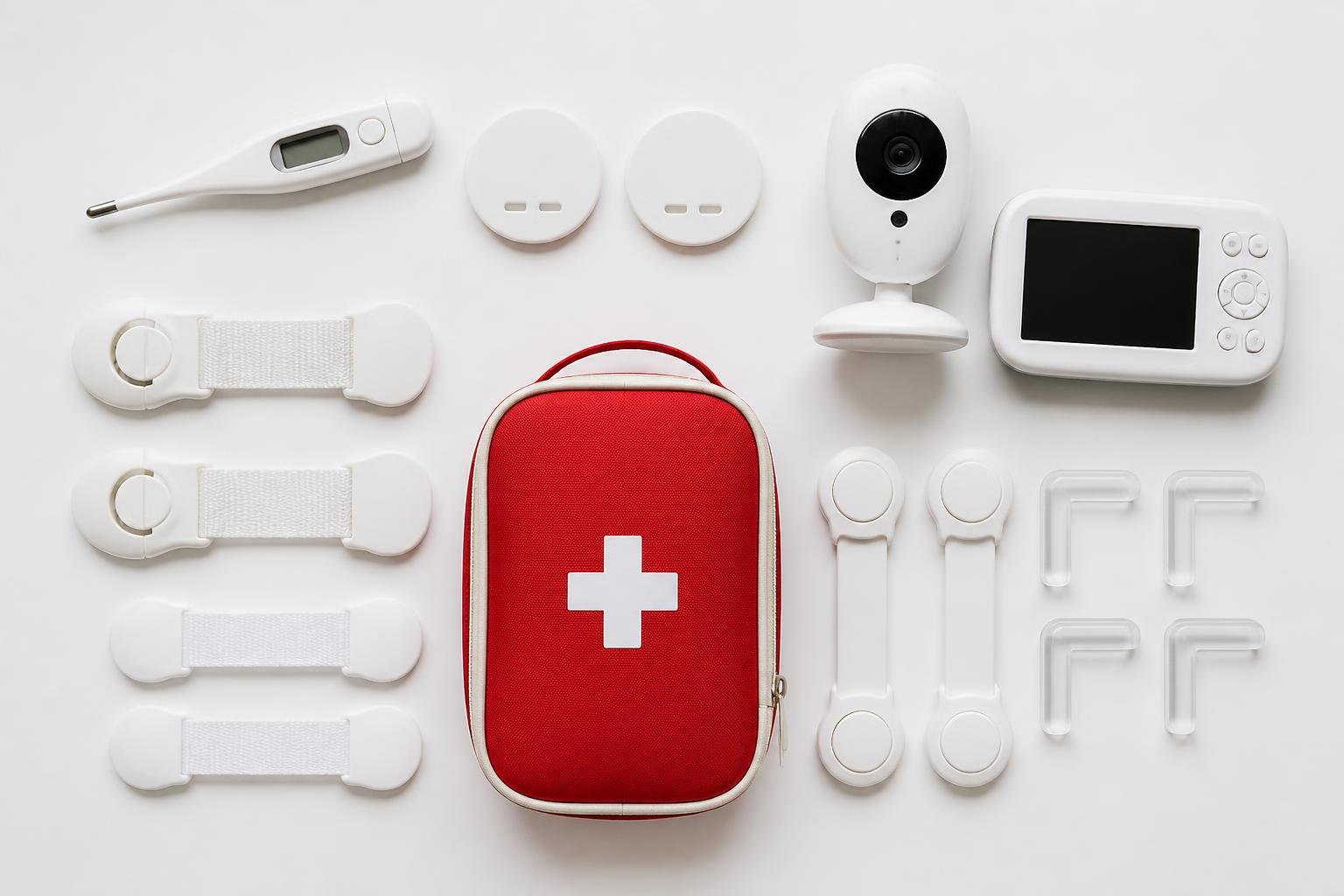
1.1 A Reliable Digital Thermometer
Why it matters: Fever is one of the most common reasons parents bring their baby to the doctor — and the most common reason parents call me at night. But you cannot manage fever if you cannot measure it accurately.
The type of thermometer matters enormously:
- Rectal thermometers are the gold standard for infants under 3 months. They provide the most accurate reading and are the only method the AAP recommends for this age group.
- Temporal (forehead) thermometers are convenient and reasonably accurate for babies over 3 months, but can be affected by ambient temperature, sweating, and technique.
- Ear (tympanic) thermometers are not recommended for babies under 6 months because their ear canals are too small for accurate readings.
- Armpit (axillary) thermometers are the least accurate and should only be used as a screening tool.
- Pacifier thermometers are convenient but not reliable enough for clinical decision-making.
What to look for:
- Fast read time (under 10 seconds for rectal)
- Flexible tip (for rectal use — reduces injury risk)
- Clear digital display (large numbers, backlit for nighttime use)
- Fever alert (beep or color change when temperature exceeds 100.4°F)
- Easy to clean
For detailed recommendations, see: Best Digital Thermometers for Babies: Accuracy & Speed Tested →
1.2 A Correctly Installed Car Seat
Why it matters: Motor vehicle crashes are a leading cause of death in children. A correctly installed and correctly used car seat reduces the risk of fatal injury by 71% for infants and by 54% for toddlers (NHTSA data).
The non-negotiables:
- Rear-facing for as long as possible (at least until age 2, ideally until the child exceeds the car seat’s rear-facing height or weight limit)
- Installed in the back seat (never in the front seat with an active airbag)
- Harness straps at or below the baby’s shoulders (rear-facing)
- Harness tight enough that you cannot pinch excess webbing at the shoulder (“pinch test”)
- Chest clip at armpit level
- No bulky clothing between the baby and the harness
- Registered with the manufacturer (for recall notifications)
For detailed recommendations, see: Best Infant Car Seats for Safety & Ease of Use →
1.3 An Ergonomic Baby Carrier
Why it matters: Baby carriers are one of the most useful parenting tools — they keep your hands free, soothe the baby through close contact, and support bonding. But a poorly designed carrier can contribute to hip dysplasia and back pain for the wearer.
The clinical requirements:
- Hip-healthy design: The carrier must support the baby’s legs in the “M” position — knees higher than the bottom, legs spread, thighs supported from knee to knee.
- Head and neck support: For newborns and young infants who cannot hold their heads up.
- Weight distribution: The carrier should distribute the baby’s weight across the wearer’s shoulders and hips.
- Appropriate for the baby’s age and size.
For detailed recommendations, see: Top 5 Ergonomic Baby Carriers for Hip Health →
Section 2: Baby-Proofing Essentials — Room by Room
Most baby injuries occur at home. Baby-proofing is not optional — it is a critical safety measure.
2.1 Living Room & Common Areas
- Furniture anchors (anti-tip straps): Anchor ALL tall furniture to the wall. Every year, approximately 20 children die from furniture tip-overs (CPSC data).
- Outlet covers: Use sliding outlet covers rather than plug-in caps.
- Corner and edge guards: Foam or rubber guards reduce the severity of impact.
- Cabinet and drawer locks: Magnetic locks are the most secure option.
2.2 Kitchen
- Stove knob covers: Prevent the baby from turning on burners.
- Oven lock: Prevent the baby from opening the oven door.
- High chair stability: Ensure the high chair cannot tip.
2.3 Bathroom
- Toilet lock: Prevent drowning risk.
- Anti-scald devices: Set your water heater to 120°F (49°C) or below.
- Non-slip bath mat.
- Medication storage: ALL medications must be stored in a locked cabinet.
2.4 Bedroom / Nursery
- Crib safety: Firm, flat mattress. Fitted sheet only. Crib slats no more than 2 3/8 inches apart. No drop-side cribs.
- Window guards or stops: Prevent windows from opening more than 4 inches.
- Blind cord safety: Replace corded blinds with cordless blinds.
- Monitor cords: Keep baby monitor cords at least 3 feet from the crib.
2.5 Stairs
- Baby gates: Hardware-mounted gates at the top of stairs. Pressure-mounted gates acceptable at the bottom.
For the complete guide, see: Baby-Proofing 101: Hidden Hazards in Every Room →
Section 3: Travel Safety Gear
3.1 Car Seat
The car seat is the single most important travel safety product. It must be installed correctly and used correctly every time.
3.2 Stroller with Reliable Brakes
A brake that locks both rear wheels simultaneously, foot-operated, and cannot be accidentally released.
3.3 Portable Crib or Play Yard
Provides a known-safe sleep surface when traveling. Must meet current CPSC safety standards with a firm, flat mattress.
Section 4: Health Monitoring Gear
4.1 Nasal Aspirator
Babies are obligate nose breathers for the first 3-4 months. When congested, they cannot breathe, feed, or sleep effectively.
4.2 Nail Clippers or Electric File
Newborn nails are sharp and grow quickly. Babies scratch themselves frequently.
For detailed guidance, see: How to Cut Newborn Nails Safely →
Section 5: Deep-Dive Articles in This Cluster
- Fever in Babies: When to Call the Doctor & How to Measure Accurately — Fever thresholds by age. Rectal vs. temporal accuracy. The “when to go to the ER” decision tree.
- Car Seat Safety: Correct Angle, Harness Tightness & Common Mistakes — The “pinch test,” recline angle indicators, and the most dangerous installation errors.
- Baby Carrier Ergonomics: Preventing Hip Dysplasia & Back Pain — The “M-position” for hips. Weight distribution for parent comfort.
- How to Cut Newborn Nails Safely: Tools & Techniques to Avoid Injury — Best timing, tools compared, step-by-step technique.
- Baby-Proofing 101: Hidden Hazards in Every Room — Non-obvious risks: blind cords, button batteries, tip-over furniture, toilet drowning.
Section 6: Recommended Products by Category
BEST DIGITAL THERMOMETERS
Accurate temperature measurement is the foundation of fever management. See our top picks →
BEST ERGONOMIC BABY CARRIERS
Hip-healthy, comfortable for the wearer, and appropriate for newborns through toddlerhood. All picks are IHDI-endorsed. See our top picks →
BEST INFANT CAR SEATS
Crash-test performance, ease of installation, harness system, and value. See our top picks →
Section 7: Frequently Asked Questions
Q: What is the single most important baby safety purchase?
A: A correctly installed car seat. Motor vehicle crashes are a leading cause of death in children, and a correctly used car seat reduces fatal injury risk by over 70%.
Q: Do I need a baby monitor for safety?
A: A basic audio monitor is sufficient for most families. Smart monitors that claim to track breathing or heart rate are NOT FDA-cleared for SIDS prevention.
Q: When should I start baby-proofing?
A: Before the baby starts crawling — ideally during pregnancy or shortly after birth.
Q: Are second-hand car seats safe?
A: Only if you can verify: the seat has not been in a crash, has not been recalled, has not expired, all parts are present, and it meets current federal safety standards.
Q: What temperature should my water heater be set to?
A: 120°F (49°C) or below. Water at 140°F can cause a third-degree burn in 5 seconds.
Section 8: Key Takeaways
- The three non-negotiable safety products are: a reliable digital thermometer, a correctly installed car seat, and a hip-healthy baby carrier.
- Baby-proofing should begin before the baby starts crawling — ideally during pregnancy.
- The most dangerous hidden hazards are: tip-over furniture, blind cords, button batteries, toilet drowning, and hot water scalds.
- Car seat safety is not just about buying the right seat — it is about installing it correctly every time.
- A hip-healthy carrier protects the baby’s developing hips AND your back. Look for the IHDI endorsement.
MEDICAL DISCLAIMER: This article is for informational purposes only and does not constitute medical advice. Always consult your pediatrician for guidance on your child’s specific safety needs.
Related: Best Safe Teething Relief Products: Pediatrician-Approved Picks
Related: Top 5 Baby Toothbrushes & Finger Brushes for First Teeth: Pediatrician-Reviewed
Related: Best Silicone Teethers by Teething Stage: A Pediatrician’s Guide
Reference: American Academy of Pediatrics (AAP)
Understanding Essential Safety Gear: What Parents Need to Know
Related Articles in This Category
- Toddler Not Listening? 7 Pediatrician-Backed Fixes (Fast)
- Newborn Hiccups: Causes, Prevention, and When to Worry
- Best Diaper Bag for Hospital: Pediatrician-Packed Essentials
- Best Diaper Rash Cream: 13 Picks That Actually Work
- Baby Constipation: How to Identify It, What Causes It &
- Baby Immune Health: A Pediatrician’s Guide to Preventi
- Seasonal Baby Care Guide: Summer, Winter, Fall & Spring
- Fall Allergy Season & Baby: Navigating Ragweed, Mold &#
- Spring Sun Safety: When to Start Sunscreen & UV Index R
- Holiday Season with a Baby: Germs, Travel & Overstimula
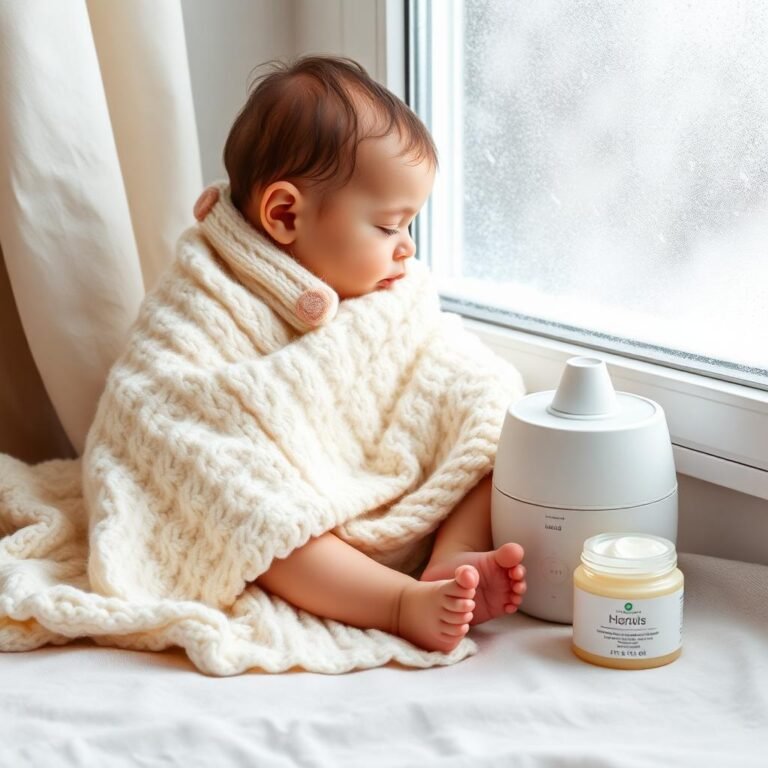
- Top 5 Winter Baby Essentials: Bunting Bags & Humidifiers
- Best All-Season Baby Gear: Versatile Products That Work Year
- The Pediatrician’s Guide to Non-Toxic Baby Products: W
- Microplastics in Baby Formula & Water: What Parents Nee
- Best Eco-Friendly Diaper & Wipe Options: Disposable �
Essential Safety Gear is a topic that comes up frequently in pediatric practice. Here is what the current evidence tells us, and what you should know as a parent.
Related Resources
Explore more pediatrician-reviewed guidance from ChildBloom:
- Teething Rash on Chin & Cheeks: Drool Dermatitis or Allergy?
- When to Start Brushing Baby Teeth: Fluoride Rules by Age
Authoritative External Sources
Related Articles
- Fever in Babies: When to Call the Doctor
- Car Seat Safety: Correct Angle & Harness
- Baby Carrier Ergonomics: Preventing Hip Dysplasia
- How to Cut Newborn Nails Safely
- Baby-Proofing 101: Hidden Hazards in Every Room
- Best Digital Thermometers for Babies
- Best Ergonomic Baby Carriers
- Best Infant Car Seats for Safety
Related Safety Pillar Articles
- C section recovery timeline: C-Section Recovery: Incision Care, Pain M
- Safe Sleep SIDS Prevention: A Complete Guide for Parents
Related Quick Guides
- Barking cough: Croup in Babies: The Barking Cough Guide
- Baby Cold: Symptoms, Relief, and Red Flags
- Call baby symptoms: When to Call the Pediatrician: Baby Symp
- Baby Vaccination Schedule: 2–12 Months Explained
- Baby Fever Temperature Guide: 3–12 Months
- Baby First Words: Language Timeline 0–18 Months
- Safe Babywearing for Newborns: The TICKS Rule and Carrier Ch
- Newborn Bath Safety: Water Temperature, Drowning Prevention,
- Babyproofing checklist newborns: Babyproofing for Newborns:
- Baby Teething Symptoms and Relief: What Works
Related Articles
- Proofing checklist: Baby-Proofing Checklist: Room-by-Room for the Craw
- Best Baby Tech That Actually Helps: A Pediatrician’s Honest Review of Smart Monitors, Socks & Apps
- Portable Cribs & Travel Playards: Are They Safe for Baby Sleep?
- Best Cribs & Bassinets for Newborn Safe Sleep: 2026 Pediatrician Picks
- Best Baby Walkers and Safer Alternatives: What Pediatricians Actually Recommend
Learn more in our guide: choking hazards and prevention.
📖 More from the Health & Safety Hub: your A-Z pediatrician guide to baby health, common illnesses, fevers, rashes, allergies, safety
Frequently asked questions about essential baby safety gear
Is essential baby safety gear normal in babies?
Mild, short-lived episodes are common and usually settle with simple home care. It is not normal if your baby is feeding poorly, unusually sleepy, breathing fast, has a fever under 3 months of age, or the problem is getting worse instead of better.
When should I call the doctor about essential baby safety gear?
Call the same day for fever in a baby under 3 months, breathing difficulty, repeated vomiting, dehydration signs such as very few wet diapers, unusual floppiness or a rash that does not fade with pressure. Trust your instinct — if something feels wrong, get your baby seen.
What can I safely do at home for essential baby safety gear?
Focus on comfort, hydration, feeding and rest, and use only medicines and doses your pediatrician has approved for your baby’s age and weight. Avoid honey under 12 months, avoid over-the-counter cough and cold products under 6 years, and never give aspirin.
Common mistakes parents make with essential baby safety gear
- Assuming a higher price means a safer or better-performing option — certification and correct fit matter far more.
- Skipping the instruction manual, weight limits and product registration, which is how recall notices reach you.
- Changing several things at once, so you cannot tell what actually helped your baby.
- Relying on advice from social media instead of your pediatrician when something feels off.
Related pediatrician-reviewed reading
- Baby Health & Safety A-Z
- Best All-Season Baby Gear
- Best Summer Baby Cooling Gear
- Newborn Essentials Checklist
- baby health & safety hub
References & further reading
Medical disclaimer: this article is for general education and does not replace individual medical advice. Always follow your own pediatrician’s guidance for your child.




One Comment