Baby Water: When Can Babies Drink Water?
Baby water can usually begin as small sips around 6 months. Most healthy babies can start small amounts while breast milk or formula remains the main drink during the first year.
Baby Water: When Can Babies Drink Water? A Safe Guide
Quick answer
Most healthy babies can start having small sips of plain water at about 6 months, when they begin complementary foods and show developmental readiness for solids. Breast milk or infant formula should remain the main source of nutrition and fluids during the first year. For babies ages 6–12 months, the CDC and American Academy of Pediatrics commonly reference about 4–8 ounces of water per day as an approximate offering range, not a required daily target. [1] [2]
Baby Water: The Right Time to Start
For most healthy infants, baby water can be introduced when small sips begin around 6 months. This usually lines up with readiness for complementary foods, such as sitting with support, controlling the head and neck, opening the mouth for food, and swallowing rather than repeatedly pushing food out with the tongue. Readiness varies, so your baby’s pediatrician can help if you are unsure.
Babies younger than 6 months generally do not need additional water. Breast milk or properly prepared infant formula supplies their fluid and nutritional needs. Do not add water to breast milk or dilute formula unless a clinician and the product instructions specifically direct you to do so. [2] [3]
How Much Baby Water Can a Baby Have?
For babies from 6 through 12 months, offer small amounts of water with meals or during cup practice. The CDC and AAP commonly describe 4–8 ounces per day as a general range for this age, but it is not a prescription that every baby must reach. Some babies drink very little water at first, especially while learning to use a cup.
The priority is not to make a baby finish a certain number of ounces of water. Offer water calmly, continue normal breast milk or formula feeds, and watch your baby’s hunger and fullness cues. If water seems to replace milk feeds, reduce the amount offered and ask your pediatrician for individualized advice.
| Age | General guidance | Important reminder |
|---|---|---|
| Birth to about 6 months | Do not routinely offer extra water to a healthy baby | Breast milk or properly prepared infant formula is the main drink unless a clinician advises otherwise |
| About 6–12 months | Offer small sips of plain water; about 4–8 ounces daily is a commonly cited range | Water complements solids; it should not displace breast milk or formula |
| 12 months and older | Water can become a regular drink | Discuss milk type and amount with your child’s clinician, especially if growth or nutrition is a concern |
Why babies should not routinely drink water before 6 months
Before about 6 months, a baby’s stomach is small and breast milk or formula is designed to provide both calories and fluid. Extra water can reduce the amount of milk a baby takes and may disturb the balance of water and electrolytes if too much is consumed. The risk is higher when caregivers use water in place of feeds or prepare formula with an incorrect water-to-powder ratio.
This does not mean every accidental sip causes harm. If a young baby drinks a significant amount of plain water, receives diluted formula, or develops unusual sleepiness, vomiting, weakness, or seizure-like activity, seek urgent medical advice or emergency care.
How to Introduce Baby Water Safely
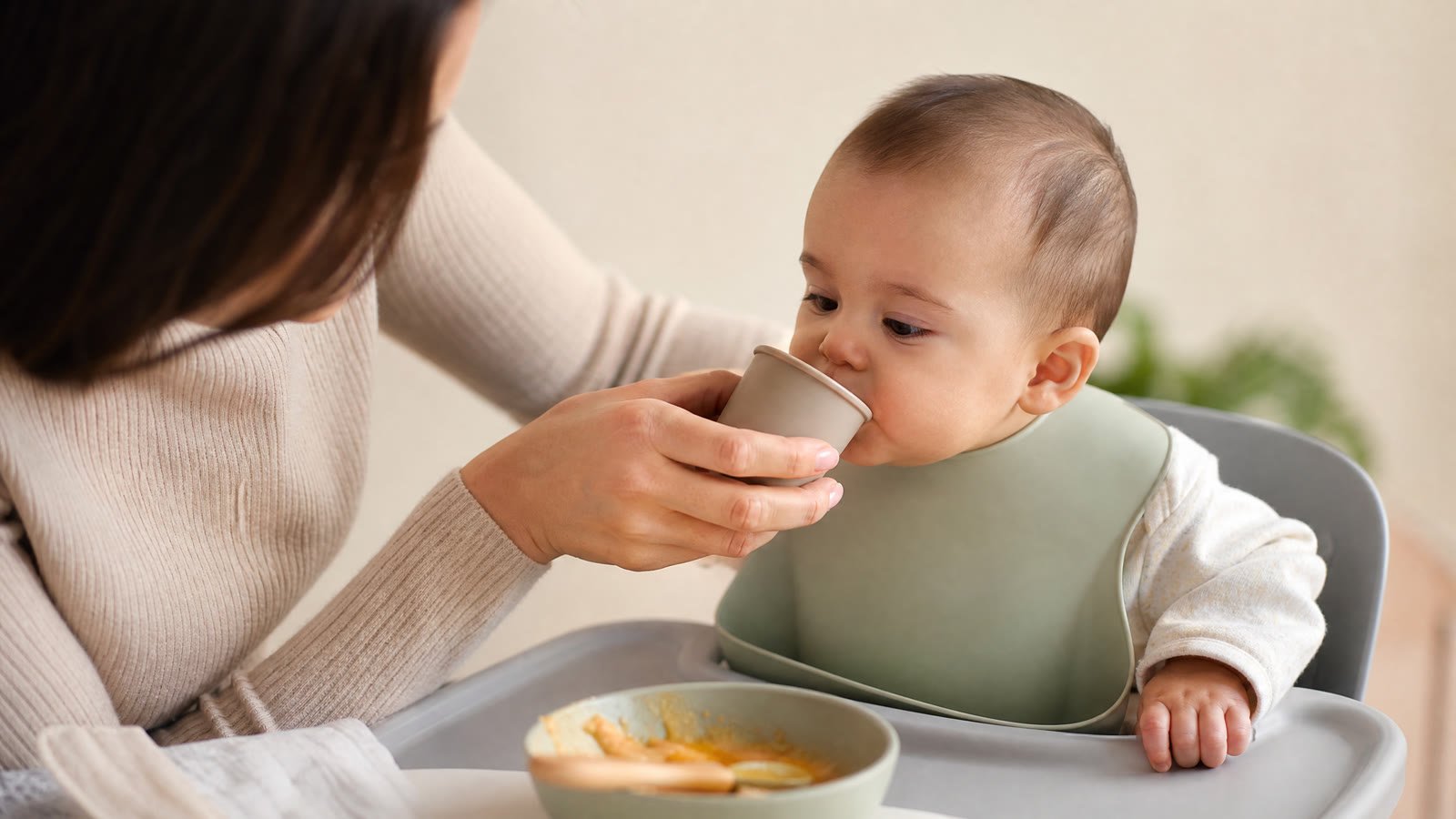
Start with a few small sips of water during a meal. An adult should stay close and keep the baby seated upright. A small open cup, straw cup, or another developmentally suitable cup can be used. The best choice is the one your baby can use safely with supervision.
Do not force water. Spitting, playing with the cup, or taking only a sip is common when babies are learning. Continue offering breast milk or formula according to your baby’s usual pattern. Water is for practice and hydration alongside solids, not a replacement for milk.
Avoid leaving a baby alone with a cup or bottle of water. Supervision lowers the risk of choking, spills, and excessive intake. Do not add sugar, juice, honey, or other sweeteners to water.
Can Babies Drink Baby Water From a Bottle?
Babies can receive small sips from a bottle, but cup practice is useful once complementary foods begin. Many families use an open cup held by an adult or a straw cup. A spouted cup may also be used temporarily; there is no need to turn cup selection into a medical test. The key baby water safety points are upright positioning, supervision, small amounts, and continued milk feeds.
Children should not carry a cup or bottle around all day. Frequent exposure to sweet drinks increases dental risk, and prolonged sipping can interfere with appetite and routines. Plain water is preferable to juice or sweetened beverages.
Baby Water in Hot Weather
Babies under about 6 months should not routinely receive extra water for hot weather. Offer breast milk or formula more often and seek medical advice if you are concerned about hydration. Around 6 months and later, small sips of water may be offered with meals while milk feeds continue. Hot weather, fever, vomiting, diarrhea, prematurity, and medical conditions can change an infant’s needs, so ask your pediatrician for specific advice. [2] [4]
Formula and water safety
Always prepare infant formula exactly according to the instructions on the product label. Measure the correct amount of water first, then add the specified amount of powder or concentrate. Too much water can reduce the formula’s nutritional concentration. Too little water can make the formula overly concentrated and may contribute to dehydration or place extra strain on the kidneys. [3] [5]
Use water from a safe source. If you use private-well water, contact your local health department about testing and infant-use recommendations. During a water emergency, follow local public-health instructions. Some young, premature, or immunocompromised infants need extra precautions when powdered formula is prepared; discuss those instructions with the baby’s clinician.
What drinks should babies avoid?
Babies younger than 12 months should not drink juice as a routine beverage. Whole fruit is a better choice than juice when developmentally appropriate. Do not give honey before 12 months because of the risk of infant botulism. Cow’s milk should not replace breast milk or iron-fortified infant formula as the main drink before 12 months. Avoid soda, sweetened water, sports drinks, tea, and caffeinated beverages. [2] [6]
Baby Water and Choking Prevention
Water itself is not a substitute for choking-prevention practices. Feed your baby while seated upright and alert. Choose age-appropriate food textures, stay within arm’s reach, and learn the difference between gagging and choking. Avoid hard, round, sticky, or coin-shaped foods unless they have been modified to reduce risk. The CDC’s choking-hazard guidance is a useful reference for food preparation and supervision. [7]
Signs your baby may be dehydrated
A noticeable reduction in wet diapers compared with your baby’s usual pattern, a dry mouth, fewer tears, repeated vomiting, diarrhea, unusual sleepiness, or difficulty waking can indicate a need for medical advice. A sunken soft spot, very dark urine, cool or mottled skin, or inability to keep feeds down may be more concerning.
Do not try to treat suspected dehydration in a young infant by giving plain water. Continue breast milk or formula if the baby can feed and contact your pediatrician promptly. During vomiting or diarrhea, ask a clinician whether an oral rehydration solution is appropriate; do not improvise a homemade mixture.
When to seek urgent care
Seek urgent medical help if your baby is difficult to wake, has a seizure, has breathing trouble, is repeatedly vomiting, cannot keep feeds down, has markedly fewer wet diapers, or appears seriously ill. A fever in a baby younger than 3 months needs prompt medical assessment. If you are worried about how much your baby is drinking, call your pediatrician rather than trying to correct the problem with extra water.
Frequently asked questions
Can I give my 4-month-old water?
Do not routinely offer plain water to a healthy 4-month-old unless your pediatrician specifically advises it. Breast milk or properly prepared formula should provide the baby’s usual fluids.
Can I give water to a breastfed baby?
Around 6 months, you can offer small sips of water as complementary foods begin. Continue breastfeeding according to your baby’s cues. Before about 6 months, extra water is generally unnecessary for a healthy breastfed infant.
Can I give water at night?
For babies under 12 months, do not use water to replace a breast milk or formula feed without discussing it with your pediatrician. A small sip during cup practice may be reasonable after solids begin, but nighttime feeding plans depend on age, growth, and development.
Is bottled water safer than tap water?
Not automatically. Safe tap water may be appropriate, while bottled water varies in mineral content and is not necessarily sterile unless labeled as such. For formula preparation, use a safe water source and follow the formula label and local health guidance. [3] [5]
Can I give water for constipation?
Do not use a fixed water dose to treat constipation without medical advice. At around 6 months, your baby may begin complementary foods and small sips of water, but constipation can have different causes. Contact your pediatrician if stools are painful, bloody, persistent, or associated with vomiting or poor feeding.
Baby Water: Key Takeaways
Baby water can begin as small sips around 6 months, when complementary foods begin. For ages 6–12 months, about 4–8 ounces per day is a general CDC/AAP reference range, not a required target. Breast milk or formula remains the primary drink during the first year. Introduce water slowly in a supervised cup, never dilute formula, avoid juice before 12 months, and contact your pediatrician when hydration or feeding seems abnormal.
About the author and medical review
Written by: Dr. Ahmad Raza, MD (Pediatrics)
Medical review: Dr. Ahmad Raza, MD (Pediatrics) — pending final clinician verification for this version.
This article provides general education and does not replace advice from your child’s pediatrician. Babies with prematurity, kidney or heart conditions, growth concerns, feeding difficulties, repeated vomiting or diarrhea, or other medical needs may require individualized fluid guidance.
Trusted sources for baby water guidance
For current guidance, review the CDC infant nutrition recommendations, the American Academy of Pediatrics drink guide, and the CDC formula-preparation instructions.




6 Comments