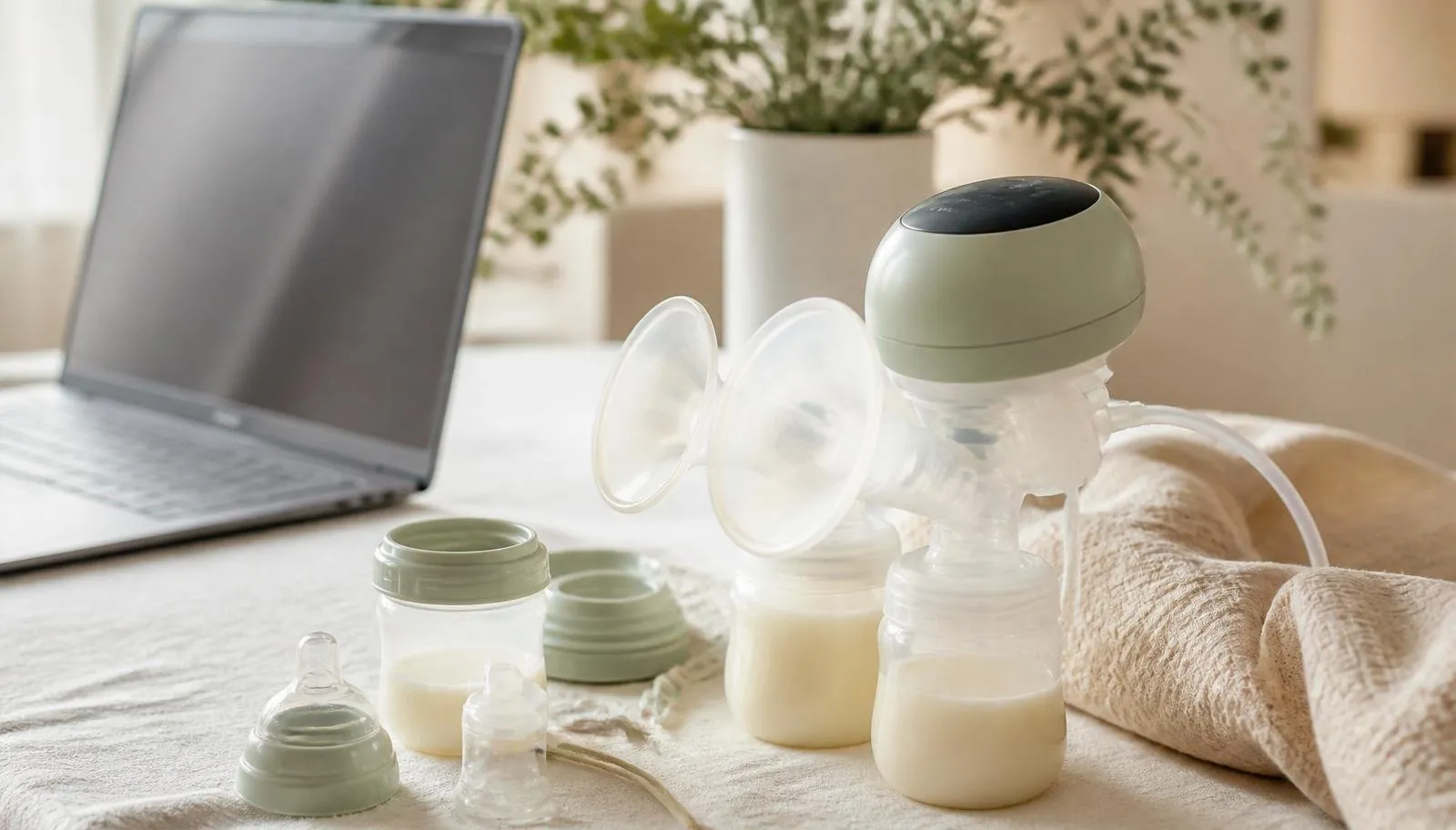
Best Breast Pumps for Working Moms: 12 Top Picks for 2026
Medically reviewed by Dr. Ahmad Raza, MD (Pediatrics) — ChildBloom Medical Review Panel. Last updated: September 27, 2026.
Editorial & affiliate disclosure: our guidance is written and reviewed by clinicians. ChildBloom may earn a commission from qualifying purchases made through links on this page, which never changes what our pediatric reviewers recommend.
Pediatrician-reviewed breast pumps for working moms — top picks compared on noise, battery and insurance eligibility, plus flange fit, cleaning and PUMP Act guidance for 2026.
📋 TL;DR — if you read nothing else
Short answer: A pediatrician reviews breast pumps for working moms: what actually matters, our tested picks, safety checks and the mistakes to avoid before you buy.
- Fit beats brand. Measure your nipple base and size the flange — the wrong tunnel size is the top cause of pain and low output.
- Choose closed-system. A diaphragm barrier keeps milk out of the motor and makes daily hygiene predictable.
- Pump on baby’s rhythm. Every 3–4 hours while you are apart, including one overnight session if supply needs it.
- Call insurance early. Most U.S. plans cover one pump per pregnancy under HCPCS code E0603.
Looking for clear answers about breast pumps for working moms? This pediatrician-reviewed guide covers what matters, what to skip, the safety checks that count, and exactly when to involve your doctor — based on current AAP, CDC and CPSC guidance.
The best breast pumps for working moms of 2026 span wearable in-bra pumps, portable double-electric pumps, and hospital-grade rentals — chosen for closed-system hygiene, sustained suction, and workday-friendly design. This roundup ranks each pump by noise level, battery life, output per session, and insurance eligibility. The guide keeps things practical: what genuinely affects your baby’s safety and comfort, what marketing you can ignore, and how to decide quickly.
Roundup Criteria
- Under 55 dB noise floor for office-friendliness.
- Minimum 2-session battery life.
- Closed-system diaphragm for daily multi-session hygiene.
- At least two flange sizes included or easily sourced.
Featured Pump Picks — Full Range (Manual, Wearable, Hospital-Grade)
Curated by our clinical team across every category — from ultra-affordable manual pumps to hospital-grade rentals — so you can filter by lifestyle, budget, and clinical need. Price tiers appear in the comparison table below.
haakaa Manual Breast Pump for Breastfeeding
One-piece silicone manual with natural suction — squeeze, attach, and it works with no batteries or tubing. An award-winning favorite, compact enough for any bag, and ideal as a travel companion or letdown catcher. Tier: $.
Medela Harmony Manual Breast Pump
The best-selling manual pump for busy parents: a convenient alternative to an electric between sessions. Medela’s breast shield technology delivers 11.8% more milk in less time, and it fits in a handbag with no batteries, cables, or tubing. Tier: $.
Spectra S2 Plus Electric Breast Pump
A double electric with comfortable suction levels that mimic natural breastfeeding and adjustable two-phase cycling. Run it single or double, and keep bottles handy in the built-in compartment. Tier: $$.
NCVI Electric Breast Pump 8782
Four modes and nine levels let you match stimulation and expression to your own rhythm. A 2200 mAh battery runs up to three sessions per charge, and every component is food-grade and non-BPA. Tier: $$.
Lansinoh Manual Breast Pump
A handheld manual with few parts that assembles and cleans quickly, BPA- and BPS-free. The easy-express handle reduces hand fatigue, and wide-neck bottles fit across the Lansinoh range. Tier: $.
Boon Trove Silicone Manual Breast Pump Set
A passive silicone collector that draws letdown with no motor at all. It holds up to 3 ounces while you nurse, pump, or go about your day, and it slips inside the bra. Tier: $.
Spectra S1 Plus Electric Breast Pump
The rechargeable version of the S2 platform: hospital-strength suction, a built-in night light, and a compartment for a Spectra bottle. Run it single or double, mains-free. Tier: $$.
Paruu Hands Free Breast Pump P16
A wearable with four modes and 12 levels across 49.5–309 mmHg, an LED display for session time, and a 240 g body that is two-thirds the size of a manual pump. Tier: $$.
NCVI Electric Breast Pump, 2-in-1 Wearable & Bottle
Combines a traditional bottle pump and wearable collection cups in one motor, with a soft night-light display for dark rooms and a 4400 mAh battery for long days. Tier: $$.
Playtex Baby Electric Breast Pump (H15 Wearable Model)
A hands-free wearable that sits inside the bra with no wires, and a three-hour battery for life on the go. Five flange sizes ship in the box (15–27 mm) with a measurement guide. Tier: $$.
Medela Symphony Breast Pump Kit
The personal pumping kit for the Symphony hospital-grade rental: tubes, membranes, valves, and the accessories you need to begin single or double pumping. Made without BPA where milk contacts. Tier: $$.
mammanuwa S32 Wearable Breast Pump
A lightweight wearable at 240 g — two-thirds the size of a traditional pump — with hands-free positioning and micro-vibration technology for comfortable expression. Tier: $$.
Zomee Z2 Double Electric Breast Pump
A portable double electric with alternate-mode technology: three pumping styles and nine suction levels you can tailor session by session. Tier: $$.
Momcozy Breast Pump, Mobile Flow M9
Control start, pause, and mode changes from the Momcozy app. The third-generation motor is quieter and stronger, with up to 15 suction levels across three modes. Tier: $$$.
Medela Sonata Smart Breast Pump
A hospital-performance double electric under 2.5 pounds with a built-in handle and rechargeable battery. Responsive suction technology keeps vacuum comfortable at high capacity. Tier: $$$.
How a Breast Pump Actually Works — The Clinical Basics
Every electric breast pump uses a cyclical vacuum to draw milk from the breast. The cycle mimics the two-phase suck pattern of a newborn: fast, shallow stimulation cycles trigger the milk-ejection reflex, then slower, deeper expression cycles remove the milk. Understanding this two-phase model is the most useful thing a pumping parent can learn.
It explains why suction level alone does not predict output. It explains why flange fit matters more than horsepower. And it explains why the hospital-grade label describes a closed-system, high-cycle-count motor rather than raw suction strength.
Vacuum is measured in mmHg. Newborn oral suction peaks around 220–280 mmHg during a strong let-down. Consumer wearable pumps typically top out at 280–300 mmHg. Hospital-grade rentals such as the Medela Symphony and Spectra S1 sustain 250–300 mmHg with far more durable motors. More is not better: vacuum above your personal comfort threshold reduces output, because it triggers vasoconstriction and pain-mediated let-down inhibition.
Flange Fit: the 90% Rule Most Parents Skip
Flange fit is the single largest predictor of pumping output and comfort. It matters more than pump brand, more than suction level, and more than schedule. The standard flanges shipped with most pumps (24 mm and 27 mm) fit only a minority of nipples. Roughly 60–70% of lactating parents need a smaller size — 17, 19, or 21 mm — after milk comes in and the nipple base swells slightly with regular pumping.
How to measure: measure the diameter of your nipple base (not the areola) in millimeters, then add 1–3 mm. That is your starting flange size. If pumping hurts, if the nipple rubs the flange tunnel, or if output plateaus below expectations, size down. IBCLCs and lactation consultants can measure in a 15-minute visit. This is one of the highest-leverage things a pumping parent can do.
Closed-System vs. Open-System Pumps — Why It Matters
A closed-system pump has a physical barrier — usually a silicone diaphragm — between the milk collection cup and the motor tubing. This prevents milk particles and moisture from entering the motor, which prevents mold, bacteria, and cross-contamination. All hospital-grade pumps are closed-system. Most modern wearables are closed-system too.
Older single-user pumps, including some legacy Medela models, are open-system. They are safe for one user only: never share them, and replace the tubing at the first sign of moisture.
FDA and CDC Cleaning Guidelines
- Wash all pump parts that touch milk after every use with hot soapy water, then rinse thoroughly.
- Sanitize — dishwasher, steam bag, or five minutes of boiling — at least once daily for infants under 3 months, immunocompromised infants, or preemies.
- Store clean parts in a sealed container, not open on the counter.
- Never wash tubing on open-system pumps; replace it at the first sign of condensation.
- Replace duckbill valves every 2–8 weeks, depending on how often you pump.
Milk Storage Guidelines (CDC)
- Room temperature (77°F/25°C or below): up to 4 hours.
- Refrigerator (40°F/4°C or below): up to 4 days.
- Freezer (0°F/-18°C or below): best within 6 months, acceptable up to 12 months.
- Thawed milk: use within 24 hours; never refreeze.
- Never microwave — it creates hot spots and destroys immune factors. Warm in a bowl of warm water.
The Breast Pump Buying Checklist
- Closed-system diaphragm — non-negotiable for hygiene.
- Two-phase (stimulation + expression) modes with independent adjustability.
- Minimum 250 mmHg suction for effective expression.
- Multiple flange sizes included or easily purchased separately.
- Rechargeable battery with 2+ pumping sessions per charge for portability.
- Noise level under 55 dB for office and public discretion.
- Insurance-eligible HCPCS code (usually E0603).
- Replacement parts widely available — avoid brands where a $3 duckbill is impossible to source.
Common Pumping Mistakes to Avoid
- Using the shipped flange without measuring. The single biggest cause of low output and pain.
- Cranking suction to maximum. Comfort vacuum — the highest setting that doesn’t hurt — produces more milk than pain vacuum.
- Skipping the stimulation phase. Without a proper let-down, expression mode is pumping against a closed faucet.
- Pumping for too long past output. After 2 minutes of no milk flow, end the session; longer doesn’t yield more.
- Neglecting replacement parts. Duckbills and membranes lose seal over 2–8 weeks, and suction drops even though the motor sounds fine.
- Skipping hands-on pumping. Breast massage and compression during pumping increases output by 30–50% in most studies.
Red Flags — When to Call Your Pediatrician or Lactation Consultant
- Sharp pain during pumping that doesn’t resolve with flange resize — screen for vasospasm, thrush, or nipple trauma.
- Bloody or brown “rusty pipe” milk beyond the first week postpartum.
- Sudden drop in supply — rule out mastitis, retained placenta, thyroid dysfunction, or medication interaction.
- Fever, chills, red streak on breast, flu-like symptoms — mastitis; call within hours, not days.
- Baby refusing bottle after several attempts — check nipple flow rate and consider paced bottle feeding.
- Persistent low weight gain in baby despite adequate pumped volumes — request weighted feeds and pediatric evaluation.
Insurance Coverage & the HCPCS Code You Need to Know
Under the Affordable Care Act, most U.S. insurance plans cover one breast pump per pregnancy at no out-of-pocket cost. Coverage is billed through durable medical equipment (DME) suppliers under HCPCS code E0603 (standard electric double pump) or E0604 (hospital-grade rental). Coverage tiers vary widely: some plans cover only the most basic manual pump, while others cover a premium wearable with no upgrade fee.
Call the DME line printed on the back of your insurance card 30 days before your due date and ask three questions. Which pumps do you cover at no cost? Is there an upgrade path where I pay the difference? Do you cover hospital-grade rentals if my baby is in the NICU, or if I have a documented low-supply condition?
If your insurance denies a medically indicated hospital-grade rental, your pediatrician or lactation consultant can submit a Letter of Medical Necessity. An LMN typically overturns the denial. This is standard practice for preemies under 34 weeks, low-supply diagnoses such as IGT, PCOS, or hypothyroidism, NICU stays, and re-lactation cases.
Real-World Output Benchmarks — What Is Normal?
Average output per pumping session, per breast, in a parent with established supply:
- Weeks 0–2: 0.5–1 oz combined (colostrum + transitional milk).
- Weeks 2–6: 2–4 oz combined, distributed unevenly across the day.
- Weeks 6+: 3–5 oz combined, with morning sessions often 40–60% higher than evening sessions.
- Exclusive pumping: full daily volume typically 24–32 oz across 8 sessions.
These are averages, not standards. Many parents produce more, many produce less, and both can still meet baby’s needs. If your output is dramatically below these ranges and baby is not gaining weight appropriately, request a supply evaluation with an IBCLC and your pediatrician.
The Return-to-Work Pumping Schedule
Plan to pump every 3 hours across your workday to mirror your baby’s feeding pattern. A typical 9–5 schedule looks like this: 7:00 AM breastfeed before leaving; 10:00 AM pump; 1:00 PM pump; 4:00 PM pump; 6:00 PM breastfeed at home; and one overnight session if your supply needs it. Store milk in the workplace refrigerator or a small insulated cooler, and label it with your name and date.
Under the PUMP Act (2022), U.S. employers are required to provide reasonable break time and a private, non-bathroom space for pumping for one year postpartum. If your employer resists, contact your HR department in writing, then the Department of Labor Wage and Hour Division.
Night Pumping and Prolactin Peaks
Prolactin — the hormone that signals milk production — peaks between midnight and 5 AM. This is why night pumping, or power pumping, during this window is such a powerful supply-boosting strategy. If your daytime output is low, add one 15-minute pumping session between 1 and 4 AM for two weeks; most parents see a measurable supply increase.
The trade-off is sleep. For most working parents, protecting maternal sleep is a higher clinical priority than an extra ounce of milk. Discuss the trade-off with your pediatrician and lactation consultant before adding an overnight session.
Pumping on the Go — Travel, Cars, and Airports
- TSA: breast pumps are medical devices and don’t count against your carry-on limit. Breast milk in any quantity is exempt from the 3.4-oz liquid rule — declare it at security.
- Car pumping: use a wearable or a car adapter for traditional pumps. Never pump while driving, even hands-free.
- Hotels: request a mini-fridge in advance for milk storage.
- International: pack a universal plug adapter. Voltage on hospital-grade pumps is usually 100–240V, but confirm on the sticker.
Cost of Ownership — What Nobody Tells You
The pump itself is only part of the cost. Budget for:
- Additional flange sizes: $15–40 each; most parents need 2–3 sizes.
- Storage bags: $10–20 per month for exclusive pumpers.
- Replacement duckbills/membranes: $20–40 per quarter.
- Bottles and nipples: $60–120 to build a full bottle-feeding kit.
- Nursing/pumping bras: $80–150 for a good hands-free rotation.
Total realistic first-year cost: $400–700 above the pump itself, or $0–100 if you’re primarily nursing and only pumping occasionally.
Extended FAQ
Can I combine breast milk from different pumping sessions? Yes — cool each session in the fridge to the same temperature first, then combine. Do not add warm milk to cold milk.
Why is my output higher on one side? Very common. Nipple size, duct anatomy, and baby preference all cause asymmetry. As long as combined output meets baby’s needs, no action needed.
How do I know if my flange fits? The nipple moves freely in the tunnel with no rubbing, no areola pulled in, no white ring after pumping, and no pain.
Can I pump if I have a cold or the flu? Yes — your milk actually contains antibodies for the illness that protect baby.
How long can I keep pumping? As long as you and baby want to — many parents pump into the second year. The WHO recommends breastfeeding up to age 2 and beyond.
Does pumping burn calories? Yes — roughly 300–500 kcal/day for exclusive pumpers, similar to direct nursing.
Can pumping cause mastitis? Poorly fit flanges or infrequent pumping can lead to blocked ducts, which can progress to mastitis. Empty breasts fully at each session.
Quick Comparison Table
Every pump featured in this guide, filtered to the products that clinically fit this article’s use case — so you can compare type, peak suction, price tier, and the “best for” verdict at a glance.
| # | Pump | Type | Peak Suction | Price Tier | Best For |
|---|---|---|---|---|---|
| 1 | Premium Wearable In-Bra Pump | Wearable | ≈280 mmHg | $$$ | Hands-free workday pumping. |
| 2 | Portable Double-Electric Pump | Portable Electric | ≈300 mmHg | $$ | Commute + home versatility. |
| 3 | Hospital-Grade Double-Electric | Hospital-Grade | ≈280 mmHg | $$$ | Supply establishment & EP. |
| 4 | Manual Silicone Pump | Manual | n/a | $ | Travel + letdown catch backup. |
| 5 | Compact Double-Electric Pump | Portable Electric | ≈250 mmHg | $$ | Best value double-electric. |
| 6 | Wearable In-Bra Pump (Budget) | Wearable | ≈270 mmHg | $$ | Budget wearable option. |
| 7 | Rechargeable Portable Pump | Portable Electric | ≈270 mmHg | $$ | All-day battery on-the-go. |
| 8 | Single Manual Pump | Manual | n/a | $ | Single-side manual backup. |
| 9 | Wearable Cup Pump | Wearable | ≈260 mmHg | $$ | Discreet office use. |
| 10 | Portable Rechargeable Double Pump | Portable Electric | ≈260 mmHg | $$ | Beginner-friendly starter. |
| 11 | Wearable Hands-Free Pump | Wearable | ≈270 mmHg | $$ | Multitasking with a toddler. |
| 12 | Next-Gen App-Connected Wearable | Wearable | ≈280 mmHg | $$$ | App-tracked output. |
| 13 | Ultra-Quiet Portable Pump | Portable Electric | ≈260 mmHg | $$ | Quiet for shared spaces. |
| 14 | Classic Double-Electric Pump | Portable Electric | ≈250 mmHg | $$ | Insurance-covered standard. |
| 15 | Silicone Letdown Catcher | Manual | n/a | $ | Letdown milk catcher. |
| 16 | Elvie Stride Wearable | Wearable | ≈280 mmHg | $$$ | Premium wearable overall. |
| 17 | Willow Go Wearable | Wearable | ≈270 mmHg | $$$ | Slim-profile wearable. |
| 18 | App-Connected Wearable | Wearable | ≈280 mmHg | $$$ | Deep app + output tracking. |
| 19 | Hospital-Grade Portable Pump | Hospital-Grade | ≈300 mmHg | $$$ | Hospital-grade portability. |
| 20 | Next-Gen Wearable Pump | Wearable | ≈280 mmHg | $$$ | New-release working-mom pick. |
| 21 | Momcozy Budget Wearable | Wearable | ≈260 mmHg | $$ | Budget wearable. |
| 22 | Compact Wearable Pump | Wearable | ≈270 mmHg | $$ | Lightweight & compact. |
| 23 | Spectra S1 Plus Hospital-Grade | Hospital-Grade | ≈280 mmHg | $$$ | Rechargeable hospital-grade for EP. |
| 24 | Medela Symphony (Rental) | Hospital-Grade | ≈300 mmHg | $$$ | NICU / preemie clinical standard. |
| 25 | Momcozy M5 Wearable | Wearable | ≈270 mmHg | $$ | Modern wearable release. |
Price tiers: $ = under $50 · $$ = $50–$200 · $$$ = $200+. Suction values are manufacturer peak specifications; comfort vacuum is typically lower.
“Best For” Picks at a Glance
The single best pick from the comparison above for each of the most common pumping situations we see in clinic.
Frequently Asked Questions
Are all breast pumps covered by insurance? Under the Affordable Care Act, most U.S. insurance plans cover one breast pump per pregnancy. Coverage varies from basic manual pumps to premium wearables. Call your insurance’s durable medical equipment (DME) line 30 days before your due date.
How often should I pump? For establishing supply: 8–12 times per 24 hours, including at least one overnight session. For maintenance while working: every 3–4 hours, matching your baby’s feeding schedule.
Can I share a breast pump? Only hospital-grade multi-user pumps (with a new personal kit per user) are FDA-cleared for sharing. Consumer single-user pumps — even closed-system — should not be shared because of motor cross-contamination risk.
How long does a breast pump last? Consumer pumps: 1–2 years of daily use. Hospital-grade pumps: 5–10 years, which is why rental costs are so reasonable.
Is a wearable pump as effective as a traditional one? For most parents with established supply, yes. In the first 2–4 weeks postpartum, when supply is being built, a hospital-grade or high-quality traditional pump generally outperforms wearables.
Quiet Pumps & Workplace Pumping FAQs
How quiet is a truly quiet breast pump?
A wearable pump under 45 dB (roughly a soft library whisper) is quiet enough for open-plan offices and video calls. The Elvie Stride and Willow Go both test in that range; standard portable pumps run 50–60 dB, which is closer to normal conversation and audible on a Zoom mic.
Can I pump during a Zoom meeting?
Yes, if you use a truly wearable pump (Elvie, Willow, Momcozy M5) worn inside your bra. They have no external tubing or bottles, produce under 45 dB of noise, and most laptop mics with noise cancellation will filter the low hum entirely.
Do quiet pumps have weaker suction than hospital-grade pumps?
Wearable pumps top out around 250–280 mmHg, versus 300–350 mmHg for hospital-grade. For maintaining supply during workdays that gap doesn’t matter — but if you’re exclusively pumping or building supply from zero, keep a hospital-grade pump for morning and evening sessions.
How often should working moms pump at the office?
Every 3 hours to match baby’s feeds and protect supply — typically 2–3 sessions across an 8-hour workday, 15–20 minutes each. Skipping sessions to fit meetings is the #1 cause of supply drops in returning-to-work moms.
Are wearable pumps covered by insurance?
Most US insurance plans cover a standard double electric pump but classify wearables as an upgrade — you pay the difference (typically $150–$250). Aeroflow and Edgepark handle the paperwork; call your insurer before ordering to confirm your upgrade allowance.
Best breast pumps for working moms: quick pediatrician summary
If you read nothing else: choose the option that meets current safety standards, that fits your baby’s needs today, and that you can use correctly every single time without shortcuts. Consistency beats features. When two products are close, pick the simpler one — fewer parts means fewer ways to get it wrong.
Common mistakes parents make
- Buying for the baby your child will be in six months rather than the baby in front of you today.
- Adding extra padding, inserts or accessories the manufacturer did not test.
- Skipping the manual — most safety failures we see are correct products used incorrectly.
- Reusing older hand-me-downs that predate current safety standards or have been recalled.
References & Further Reading
- American Academy of Pediatrics — Breastfeeding Guidance for Families
- Academy of Breastfeeding Medicine (ABM) — Clinical Protocols
- CDC — Proper Storage and Preparation of Breast Milk
- FDA — Breast Pumps: Cleaning and Safety
- La Leche League International — Pumping and Supply Guidelines
- PMC / NIH — Flange sizing and pump output studies
- CDC — Infant and Toddler Nutrition
- AAP policy statement on breastfeeding and the use of human milk
- FDA — Questions and Answers on infant formula for consumers
🩺 Doctor’s Take
If you remember one thing: fit beats horsepower. Measure your nipple base, size the flange, and use comfort vacuum — not maximum suction — because pain shuts down let-down. Keep the system closed, wash parts after every session, and pump every 3 to 4 hours while you are apart from your baby. Insurance covers a pump under HCPCS code E0603, so call your DME line 30 days before your due date. New sharp pain, rusty-colored milk, fever, or a baby who stops gaining weight deserve a call, not another setting.
This article is for general education and is not a substitute for individual medical advice, diagnosis or treatment. Every family is different — talk to your own pediatrician about your pumping and your baby’s feeding, and seek urgent care for breathing difficulty, poor feeding, dehydration, fever in an infant under 3 months, or any sudden change in your baby’s condition.
Medical review
Reviewed by Dr. Ahmad Raza, MD, Pediatrics. Last reviewed September 27, 2026. This article provides general education and does not replace individualized advice from your child’s pediatrician. Learn about our physicians on the About page.




13 Comments