How Much Should a Toddler Eat? Portions, Calories & Sample Plates
Medically reviewed by Dr. Ahmad Raza, MD (Pediatrics) — ChildBloom Medical Review Panel. Last updated: September 27, 2026.
Editorial & affiliate disclosure: our guidance is written and reviewed by clinicians. ChildBloom may earn a commission from qualifying purchases made through links on this page, which never changes what our pediatric reviewers recommend. As an Amazon Associate, we earn from qualifying purchases.
How much should a toddler eat? About 1,000–1,400 calories/day in small portions (1 tbsp per year of age). Get a sample plate and schedule.
📋 TL;DR — if you read nothing else
Short answer: Most toddlers need about 1,000–1,400 calories a day, spread across three meals and two snacks. Keep portions small: about one tablespoon of each food per year of age. Milk stays on the menu — 16–24 oz of whole milk at 1–2 years, 12–20 oz of low-fat milk at 2–3 — with water in between.
- Portion rule: 1 tablespoon of each food per year of age; a 2-year-old gets about 2 tablespoons of each food at a meal.
- Day shape: 3 meals plus 2 snacks, spaced 1.5–2 hours before the next meal. Never force a clean plate.
- Picky phase: fear of new foods peaks at 18–24 months and often needs 10–15 exposures before a food is accepted.
- Call your pediatrician if intake stays very narrow for more than two weeks or weight drops off the growth curve.

Toddlers eat less than most parents expect. Growth slows after the first birthday. Appetites shrink. A day that once revolved around milk becomes three small meals plus a couple of snacks.
The question behind most mealtime stress is always the same: how much should a toddler actually eat? This guide answers it with numbers you can use — daily calories, the tablespoon-per-year portion rule, what a balanced plate looks like, when snacks fit, and the signs that mean it is time to call your pediatrician.
Most toddlers aged 1–3 need about 1,000–1,400 calories a day, split across three meals and two snacks. Use the portion rule: one tablespoon of each food per year of age, so a 2-year-old gets about 2 tablespoons of each food at a meal. Serve milk at meals — 16–24 oz of whole milk daily at 1–2 years, 12–20 oz of low-fat milk at 2–3 — give water the rest of the day, and never push a clean plate.
What a Toddler Actually Needs
Between the first and third birthdays, most children need about 1,000–1,400 calories a day. That range covers a healthy 1-year-old and an active 3-year-old. Activity, growth pace, and illness move the number up or down. The daily total matters less than the pattern behind it: three small meals, two snacks, and milk served at meals rather than all day.
Volume is not the goal. A toddler’s stomach is roughly the size of their fist, so small servings of dense food do more than large servings of air. Offer a mix of food groups at each meal and let appetite do the rest.
Daily nutritional needs at 1–3 years
Despite small appetites, toddlers need nutrient-dense foods. Daily targets: 2–3 servings of protein a day — meat, poultry, fish, eggs, beans, or tofu. Add 3–4 servings of calcium-rich foods: whole milk, yogurt, cheese, or fortified alternatives. Grains run 3–4 servings, preferably whole grains such as oats, whole wheat bread, and brown rice. Vegetables and fruit round it out at 2–3 servings each.
Iron deserves special attention. Include red meat, fortified cereals, beans, and dark leafy greens at least 2–3 times per week. Vitamin D supplementation — 400 IU daily — is recommended for every toddler who does not drink 32 oz of fortified milk a day.
Milk still matters, but placement matters more than volume. Serve it at meals, where it complements food instead of replacing it. Water belongs in a cup at meals and between them. After the first birthday, whole milk supplies the fat toddlers need for brain growth. From age 2, many children shift to low-fat milk without giving up what matters.
Toddler Portion Sizes: The Tablespoon Rule
Toddler portions are much smaller than parents expect. A general rule of thumb: one tablespoon of each food per year of age. A 2-year-old gets about 2 tablespoons of vegetables, 2 tablespoons of protein, and 2 tablespoons of grains at a meal. That looks tiny. It is not — a toddler’s stomach is about the size of their fist.
Plate too much food and you overwhelm them. Meals turn into battles over a plate the child cannot finish. Start with small portions and let your child ask for more. Seconds are a compliment. This approach respects natural hunger and fullness cues, and it builds a positive relationship with food.
Expect the serving size to swing. A toddler who eats a full plate at breakfast may ignore lunch entirely. That is the pattern of this age, not a problem to solve. Watch the week, not the meal.
The rule scales with age. A 1-year-old gets about 1 tablespoon of each food. A 3-year-old gets about 3. The point is proportion, not precision: protein, vegetables, and grains in roughly equal parts, with fruit and milk alongside. If your child finishes everything and asks for more, serve it. If half the plate comes back, that is information, not defiance.
A Sample Plate and Daily Schedule
Numbers help only when they look like food. Here is a plate built on the tablespoon rule, and a day built on three meals and two snacks. Treat both as templates, not rules. Naps drift, appetites shift, and dinner at 5:30 becomes 6:15 without hurting anything.
A sample plate for a 2-year-old
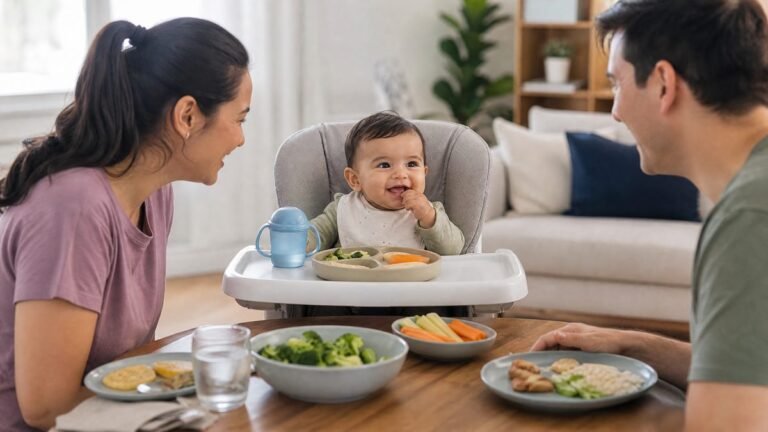
Build the plate from one tablespoon of each food per year of age: 2 tablespoons of protein — shredded chicken, beans, or scrambled egg — 2 tablespoons of vegetables, and 2 tablespoons of whole grains such as pasta, rice, or toast strips. Add a small fruit portion and a cup of milk on the side. The whole plate fits in a small hand. It should, because the stomach behind it is about the size of a fist.
A sample daily schedule
| Time | What happens |
|---|---|
| 7:30 AM | Breakfast with milk |
| 10:00 AM | Snack — served at least 1.5–2 hours before lunch |
| 12:00 PM | Lunch with milk |
| 3:00 PM | Snack — kept outside the 90-minute window before dinner |
| 5:30 PM | Dinner with milk |
| All day | Water with meals and in between |
The clock times are examples; the structure is the point. Three meals and two snacks, with snacks spaced well before the next meal so they never spoil it. Serve milk at meals rather than in a cup carried around the house. All-day sipping dulls appetite and affects teeth. Offer seconds when your child asks. Stop when they turn away.
Leftovers are fine. So is a dinner that gets pushed around and abandoned. Toddlers who eat a big breakfast often skip lunch and make it up at dinner. Judge the whole day before you judge the plate.
Common Toddler Feeding Challenges and Solutions
Food neophobia: fear of new foods
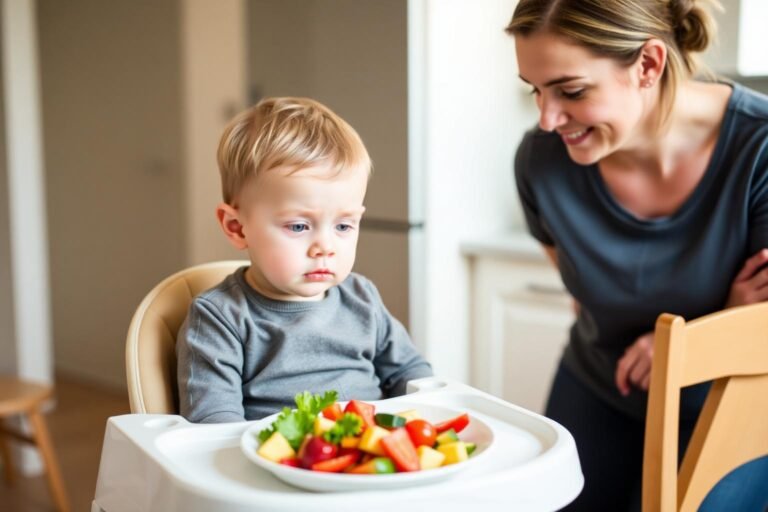
Food neophobia peaks between 18 and 24 months. It is a normal developmental phase, not defiance. Studies show toddlers may need 10–15 exposures to a new food before accepting it. Do not pressure, bribe, or coax. Offer the new food alongside familiar favorites, and eat it yourself with positive comments.
Try food bridging: offer a new food that resembles one your child already likes. Sweet potatoes accepted? Try butternut squash. Avoid making separate meals. Your child eats what the family eats, with at least one safe option they already accept. For the full playbook, see our Picky Eating Toddler Strategies: A Complete Parent Guide. If you are still in the 6–12 month window, start earlier with Picky Eating Prevention: Expert Guide for 6–12 Month Babies.
Appetite fluctuations: why it is normal
Toddler appetites vary dramatically from day to day and even meal to meal. Growth slows after the first birthday, so the voracious appetite of infancy naturally decreases. A toddler might eat a large breakfast, skip lunch, and eat a moderate dinner. This is normal.
What matters is the pattern over a week, not a single meal. Good energy, steady weight gain along the growth curve, and adequate wet diapers mean nutrition is sufficient. Never force-feed, and never use a screen as a distraction at the table. Both tactics undermine self-regulation — the skill that keeps portions right without a fight.
Some toddlers also cycle. Active days bring bigger appetites. Quiet days bring smaller ones. Trust the weekly average, not the last meal.
When to Offer Snacks and How to Make Them Count
Toddlers need 2–3 snacks a day between meals. Their small stomachs cannot hold enough at meals to sustain them for 3–4 hours. Schedule snacks at consistent times, at least 1.5–2 hours before the next meal, and avoid offering anything within 90 minutes of a meal. Snacking too close to dinner spoils the appetite that dinner needs.
Make snacks count nutritionally. Pair a protein or fat with a carbohydrate for sustained energy: apple slices with peanut butter, yogurt with berries, cheese cubes with whole-grain crackers, hummus with vegetable sticks, or a hard-boiled egg with a slice of toast. Keep portions snack-sized, not meal-sized — a handful, not a plate. For more ideas, our list of healthy toddler snacks for on the go low sugar keeps prep simple on busy days.
Snacks are food, not rewards. Offer them at the table, in the same place meals happen, so your child reads them as eating rather than as a treat. Two planned snacks a day are usually enough. A third often crowds out the meal that follows it.
Pediatrician’s Take
“How much should a toddler eat? Enough to grow, not enough to fight over. One tablespoon of each food per year of age. Three meals and two snacks. Milk at meals, water in between. You decide what is served, when, and where. Your toddler decides whether to eat and how much. If a meal becomes a standoff, drop it — the next meal is only a few hours away. Fear of new foods peaks around 18 to 24 months, and it fades. Keep offering, keep it calm, and let growth curves — not clean plates — tell you how feeding is going.”
When to Call the Doctor
- Weight drops or your toddler slips off their growth curve
- Intake stays very narrow for more than two weeks
- Diaper output drops — noticeably fewer wet diapers than usual
- Your toddler seems unusually tired or low on energy
Trust your instincts. You know your child best, and a quick check is always reasonable. Bring notes: what was offered, how much was eaten, and how the week went. That detail turns a vague worry into a useful appointment. Specific concerns about your child’s health or development deserve a real conversation at your next pediatrician visit.
Frequently Asked Questions
How many calories does a 2-year-old need per day? About 1,000–1,400 calories, split across three meals and two snacks. Use 1 tablespoon per year of age per food at meals (about 2 tablespoons at age 2). The exact amount varies with activity and growth — trust hunger and fullness cues over a fixed count.
Should I force my toddler to finish their plate? No. The AAP advises against pressuring; it can override self-regulation and fuel power struggles. You provide balanced options at set times; your child chooses how much. If they eat little at one meal, they often compensate at the next. Keep the tone calm and avoid bribes or screens.
My toddler only eats a few foods — is that okay? Selective eating is common at 1–3 years. Keep offering a variety without pressure; most kids broaden their diet over time. Make sure they still get key nutrients: iron, calcium, and healthy fats. If intake is very narrow for more than two weeks or weight drops, mention it at your next visit.
How much milk should a toddler drink? Toddlers 1–2 years need about 16–24 oz of whole milk daily; ages 2–3 shift to low-fat milk (12–20 oz). Offer water as the main drink. Use milk at meals rather than in a cup carried all day — constant sipping can dampen appetite and affect teeth.
The Bottom Line
How much should a toddler eat? About 1,000–1,400 calories a day, served as three small meals and two snacks in portions of roughly one tablespoon per year of age. Milk at meals — 16–24 oz of whole milk at 1–2 years, 12–20 oz of low-fat milk after — and water the rest of the day. Expect picky phases and day-to-day swings; they pass. When specific concerns about your child’s health or development are not answered here, bring them to your next pediatrician visit. Your pediatrician knows your child’s history, and that beats any general guide.
References
?? Doctor’s Take
One tablespoon per year of age, three meals and two snacks, milk at meals and water in between. You choose the food. Your toddler chooses how much. When the weekly pattern holds and the growth curve holds, the plate does not have to.
This article is general information, not individual medical advice. Every baby is different – talk to your own pediatrician about your child’s feeding, sleep, growth or development, and seek urgent care for breathing difficulty, poor feeding, dehydration, fever in an infant under 3 months, or any sudden change in your baby’s behaviour. When in doubt, call your doctor.
Medical review
Reviewed by Dr. Ahmad Raza, MD, Pediatrics. Last reviewed September 27, 2026. This article provides general education and does not replace individualized advice from your child’s pediatrician. Learn about our physicians on the About page.




One Comment