Combination Feeding: The Complete Breast and Formula Guide
Medically reviewed by Dr. Ahmad Raza, MD (Pediatrics) — ChildBloom Medical Review Panel. Last updated: September 27, 2026.
Editorial & affiliate disclosure: our guidance is written and reviewed by clinicians. ChildBloom may earn a commission from qualifying purchases made through links on this page, which never changes what our pediatric reviewers recommend. As an Amazon Associate, we earn from qualifying purchases.
Learn how combination feeding works: safe ways to mix breast milk and formula, sample daily schedules by age, amounts in ounces and ml, and tips to protect your supply.
📋 TL;DR — if you read nothing else
Short answer: Combination feeding means breastfeeding plus formula. It is safe, common, and any amount of breast milk helps.
- Start bottles after about 3 to 4 weeks, once breastfeeding is well established.
- Protect supply: pump whenever a formula feed replaces a breastfeed.
- Amounts: about 2.5 ounces per pound per day, shared between breast and bottle.
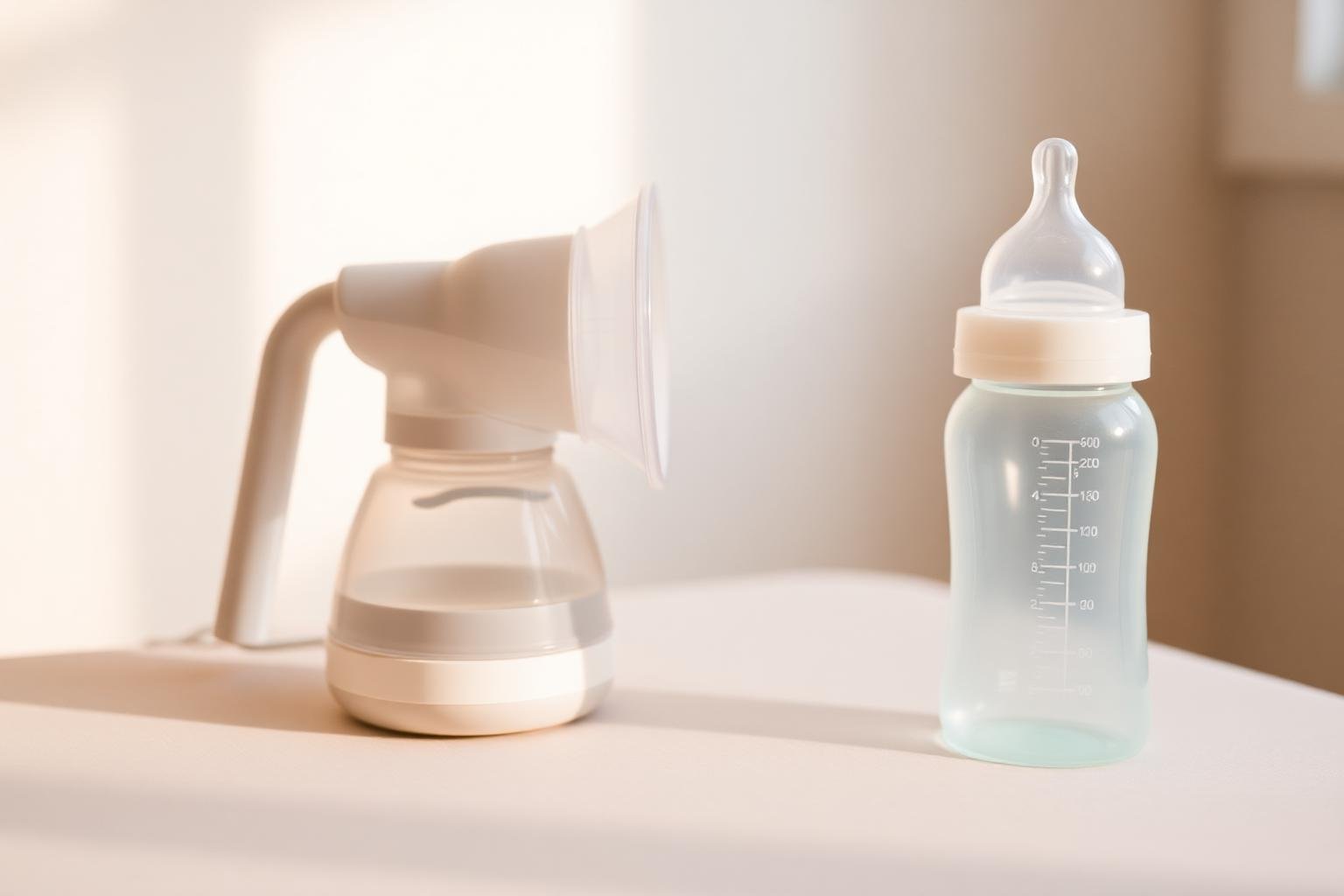
Combination feeding means your baby gets both breast milk and formula. Some families mix from the first week. Others add a bottle when work starts or when nights feel long. There is no single right ratio. The right plan feeds your baby well and fits your family.
This guide covers when to start, how to add a bottle while protecting your supply, how much formula to offer, and how to mix breast milk and formula safely. A sample day and the signs of enough intake are included too.
Combination feeding is safe and common. Establish breastfeeding first, usually for 3 to 4 weeks, then add a bottle with a slow-flow nipple. Pump whenever a formula feed replaces a breastfeed to protect supply. Expect about 2.5 ounces of formula per pound each day, shared with breast milk. Call your doctor if wet diapers drop or feeding changes.
What Is Combination Feeding?
Combination feeding means feeding both breast milk and formula. Your baby might take breast milk at some feeds and formula at others. The mix might be one bottle a day or most feeds. Parents combine for many reasons: low supply, a return to work, or shared night feeds. The CDC and the American Academy of Pediatrics agree that any amount of breast milk helps. What matters most is that your baby grows well and is fed responsively. Watch the cues. Rooting and hand-sucking mean hungry. Turning away, slowing down, or falling asleep mean full.
When to Start Combination Feeding
Most families do best when breastfeeding is established first. That usually takes about 3 to 4 weeks. After that window, a bottle fits in more easily. Your baby has learned the latch and your supply has settled. You can start earlier if you need to. Talk with your pediatrician first, especially if your baby was premature or is not gaining weight. Common moments to add a bottle: the week before work, the first stretch of night feeds, or a day you need a break.
Common Combination Feeding Plans
There are four plans most families use. Pick one and give it a week before changing it. Your baby needs time to adjust.
- Top-ups after breastfeeds: your baby nurses, then takes 1 to 2 ounces of formula if hunger cues continue.
- One or two bottles a day: many families give a formula bottle in the evening so a partner can help.
- Bottles for the workday: if you are away, your caregiver offers formula while you pump to keep supply up.
- Both at every feed: some parents offer breast and bottle together during the early weeks.
Whatever plan you choose, count intake across a full day instead of worrying about one feed. If the day’s total looks low, or your baby seems hungry often, review the plan with your pediatrician.
How to Introduce the Bottle
Wait until nursing is well established, usually around 3 to 4 weeks. Then have another caregiver offer the first bottle. Babies can smell their mother’s milk. A bottle offered by the breastfeeding parent is more likely to be refused. Start in a calm setting with a slow-flow nipple, so milk comes slowly. Hold the bottle horizontally and pause every few minutes. This is paced feeding, and it feels more like the breast. Some babies need several attempts. Stay patient, and never force the nipple if your baby turns away. If your baby resists, try another nipple shape, another milk temperature, or another time of day.
Protecting Your Milk Supply
Your body makes milk on a supply-and-demand system. More removal means more production. Less removal means less. A formula feed that fully replaces a nursing session lowers supply over time. So pump at the time of the feed you skip. Skipped sessions without pumping tell your body to make less milk. Some parents pump one side while the baby takes a bottle. Others pump right after the first feed of the day. Keep sessions consistent. Many parents combine for months while keeping a steady supply through consistent, frequent emptying. If supply drops, review your pumping schedule with your pediatrician or a lactation consultant.
How Much Formula Does a Combo-Fed Baby Need?
A simple estimate helps you plan. Most combo-fed babies take about 2.5 ounces of formula per pound of body weight in a day. That volume is shared between breast and bottle. A 12-pound baby may need roughly 30 ounces daily, or about 900 milliliters. Formula covers the part nursing does not. Divide the total by the number of bottles. That often lands between 4 and 6 ounces per bottle, or 120 to 180 milliliters. These numbers are a starting point, not a rule. Always follow your baby’s cues and your pediatrician’s individualized guidance. Babies who get enough gain weight steadily and stay content after most feeds.
Can I Mix Breast Milk and Formula in One Bottle?
Yes, you can, but prepare carefully. Make the formula first, exactly as the label describes. Then add expressed breast milk to the same bottle. Never use breast milk to mix formula powder. The measurements do not work that way, and the risk of a wrong concentration rises. Once breast milk and formula are combined, use the bottle within 1 hour at room temperature. In the refrigerator, use it within 24 hours. Discard any leftover mix instead of saving it. This prevents bacterial growth.
Sample Combination Feeding Day
Every family’s day looks different. These two sketches show how the pieces fit together.
A younger baby, in the first weeks: feed on hunger cues, day and night. A sample day has six or seven breastfeeds plus one or two formula bottles of 2 to 3 ounces, or 60 to 90 milliliters. Offer the bottle before the longest stretch of sleep, when your baby is calm.
A baby at 6 months: milk is still the main food, and solids begin small. A sample day has breastfeeds on waking and at naps, two formula bottles of 5 to 6 ounces, or 150 to 180 milliliters, plus one solid meal in the middle. By 8 months there are two solid meals, and by 10 to 12 months there are three, with milk feeds continuing between them.
Treat these as examples; your pediatrician can adjust the plan to your baby’s growth.
Pediatrician’s Take
“Combination feeding is a normal way to feed a baby. You do not have to pick one side and defend it. Keep supply steady by removing milk regularly, add formula at a pace that suits your baby, and watch how they grow rather than the exact ounces in each bottle. Growth, diapers, and a content baby after feeds say more than any chart.” — Dr. Ahmad Raza, MD (Pediatrics)
When to Call the Doctor
Most combination feeding questions can wait for the next visit. A few signs should not wait.
- fewer than 6 wet diapers a day after day 5
- weight gain under 5 ounces a week in the first months
- unusual lethargy, or a baby who is hard to wake
- refusing feeds for 8 hours or more
- blood in the stool
- a fever of 100.4°F (38°C) or higher in a baby under 2 months — call right away
- any time you are unsure your combination feeding plan meets your baby’s needs
Trust your instincts. You know your baby best, and a quick call is always reasonable. A short note on feeds and diapers helps.
Common Feeding Questions Answered
Is combination feeding bad for my baby? No. Combination feeding is safe and common. Babies get the nutrition they need from breast milk, formula, or both. The CDC and the American Academy of Pediatrics agree that any breast milk helps. What matters most is that your baby grows well, stays hydrated, and is fed responsively to hunger and fullness cues.
Will giving formula reduce my breast milk supply? It can, if a formula feed fully replaces a nursing session without pumping. Your supply follows demand, so empty your breasts whenever a feed is missed. Pumping at the same time as a bottle feeding preserves production. Many parents combine for months while keeping a steady supply through consistent, frequent emptying.
How do I know if my baby is getting enough? The most reliable signs are weight gain, diaper output, and behavior after feeds. Your baby should follow their growth curve. Expect at least 6 to 8 wet diapers a day after the first week. After a feed, your baby should be content and relaxed, not crying or rooting. If you are concerned, your pediatrician can do a weighted feed to measure how much milk your baby transfers.
Can I switch between breast and bottle? Yes. Many babies combine breast and bottle, also called combination feeding. Establish breastfeeding first, usually for 3 to 4 weeks, before you introduce a bottle. Use a slow-flow nipple to keep the feeding pace close to the breast. Have someone other than the breastfeeding parent offer the first bottles, since babies can smell their mother’s milk. If your baby resists, try different nipple shapes, temperatures, and timing.
How do I introduce a bottle to a breastfed baby? Wait until nursing is well established, usually around 3 to 4 weeks. Have another caregiver offer the first bottle in a calm setting, using a slow-flow nipple. Try paced feeding with the bottle held horizontally. Some babies need several attempts, so stay patient and avoid forcing the nipple if your baby turns away.
Can I mix breast milk and formula in one bottle? Yes, but prepare carefully. Make formula separately first, then add expressed breast milk. Do not use breast milk to mix formula powder, since the measurements change. Once combined, use the bottle within 1 hour at room temperature or within 24 hours if refrigerated. Discard any leftover to prevent bacterial growth.
How much formula does a combo-fed baby need? Total daily intake is about 2.5 ounces per pound, shared between breast and bottle. A 12-pound baby may need roughly 30 ounces daily. Divide that by the feed count, which often lands at 4 to 6 ounces per bottle. Always follow your baby’s cues and your pediatrician’s individualized guidance.
When should I switch fully to formula? Only you and your pediatrician can decide. Many families combine for months, while others move fully when work, supply, or comfort changes. The American Academy of Pediatrics supports breastfeeding through 12 months if that is your goal. Choose the plan that works for your family.
The Bottom Line
Combination feeding is safe, common, and flexible. Establish breastfeeding first if you can. Protect supply by pumping whenever a formula feed replaces a breastfeed. Offer bottles with a slow-flow nipple and paced holds. Aim for about 2.5 ounces per pound a day, shared between breast and bottle, and always follow your baby’s cues. Watch diapers and growth, and adjust the plan over time.
References
- CDC infant and toddler nutrition
- AAP policy statement on breastfeeding and the use of human milk (Pediatrics, 2022)
- FDA: infant formula guidance for parents
?? Doctor’s Take
Both milks, one plan. Establish breastfeeding, add bottles with a slow-flow nipple, pump whenever a formula feed replaces a breastfeed, and let your baby’s cues and growth — not the ounces on a bottle — judge whether the plan fits.
This article is general information, not individual medical advice. Every baby is different – talk to your own pediatrician about your child’s feeding, sleep, growth or development, and seek urgent care for breathing difficulty, poor feeding, dehydration, fever in an infant under 3 months, or any sudden change in your baby’s behaviour. When in doubt, call your doctor.
Medical review
Reviewed by Dr. Ahmad Raza, MD, Pediatrics. Last reviewed September 27, 2026. This article provides general education and does not replace individualized advice from your child’s pediatrician. Learn about our physicians on the About page.





4 Comments