Baby Open Cup: Safe Steps for Water Practice
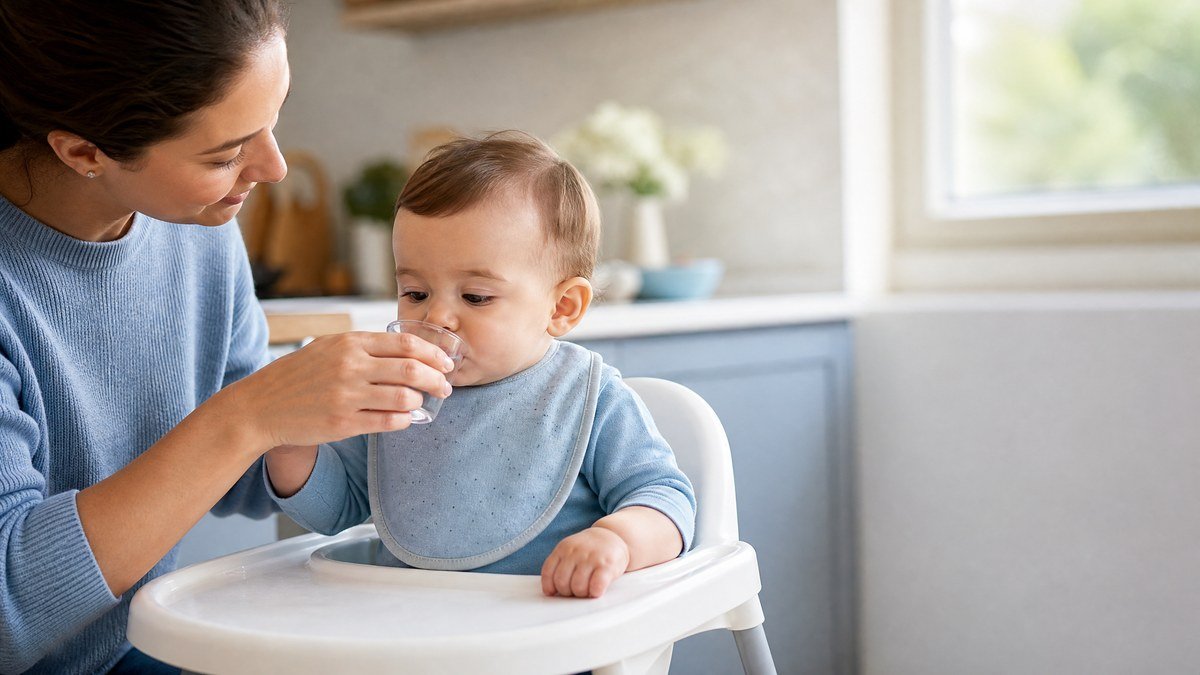
Baby open cup practice can begin around 6 months, when complementary foods are starting and your child can sit safely with good head control. Use a small amount of water or the child’s usual milk, hold the cup at first, and let the child set the pace. Milk or formula remains important. 1
Care note: This article offers general pediatric education. Feeding needs vary, especially with prematurity, medical conditions, allergies, growth concerns, or swallowing symptoms. Your child’s pediatrician can tailor advice.
When to start practising with a cup
The AAP supports offering a cup when a baby begins eating solids, usually around 6 months. The baby may practise with an open cup, a straw cup, or a training cup. The best option depends on the child, the setting, and what the family can supervise safely. 1
A baby does not need to master a cup before starting solids. Cup practice is one skill among many. Early attempts may involve touching the rim, taking a tiny sip, spilling, or pushing the cup away.
Water amounts and milk feeds
From about 6 to 12 months, water is usually offered in small amounts with meals while breast milk or infant formula remains the main drink. AAP and CDC guidance commonly uses about 4–8 ounces of water per day for this age. Needs can vary with health, climate, and the rest of the diet. 1
Do not dilute formula or replace breast milk or formula feeds with water. Babies under 12 months should not receive juice. After 12 months, plain water and plain milk are preferred; ask your pediatrician about the milk amount that fits your child.
How to introduce an open cup
- Choose a small, sturdy cup with a rim that is easy to see.
- Seat your baby upright in a stable feeding seat.
- Add only a small amount of liquid at first.
- Bring the rim to the lips and wait. Do not pour liquid into the mouth.
- Let your baby pause, turn away, or stop.
- Practise briefly at a calm meal and expect spills.
You can offer the baby’s usual breast milk or formula in a cup if that feels more familiar. Water can be used for practice once solids are underway. Never leave a baby unattended with a cup.
Open, straw, and training cups
An open cup is not the only appropriate route. A straw cup can be useful for travel or for a child who finds it easier. A training cup may be a temporary bridge. Avoid presenting one cup as guaranteed to improve speech or oral development. The priorities are safe posture, comfortable swallowing, appropriate liquids, and gradual skill-building.
Do not cut a straw, squeeze liquid into the mouth, or use a cup to force a feed. If your child coughs, gags repeatedly, has wet breathing, tires during drinking, or takes much less milk, stop and contact the pediatrician.
Moving away from bottles
Many children begin the bottle-to-cup transition around 6 months and complete it gradually between 12 and 18 months. The exact pace varies. Start with one routine cup opportunity, often at a meal, and reduce bottles slowly when the child is ready. 2
Offer comfort in other ways when a bedtime bottle is being reduced. Never put a baby to bed with a bottle containing milk, formula, or juice. Ask the pediatrician or dentist for help if bottle use, dental concerns, or feeding difficulty becomes a struggle.
FAQ
Does my baby need water at 6 months?
A small amount of water may be offered with solids. Breast milk or formula remains important, and water should not replace feeds.
Is an open cup safer than a straw cup?
Neither is automatically best for every child. Use a developmentally appropriate cup with close supervision and safe liquids.
What if my baby refuses the cup?
Try another day, model drinking at meals, or use a different cup style. Pressure can make learning harder. Persistent coughing or difficulty deserves a clinical review.
Related ChildBloom guides
- When can babies drink water?
- 8-month feeding schedule
- 11-month feeding schedule
- Starting solids and readiness
Author and medical-review status
Dr. Ahmad Raza, MD, Pediatrics is the named ChildBloom pediatric author for this draft. Prepared for medical review by Dr. Ahmad Raza, MD, Pediatrics. Reviewed and approved by Dr. Ahmad Raza, MD, Pediatrics on August 23, 2026.
Last updated: August 22, 2026