Can You Bring Breast Milk Through TSA? A Practical Packing Guide
Yes, you can bring breast milk through TSA. In the United States, expressed breast milk is allowed in carry-on baggage in quantities greater than 3.4 ounces or 100 milliliters. It does not need to fit inside a quart-sized liquids bag. The same exception covers breast-milk coolers, ice packs, freezer packs, gel packs, pumps, and related feeding supplies. [1] [2]
For the full picture, read our pillar guide on Baby’s First Flight: A Pediatrician-Reviewed Checklist.
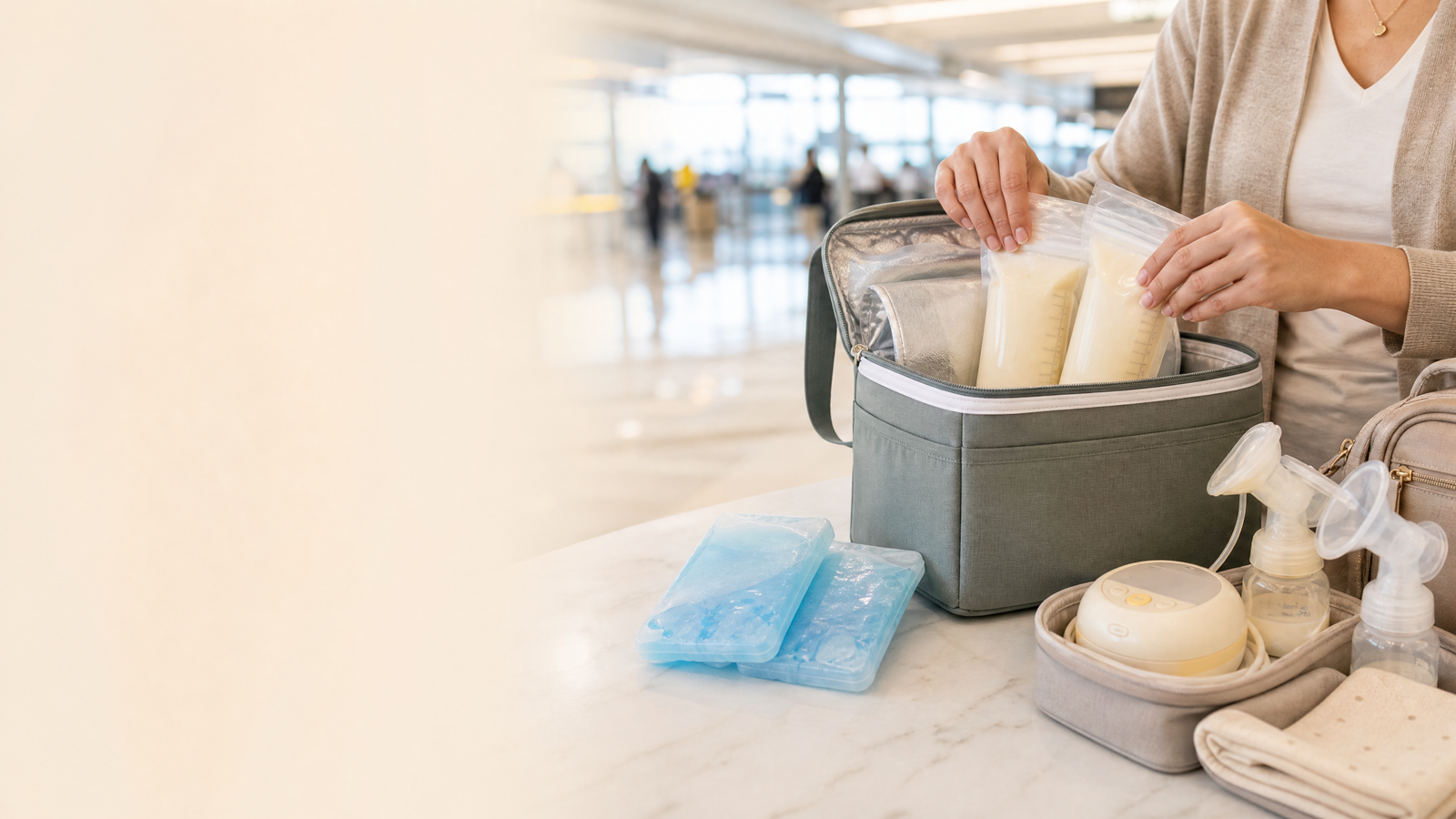
At the start of screening, tell the TSA officer that you are carrying breast milk. Remove the milk and cooling supplies from your carry-on so they can be screened separately. Your baby does not need to be traveling with you. Also, the milk does not need to be in a small bottle or bag to qualify for the exception. [1] [3]
The goal is simple: keep the milk cold, make it easy to present, and allow extra time for screening. This guide explains the current U.S. process. TSA officers make the final decision at the checkpoint, and airline rules for carry-on limits or onboard storage can change. Recheck the official TSA and airline instructions before each trip.
Quick answer: what can you bring?
| Item | Usually allowed in carry-on? | What to do at screening |
|---|---|---|
| Expressed breast milk over 3.4 oz/100 mL | Yes | Tell the officer at the beginning and remove it for separate screening |
| Breast milk in storage bags or bottles | Yes | Clear or translucent bottles may make screening easier |
| Ice packs, freezer packs, and gel packs | Yes | Bring them with the milk or explain that they are cooling accessories |
| Breast pump and pump kit | Yes | Remove or present them if the officer asks |
| Insulated cooler bag | Yes as carry-on property | Check the airline’s baggage allowance and keep it accessible |
| Milk when the baby is not traveling | Yes | The child does not need to be present |
| Milk in checked luggage | TSA permits checked baggage, but carry-on is usually easier to monitor | Protect the milk from temperature changes and baggage delays |
TSA classifies breast milk and related items as medically necessary liquids for screening purposes. The exception is about checkpoint screening. It is not a guarantee that every airline will provide refrigerator space, let you bring an extra free bag, or allow a particular cooler onboard. Therefore, confirm the airline’s current baggage policy as well.
What is the 3.4-ounce rule for breast milk?
The standard TSA liquids rule generally limits liquids in carry-on containers to 3.4 ounces or 100 milliliters. Breast milk is an exception. TSA allows reasonable quantities of breast milk over that limit when it is carried through the checkpoint for an infant or child. It does not need to fit in a quart-sized bag. [1] [2]
“Reasonable quantities” is not a fixed number published as an ounce limit. Pack the amount that your baby needs for the travel period, plus a practical buffer for delays. Avoid presenting more milk than you can reasonably explain for the trip. If you are traveling without your baby, TSA still says that the child does not need to be present for you to carry breast milk and related supplies. [1]
The exception also applies to frozen or partially frozen milk and the cooling items needed to protect it. A gel pack does not have to be completely frozen when you reach the checkpoint. However, partially frozen or slushy cooling items may receive the same screening as the milk. [1]
How do you take breast milk through airport security?
Before joining the line, place the milk and cooling accessories where you can reach them. Keep pump parts, storage bags, and ice packs together in one clean section. Then follow these steps.
1. Tell the TSA officer before screening begins
Say clearly, “I am traveling with breast milk and cooling supplies.” Do this at the beginning of the screening process. You do not need to wait until an officer asks about the cooler. Early notice gives the officer time to explain the local process and tell you what to remove.
If you are carrying formula, toddler drinks, baby food, or liquid-filled teethers as well, mention those items too. They may qualify for the same medically necessary-liquid exception. [2]
2. Remove the milk and accessories
Take the breast milk, cooler, ice packs, and related supplies out of your carry-on when instructed. Place them where the officer directs. TSA says these items may be screened separately from the rest of your belongings. [1]
Do not hide the milk inside clothing or bury it under other items. A clearly organized cooler is easier to explain and may reduce unnecessary unpacking.
3. Expect screening, not automatic disposal
TSA officers may test breast milk for explosives or concealed prohibited items. The screening process does not involve placing anything into the milk. TSA also states that its X-ray machines do not adversely affect food or medicines. [1]
If you do not want the milk to be X-rayed or opened, tell the officer. TSA may use additional procedures to clear the milk. Those procedures can include extra screening for you and your carry-on property. A request for alternate screening may take longer, so plan extra time.
4. Ask for private screening if needed
You may request private screening if you prefer to discuss or present the milk away from the main checkpoint. This can be helpful when you are carrying several containers, traveling with a pump, or feeling rushed. TSA’s children-travel guidance says private screening can be requested at any time during the process. [2]
5. Repack the cooler before leaving the checkpoint
Check that every container is closed and the ice packs still surround the milk. If the cooler was opened, use a clean surface or bag for pump parts and nipples.
Can you bring ice packs or a breast-milk cooler through TSA?
Yes. Ice packs, freezer packs, frozen gel packs, and other cooling accessories required to keep breast milk cold are allowed in carry-on baggage. TSA says these accessories are allowed even when no breast milk is present. Liquid-filled teethers may also qualify for the children’s screening exception. [1] [2]
If the packs are partly frozen or slushy, they may receive the same screening as the milk. Do not assume that a soft pack will be discarded simply because it is not rock solid. Present it with the milk and explain its purpose.
Use a clean cooler that closes securely. A soft-sided bag may fit under a seat more easily than a hard cooler, but the choice depends on the milk volume, trip length, and airline limits. The cooler still counts as carry-on property unless your airline says otherwise.
Pack the cooling supplies around the milk rather than placing all the ice on top.
How should you pack breast milk for air travel?
Start with the travel time, not only the flight time. Count the drive to the airport, parking or transit, check-in, security, boarding, the flight, connections, baggage retrieval, and the trip to your destination. Delays can extend this period. Then choose a cooler and amount of milk that fit your actual plan.
Use a clean, organized cooler
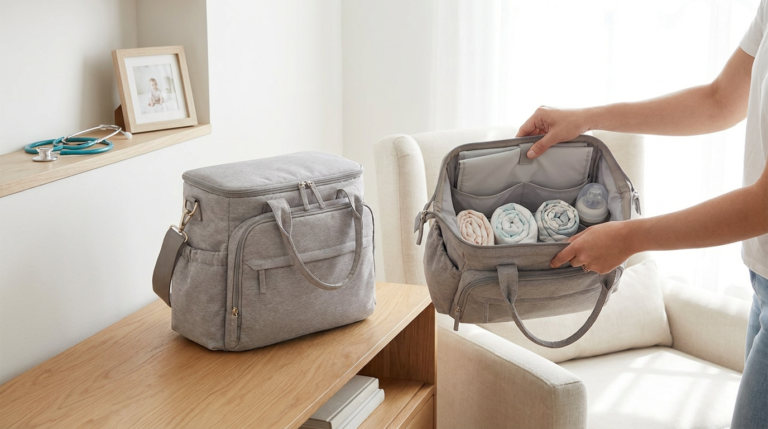
Place the milk in clean storage bags or food-grade containers with tight-fitting lids. Put the containers in a leak-resistant inner pouch. Then surround them with frozen ice packs. Keep the cooler in your carry-on so you can monitor it and present it at security.
Avoid packing loose bottles next to keys, snacks, or cosmetics. Those items can soil the container or make the cooler difficult to inspect. Instead, use separate compartments or clean resealable bags.
Keep a small airport-access kit
A separate pouch can hold clean pump parts, spare storage bags, labels, hand sanitizer, and a washable cloth. Wash your hands with soap and water before expressing milk. If soap and water are unavailable, CDC guidance says an alcohol-based hand sanitizer with at least 60% alcohol can be used. [5]
Pack extra storage bags and one change of clothing for you and your baby. A leaking bag is inconvenient, but it does not need to ruin the trip if you have a backup container and a clean layer.
Protect the cold chain
CDC guidance says freshly expressed milk can be carried in an insulated cooler bag with frozen ice packs for up to 24 hours. After arrival, use it promptly, refrigerate it, or freeze it. [5]
Related reading: International Travel With a Baby.
If previously frozen milk still has ice crystals when you arrive, CDC says it can be refrozen. If it has thawed completely, use it within 24 hours. [5] Do not rely on the cooler alone for a long trip without checking the milk’s condition.
The AAP’s conservative storage advice is also useful: freshly expressed milk is best chilled promptly, can be kept at room temperature up to 4 hours under typical conditions, and is best used within 4 days when refrigerated at 39°F/4°C or colder. [4] Travel conditions vary, so use the more cautious option when temperature or timing is uncertain.
Do not microwave breast milk
If you need to warm milk at your destination, use warm water or another method recommended by your child’s feeding plan. Do not microwave breast milk. Microwaves can create hot spots that may burn a baby. [4]
Can you pump at the airport or on the plane?
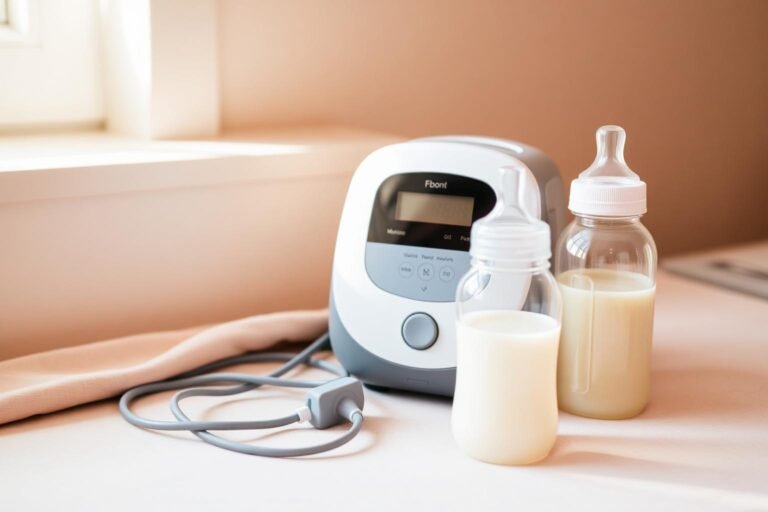
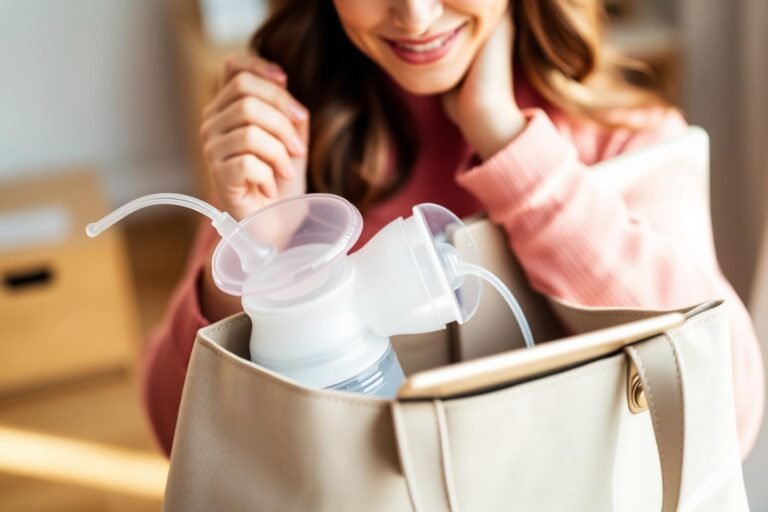
Yes, you can carry a breast pump and pump kit through security and onboard a flight. CDC guidance specifically includes pumps, pump kits, and other items needed to express or transport milk among the supplies that passengers can carry. [5]
Before the trip, check the airport website for a private pumping or lactation space. CDC notes that the Friendly Airports for Mothers Acts require U.S. airports to provide a private, non-bathroom space for expressing milk in each terminal. [5] Airport layouts and access procedures still vary, so confirm the location before leaving home.
Plan pumping breaks around your normal feeding pattern when possible. CDC recommends expressing milk as often as you normally feed your baby to help maintain supply during separation. [5]
Bring the charger, batteries, or adapter your pump needs. A manual pump can be a useful backup if an outlet is unavailable or a battery fails. Clean pump parts according to the manufacturer’s instructions and your clinician’s advice.
On the plane, follow crew instructions and choose a safe position. Keep hot liquids and loose pump parts secured. Ask a flight attendant early if you need help.
What if TSA wants to open or test the milk?
TSA officers may need to test breast milk for explosives or concealed prohibited items. The screening process does not involve placing anything into the milk. If you do not want it opened or X-rayed, tell the officer before screening begins. TSA may use alternate procedures, which can take longer. [1]
State your preference calmly and ask whether private screening is available. Do not argue that breast milk is exempt from all screening: the exception removes the standard quantity limit, but carry-on items still must be screened. You can save the current TSA page or contact TSA Cares before travel for information. [1] [2]
What should you do if the milk warms up?
First, separate the milk by condition. Keep clearly frozen containers apart from milk that is fully thawed or warm. Do not refreeze milk that has completely thawed unless current guidance and your child’s clinician specifically support that plan. CDC advises using previously frozen milk within 24 hours after it thaws completely. [5]
If you are unsure how long the milk stayed warm, how warm it became, or whether a container was contaminated, do not guess. Ask your pediatrician, lactation professional, or another qualified healthcare professional about that specific milk. When in doubt, safety and the baby’s feeding needs come before avoiding waste.
If you rely on temperature tracking, a small cooler thermometer can help you notice a problem earlier, but it does not replace safe storage guidance. Record when milk was expressed and, if frozen, when it fully thawed.
See also: Can You Bring Car Seat on Airplane Without Extra Seat (FAA).
Breast-milk airport checklist
Before leaving home
- Check the current TSA breast-milk and traveling-with-children pages.
- Check your airline’s carry-on and cooler policy.
- Estimate the full door-to-door travel time, including possible delays.
- Pack milk in clean, sealed bags or containers.
- Freeze enough cooling packs for the trip.
- Put milk and cooling accessories in an accessible carry-on section.
- Pack spare storage bags, labels, wipes, and a clean cloth.
- Pack the pump, power supplies, and a backup if needed.
- Locate airport pumping spaces and keep your pediatrician’s contact information handy if your baby has special feeding needs.
At TSA screening
- Tell the officer at the beginning that you are carrying breast milk.
- Remove the milk, cooler, pump, and cooling accessories when instructed.
- Ask about private screening if you prefer it.
- State your preference before the milk is X-rayed or opened.
- Allow extra time for alternate screening if requested.
- Repack the cooler on a clean surface after screening.
During the trip
- Keep the cooler closed and cold whenever possible.
- Express milk near your usual feeding rhythm when practical.
- Keep pump parts clean and protected.
- Monitor frozen milk for ice crystals or complete thawing.
- Use milk according to current storage guidance.
- Ask the crew for help before turbulence or other safety-critical periods.
When should you ask your pediatrician or lactation professional?
Ask before travel if your baby has a complex medical condition, feeding difficulty, poor weight gain, a special formula or milk plan, or a history of dehydration. Also ask if you will be separated from your baby for an extended period and need help planning pumping or stored milk.
A clinician can help with your baby’s individual feeding needs, but no clinician can guarantee how quickly a checkpoint will move or how an airline will handle a cooler. Keep the medical plan separate from the airport-policy plan.
Call for advice if your baby refuses feeds, has fewer wet diapers, is unusually sleepy, vomits repeatedly, or shows other signs of illness while you are traveling. Seek urgent care for trouble breathing, blue or gray color, unresponsiveness, a seizure, severe dehydration, or another emergency symptom.
FAQ
How much breast milk can I bring through TSA?
TSA allows reasonable quantities of breast milk over 3.4 ounces or 100 milliliters in carry-on baggage. TSA does not publish one universal ounce limit for every trip. Bring the amount your baby reasonably needs for the travel period and plan for delays. [1]
Can I bring frozen breast milk on a plane?
Yes. Frozen breast milk can be carried through security. Frozen, partially frozen, or slushy cooling packs are also allowed, but they may receive additional screening. Keep frozen milk with enough cooling capacity for the full travel period. [1] [5]
Can TSA open my breast milk?
TSA may need to test the milk during screening. If you do not want it opened or X-rayed, tell the officer. Additional screening may be required to clear it. [1]
How long can breast milk stay in a cooler during travel?
CDC says freshly expressed milk can be carried in an insulated cooler bag with frozen ice packs for up to 24 hours. After arrival, use it, refrigerate it, or freeze it. Previously frozen milk should be used within 24 hours after it completely thaws. [5]
What if the TSA officer is unsure about the rule?
Remain calm, show the current official TSA page, and ask what screening process the officer needs to use. You can also request private screening or contact TSA Cares before travel for assistance. The final decision at the checkpoint rests with the TSA officer. [1] [2]
The bottom line
You can bring breast milk through TSA in reasonable quantities, including amounts over 3.4 ounces or 100 milliliters. The milk does not need to fit in a quart-sized bag, and your baby does not need to be traveling with you. Ice packs, gel packs, coolers, pumps, and related supplies are also allowed under the applicable screening exception. [1] [2]
Tell TSA at the start of screening, remove the milk and cooling supplies, and ask about private or alternate screening if needed. Keep the milk cold, use clean containers, plan for delays, and follow current CDC and AAP storage guidance. Finally, check your airline’s rules because TSA permission and airline baggage policies are separate questions.
Author and medical-review note
Medically reviewed by Dr. Ahmad Raza, MD, Pediatrics. Reviewed and approved for publication on August 23, 2026. This article is educational and does not replace advice from your child’s own pediatrician.
- Transportation Security Administration: Breast Milk
- Transportation Security Administration: Traveling with Children
- TSA: Breast Milk, Formula and Juice and the 3-1-1 Rule
- American Academy of Pediatrics / HealthyChildren.org: Tips for Freezing & Refrigerating Breast Milk
- Centers for Disease Control and Prevention: Travel Recommendations for Nursing Mothers
Related ChildBloom Guides
- Baby Ear Pressure on a Plane
- How Soon Can a Newborn Fly After Birth (Pediatrician)
- How Often to Stop on a Road Trip With a Baby
- Minimal Baby Travel Gear Checklist for Flying
- Baby Sleep in a Hotel Room
- Browse all Travel guides
References & Medical Sources
- AAP / HealthyChildren: flying with baby
- FAA child air travel / car seats
- TSA traveling with children
- CDC travelers’ health
Reviewed by the ChildBloom pediatric panel. Meet our physicians on the About page. This article is educational and does not replace your child’s clinician.