Baby Refuses Textured Food? Safe Steps That Help
Baby Refuses Textured Food? Safe Steps That Help
Short answer: If your baby refuses textured food, slow down and offer a familiar food in a slightly thicker or softer texture. Keep your baby upright, let them control the pace, and never force a bite. Gagging can happen while babies learn, but repeated coughing, choking, vomiting, breathing changes, poor growth, or ongoing distress needs prompt pediatric advice. 1 3
A baby refusing lumps does not automatically mean something is wrong. Moving from smooth purées to mashed, lumpy, and finger foods is a learning process. Some babies need more time. The safest approach is gradual exposure, responsive feeding, and close supervision during every meal.
This guide is for babies who have started complementary foods. Babies born prematurely or babies with medical, developmental, or swallowing concerns may need an individualized plan based on corrected age and advice from their clinician.
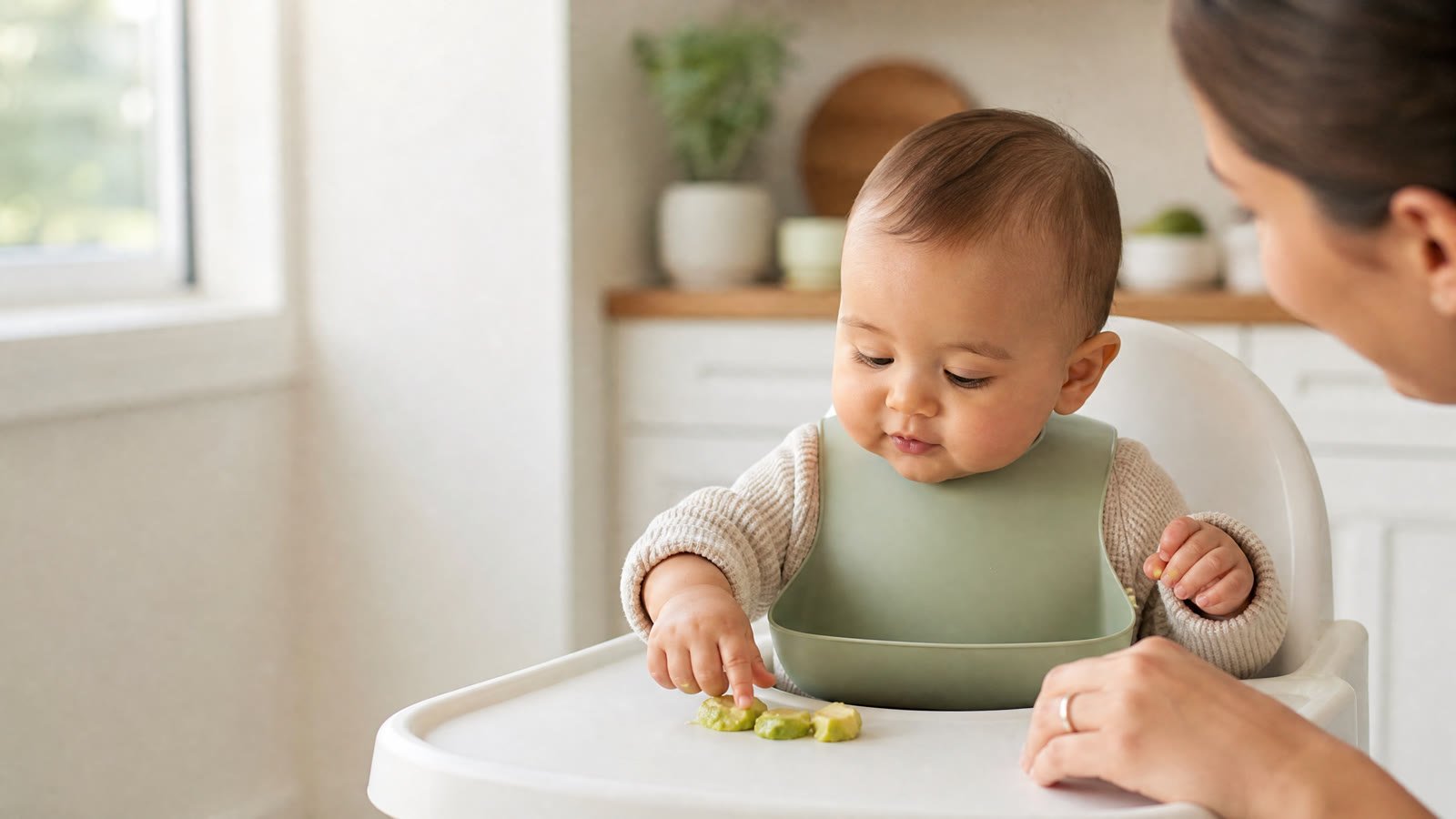
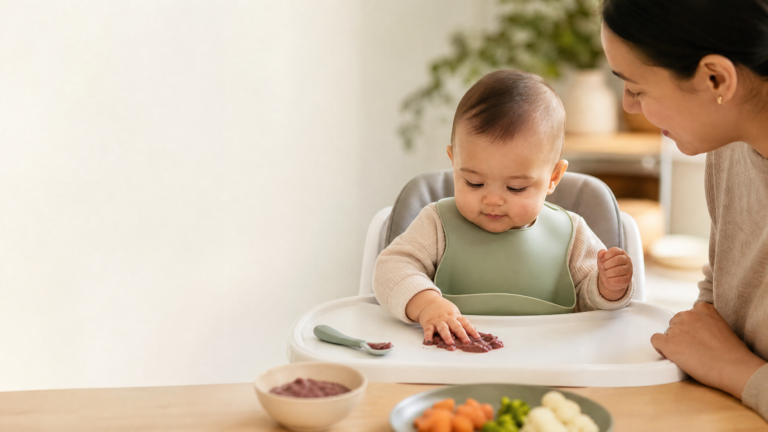
Featured image: A calm, supervised approach can help babies explore new food textures.
Why does a baby refuse textured food?
Smooth purées are predictable. A thicker or lumpy food feels different on the tongue and may require new skills, such as moving food around the mouth and coordinating chewing with swallowing. A baby may spit food out, grimace, or gag while learning. These reactions do not necessarily mean your baby dislikes the flavor or is being difficult. 2
Texture refusal can also be more noticeable when a baby is tired, ill, constipated, teething, uncomfortable from reflux, or pressured during meals. These possibilities cannot be diagnosed from a single feeding pattern. If eating seems painful or your baby has frequent symptoms, discuss the pattern with your pediatrician.
Is there a strict “texture window”?
There is no single deadline that every baby must meet. Guidance from the NHS recommends moving from puréed foods toward mashed, lumpy, and finger foods as soon as a baby can manage them, while recognizing that some babies need longer to adjust. 4
Avoid both extremes: do not rush a baby who is not ready, but do not keep offering only smooth purée indefinitely without discussing the lack of progress. Development, prematurity, oral skills, medical history, and growth all matter.
First check that your baby is ready for solids
Around 6 months, many babies show readiness by sitting with steady head control, coordinating their eyes and hands to bring food toward the mouth, and swallowing rather than repeatedly pushing food out. Readiness varies, so age alone should not determine the next texture. 2
Breast milk or infant formula remains an important source of nutrition during the first year. Solid foods complement milk feeds; they should not be used to pressure a baby to eat or to replace milk without guidance from a clinician. 2
A safe texture progression
Think of texture progression as a flexible sequence, not a rigid five-stage program. Move forward when your baby manages the current texture comfortably. If your baby coughs repeatedly, becomes distressed, or cannot manage a texture, pause and ask your pediatrician whether a feeding evaluation is needed.
| Step | What to offer | Safety check |
|---|---|---|
| 1. Smooth | A smooth purée or thin infant cereal | Use a small amount and wait for your baby to open their mouth. |
| 2. Thicker | A thicker purée, smooth oatmeal, or thoroughly mashed avocado | Keep it soft and moist, with no hard pieces. |
| 3. Soft mashed | Fork-mashed banana, sweet potato, lentils, beans, or egg | Any pieces should be soft enough to squash easily. |
| 4. Soft mixed texture | Mashed food with very soft, finely broken pieces | Introduce one manageable change at a time. |
| 5. Soft finger foods | Soft strips or pieces of cooked vegetables, ripe fruit, tender pasta, egg, or flaked fish | Baby should sit upright and remain within arm’s reach. |
The table is a guide, not a prescription. A baby may manage a soft finger food before accepting a lumpy purée, or may need to move back and forth between textures. Progress is more important than speed.
How to help a baby accept textured food
1. Start with a familiar flavor
If your baby accepts smooth sweet potato, try a thicker or fork-mashed version of the same food. Keeping the flavor familiar reduces the number of changes your baby has to manage at once.
2. Make the change very small
You can mix a small amount of soft mashed food into a familiar purée, then gradually adjust the texture as your baby becomes comfortable. Stop if your baby shows distress. This is not a trick to hide food; your baby should be allowed to see, touch, and explore what is being offered.
3. Offer food when your baby is calm
Avoid starting with a baby who is exhausted, upset, or extremely hungry. Offer a small amount before or between usual milk feeds according to your baby’s routine. A baby who turns away, closes their mouth, or pushes food away is communicating that they need a break. 2
4. Let your baby participate
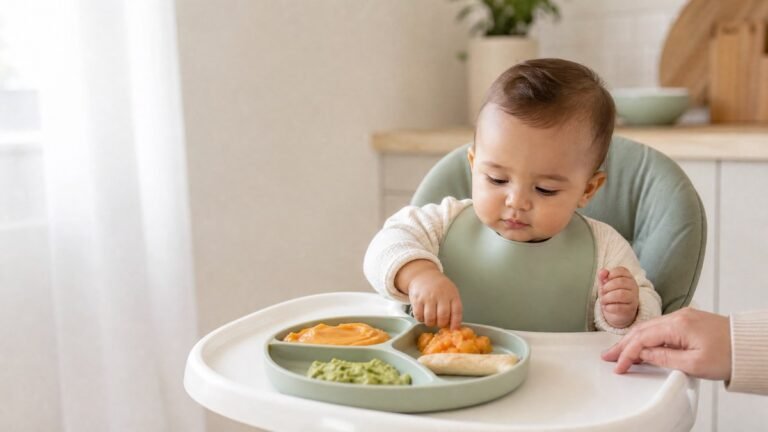
Place a pre-loaded spoon within reach if your baby is ready to hold it, or offer a soft piece that is prepared for their developmental abilities. Self-feeding can give a baby more control over the pace and amount. Stay close and supervise continuously.
5. Keep mealtimes calm and brief
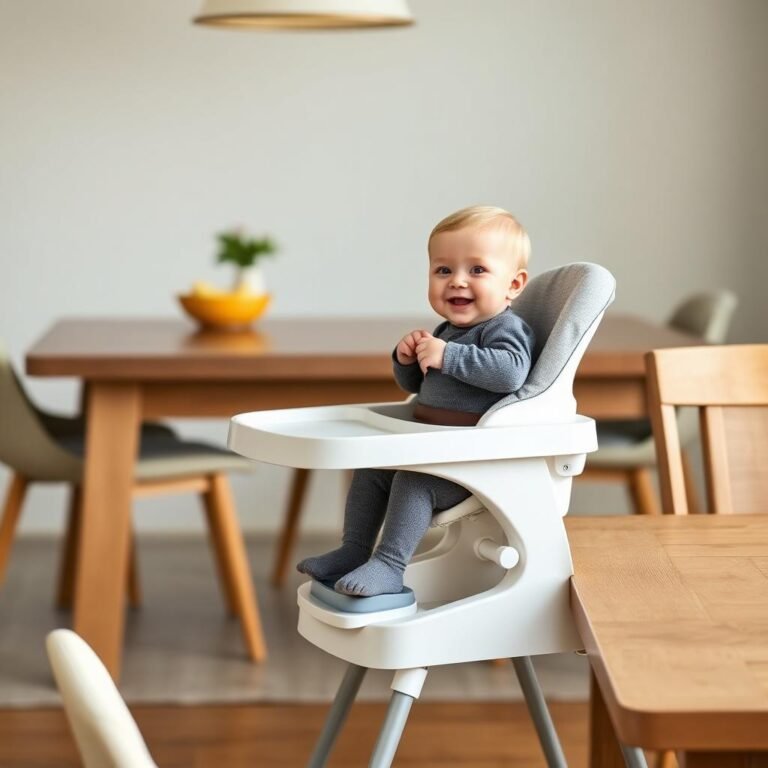
Sit your baby upright in a stable high chair. Reduce distractions, allow time to explore, and stop when your baby is finished. Do not chase a closed mouth with a spoon, scrape food into the mouth, hold the head still, or continue after repeated refusal. Responsive feeding means the caregiver offers suitable food, while the baby decides whether and how much to eat. 2
6. Keep offering without pressure
Acceptance may take repeated opportunities. The NHS notes that a baby may need 10 tries or more to become familiar with a new food, flavor, or texture. An opportunity can include seeing, touching, licking, or tasting the food. Offer it again on another day rather than insisting on a full serving. 4
7. Include iron-rich foods and variety
As textures expand, offer suitable foods from different groups, including iron- and zinc-rich foods such as meat, beans, lentils, eggs, tofu, and iron-fortified infant cereals. Prepare every food so it is soft and appropriate for your baby’s developmental skills. Ask your pediatrician about supplements when needed; do not start or change supplements based only on an online article. 2
Gagging versus choking
Gagging is common while babies learn to manage solid foods. It may be noisy and can include watery eyes, retching, coughing, or the tongue moving forward. Stay close, remain calm, and allow your baby to work the food forward. Do not perform a blind finger sweep, because this can push food farther back. 1 4
Choking is different. A baby who cannot breathe, cry, cough effectively, or make a sound may have a blocked airway. Blue or gray coloring, limpness, or unresponsiveness is an emergency. Call your local emergency number and begin infant choking first aid according to certified training and dispatcher instructions. Take an infant CPR and choking first-aid course before you need it. 1
For a fuller explanation, read Baby Gagging vs. Choking: What Parents Should Do.
Choking prevention when offering textured food
No food preparation method removes choking risk completely. Reduce risk by following these steps:
- Keep your baby seated upright in a high chair or other safe seat. Do not feed while your baby is lying down, walking, crawling, or riding in a stroller or car.
- Stay within arm’s reach and watch your baby throughout the meal.
- Cook foods until soft and prepare them in a shape, size, and texture your baby can manage.
- Avoid hard, sticky, rubbery, or round foods that are difficult to chew and swallow.
- Do not offer whole grapes, uncut cherry tomatoes, whole nuts or seeds, popcorn, hard raw apple or carrot, thick spoonfuls of nut butter, hot-dog rounds, large chunks of meat or cheese, hard candy, or similar hazards. Modify foods according to current professional guidance and your child’s development. 1 4
- Keep meals calm. Avoid screens, rushing, and distractions.
What if my baby spits out every lump?
Make the next attempt softer, smaller, and closer to a texture your baby already manages. Try the same familiar flavor in a thicker purée, then a fork-mashed form. Offer a small amount and stop if your baby becomes upset. Some babies may accept soft finger foods more readily than spoon-fed lumps because they can control the experience; others need more time.
If your baby repeatedly coughs, chokes, vomits, develops wet or noisy breathing during or after eating, or cannot manage even soft textures, stop advancing textures and contact your pediatrician. These signs may indicate a swallowing or feeding problem and should not be self-diagnosed.
What if my baby holds food in the cheek?
A baby may pause with food in the mouth while learning. Offer smaller amounts, allow extra time, and keep the baby upright. Do not sweep the mouth blindly or push in more food. If food pocketing happens often, lasts for a long time, is paired with coughing or distress, or occurs with poor intake, ask your pediatrician about a feeding and swallowing assessment.
What if my baby prefers only one texture?
Work from the texture your baby accepts and change only one feature at a time, such as thickness, softness, or size. Do not force a disliked texture or remove all familiar foods. Strong preferences that interfere with adequate nutrition, growth, or family meals deserve professional assessment, especially when other sensory, motor, or developmental concerns are present.
When to call your pediatrician
Contact your pediatrician if your baby:
- Makes little or no progress toward thicker, mashed, lumpy, or soft finger foods despite calm, repeated opportunities.
- Coughs, chokes, gags severely, vomits, or shows breathing changes during feeds.
- Has wet or gurgly breathing or voice after eating, recurrent chest infections, or difficulty coordinating breathing and swallowing.
- Refuses most food, takes very long to finish meals, or becomes consistently distressed during feeding.
- Has trouble moving food around the mouth, managing saliva, chewing, or swallowing.
- Is not gaining weight as expected, loses weight, has fewer wet diapers, or seems unusually tired.
- Has a history of prematurity, reflux with feeding problems, aspiration, surgery, neurologic disease, or another condition that may affect feeding.
- Has a very restricted diet or other developmental or sensory concerns.
Seek emergency help for inability to breathe, blue or gray coloring, collapse, unresponsiveness, or a severe allergic reaction. Your clinician may refer you to a speech-language pathologist, occupational therapist, registered dietitian, gastroenterologist, or specialized feeding team when appropriate. 1
Frequently asked questions
My 8-month-old still prefers smooth purée. Is that normal?
Some babies need longer to adjust, and prematurity or medical history can affect the timeline. At this age, continue offering safe, gradual texture changes if your baby is ready. If there is no progress, feeding is stressful, or any red flags are present, discuss it with your pediatrician rather than waiting for a fixed age deadline.
Should I make my baby hungry so they will eat textured food?
No. Do not restrict breast milk, formula, or familiar foods to force a new texture. Offer a small amount of the new texture alongside foods your baby accepts, and follow hunger and fullness cues. Milk remains important during the first year. 2
Can I skip purées and offer finger foods?
Some babies begin with soft finger foods, while others start with purées or mashed foods. Either approach requires readiness, appropriate preparation, upright positioning, and continuous supervision. Babies with swallowing problems, developmental concerns, or a history of aspiration need individualized guidance.
Does texture refusal mean autism?
Texture refusal by itself does not establish autism or any other diagnosis. Many babies have temporary feeding preferences. If feeding concerns occur alongside broader developmental differences, ask your pediatrician for developmental screening and appropriate guidance.
When should I stop trying a new texture?
Stop the meal if your baby turns away, closes their mouth, cries, or becomes distressed. Try again on another day with a smaller or softer change. Stop advancing and seek advice if there is repeated coughing, choking, vomiting, breathing difficulty, poor growth, or significant feeding distress.
The bottom line
When a baby refuses textured food, progress works best when it is gradual, pressure-free, and safe. Offer familiar flavors in softer, thicker, or gently mashed forms. Let your baby participate, supervise every meal, and keep breast milk or formula an important part of the first-year diet. Gagging can occur during learning, but breathing problems, repeated coughing or choking, vomiting, poor growth, or persistent distress warrant pediatric assessment.
Author and medical review
Written by: Dr. Ahmad Raza, MD, Pediatrics
Medically reviewed by: Dr. Ahmad Raza, MD, Pediatrics
Medical review status: Pending final clinician verification before publication.
This article is for general education. It does not replace individualized medical advice, emergency services, certified choking first-aid training, or an assessment by your child’s pediatrician.
External citations
The article cites the CDC, American Academy of Pediatrics, and NHS sources listed below. These links should remain dofollow unless the site’s editorial policy requires otherwise.