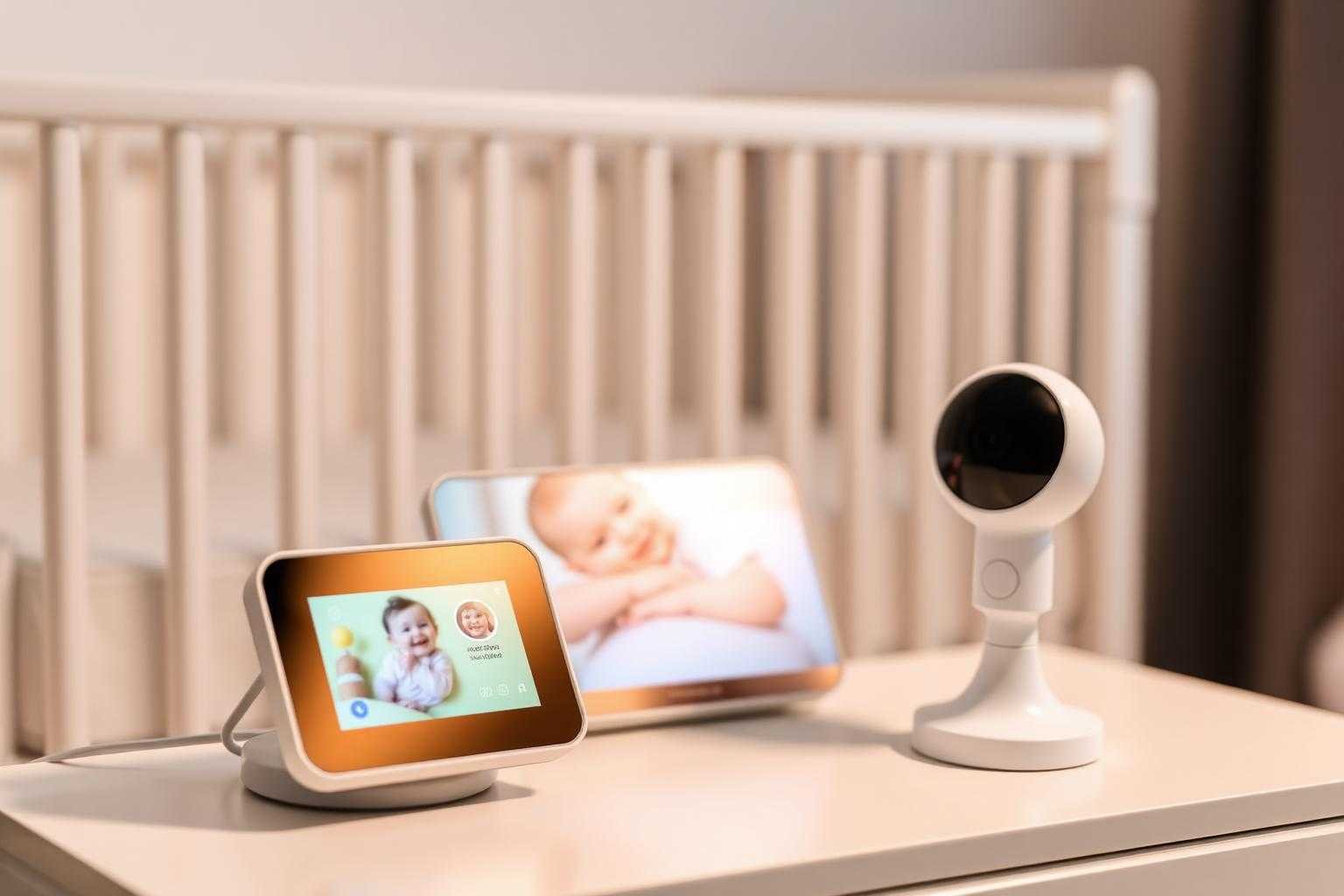
Nursery setup: The Pediatrician’s Complete Nursery Setup Guide: Safe Sleep, Air Quality & Essentials
Medically reviewed by Dr. Ahmad Raza, MD (Pediatrics) — ChildBloom Medical Review Panel. Last updated: August 4, 2026.
Editorial & affiliate disclosure: our guidance is written and reviewed by clinicians. ChildBloom may earn a commission from qualifying purchases made through links on this page, which never changes what our pediatric reviewers recommend.
Looking for clear answers about nursery setup? This pediatrician-reviewed guide covers what matters, what to skip, the safety checks that count, and exactly when to involve your doctor — based on current AAP, CDC and CPSC guidance on nursery setup.
Quick pediatrician summary: nursery setup
Short answer: A pediatrician explains nursery setup: safe-sleep rules, what genuinely helps tonight, product checks and when to get help.
The Pediatrician’s Complete Nursery Setup Guide: Safe Sleep, Air Quality & Essentials
Written by the ChildBloom Pediatric Panel, FAAP | Medically reviewed | Last updated July 2026
As an Amazon Associate, we earn from qualifying purchases.
B0B8Y5K2L1 Product does not exist anymore.
B0C3N7M8P9 Product does not exist anymore.
Setting up the nursery is one of the most anticipated parts of preparing for a baby. You scroll through Pinterest, browse showrooms, and add items to your registry. Cribs, dressers, gliders, monitors, humidifiers, air purifiers, night lights — the list seems endless, and the marketing makes everything feel essential.
But what actually matters? What does the evidence say about the nursery environment and your baby’s health, safety, and sleep?
This guide cuts through the marketing noise. I will walk you through every element of the nursery — from the crib (the most important piece of equipment) to the air your baby breathes to the light in the room — and tell you what the science says, what the AAP recommends, and where you can save money without compromising safety.
SECTION 1: THE CRIB — THE MOST IMPORTANT DECISION
1.1 Safe Sleep Standards
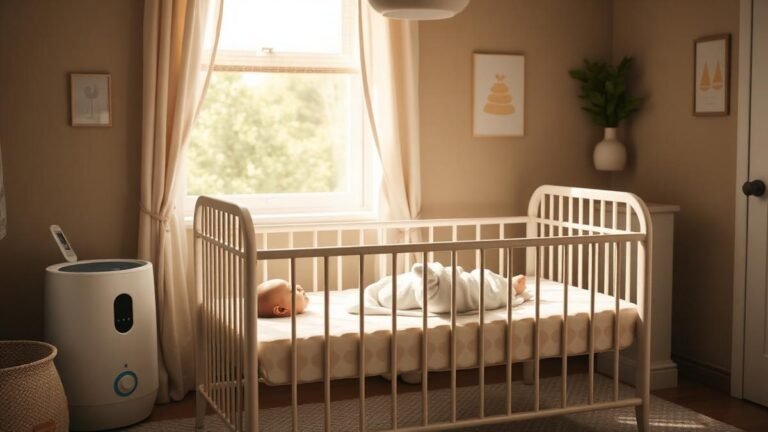
The crib is where your baby will spend approximately 12-16 hours per day for the first year of life. It is the single most important piece of nursery equipment, and its safety standards are non-negotiable.
Key requirements (per CPSC and AAP):
- Full-size cribs must meet ASTM F1169-19 (the current standard, updated in 2022).
- Slat spacing: No more than 2-3/8 inches (60mm) apart — to prevent the baby’s head from becoming entrapped.
- Mattress fit: No more than two fingers’ width (approximately 1 inch) between the mattress and the crib frame — to prevent entrapment.
- Corner posts: Must not extend more than 1/16 inch above the end panels — to prevent clothing from catching.
- No drop-side cribs: Banned by the CPSC in 2011 after multiple infant deaths.
- No soft bedding: No pillows, blankets, bumper pads, or stuffed animals in the crib. The sleep surface should be firm and flat with only a fitted sheet.
1.2 Crib Types
STANDARD CRIB: Fixed sides, full-size mattress. The safest and most straightforward option.
CONVERTIBLE CRIB: Converts from crib to toddler bed to daybed (and sometimes full-size bed). A good long-term investment if the conversion kit is available and the crib meets current safety standards.
MINI CRIB: Smaller than a standard crib. Useful for small spaces but has a shorter usable lifespan.
PORTABLE CRIB / PLAYARD: Foldable, lightweight. Convenient for travel or small spaces but not intended as a primary sleep surface for long-term use.
See our detailed article: Crib Safety Standards: What Changed After the 2022 CPSC Update.
SECTION 2: THE MATTRESS — FIRMNESS AND CHEMICAL SAFETY
2.1 Firmness
The AAP recommends a firm sleep surface. A mattress that is too soft increases the risk of suffocation and SIDS.
How to test firmness: Press your hand firmly on the mattress. It should snap back immediately without conforming to your hand. The mattress should not indent when the baby lies on it.
2.2 Chemical Safety
Mattresses can off-gas volatile organic compounds (VOCs) including formaldehyde, flame retardants, and phthalates. These chemicals are emitted from the foam, adhesives, and fabric treatments.
Look for:
- GREENGUARD Gold certification: Certifies low chemical emissions.
- CertiPUR-US certification: Certifies that foam is free from certain harmful chemicals (formaldehyde, heavy metals, phthalates, flame retardants).
- Organic materials: Organic cotton covers and natural latex foam reduce chemical exposure.
- Waterproof covers: Necessary for hygiene, but look for covers made from food-grade polyethylene (not PVC/vinyl, which can contain phthalates).
SECTION 3: AIR QUALITY
3.1 Why Nursery Air Quality Matters
Babies breathe more rapidly than adults (30-40 breaths per minute vs. 12-20 for adults), meaning they inhale proportionally more air — and more of whatever is in that air. The nursery is also often a newly furnished room, which means new furniture, new paint, new carpet — all of which off-gas VOCs.
3.2 Common Nursery Air Pollutants
- VOCs (volatile organic compounds): Emitted from paint, new furniture, carpet, adhesives, and air fresheners. Include formaldehyde, benzene, toluene, and xylene.
- Particulate matter (PM2.5): Fine particles from dust, cooking, outdoor pollution, and candles.
- Carbon dioxide: Builds up in poorly ventilated rooms.
- Mold spores: In humid environments or rooms with water damage.
3.3 What an Air Purifier Can and Cannot Do
CAN remove:
- Particulate matter (dust, pollen, pet dander, mold spores) — with a true HEPA filter
- Some VOCs and odors — with an activated carbon filter
- Some bacteria and viruses — with a HEPA filter (though this is not a substitute for ventilation)
CANNOT remove:
- Carbon dioxide (requires ventilation with fresh air)
- All VOCs (some VOCs pass through carbon filters)
- Radon (requires specific mitigation)
See our detailed article: Nursery Air Quality: VOCs, Formaldehyde & What an Air Purifier Actually Removes.
SECTION 4: LIGHTING
4.1 Why Lighting Matters for Baby Sleep
Light is the primary cue for the circadian rhythm — the body’s internal clock. Babies are born without a mature circadian rhythm (it develops over the first 3-6 months), and light exposure plays a critical role in its development.
- Blue light (emitted by screens, LEDs, and daylight) suppresses melatonin production and signals “wakefulness.”
- Warm, dim light (amber, red, or candlelight tones) does not suppress melatonin and supports the transition to sleep.
4.2 Nursery Lighting Recommendations
- Main light: A dimmable overhead light with warm-tone bulbs (2700K or lower). Avoid cool-white or daylight bulbs (5000K+) in the nursery.
- Night light: A dim, warm-toned night light (amber or red) for nighttime feeds and diaper changes. Avoid blue-white LED night lights.
- Blackout solutions: Blackout curtains or shades are essential for nap time and for preventing early morning wake-ups. The room should be as dark as possible during sleep.
See our detailed article: Best Nursery Lighting for Baby’s Circadian Rhythm.
SECTION 5: TEMPERATURE AND HUMIDITY
5.1 The Ideal Range
The AAP recommends a nursery temperature of 68-72F (20-22C) for safe sleep. This range minimizes the risk of overheating (a SIDS risk factor) while keeping the baby comfortable.
Humidity should be maintained at 40-60%. Below 40%, the air is too dry (causes dry skin, nasal congestion, and increased susceptibility to respiratory infections). Above 60%, the air is too humid (promotes mold growth and dust mite proliferation).
5.2 Tools for Monitoring and Control
- Thermometer: A reliable digital thermometer (not a phone app) to monitor room temperature.
- Hygrometer: Measures humidity. Many thermometers include a hygrometer function.
- Humidifier: Adds moisture to the air in dry environments. Cool mist humidifiers are recommended (warm mist humidifiers pose a burn risk).
- Dehumidifier: Removes moisture in humid environments.
See our detailed article: Nursery Temperature: The Ideal Range for Safe Sleep & Comfort.
SECTION 6: THE GLIDER — IS IT WORTH IT?
A nursery glider or rocker is not a safety necessity, but it is one of the most-used pieces of nursery furniture. You will spend hundreds of hours in it during nighttime feeds, soothing sessions, and quiet moments with the baby.
The key considerations:
- Ergonomics: Proper lumbar support and arm height for feeding.
- Motion: Gliders move on a track (back and forth). Rockers move on curved legs (arc motion). Gliders are generally smoother and quieter.
- Size: Measure your nursery. Gliders are large pieces of furniture.
- Recline: Some gliders offer a recline function, which is useful for feeding but may not be safe for sleeping in (the AAP recommends a flat sleep surface).
See our detailed article: Do You Need a Nursery Glider? Ergonomics for Feeding & Back Health.
SECTION 7: DEEP-DIVE ARTICLES IN THIS CLUSTER
- Crib Safety Standards: What Changed After the 2022 CPSC Update
The latest safety requirements, what to look for, and which cribs meet current standards.
Related reading: Baby Room Temperature & Sleep Clothing.
[Read the full article ->]
- Nursery Air Quality: VOCs, Formaldehyde & What an Air Purifier Actually Removes
The science of indoor air quality and how to choose an air purifier that actually works.
[Read the full article ->]
- Best Nursery Lighting for Baby’s Circadian Rhythm
How light affects baby sleep and what to look for in nursery lighting.
[Read the full article ->]
- Do You Need a Nursery Glider? Ergonomics for Feeding & Back Health
The ergonomics of feeding furniture and what to look for in a glider or rocker.
[Read the full article ->]
- Nursery Temperature: The Ideal Range for Safe Sleep & Comfort
The science of thermal regulation and how to maintain the optimal nursery environment.
[Read the full article ->]
SECTION 8: RECOMMENDED PRODUCTS BY CATEGORY
BEST BABY CRIBS
Cribs that meet current CPSC safety standards, with GREENGUARD certification and solid construction.
[See our top picks ->]
BEST AIR PURIFIERS FOR NURSERIES
True HEPA + activated carbon air purifiers that actually remove particulates and VOCs.
[See our top picks ->]
BEST HUMIDIFIERS & THERMOMETERS
See also: White Noise for Baby: Placement, Volume, and Safety.
Cool mist humidifiers and reliable thermometers/hygrometers for the nursery.
[See our top picks ->]
SECTION 9: THE NURSERY CHECKLIST
ESSENTIAL (Safety):
- [ ] Crib meeting current CPSC standards (ASTM F1169-19)
- [ ] Firm, flat mattress with tight-fitting sheet
- [ ] No soft bedding, pillows, bumpers, or stuffed animals in the crib
- [ ] Room temperature maintained at 68-72F
- [ ] Smoke detector and carbon monoxide detector in or near the nursery
- [ ] Window cords secured (strangulation risk)
- [ ] Furniture anchored to the wall (tip-over prevention)
IMPORTANT (Health & Comfort):
- [ ] Air purifier with true HEPA filter
- [ ] Blackout curtains or shades
- [ ] Dimmable, warm-toned lighting
- [ ] Humidifier (if indoor humidity is below 40%)
- [ ] Thermometer/hygrometer
- [ ] White noise machine (optional but helpful for sleep)
NICE TO HAVE:
- [ ] Glider or rocker with lumbar support
- [ ] Changing table or dresser with changing pad
- [ ] Bookshelf (start the reading habit early)
- [ ] Dim night light (warm-toned) for nighttime care
SECTION 10: KEY TAKEAWAYS
- The crib is the most important nursery purchase. It must meet current CPSC safety standards (ASTM F1169-19). No drop-side cribs. No soft bedding. Firm, flat mattress.
- Air quality matters. New furniture off-gases VOCs. A true HEPA + carbon air purifier reduces particulate matter and some VOCs. Ventilate the nursery before the baby arrives.
- Lighting affects sleep. Use warm-toned, dimmable lights. Avoid blue light in the evening. Blackout curtains are essential for naps.
- Temperature should be 68-72F. Use a thermometer to monitor. Overheating is a SIDS risk factor.
- A glider is not essential but is one of the most-used pieces of nursery furniture. Choose one with proper lumbar support and smooth motion.
MEDICAL DISCLAIMER: This article is for informational purposes only and does not constitute medical advice. Always consult your pediatrician for guidance on safe sleep and nursery setup.
Explore more pediatrician-reviewed guidance from ChildBloom:
- Nursery Temperature: The Ideal Range for Safe Sleep & Comfort
- Do You Need a Nursery Glider? Ergonomics for Feeding & Back Health
- Best Nursery Lighting for Baby’s Circadian Rhythm
- Nursery Air Quality: VOCs, Formaldehyde & What an Air Purifier Actually Removes
Authoritative External Sources
- AAP Safe Sleep
- CDC SIDS
Frequently Asked Questions
Q: How much sleep does my baby need?
A: Newborns (0-3 months) need 14-17 hours per day. Infants (4-11 months) need 12-15 hours. Toddlers (1-2 years) need 11-14 hours. These are totals including naps. Every baby is different, but consistency in schedule and sleep environment matters more than hitting exact numbers.
Q: When will my baby sleep through the night?
A: Most babies start sleeping longer stretches (5-6 hours) around 3-4 months, but “sleeping through the night” (10-12 hours) typically doesn’t happen consistently until 6-9 months or later. Night wakings are normal and developmentally appropriate even after your baby can sleep longer stretches.
Q: What is the safest sleep position for my baby?
A: Always place your baby on their back for every sleep (naps and nighttime). This is the single most important step to reduce SIDS risk. Once your baby can roll independently (usually 4-6 months), they may roll to their stomach during sleep—this is okay if they got there on their own, but always start them on their back.
- Evidence-Based Baby Sleep Solutions
- Safe Sleep Checklist
- Hip-Healthy Swaddles & Sleep Sacks
Related Articles in Nursery
- When to Stop Using a Baby Monitor (And What to Watch For)
- Are Baby Sleep Positioners Safe? A Pediatrician Says No — He
- Baby Room Temperature: What’s Safe and What’s Da
- Is It Safe to Let Baby Sleep in a Swing All Night? (Doctor&#
- Best Breast Pumps of 2026: A Comprehensive Pediatrician-Revi
- Best Baby Swing for Reflux: 7 Calming Picks
- Best Baby Cribs That Meet Current Safety Standards: Pediatri
- Top 5 Air Purifiers for Baby Nurseries: Pediatrician-Reviewe
- Best Nursery Humidifiers & Thermometers for Optimal Sle
- 6-Month Sleep Regression: What It Is and How to Fix It
- Baby Waking Up Too Early? 9 Fixes That Actually Work
- 8-Month Sleep Regression Guide: Causes, Signs & Fixes
- 9-Month Sleep Regression: Causes, Signs & Survival Guid
- Toddler Hitting and Biting: Why It Happens and What to Do
- Baby Early Morning Wakings: 7 Fixes That Actually Work
Related Articles
- Best twin nursery gear: Best Gear for Twin Nurseries: Dual Monitors, M
- Best Baby Wipes for Sensitive Skin: 7 Hypoallergenic Picks
- Crib for newborns: Best Crib for Newborns 2026: 14 Safe, Pediatrician-
- Best Baby Carrier 2026: Top Wraps, Slings & Structured Picks Test
Related: Sleep Regressions By Age Complete Guide
Frequently asked questions about nursery setup
Where should my baby sleep for nursery setup?
Alone, on the back, on a firm flat mattress in a crib, bassinet or play yard that meets current CPSC standards, in your room for at least the first six months. Keep pillows, blankets, bumpers and toys out of the sleep space.
Is nursery setup a sign of a sleep problem?
Frequent night waking, short naps and unsettled evenings are developmentally normal in the first year. It may need review if your baby snores or pauses in breathing, is not gaining weight, or is excessively sleepy and hard to wake.
What actually helps with nursery setup tonight?
A predictable short wind-down, a dark cool room, white noise at a safe volume and distance, age-appropriate wake windows, and putting your baby down drowsy but awake. Give any change five to seven consistent nights before judging it.
Common mistakes parents make with nursery setup
- Assuming a higher price means a safer or better-performing option — certification and correct fit matter far more.
- Skipping the instruction manual, weight limits and product registration, which is how recall notices reach you.
- Changing several things at once, so you cannot tell what actually helped your baby.
- Relying on advice from social media instead of your pediatrician when something feels off.
- Nursery Temperature
- Nursery Air Quality
- Sleep Regressions by Age
- Is a Portable Crib Safe for Baby Sleep? Pediatrician's Guide
- baby sleep & nursery hub
- NICHD Safe to Sleep basics
- AAP 2022 safe sleep policy
- CPSC nursery recalls
Medical disclaimer: this article is for general education and does not replace individual medical advice. Always follow your own pediatrician’s guidance for your child.
Medical review
Reviewed by Dr. Ahmad Raza, MD, Pediatrics. This page was reviewed for pediatric accuracy and safety. It is educational information and does not replace individualized advice from a qualified clinician.
Related ChildBloom Guides
- Top White Noise Machines for Babies
- How to Dress Baby for Sleep by Room Temperature
- Nursery Air Quality: VOCs, Formaldehyde & What an Air Purifier Actuall
- Baby Room Temperature: What’s Safe and What’s Dangerous (By Age)
- Nursery glider: Do You Need a Nursery Glider? Ergonomics for Feeding &
- Best air purifier for baby nursery
- Browse all Sleep & Nursery guides
References & Medical Sources
- NICHD Safe to Sleep: safe sleep environment
- CPSC safe sleep and crib product rules
- EPA on VOCs and indoor air quality
- NIDCD on noise-induced hearing loss
Reviewed by the ChildBloom pediatric panel. Learn about our physicians on the About page. This article is educational and does not replace your child’s clinician.
24 Comments