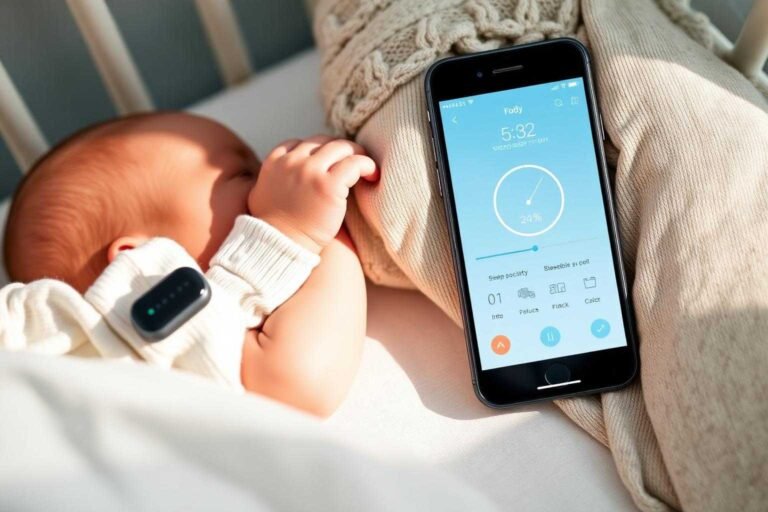
Early Waking After Daylight-Saving Time
Baby daylight saving sleep: the quick answer
A baby daylight saving sleep shift can cause early waking because a baby’s body follows light and routine, not the clock. After the change, move the whole schedule—bedtime, naps, and wake time—by about 15 minutes a day for three to four days. Keep the room dark in the early morning and hold a steady routine so the new time settles in.
For the full picture, read our pillar guide on Evidence-Based Baby Sleep Solutions.
Why baby daylight saving sleep happens — the sleep science
Babies do not read clocks. Their internal body clock, called the circadian rhythm, is set mostly by light, darkness, and repeated daily events like meals and sleep. When the clocks jump forward or back by an hour, the numbers change but your baby’s biology does not.
Picture a baby who normally wakes at 6:00 a.m. old time. After spring-forward, that same biological moment is now 7:00 a.m. new time. But the baby’s body still says “wake up” at the old light cue. If the sun is already up or the room is bright, the baby wakes early by the new clock. Parents then see a 5:00 a.m. or 6:00 a.m. wake-up that feels like a problem.
The good news is that the body clock is flexible. It can shift about 15 minutes per day in either direction. That is why a slow, staged shift works better than a sudden one-hour jump.
The gradual shift method
Start three to four days before the clock change if you can. If you forgot, the same method works after the change—just begin when you remember.
- Pick your direction. In spring (clocks forward), shift everything later by 15 minutes a day. In fall (clocks back), shift everything earlier by 15 minutes a day.
- Move bedtime first. Bedtime is the anchor. Shift it 15 minutes on day one.
- Shift naps and meals to match. Move the morning nap, afternoon nap, and meal times by the same 15 minutes so the whole day stays in step.
- Shift the wake time too. If you can, delay or advance the time you get your baby up by 15 minutes a day. This is the hardest part, because light will pull them awake.
- Use blackout curtains. Block early morning light so the body does not get the “it’s daytime” signal too soon.
- Hold the routine. Same wind-down order, same sleep sack, same sound. The clock changed; the cues should not.
- Give it three to four days. By day four, most babies have caught up to the new time.
If you did not prepare ahead
Many parents learn about the time change after it happens. That is fine. Start the 15-minutes-a-day shift the day you notice the early waking. The body clock moves at the same pace, so it still works—it just takes a few days after the fact.
Do not try to force a one-hour correction in a single day. A sudden shift tends to cause overtiredness, which then causes even earlier waking. Slow and steady wins.
Sample spring-forward shift
This shows a family shifting later by 15 minutes each day:
- Day 1: Bedtime 15 minutes later than usual; naps and meals 15 minutes later.
- Day 2: Cumulative 30 minutes later than the original schedule.
- Day 3: Cumulative 45 minutes later.
- Day 4: Fully aligned to the new clock time.
For fall-back, do the same steps in reverse, moving everything 15 minutes earlier each day.
Age-specific guidance
Newborns (0 to 3 months)
Very young babies have an immature body clock and sleep in short chunks around the clock. The time change barely affects them. Keep feedings and safe sleep habits; the schedule will sort itself out as their rhythm matures.
Babies 4 to 8 months
By this age, a clear day-night rhythm exists. The staged shift matters most here. Protect naps and use blackout curtains, because an early wake can snowball into short naps and an overtired evening.
Babies 9 to 12 months
Older babies and toddlers understand more. A visual “okay to wake” clock that turns green at the new wake time gives a concrete anchor. It reduces early-rising battles and teaches the new schedule in a way they can see.
Sample schedule (spring-forward example)
| Day | Bedtime | First nap | Wake time | Notes |
|---|---|---|---|---|
| —– | ——— | ———– | ———– | ——- |
| Normal | 7:30 p.m. | 9:30 a.m. | 6:30 a.m. | Before change |
| Day 1 | 7:45 p.m. | 9:45 a.m. | 6:45 a.m. | +15 min |
| Day 2 | 8:00 p.m. | 10:00 a.m. | 7:00 a.m. | +30 min |
| Day 3 | 8:15 p.m. | 10:15 a.m. | 7:15 a.m. | +45 min |
| Day 4 | 8:30 p.m. | 10:30 a.m. | 7:30 a.m. | Aligned to new clock |
A pre-change checklist
- [ ] Mark the date of the clock change on your calendar.
- [ ] Plan to start the shift three to four days early.
- [ ] Confirm blackout curtains are up in the nursery.
- [ ] Decide the direction (later for spring, earlier for fall).
- [ ] Tell all caregivers the new times so everyone stays consistent.
- [ ] Keep the same bedtime routine order every night.
Safety reminders
The time change does not change safe sleep rules. Follow the same AAP guidance:
- Always place your baby on their back to sleep.
- Use a firm, flat mattress with a fitted sheet only.
- Keep the sleep space free of bumpers, loose blankets, pillows, and positioners.
- Do not bed-share, especially on soft surfaces.
- Room-share without bed-sharing for at least the first six months.
- Never let a baby sleep in a lounger, swing, or inclined seat as a routine sleep spot.
A darker room helps both sleep and safety by reducing the chance of an early, overtired day.
When to Call Your Pediatrician
Early waking after a time change is normal and temporary. Call your pediatrician if:
- Your baby shows poor weight gain or fewer wet diapers than usual.
- There is a fever, especially under three months of age.
- You notice breathing changes: fast, noisy, or paused breathing.
- Your baby has a high-pitched or unusual weak cry.
- There are signs of dehydration, such as a dry mouth or no tears.
- Early waking lasts more than two to three weeks after the shift and comes with mood or feeding problems.
These can signal something beyond the clock change, and your doctor can help.
FAQ
How long does baby daylight saving sleep disruption usually last?
Most babies adjust within three to seven days if you shift the schedule gradually. A sudden one-hour change can take longer and cause more crankiness. The slower the shift, the smoother the result.
Should I wake my baby in the morning to fix the schedule?
During the shift, yes—if they wake earlier than your target, you can gently keep them in the dark and quiet until the planned wake time, or wake them at the new time to set the day. Consistency matters more than any single morning.
What if my toddler just gets up at the old time no matter what?
Use a visual wake clock that turns green at the new time, and keep the room dark. Reward staying in the room until the light changes. Hold the boundary calmly for several days.
Do I need to shift feeds too?
Yes, shifting meals and bottles by the same 15 minutes helps the body clock reset, because eating is a strong daily cue. Move feeds along with sleep times during the transition.
Will the time change ruin my baby’s sleep training?
A brief, planned shift rarely undoes good habits. Stick to your same routine and response style; only the clock times move. Most babies return to their prior pattern within a week.
What if the early waking is not the time change?
Not every early wake after a clock change is about the clock. Teething, a cold, a developmental leap, or a change in the household can all cause early rising. Before blaming the time change, check whether the baby is otherwise well. If the early waking started before the change or comes with other symptoms, look at those causes first.
Related reading: Baby Wakes Every Hour: Is It Hunger, Habit, or Discomfort.
A fallback plan if you missed the prep
Many parents remember the time change only after it happens. The same 15-minutes-a-day method works in reverse—start the day you notice. Move bedtime, naps, and wake time by 15 minutes daily until the schedule catches up. Expect three to four days of adjustment. The body clock moves at the same pace whether you planned ahead or not.
Toddlers, clocks, and the “okay to wake” light
Older babies and toddlers understand concrete cues. A visual clock that shows a green light at the new wake time gives them a clear “it’s okay to get up” signal. Before the light turns green, the rule is “stay in the room.” This reduces early-rising battles and teaches the new schedule in a way they can see and follow.
Travel and time zones
If you travel across zones, use the same gradual shift principle. Shift by 15 to 30 minutes a day toward the destination time starting a few days before, or shift after arrival. Keep the bedtime routine identical; the familiar order is the anchor your child can rely on anywhere.
Protecting naps during the shift
Naps are the canary in the coal mine during a schedule shift. If the early wake steals night sleep, the first nap may come early and short, which then pushes the whole day early. Protect the first nap by keeping the room dark and the routine the same, and consider an earlier bedtime on rough days to prevent a spiral of overtiredness.
Common mistakes during the shift
Parents often shift bedtime but forget naps and meals, so the day stays out of sync. Others shift too fast—an hour at once—which causes overtiredness and worse waking. A third mistake is inconsistent caregivers: if one parent holds the new time and another follows the old, the baby gets mixed signals. Align everyone on the same daily plan.
When early waking signals something else
If early waking continues more than two to three weeks after the shift and comes with poor mood, low appetite, or fewer wet diapers, the cause may not be the clock. Review with your pediatrician to rule out reflux, ear infection, or a feeding issue.
The role of morning light
Morning light is the strongest signal to the body clock that the day has begun. During a shift, once you reach the new wake time, open the curtains and let bright light in. This locks the new schedule faster than darkness alone. Conversely, before the new wake time, keep the room dark so the baby does not get the “daytime” cue too early.
A week-at-a-glance realignment table
| Day | Bedtime | First nap | Wake time | Goal |
|---|---|---|---|---|
| —– | ——— | ———– | ———– | ——- |
| 1 | +15 min | +15 min | +15 min | Start shift |
| 2 | +30 min | +30 min | +30 min | Continue |
| 3 | +45 min | +45 min | +45 min | Almost there |
| 4 | Aligned | Aligned | Aligned | New time set |
Preparing the nursery for the shift
A dark, calm room is your best tool during a time change. Put up blackout curtains so early morning light does not pull your baby awake before the new time. Use white noise to mask household sounds during the shifted schedule. Keep the room cool. These steps do not change the clock, but they make the body clock’s job easier and reduce early waking while the schedule settles.
A fall-back realignment example
For the autumn change, when clocks move back an hour, shift everything 15 minutes earlier each day:
| Day | Bedtime | Wake time | Note |
|---|---|---|---|
| —– | ——— | ———– | —— |
| 1 | 15 min earlier | 15 min earlier | Start |
| 2 | 30 min earlier | 30 min earlier | Continue |
| 3 | 45 min earlier | 45 min earlier | Almost |
| 4 | Aligned | Aligned | Done |
The method is the mirror of spring-forward. The body clock moves at the same pace in either direction, so the timeline is the same.
See also: Baby Crying in Sleep But Not Awake at Night.
When to ask for help
If early waking lasts longer than two to three weeks after the shift, or if it comes with poor feeding, low mood, or fewer wet diapers, check with your pediatrician. Sometimes what looks like a sleep-schedule problem is actually teething, reflux, or a growth-spurt feeding change. A quick review can rule out these causes and give you a clearer plan.
Locking in the new time with light and routine
Once you reach the new wake time, reinforce it. Open curtains and turn on lights at the new wake time so the body clock gets a strong “day has started” signal. Keep the bedtime routine identical every night. The combination of light timing and routine repetition is what makes the new schedule stick and prevents a slide back to the old early wake.
A note for daycare and caregivers
If your baby is in daycare, share the shifted schedule with the provider so naps line up. A mismatch between home and daycare times can undo the shift. A short written note with the new nap and wake times keeps everyone on the same page and supports a smoother transition for your baby.
Keeping the schedule steady during illness
When a baby is sick, sleep often slips, and the early-waking pattern can return. During illness, it is fine to offer extra comfort and contact; the schedule can be rebuilt once the baby recovers. Return to the staged, consistent approach over a few days rather than expecting the new time to hold through a fever. Temporary flexibility does not erase the work you did.
A two-week view of the change
| Phase | What to expect |
|---|---|
| ——- | —————- |
| Days 1–4 | Gradual 15-min shifts; some early waking |
| Days 5–7 | Schedule near new time; routine settling |
| Week 2 | New time usually stable; minor slips normal |
Viewing the change as a two-week process lowers stress. Most babies are fully realigned within that window.
One last reminder
The time change is temporary, and so is the early waking. Your baby’s body clock wants to follow a steady rhythm; your job is to guide it gently with small daily shifts and a calm, unchanging routine. Within a week or two, most families are back to normal. Be patient with the process and with yourself.
Common Myths vs Facts
- Myth: “A tired baby will fall asleep anywhere.” Fact: Overtired babies make more cortisol, which fragments sleep.
- Myth: “A later bedtime always means a longer night.” Fact: Only if anchored to the baby’s true sleep need; too late backfires.
- Myth: “One rough night means failure.” Fact: Judge progress across 1–2 weeks, not a single night.
- Myth: “You must sleep-train.” Fact: Consistency, a dark room, and gentle boundaries resolve many issues without formal training.
If Nothing Works After Two Weeks
- Re-check total daytime sleep (too much or too little both fragment nights).
- Confirm the room is genuinely dark and quiet until your chosen wake time.
- Review the last nap’s timing so it does not steal the night.
- Rule out discomfort: illness, teething, reflux, ear pain, growth spurt.
- Call your pediatrician for a brief check to exclude underlying issues.
- Baby Wakes at 5 a.m. Every Day
- Sleep Regression After Travel
- When Baby Fights Bedtime
- American Academy of Pediatrics — A Parent’s Guide to Safe Sleep
- NICHD Safe to Sleep — Safe Sleep Environment
- CDC — About Sudden Unexpected Infant Death
- World Health Organization — Newborn Care
About the author
Dr. Michael Anderson, MD (Pediatrics) is a board-certified pediatrician on the ChildBloom medical panel, focusing on infant sleep, safe sleep environments, and responsive routines. This article was medically reviewed and approved by Dr. Ahmad Raza, MD (Pediatrics) against current AAP safe-sleep guidance. Read our editorial and review standards.
This guide is general education, not a diagnosis. If you are worried about your baby’s breathing, feeding, growth, or sleep, contact your pediatrician. For any breathing emergency, call emergency services immediately.
Related ChildBloom Guides
- Start here: Evidence-Based Baby Sleep Solutions
- Safe Sleep During a Power Outage or Heat Wave
- Baby Cries in Sleep but Is Calm When Awake
- 8-Month Split Nights: What Causes Them and What Helps
- Night Feeding and Sleep
- Baby Wakes Every Hour but Is Not Hungry
- Browse all Sleep & Nursery guides
References & Medical Sources
- AAP guidance on getting your baby to sleep
- AAP healthy sleep hours by age
- NICHD Safe to Sleep: safe sleep environment
- NICHD infant sleep research overview
Reviewed by the ChildBloom pediatric panel. Learn about our physicians on the About page. This article is educational and does not replace your child’s clinician.