Nursery Air Quality: VOCs, Formaldehyde & What an Air Purifier Actually Removes
Medically reviewed by Dr. Ahmad Raza, MD (Pediatrics) — ChildBloom Medical Review Panel. Last updated: August 4, 2026.
For the full picture, read our pillar guide on Nursery setup: The Pediatrician’s Complete Nursery Setup Guide: Safe S.
Editorial & affiliate disclosure: our guidance is written and reviewed by clinicians. ChildBloom may earn a commission from qualifying purchases made through links on this page, which never changes what our pediatric reviewers recommend.
Looking for clear answers about nursery air quality? This pediatrician-reviewed guide covers what matters, what to skip, the safety checks that count, and exactly when to involve your doctor — based on current AAP, CDC and CPSC guidance on nursery air quality.
Quick pediatrician summary: nursery air quality
Short answer: A pediatrician explains nursery air quality: safe-sleep rules, what genuinely helps tonight, product checks and when to get help.
Nursery Air Quality: VOCs, Formaldehyde & What an Air Purifier Actually Removes
As an Amazon Associate, we earn from qualifying purchases.
B0C4Y5G6H7 Product does not exist anymore.
Written by the ChildBloom Pediatric Panel, FAAP | Medically reviewed | Last updated July 2026
You painted the nursery. You bought a new crib, a new dresser, a new rocking chair. You installed new carpet or laid down a new rug. The room looks beautiful. But it also smells — that “new” smell that is actually a mixture of volatile organic compounds (VOCs) off-gassing from paint, adhesives, pressed wood, and synthetic fabrics.
And your baby will spend 12-16 hours per day in this room, breathing this air.
Babies are more vulnerable to indoor air pollution than adults. They breathe more rapidly (30-40 breaths per minute vs. 12-20 for adults), meaning they inhale proportionally more air — and more of whatever is in that air. Their developing organs and immune systems are more susceptible to the effects of chemical exposure.
This article explains what is in your nursery’s air, what an air purifier can and cannot do, and how to protect your baby’s respiratory health.
PART 1: COMMON NURSERY AIR POLLUTANTS
1.1 VOCs (Volatile Organic Compounds)
VOCs are chemicals that evaporate (off-gas) at room temperature. They are emitted from:
- Paint and paint fumes (formaldehyde, benzene, toluene, xylene)
- Pressed wood furniture (formaldehyde from urea-formaldehyde resins in particleboard, MDF, and plywood)
- Carpet and carpet adhesives (4-phenylcyclohexene, styrene, VOCs)
- Vinyl flooring (phthalates, VOCs)
- Mattresses (formaldehyde, flame retardants, VOCs from foam)
- Air fresheners, candles, and cleaning products (formaldehyde, benzene, terpenes)
Health effects of VOC exposure in infants:
- Eye, nose, and throat irritation
- Headaches and dizziness
- Respiratory irritation and worsening of asthma
- Some VOCs (formaldehyde, benzene) are known or probable carcinogens with long-term exposure
1.2 Particulate Matter (PM2.5)
PM2.5 refers to fine particles 2.5 micrometers or smaller. Sources include:
- Dust and dust mites
- Pet dander
- Pollen (from outdoors)
- Mold spores
- Cooking fumes (if the nursery is near the kitchen)
- Outdoor air pollution
PM2.5 is small enough to penetrate deep into the lungs and enter the bloodstream. In infants, whose lungs are still developing, PM2.5 exposure is associated with increased respiratory infections and may affect lung development.
1.3 Biological Contaminants
- Mold spores: Grow in damp environments (bathrooms adjacent to the nursery, leaky windows, humid climates).
- Dust mites: Thrive in warm, humid environments. They live in mattresses, carpets, upholstered furniture, and stuffed animals.
- Bacteria and viruses: Circulate through the air, especially during cold and flu season.
1.4 Carbon Dioxide (CO2)
CO2 builds up in poorly ventilated rooms as occupants breathe. High CO2 levels (>1,000 ppm) are associated with poor sleep quality, headaches, and drowsiness. An air purifier does NOT remove CO2 — only ventilation with fresh air does.
PART 2: WHAT AN AIR PURIFIER CAN AND CANNOT DO
2.1 What It CAN Remove
TRUE HEPA FILTER (removes 99.97% of particles 0.3 micrometers and larger):
- Dust, pollen, pet dander
- Mold spores
- Some bacteria and viruses (though this is not a substitute for ventilation or infection prevention)
- Smoke particles
ACTIVATED CARBON FILTER:
Related reading: Baby Room Temperature & Sleep Clothing.
- Some VOCs (formaldehyde, benzene, toluene — though effectiveness varies by carbon quality and contact time)
- Odors (cooking smells, pet odors, diaper smells)
- Some gases
2.2 What It CANNOT Remove
- Carbon dioxide (requires fresh air ventilation)
- All VOCs (some pass through carbon filters; effectiveness depends on carbon quality, amount, and contact time)
- Radon (requires specific radon mitigation)
- Large debris (hair, large particles — these settle on surfaces and need to be vacuumed)
2.3 The Bottom Line on Air Purifiers
An air purifier with a true HEPA filter and a substantial activated carbon filter can meaningfully reduce particulate matter and some VOCs in the nursery. It is not a substitute for ventilation, source control (choosing low-VOC products), or regular cleaning — but it is a valuable addition.
PART 3: HOW TO IMPROVE NURSERY AIR QUALITY
3.1 Source Control (Most Effective)
- Choose low-VOC or zero-VOC paint (look for GREENGUARD Gold certification).
- Choose solid wood furniture over pressed wood (particleboard, MDF). If using pressed wood, look for GREENGUARD Gold or CARB Phase 2 compliance (California Air Resources Board standard for formaldehyde emissions).
- Choose a mattress with GREENGUARD Gold or CertiPUR-US certification.
- Avoid vinyl flooring in the nursery.
- Do not use air fresheners, candles, or essential oil diffusers in the nursery.
- Remove shoes before entering the nursery (reduces tracked-in pollutants).
3.2 Ventilation
- Open windows regularly (when outdoor air quality is good) to flush out accumulated VOCs and CO2.
- Before the baby arrives, set up the nursery at least 2-4 weeks in advance and ventilate heavily to allow off-gassing to occur before the baby is exposed.
- Consider an HRV (heat recovery ventilator) or ERV (energy recovery ventilator) for continuous fresh air without heat loss.
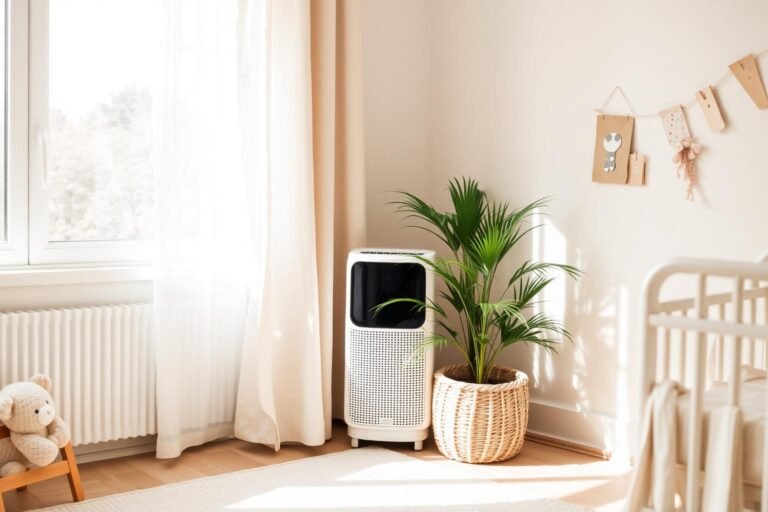
3.3 Air Purifier
- Choose a purifier with a true HEPA filter AND a substantial activated carbon filter (not just a thin carbon pre-filter).
- Match the purifier’s rated room size to your nursery (or choose one rated for a larger room — it will run more quietly at a lower speed).
- Run the purifier continuously (24/7) for maximum benefit.
- Replace filters according to the manufacturer’s schedule.
3.4 Humidity Control
- Maintain humidity at 40-60%. Below 40%: use a cool mist humidifier. Above 60%: use a dehumidifier or air conditioning.
- High humidity promotes mold growth and dust mite proliferation.
- Low humidity causes dry skin, nasal congestion, and increased susceptibility to respiratory infections.
PART 4: WHAT TO AVOID IN THE NURSERY
- Air fresheners and plug-in deodorizers: These add VOCs to the air rather than removing them.
- Essential oil diffusers: Essential oils are VOCs. Some (eucalyptus, peppermint, tea tree) can cause respiratory irritation in infants.
- Scented candles: Release particulate matter and VOCs when burned.
- Ozonators / “ionizers”: Ozone is a lung irritant. The EPA and AAP advise against the use of ozone-generating air purifiers, especially in children’s rooms.
- UV-C air purifiers: The evidence for effectiveness in home settings is limited, and some generate ozone as a byproduct.
PEDIATRICIAN’S TAKE
Indoor air quality is one of the most overlooked aspects of nursery setup. New furniture off-gases formaldehyde and other VOCs for months. Paint releases chemicals for weeks. And babies breathe more air per pound of body weight than adults, making them more vulnerable. The most effective strategy is source control: choose low-VOC products, ventilate the nursery before the baby arrives, and avoid air fresheners and essential oil diffusers. An air purifier with a true HEPA and carbon filter is a valuable addition — but it is not a substitute for choosing safe products in the first place.
WHEN TO CALL THE DOCTOR
- The baby has persistent respiratory symptoms (coughing, wheezing, congestion) that may be related to air quality
- Visible mold in the nursery or adjacent rooms
- Concerns about formaldehyde or VOC exposure from new furniture
- Crib Safety Standards: What Changed After the 2022 CPSC Update
- Nursery Temperature: The Ideal Range for Safe Sleep & Comfort
- The Pediatrician’s Complete Nursery Setup Guide
RECOMMENDED PRODUCTS
Best Air Purifiers for Baby Nurseries (True HEPA + carbon, quiet operation, GREENGUARD-certified options reviewed)
[See our top picks ->]
MEDICAL DISCLAIMER: This article is for informational purposes only and does not constitute medical advice. Always consult your pediatrician for guidance on your child’s specific needs.
Explore more pediatrician-reviewed guidance from ChildBloom:
- The Pediatrician’s Complete Nursery Setup Guide: Safe Sleep, Air Quality & Essentials
- Nursery Temperature: The Ideal Range for Safe Sleep & Comfort
- Do You Need a Nursery Glider? Ergonomics for Feeding & Back Health
- Best Nursery Lighting for Baby’s Circadian Rhythm
Authoritative External Sources
- American Academy of Pediatrics
- HealthyChildren.org (AAP)
Signs of Poor Indoor Air Quality in Your Nursery
Your baby cannot tell you that the air quality is poor, but they may show signs that indicate a problem. Respiratory symptoms that improve when you leave the house and worsen when you return can indicate indoor air quality issues. Your baby may have chronic congestion, a persistent cough, or unexplained wheezing that is worse in certain rooms of the house. Your baby may have red, itchy eyes indoors that improve when you go outside. Your baby may develop a rash that is not related to food or topical products. In addition to your baby’s symptoms, you may notice environmental signs of poor air quality. A musty smell indicates mold or mildew. Excessive dust on surfaces indicates poor filtration or high dust levels. Condensation on windows indicates high humidity, which promotes mold growth. Peeling paint or wallpaper can indicate moisture problems. Unexplained headaches, fatigue, or difficulty concentrating in adults can also be signs of poor indoor air quality. If you suspect your nursery has air quality problems, start by testing your home for radon, carbon monoxide, and mold. Consider hiring a professional to inspect your HVAC system and ductwork. An air purifier with a HEPA filter can help remove airborne particles, but identifying and eliminating the source of the problem is the most effective long-term solution.
Frequently Asked Questions
Q: When should I call the pediatrician?
A: Call immediately for: fever in a baby under 3 months, difficulty breathing, signs of dehydration (no wet diapers for 8+ hours, no tears when crying), lethargy or difficulty waking, a rash that doesn’t fade when pressed, or if your baby seems to be getting worse. For non-urgent concerns, call during business hours.
Q: How do I know if my baby is developing normally?
A: Development varies widely, but babies should show progressive gains in motor skills, social interaction, and communication. If your baby isn’t meeting multiple milestones or is losing skills they once had, discuss with your pediatrician. Early intervention is highly effective if there are delays.
Q: What products do I really need for my baby?
A: The essentials are: a correctly installed car seat, a safe sleep space (crib or bassinet with firm mattress), diapers and wipes, appropriate clothing, and a digital thermometer. Beyond these, focus on products that address specific needs rather than marketing claims. Always prioritize safety certifications over features.
See also: White Noise for Baby: Placement, Volume, and Safety.
Clinical Pearl: What the Research Actually Says
One of the most valuable skills a parent can develop is the ability to evaluate health information critically. In the age of social media and parenting influencers, misinformation about child health spreads faster than evidence-based guidance. When you encounter a new parenting recommendation — whether about sleep, feeding, development, or safety — ask yourself three questions: Who is making this recommendation and what are their credentials? Is the recommendation supported by peer-reviewed research or is it based on anecdote and tradition? Does the recommendation align with guidance from major medical organizations like the American Academy of Pediatrics, the Centers for Disease Control and Prevention, or the World Health Organization? If a recommendation contradicts established medical guidance, it should be viewed with skepticism, regardless of how compelling the testimonial may be. When in doubt, bring what you have read or heard to your pediatrician. We are trained to help you separate evidence from anecdote and to make decisions that are right for your individual child.
Natural Air Purification: Plants and Ventilation
In addition to mechanical air purifiers, several natural strategies can improve your nursery air quality. The most effective natural strategy is ventilation. Opening windows for 5 to 10 minutes daily, even in cold weather, flushes out accumulated indoor pollutants and brings in fresh outdoor air. Cross-ventilation, where you open windows on opposite sides of the room, is most effective. Exhaust fans in bathrooms and kitchens should be used consistently to remove moisture and pollutants at the source. Certain houseplants can help remove pollutants from indoor air, though their effectiveness is modest compared to mechanical purifiers. Snake plants, spider plants, peace lilies, and Boston ferns are known for their air-purifying properties. However, be careful with plant placement. Some plants are toxic if ingested, and soil can harbor mold. Place plants out of your baby reach. Avoid scented candles, air fresheners, and essential oil diffusers in the nursery, as these release volatile organic compounds into the air. Choose fragrance-free, low-VOC paints and furnishings when decorating the nursery. Remove shoes at the door to prevent tracking outdoor pollutants into the home. Vacuum regularly with a HEPA-filter vacuum to remove dust, pet dander, and other allergens. A combination of mechanical air purification and natural strategies provides the most comprehensive approach to nursery air quality management.
Related: Teething Timeline Symptoms Timeline And What Actually Helps
Frequently asked questions about nursery air quality
Where should my baby sleep for nursery air quality?
Alone, on the back, on a firm flat mattress in a crib, bassinet or play yard that meets current CPSC standards, in your room for at least the first six months. Keep pillows, blankets, bumpers and toys out of the sleep space.
Is nursery air quality a sign of a sleep problem?
Frequent night waking, short naps and unsettled evenings are developmentally normal in the first year. It may need review if your baby snores or pauses in breathing, is not gaining weight, or is excessively sleepy and hard to wake.
What actually helps with nursery air quality tonight?
A predictable short wind-down, a dark cool room, white noise at a safe volume and distance, age-appropriate wake windows, and putting your baby down drowsy but awake. Give any change five to seven consistent nights before judging it.
Common mistakes parents make with nursery air quality
- Assuming a higher price means a safer or better-performing option — certification and correct fit matter far more.
- Skipping the instruction manual, weight limits and product registration, which is how recall notices reach you.
- Changing several things at once, so you cannot tell what actually helped your baby.
- Relying on advice from social media instead of your pediatrician when something feels off.
- Best air purifier for baby nursery
- Nursery setup
- Best Nursery Lighting for Baby's Circadian Rhythm
- Best Nursery Humidifiers & Thermometers for Optimal Sleep
- baby sleep & nursery hub
- NICHD Safe to Sleep basics
- AAP 2022 safe sleep policy
- CPSC nursery recalls
Medical disclaimer: this article is for general education and does not replace individual medical advice. Always follow your own pediatrician’s guidance for your child.
Related ChildBloom Guides
- Start here: Nursery setup: The Pediatrician’s Complete Nursery Setup Guide: Safe S
- How to Dress Baby for Sleep by Room Temperature
- Baby Room Temperature: What’s Safe and What’s Dangerous (By Age)
- Nursery glider: Do You Need a Nursery Glider? Ergonomics for Feeding &
- Best air purifier for baby nursery
- Nursery Temperature: The Ideal Range for Safe Sleep & Comfort
- Browse all Sleep & Nursery guides
References & Medical Sources
- NICHD Safe to Sleep: safe sleep environment
- CPSC safe sleep and crib product rules
- EPA on VOCs and indoor air quality
- NIDCD on noise-induced hearing loss
Reviewed by the ChildBloom pediatric panel. Learn about our physicians on the About page. This article is educational and does not replace your child’s clinician.
2 Comments