How to Dress Baby for Sleep by Room Temperature
Baby sleep clothing: the quick answer
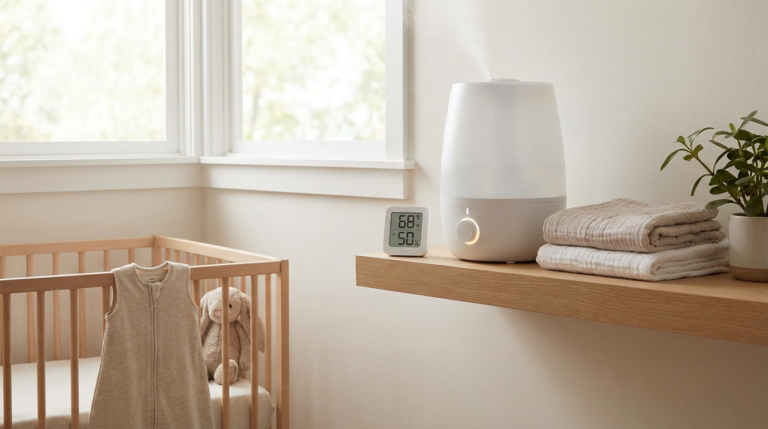
For safe baby sleep clothing temperature choices, dress your baby in about one extra layer compared to what you find comfortable, and use a fitted sleep sack instead of loose blankets. At 75°F (24°C) use a light onesie or diaper under a thin sack; at 70°F (21°C) a short-sleeve onesie plus sack; at 65°F (18°C) a long-sleeve onesie plus a warmer sack. Keep the room 68–72°F and avoid hats or loose bedding under 12 months.
For the full picture, read our pillar guide on Nursery setup: The Pediatrician’s Complete Nursery Setup Guide: Safe S.
The layering principle
The simplest rule is “you plus one.” If you are comfortable in pajamas, your baby gets pajamas plus a sleep sack. This accounts for the fact that babies are less able to regulate temperature and that a sleep sack replaces the blanket you would use.
Avoid stacking many loose layers. A pile of onesies and blankets can overheat a baby and also introduces loose items into the sleep space, which is unsafe under 12 months. One well-chosen layer plus a sleep sack is almost always enough.
The layering principle works in every season. In summer you lighten the base layer and pick a thin sack; in winter you choose a warmer sack and a long-sleeve base. The room thermometer, not the calendar, should drive the decision.
Temperature band guide
Use these bands as a starting point, then fine-tune with the chest check:
- 75°F+ (24°C+): thin onesie, lightweight (0.5 TOG) sack, or a diaper under a thin sack.
- 72°F (22°C): short-sleeve onesie plus a light (1.0 TOG) sack.
- 68°F (20°C): long-sleeve onesie plus a standard (1.0 TOG) sack.
- 65°F (18°C): long-sleeve onesie plus a warmer (2.5 TOG) sack.
- Below 65°F (18°C): long-sleeve onesie, possibly footed pajamas, plus a 2.5 TOG sack; still avoid loose blankets.
Every baby is different in size and metabolism, so the chest check after 20 minutes is the final authority.
Understanding sleep sack TOG
TOG (Thermal Overall Grade) measures how warm a sleep sack is. Higher TOG means warmer. Matching TOG to room temperature is the easiest way to dress a baby safely:
- 0.5 TOG: warm rooms, around 75°F (24°C) and up.
- 1.0 TOG: moderate rooms, around 68–72°F (20–22°C).
- 2.5 TOG: cool rooms, around 61–65°F (16–18°C).
Always read the sack’s own label, because brands differ slightly. A sleep sack replaces a blanket, so you do not add a quilt on top. Weighted sacks are not recommended for infants.
What to avoid
- Loose blankets, bumpers, and pillows under 12 months — suffocation risk.
- Hats indoors — they trap heat; overheating is a sleep risk.
- Weighted sleep sacks or blankets — not recommended; no evidence of safety.
- Too many layers “just in case” — invites overheating.
- Hand-me-down sacks without a clear TOG label — guesswork is unsafe; choose a labeled product.
Check comfort the right way
Hands and feet feel cool in babies normally. Do not use them to decide if the baby is cold. Instead:
- Slide a hand under the clothing onto the chest or the nape of the neck.
- Warm and dry means the outfit is right.
- Sweaty or hot means remove a layer and cool the room.
- Cool chest with a content baby usually means add one light layer.
This single check prevents most dressing mistakes.
Age-specific guidance
Newborn (0–3 months)
Newborns lose heat faster but must not overheat. Use a sleep sack, skip hats indoors, and keep the room 68–72°F. Premature or low-birth-weight babies need the care team’s specific plan.
3–6 months
The layering rule holds as babies grow. Rolling means the crib must stay bare, so a sleep sack (not a blanket) remains the safe warmth choice. Adjust with seasons.
6–12 months
More active babies generate more heat. Watch for sweating during long naps and lighten layers if needed. Continue the sleep sack until at least 12 months, when loose blankets become safer.
Sample clothing-by-temperature table
| Room temp | Base layer | Sleep sack (TOG) | Notes |
|---|---|---|---|
| — | — | — | — |
| 78°F / 25°C+ | Diaper or thin onesie | 0.5 | Fan for circulation, not on baby |
| 75°F / 24°C | Light onesie | 0.5 | Minimal layers |
| 70°F / 21°C | Short-sleeve onesie | 1.0 | Common comfort zone |
| 68°F / 20°C | Long-sleeve onesie | 1.0 | Standard cool-room setup |
| 65°F / 18°C | Long-sleeve onesie | 2.5 | Add footed pajamas if needed |
| 61°F / 16°C | Footed pajamas | 2.5 | Warmest typical home setting |
Use the chest check to confirm; the table is a guide, not a substitute for feeling your baby.
Travel and hotels
Hotel rooms are often warmer or cooler than home, and you cannot trust the thermostat reading. Pack the right TOG sack for your destination’s typical room temperature and do not rely on hotel blankets.
On planes and in cars, dress the baby in light layers you can add or remove, since cabin and car temperatures swing. A sleep sack is easier than wrangling a blanket on a moving baby, and it stays put safely.
Step-by-step dressing plan
- Measure the room with a thermometer; aim for 68–72°F (20–22°C).
- Pick the base layer for that temperature band.
- Choose a sleep sack TOG that matches the room.
- Skip hats and loose bedding indoors.
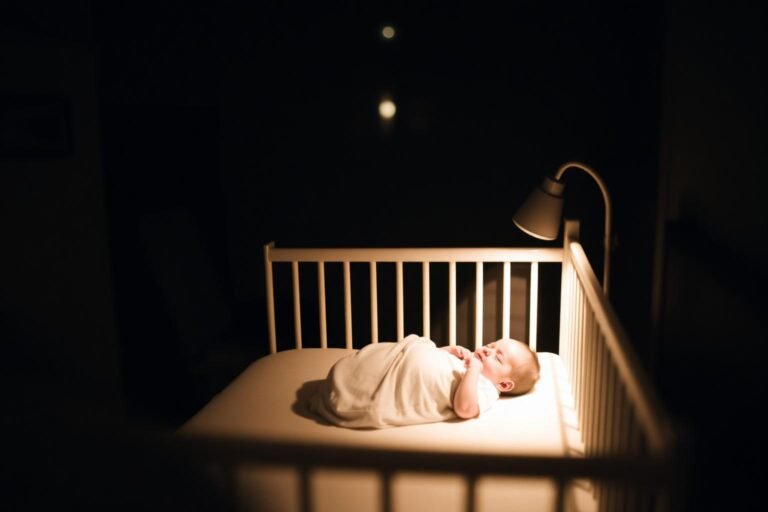
- Place the baby on the back in a bare, firm, flat sleep space.
- Check the chest or neck after 20 minutes.
- Adjust one layer if too warm or too cool.
- Recheck during illness, when fever changes needs.
Safety reminders
- Always place your baby on the back for sleep.
- Use a firm, flat, level surface that meets safety standards.
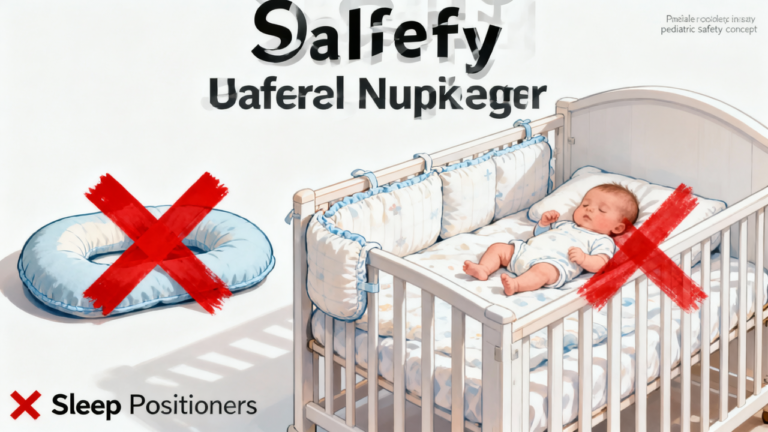
- Keep the crib bare: no bumpers, loose bedding, pillows, or positioners.
- Avoid overheating; it is a known SIDS risk factor.
- Do not bed share, especially on soft surfaces.
- Dress for the room and use a sleep sack instead of blankets under 12 months.
- No hats indoors once home.
Baby sleep clothing: when to call your pediatrician
Call your pediatrician if:
- Your baby has overheating with lethargy, flushed skin, or fast breathing.
- There is a fever, especially under 3 months — seek guidance promptly.
- You notice poor weight gain or feeding difficulty.
- There are breathing changes: fast breathing, grunting, pauses, or color change.
- The baby has a high-pitched or weak cry that is new.
- You see signs of dehydration: fewer wet diapers, no tears, dry mouth.
FAQ
What is the safest baby sleep clothing temperature setup?
Keep the room 68–72°F (20–22°C), dress the baby in one extra layer, and use a fitted sleep sack instead of a loose blanket. Check the chest or neck, not the hands and feet.
How many layers should my baby wear to sleep?
About one more than you would wear. Usually a onesie plus a sleep sack. Avoid piling on loose layers, which can overheat and are unsafe under 12 months.
What TOG sleep sack do I need?
Use 0.5 TOG for warm rooms around 75°F (24°C), 1.0 TOG for 68–72°F (20–22°C), and 2.5 TOG for cool rooms around 65°F (18°C). Always follow the sack’s label.
Should my baby wear a hat to sleep?
No, not indoors. Hats trap heat and can contribute to overheating, which is a known sleep risk. Use a sleep sack for warmth instead.
When can my baby use a loose blanket?
Not before 12 months. Until then, a fitted sleep sack is the safe way to keep a baby warm without the suffocation risk of loose bedding.
Common dressing myths
Myth: “Footed pajamas plus a blanket is best.” Fact: under 12 months, a sleep sack replaces the blanket, and loose blankets are unsafe.
Myth: “If I’m cold, the baby is cold.” Fact: your baby needs about one extra layer than you, not five. Over-layering overheats.
Myth: “Hats are needed for warmth at night.” Fact: indoors, hats trap heat and raise risk. Use a sleep sack instead.
Related reading: Baby Room Temperature & Sleep Clothing.
Myth: “One TOG works all year.” Fact: match the sack to the room; use 0.5 TOG when warm and 2.5 TOG when cool.
Building a seasonal sleep wardrobe
You do not need a huge wardrobe. A few onesies (short- and long-sleeve), one pair of footed pajamas, and two or three sleep sacks in different TOGs cover most homes. Label sacks by TOG so a tired parent at 2 a.m. grabs the right one. Keep a thin sack for travel and a warmer one for winter. Replace sacks that are stretched, torn, or missing their label, since you then lose the warmth guide.
Dressing for special situations
During a heat wave, use the lightest layers and a fan for air movement; keep the baby hydrated with normal feeds. In a cold snap or power outage, add a warmer TOG sack and footed pajamas rather than loose blankets; if the room is very cold, hold the baby skin-to-skin for warmth and return them to the safe sleep space when possible. While traveling, pack the right TOG for your destination and do not trust hotel thermostats—measure the room.
Signs the outfit is right
The outfit fits when the room is 68–72°F, the baby’s chest or neck is warm and dry, the base layer and sleep-sack TOG match the temperature, the head is bare indoors, and the crib is bare. Recheck after 20 minutes and adjust one layer at a time. Comfort, not the calendar, is the guide.
When in doubt, simplify
If you are unsure what to put on your baby, start with one light base layer and a 1.0 TOG sack in a 70°F room, then check the chest. It is far safer to begin light and add a layer than to over-bundle. The chest check after 20 minutes tells you the truth faster than any chart. Safe, simple dressing beats a complicated outfit every time.
Sleep sack fit and safety details
A sleep sack should fit snugly at the neck and arms but allow free leg movement. The neck opening must not be so loose that it can slip over the baby’s head. Check the sizing by weight and height on the label, not by age alone. A too-large sack can ride up and become a hazard; a too-small one restricts hips, which matters for healthy hip development.
Choose a sack with a two-way zipper for easy night changes, and avoid any with loose decorations, strings, or hoods indoors. A hood adds overheating risk and is not needed. The sack replaces a blanket, so do not layer a quilt on top. A correctly sized sack is the single safest way to keep a baby warm under 12 months.
Dressing a baby who can roll
Once a baby rolls both ways, continue placing them on the back, but you no longer need to flip them if they roll to the stomach during sleep. Two things stay constant: the crib stays bare, and the sleep sack stays on instead of a blanket. A rolling baby can get tangled in loose bedding, which is exactly why the sack matters more, not less, at this stage.
If your baby wears a swaddle earlier on, stop swaddling as soon as rolling starts, since a swaddled baby who rolls to the stomach cannot use their arms to reposition. Switch to a sleep sack at that point. This change is a normal milestone, not a setback, and the safe sleep rules carry right through it.
A parent’s quick-dress cheat sheet
Keep this simple list near the diaper station:
- Measure the room; target 68–72°F.
- Pick base layer by temperature band.
- Match sleep-sack TOG to the room.
- Skip hats and loose blankets indoors.
- Place on back in a bare crib.
- Check chest or neck after 20 minutes.
- Adjust one layer at a time.
Comfort, confirmed by the chest check, always beats a rigid chart. When unsure, start light and add a layer rather than over-bundling.
Dressing for growth spurts and illness
Babies change size fast, and a sack that fit last month may now be too small. Recheck the fit every few weeks; a snug neck that slips over the head is a sign to size up. During illness, temperature needs shift—a fever may call for lighter layers, while poor feeding can make a baby cooler and need slightly more. Check the chest more often when your baby is sick, and never add a hat to “treat” a fever. If your baby is unusually sleepy, flushed, or breathing fast, call your pediatrician.
See also: White Noise for Baby: Placement, Volume, and Safety.
Why “one extra layer” is the right mental model
The “you plus one” rule exists because babies are less able to regulate temperature than adults, not because they need to be bundled. One extra layer plus a sleep sack accounts for that gap without overheating. Parents who add five layers “just in case” create the bigger risk. When the chest is warm and dry, the outfit is right—stop there.
When the outfit is not enough: the sleep space
Clothing is only half of safe sleep. Even a perfectly dressed baby needs a firm, flat, bare sleep surface and a back-to-sleep position. A warm sleep sack does not make a soft couch or an inclined sleeper safe. If you are visiting and the only option is a couch or a makeshift bed, hold the baby or use a portable crib you brought; do not let a good outfit excuse an unsafe surface.
Also remember that the crib stays bare regardless of temperature. A cute blanket or lovie may be tempting on a cold night, but loose items are unsafe under 12 months. The sleep sack does that job. Pair correct clothing with a correct sleep space, and you have covered both halves of the equation.
Finally, keep the room smoke-free. Secondhand smoke raises SIDS risk and can irritate tiny airways, undermining even the best dressing choices. A clean, cool, smoke-free room plus a well-dressed baby in a bare crib is the full picture of safe sleep.
A good habit is to do a single nightly check that covers both halves: outfit right for the room, and space bare and flat. When both are true, you can put your baby down with confidence. No single layer or gadget replaces the combination of sensible clothing and a safe sleep surface.
Quick recap for tired parents
If you remember nothing else: keep the room 68–72°F, dress the baby in about one extra layer, use a sleep sack instead of a blanket, and check the chest or neck—not the hands and feet. Those four steps cover most dressing questions. Everything else, from TOG charts to travel kits, is detail on top of that foundation. When you are exhausted at 2 a.m., the simple version is enough.
Practical Summary You Can Use Tonight
- Write the ideal schedule on paper or in a notes app, then adjust it by your baby’s cues each day.
- Protect the first sleep of the night and the first nap — these are the anchors that steady the rest.
- Keep the sleep space the same every time: same room, same dark, same safe surface.
- Respond to night waking with calm consistency; the baby learns the expected pattern from your steady response.
- If a plan is not working after two weeks, step back, simplify, and check in with your pediatrician.
You do not need perfection. You need a safe, consistent rhythm that fits your family and protects your baby’s development.
- Best Baby Room Temperature for Sleep
- Baby Sleep in a Hot Room
- Is White Noise Safe for Babies?
- American Academy of Pediatrics — A Parent’s Guide to Safe Sleep
- NICHD Safe to Sleep — Safe Sleep Environment
- CDC — About Sudden Unexpected Infant Death
- World Health Organization — Newborn Care
About the author
Dr. Michael Anderson, MD (Pediatrics) is a board-certified pediatrician on the ChildBloom medical panel, focusing on infant sleep, safe sleep environments, and responsive routines. This article was medically reviewed and approved by Dr. Ahmad Raza, MD (Pediatrics) against current AAP safe-sleep guidance. Read our editorial and review standards.
This guide is general education, not a diagnosis. If you are worried about your baby’s breathing, feeding, growth, or sleep, contact your pediatrician. For any breathing emergency, call emergency services immediately.
Related ChildBloom Guides
- Start here: Nursery setup: The Pediatrician’s Complete Nursery Setup Guide: Safe S
- Nursery Air Quality: VOCs, Formaldehyde & What an Air Purifier Actuall
- Baby Room Temperature: What’s Safe and What’s Dangerous (By Age)
- Nursery glider: Do You Need a Nursery Glider? Ergonomics for Feeding &
- Best air purifier for baby nursery
- Nursery Temperature: The Ideal Range for Safe Sleep & Comfort
- Browse all Sleep & Nursery guides
References & Medical Sources
- NICHD Safe to Sleep: safe sleep environment
- CPSC safe sleep and crib product rules
- EPA on VOCs and indoor air quality
- NIDCD on noise-induced hearing loss
Reviewed by the ChildBloom pediatric panel. Learn about our physicians on the About page. This article is educational and does not replace your child’s clinician.