Baby’s First Flight: A Pediatrician-Reviewed Checklist
Medically reviewed by Dr. Ahmad Raza, MD (Pediatrics) — ChildBloom Medical Review Panel. Last reviewed: August 23, 2026.
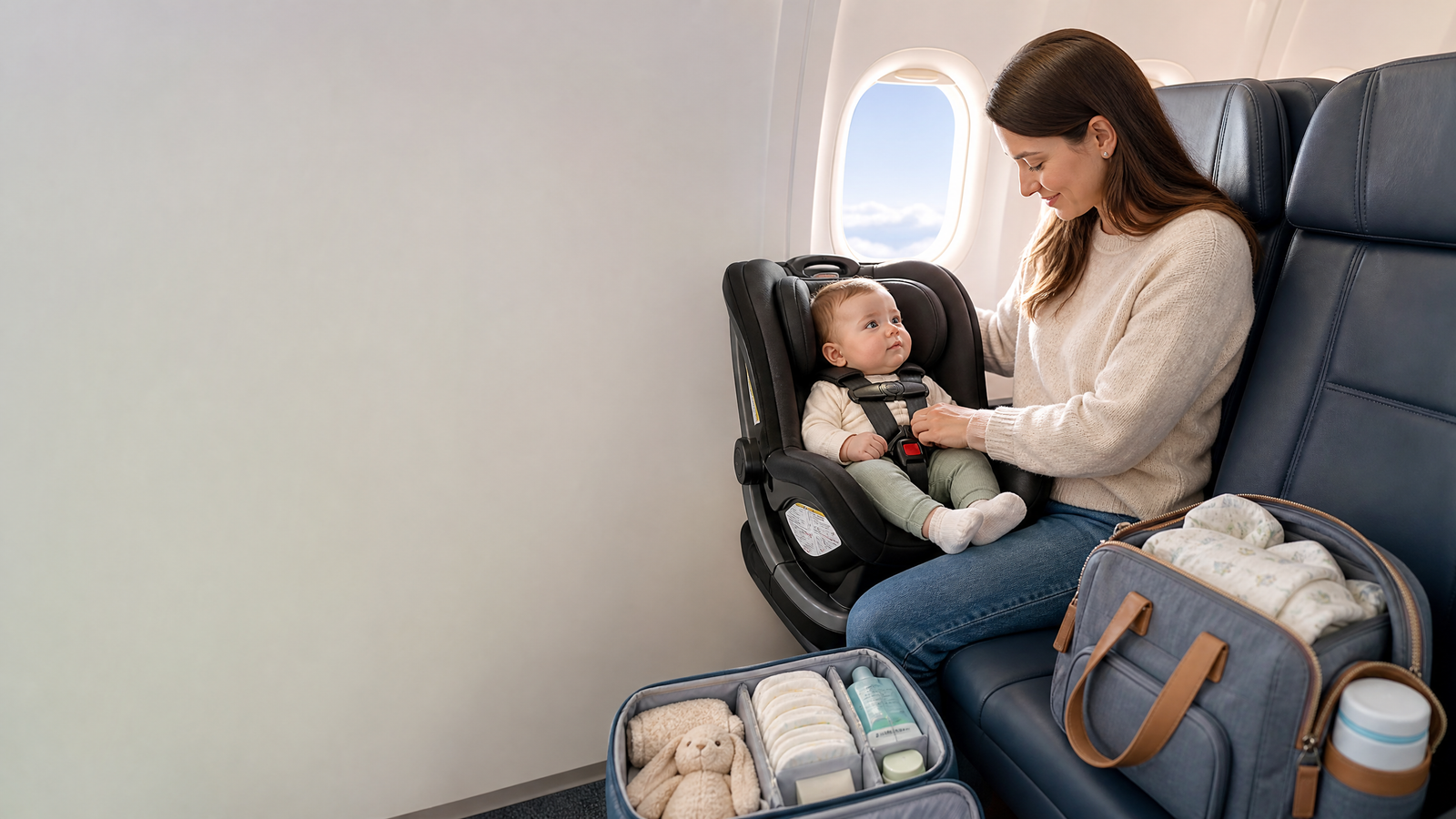
A first flight with baby is usually manageable with a simple plan. First, check your child’s health and the airline rules. Next, pack feeding and diaper supplies in your carry-on. Use an approved child restraint when possible. Finally, allow extra time for screening, boarding, and delays. 1 2 3
A first flight does not need military-level planning. Instead, focus on the basics. Your baby’s health, safe restraint, feeding, and essential supplies matter most. Therefore, you can leave bulky gear at home.
This guide is for families flying from the United States with a newborn, infant, or young toddler. Airline policies can change, especially for strollers, bassinets, lap infants, and baggage. Check the operating airline’s current rules before departure.
Quick checklist for a baby’s first flight
| When | What to do | Why it matters |
|---|---|---|
| Before booking | Consider age, health, destination, and whether your baby needs a medical check | A very young or medically complex infant may need individualized advice |
| Two to four weeks before | Confirm airline rules, seats, documents, car-seat approval, and destination care | Policies and documents vary by route and airline |
| Seventy-two hours before | Recheck the itinerary, pack the carry-on, and organize feeding supplies | Delays are easier when essentials stay accessible |
| At the airport | Arrive early, keep liquids and baby items together, and ask for help | Screening baby equipment takes extra time |
| Before boarding | Change the diaper, feed if appropriate, and install the restraint correctly | A calm setup reduces rushed decisions |
| During takeoff and landing | Keep the baby secured or held as allowed, and offer breast, bottle, or pacifier if useful | Swallowing may ease pressure discomfort |
| After landing | Recheck the car seat, feeding plan, sleep space, and medical supplies | The trip continues after you leave the airport |
1. Decide whether your baby is ready to fly
There is no single best age for every baby. When possible, the American Academy of Pediatrics says waiting until 2 to 3 months is ideal. For a deeper age-and-health discussion, see ChildBloom’s newborn flying guide. HealthyChildren.org says a healthy newborn may generally fly after 7 days. However, airports can increase infection exposure. 1
This is not a personal medical clearance. A premature, ill, or medically complex baby may need a different plan. The CDC recommends medical guidance for children with chronic heart or lung problems or sickle cell disease. 4 5 Therefore, call the clinician before booking if your baby has a fever, breathing trouble, repeated vomiting, feeding difficulty, or fewer wet diapers. Also ask after ear surgery or an ear infection. 1
2. Make a booking plan before you buy the ticket
Decide between a lap infant and a ticketed seat
U.S. airlines generally allow children younger than 2 years to travel as lap infants. However, permission is not the same as the safest arrangement. The FAA and AAP encourage an approved child restraint system, or CRS. Use it in the child’s own ticketed seat. The FAA describes an approved CRS as the safest place for a child under 2 on a U.S. airplane. 2 3
A ticketed seat is the only way to guarantee use of your child’s restraint. If you plan to use a car seat, budget for the extra seat. Also, confirm that it fits the aircraft seat. A lap infant may be permitted. Still, an adult’s arms cannot reliably restrain a child during severe turbulence. 2 3
Do not assume a free neighboring seat will be available. Some airlines may allow an empty neighboring seat. However, this depends on the airline. It is not guaranteed.
Choose seats carefully
Ask the airline about the best location for your family and your restraint. A window seat is often preferred for a rear-facing car seat. It is less likely to block another passenger’s exit path. Exit-row seating is not appropriate for a child restraint. Some aircraft and airlines restrict car seats in particular rows or seats. 1 2
A bulkhead row may offer more space, but it may also be where an airline bassinet attaches. A bassinet is not a car seat. It also has age, weight, and mobility rules. Ask about the airline’s bassinet size, booking process, and restrictions before relying on it.
If you travel with another adult, an aisle seat can make bathroom trips easier. Meanwhile, a window seat can create a more contained space for the baby. There is no perfect seat. Ask three questions. Is the restraint allowed? Can you reach your supplies? Can you care for your baby safely?
Check airline rules directly
Airline policies can cover newborn age, proof of age, lap-infant documents, stroller size, gate checking, bassinets, and car-seat placement. Codeshare flights may follow the operating carrier’s rules. Before booking, ask a few direct questions. Can your baby travel on this route? Which documents are required? Will the restraint fit? Where may it be installed? How do you gate-check gear? Save the current policy page on your phone.
3. Prepare the documents and health plan
For a domestic U.S. flight, TSA does not require identification from a child traveling with an adult. However, the airline may ask for proof of age. The airline may request a birth certificate or passport. Therefore, check its policy for lap infants and child fares. 1
For international travel, your baby needs a valid passport. Entry rules, visas, vaccines, and health concerns may also apply. In addition, the CDC recommends a visit with your child’s clinician or a travel-medicine specialist at least one month before travel. 5
Bring a photo or copy of important documents, but keep the original documents secure. Your carry-on health folder can include:
- Insurance information.
- Your pediatrician’s name and phone number.
- A list of current medicines and allergies.
- The baby’s feeding information if another caregiver may help.
- Destination medical-care details for international trips.
- Copies of prescriptions when relevant.
Do not start a new medicine to make your baby sleepy. For example, HealthyChildren.org warns against using diphenhydramine, such as Benadryl, for sedation without pediatrician guidance. Some children can have serious side effects. Others may become more alert. 1
4. Pack the carry-on around care, not convenience
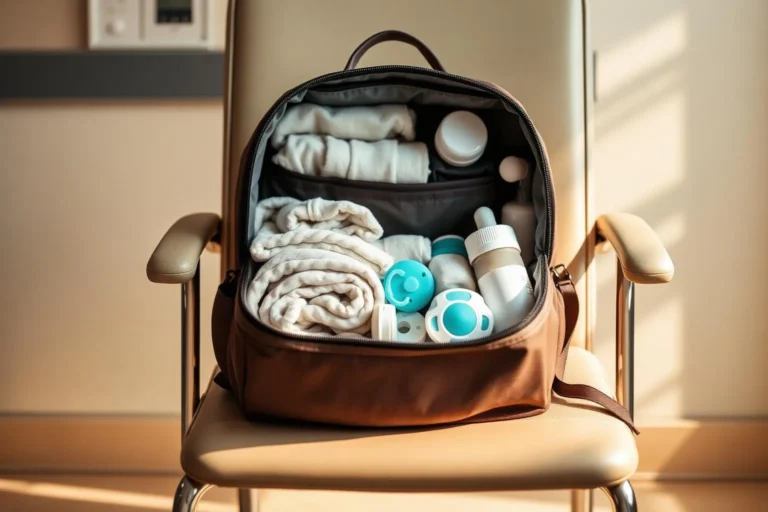
The carry-on is your real first-flight safety kit. For a broader packing reference, see ChildBloom’s baby travel essentials checklist. Checked luggage can be delayed. Pack enough for the travel day, delays, and one reasonable backup period. The exact amount depends on your baby’s age, feeding method, and trip length.
Diapering supplies
Pack diapers, wipes, a changing pad, diaper cream if needed, and sealable bags for wet clothing. Add one extra outfit for the baby. Also pack one for the adult most likely to hold the baby. A spare shirt can be more useful than a third toy.
Keep one small diaper kit at the top of the bag. Refill it from the larger supply after security. This prevents you from unpacking your entire carry-on in the airplane lavatory.
Feeding supplies
Bring the feeding supplies your baby already uses. These may include breast milk, formula, bottles, nipples, pump parts, burp cloths, bibs, and cleaning wipes. Choose only what fits your normal routine.
TSA allows breast milk, formula, toddler drinks, and baby food over 3.4 ounces or 100 milliliters. Cooling packs are also allowed. At screening, tell the TSA officer about these items. Remove them for separate inspection. You can ask for private screening if you prefer. 3
Do not hide milk or formula inside the bag. Instead, group it in an easy-to-open pouch. TSA may test liquids or perform extra screening. The agency says its X-ray machines do not harm food or medicine. However, you can tell the officer if you do not want an item X-rayed or opened. 3
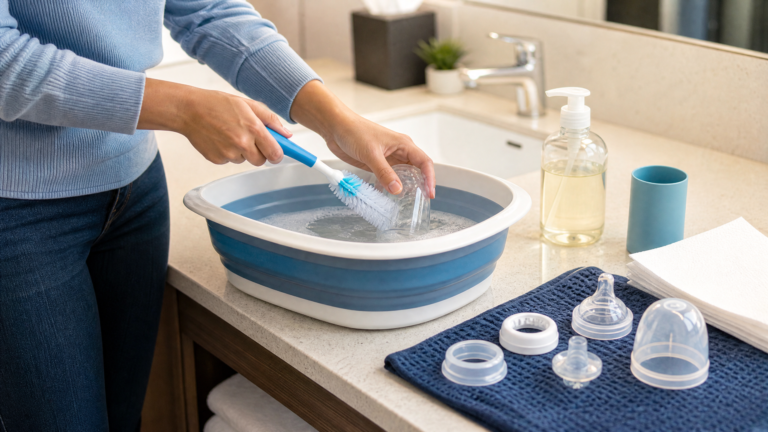
For formula, follow the manufacturer’s mixing instructions. Do not dilute formula to make it last longer. If you prepare bottles after security, plan where you will get safe water. Also plan how you will clean the feeding equipment.
Comfort and clothing
Dress your baby in layers. Airplane temperatures and delays can vary. Choose clothing that makes diaper changes simple. Pack a familiar sleep sack or pacifier if your baby uses one. However, do not add loose items to a sleep space.
Bring a small number of quiet, familiar toys. A soft book, teether, or fabric toy may be enough for a young infant. For an older baby or toddler, add one or two new activities. A full toy box is not needed.
Health supplies
Bring medicines your child already uses, preferably in the original packaging. Add prescribed treatment and a simple health-information card. Ask the pediatrician about age- and weight-appropriate medicines before travel. Keep all medicines in your carry-on and out of the baby’s reach.
5. Move through TSA with a baby
Expect your baby, stroller, carrier, car seat, and carry-on items to be screened. TSA allows infants and small children to be carried through a walk-through metal detector. Also, children are not separated from a parent or guardian during screening. 3
Strollers, carriers, car seats, booster seats, toys, blankets, and bags may need X-ray or physical inspection. Equipment that cannot fit through the X-ray machine may be inspected by hand. 3
Related reading: International Travel With a Baby.
Before joining the line:
- Put your liquids, milk, formula, and cooling packs together.
- Remove unnecessary items from stroller pockets and baskets.
- Keep the baby’s carrier easy to remove if requested.
- Place documents and boarding passes where you can reach them.
- Tell the officer about breast milk, formula, baby food, or medical needs before screening begins.
If you are anxious, ask the officer to explain the next step. TSA Cares provides assistance information for travelers with disabilities, medical conditions, or other screening needs. 3
6. Use a safe restraint on the aircraft
Look for the FAA label on the restraint. It should say, “This restraint is certified for use in motor vehicles and aircraft.” Then check the label and manual before travel. Not every car seat is approved for use on an airplane. ChildBloom’s FAA-approved car-seat guide explains the restraint details. 2
A hard-backed, FAA-approved car seat should be used according to the manufacturer’s instructions. Use the rear-facing or forward-facing position allowed by the manufacturer. Follow the same limits that apply in a car. If the seat does not fit, ask the airline about its approved accommodation process. 2
Do not use a booster seat, backless restraint, or ordinary baby carrier during taxi, takeoff, or landing. The FAA also distinguishes CARES from a car seat. CARES is an aircraft-only restraint. It is for children within its height and weight limits. It is not for infants. It cannot be used in a car. 2
If you use a car seat, board when invited. This gives you time to install it without blocking the aisle. Read the aircraft-installation section of the manual before leaving home. A seat that is easy to install in a vehicle may feel different on an aircraft seat.
7. Handle feeding, ear pressure, and sleep
Takeoff and landing
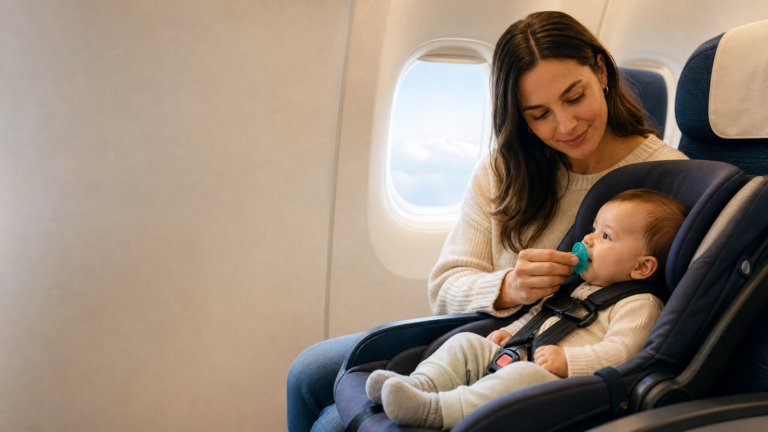
Cabin-pressure changes can bother babies, especially during descent. Swallowing may help. If your baby is awake and willing, offer breastfeeding, a bottle, or a pacifier during takeoff and landing. Do not force a feed. Also, do not delay a feed to match the flight schedule. 1 4
If your baby has a cold, recent ear infection, ear surgery, or unusual pain, ask the clinician for an individualized plan. The CDC says antihistamines and decongestants have not been shown to help routine airplane ear pressure. In addition, the AAP advises against decongestants in young children. 4
Sleep during the flight
A ticketed seat with an approved restraint is the safest setup during flight. Some airlines offer bassinets. However, bassinets have restrictions and cannot be used during every phase of flight. Follow the airline’s instructions and buckle your baby into the approved restraint for takeoff, landing, and turbulence. 1 2
If your baby falls asleep while held, the adult should stay awake and alert. Keep the baby’s face uncovered. Make sure breathing is easy. Do not improvise a sleep surface with a pillow, blanket nest, inflatable footrest, or unapproved seat extension.
8. Board with a simple plan
If you need time to install a car seat or organize feeding supplies, pre-boarding may help. Ask the gate agent about the current process. The goal is a safe setup, not necessarily being first on the plane.
9. Make the flight practical
Change the diaper before boarding. Still, you may need to change it again. Find the lavatory with a changing table. Keep one hand on the baby during every change. Never place a baby on an unsecured tray table, seat, or closed toilet lid.
Feed responsively. The travel day may change your baby’s pattern. However, do not force extra milk or solids. Carry more than the minimum for delays while following safe storage and preparation practices. Ask crew for help with bags, policies, or the changing table. If the baby cries, check the diaper, temperature, hunger, position, pain, and need for a break. Crying is not a parenting failure.
10. Rebuild the routine after landing
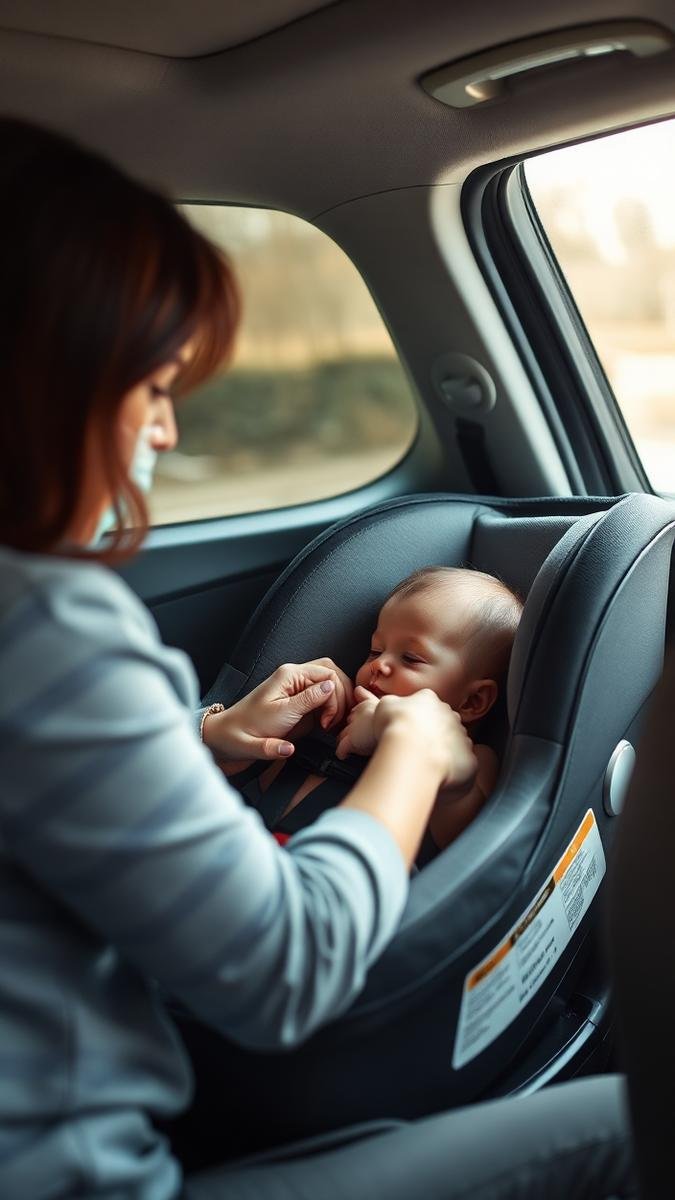
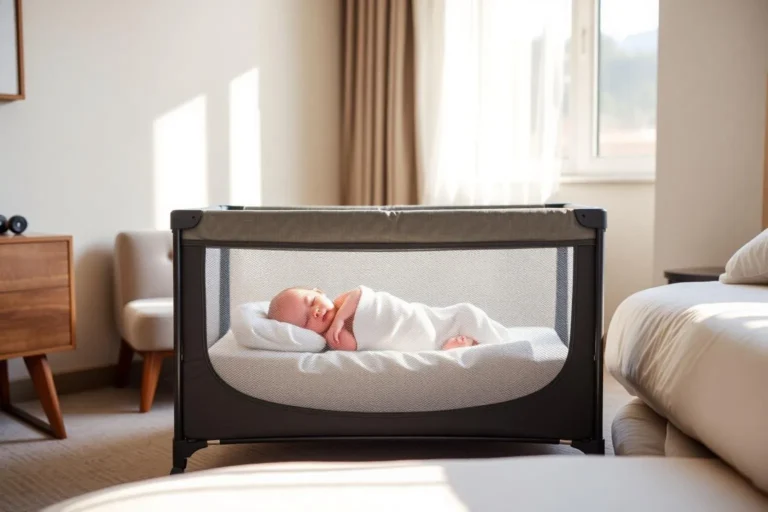
Return to familiar feeds, naps, and bedtime without demanding a perfect schedule. Inspect any rented or borrowed crib before use. ChildBloom’s portable crib safety guide can help with the sleep-space check. If you brought a car seat, install it correctly before the first drive. For longer or international trips, identify nearby medical care and consider travel insurance. 5
See also: Can You Bring Car Seat on Airplane Without Extra Seat (FAA).
What not to use for a baby’s first flight
Avoid sedating medicine without clinician advice, unapproved car seats, carriers during taxi or takeoff, makeshift sleep surfaces, and hidden liquids that complicate screening. Do not put essential medicine or formula in checked luggage.
When to call your pediatrician
Call your child’s clinician before the trip if your baby was born prematurely. Also call if your baby has a heart or lung condition. Call as well for sickle cell disease, a weakened immune system, or a current illness. Ask before flying after ear surgery or an ear infection. Ask for advice if your baby has feeding problems or breathing symptoms. Also ask about repeated vomiting, fever, or fewer wet diapers.
For international travel, arrange advice early. The CDC recommends a pre-travel appointment at least one month before departure. This matters even more when vaccines, medicines, destination risks, or chronic conditions need review. 5
After travel, tell the clinician about the trip if your child develops a fever or seems unusually ill. Seek urgent care for trouble breathing, blue or gray color, a seizure, severe dehydration, unresponsiveness, or another emergency symptom.
FAQ: first flight with baby
What is the best age for a baby’s first flight?
There is no universal best age. When possible, HealthyChildren.org says waiting until 2 to 3 months is ideal. A healthy newborn may generally fly after 7 days. Premature, ill, or medically complex babies need individualized advice. 1
Should I buy a seat for my baby?
A ticketed seat lets you use an approved child restraint and guarantees that space. The FAA and AAP encourage an approved CRS instead of relying on a lap arrangement. 2 3
Can I bring formula or breast milk through TSA?
Yes. TSA allows breast milk, formula, baby food, and cooling packs over the usual liquid limit. Tell the officer at the start and remove these items for separate inspection. 3
Should I feed my baby during takeoff and landing?
If your baby is awake and willing, offer nursing, a bottle, or a pacifier. Swallowing may ease pressure discomfort. Do not force a feed. If your baby has recent ear disease or unusual pain, ask a clinician for advice. 1 4
Can my baby sleep in an airplane bassinet?
Some airlines provide bassinets with age, weight, and mobility limits. Follow the airline’s instructions. During turbulence, takeoff, and landing, use the approved restraint or hold the baby as required. Do not add loose items. 1
Does my baby need identification for a domestic U.S. flight?
TSA does not require identification from a child traveling with an adult. However, the airline may request proof of age. Check current rules, especially for a lap infant. 1
The bottom line
For a baby’s first flight, plan around health, safe restraint, feeding, documents, and delays. Check airline rules before departure. Keep milk, formula, diapers, medicines, and a change of clothes in your carry-on. Use only an aircraft-approved restraint according to its instructions. If your baby has a medical condition or recent illness, ask the pediatrician before booking.
A calm first flight is not one where nothing goes wrong. It is one where you have enough time and supplies. It is also one where you can respond safely when the plan changes.
Author and medical-review note
Editorial status: Drafted for ChildBloom. Proposed physician reviewer: Dr. Ahmad Raza, MD, Pediatrics — verification pending. Medical review: Not yet completed. This article is educational and does not replace advice from your child’s own pediatrician.
- American Academy of Pediatrics / HealthyChildren.org: Flying With Baby — age considerations, restraints, bassinets, feeding, medicine cautions, identification, and passports.
- Federal Aviation Administration: Kids’ Corner — approved child restraint systems, labels, seating, lap-child safety, and CARES limits.
- Transportation Security Administration: Traveling with Children — screening, breast milk, formula, baby food, cooling packs, strollers, carriers, and child screening.
- CDC Yellow Book: Traveling Safely with Infants and Children — medical-condition considerations, ear pressure, medication cautions, and restraint safety.
- CDC Travelers’ Health: Traveling with Children — pre-travel appointments, vaccines, travel-health planning, and post-travel fever advice.
Related ChildBloom Guides
- Can You Bring Breast Milk Through TSA? A Practical Packing Guide
- Baby Ear Pressure on a Plane
- How Soon Can a Newborn Fly After Birth (Pediatrician)
- How Often to Stop on a Road Trip With a Baby
- Minimal Baby Travel Gear Checklist for Flying
- Browse all Travel guides
References & Medical Sources
- AAP / HealthyChildren: flying with baby
- FAA child air travel / car seats
- TSA traveling with children
- CDC travelers’ health
Reviewed by the ChildBloom pediatric panel. Meet our physicians on the About page. This article is educational and does not replace your child’s clinician.
6 Comments