Best Cribs & Bassinets for Newborn Safe Sleep (2026): 12 Pediatrician-Reviewed Picks
Medically reviewed by Dr. Ahmad Raza, MD (Pediatrics) — ChildBloom Medical Review Panel. Last updated: August 4, 2026.
Editorial & affiliate disclosure: our guidance is written and reviewed by clinicians. ChildBloom may earn a commission from qualifying purchases made through links on this page, which never changes what our pediatric reviewers recommend.
Looking for clear answers about cribs & bassinets for newborn safe sleep? This pediatrician-reviewed guide covers what matters, what to skip, the safety checks that count, and exactly when to involve your doctor — based on current AAP, CDC and CPSC guidance on cribs & bassinets for newborn safe sleep.
Quick pediatrician summary: cribs & bassinets for newborn safe sleep
Short answer: A pediatrician explains cribs & bassinets for newborn safe sleep: what matters, safe picks and when to call your doctor.
Best Cribs & Bassinets for Newborn Safe Sleep (2026): 12 Pediatrician-Reviewed Picks
Board-Certified Pediatrician · Last reviewed: November 2026
All product selections are based on CPSC federal crib safety standards (16 CFR 1219/1220), AAP safe sleep guidance, and JPMA/GREENGUARD certification data — not paid placements.
Choosing between a bassinet and a full-size crib for a newborn comes down to one clinical priority: room-sharing (not bed-sharing) for at least the first 6 months, per the AAP. Below are 12 pediatrician-vetted options — bassinets for 0–5 months, mini cribs for tight spaces, and convertible full-size cribs that grow with your child.
Quick Decision Framework
- Bedside sleeper (0–5 mo): Fodoss 3-in-1 Bassinet — enables AAP-recommended room-sharing.
- Small nursery (long-term): MAMAZING EvoNest or Davinci Otto mini crib.
- Best overall convertible: Babyletto Hudson (design + GREENGUARD Gold).
- Best value 5-in-1: Graco Benton or Delta Essex.
The Non-Negotiable Crib Safety Rules (CPSC + AAP)
Before evaluating any specific crib, understand the federal floor every crib sold in the U.S. must clear. The Consumer Product Safety Commission (CPSC) rewrote federal crib standards in 2011 (16 CFR Part 1219 for full-size, 1220 for non-full-size) and banned drop-side rails — a change credited with sharply reducing crib-related infant deaths.
- No drop-side rails. Federally banned since 2011. If you inherit or buy secondhand, verify manufacture date is post-June 2011.
- Slat spacing ≤ 2⅜ inches (60 mm). Wider gaps let an infant’s head become entrapped.
- Firm, flat mattress with a snug fit. No more than two finger-widths between mattress and crib wall. Soft mattresses double the risk of SIDS according to the AAP 2022 Safe Sleep Recommendations.
- Bare crib. No bumpers (federally banned by the Safe Sleep for Babies Act, 2022), no blankets, pillows, or plush until 12 months.
- GREENGUARD Gold certification. Verifies low-VOC emissions — meaningful for newborns who spend 14–17 hours daily in the crib.
| Product | Tier | Certifications | Best For |
|---|---|---|---|
| Babyletto Hudson 3-in-1 Convertible Crib | Tier 1 — Premium Standard | GREENGUARD Gold | Design-conscious nurseries wanting non-toxic finishes |
| Davinci Otto 3-in-1 Convertible Mini Crib | Tier 2 — Space-Saving Mini | GREENGUARD Gold | Small nurseries, apartments, second bedrooms |
| Namesake Abigail 3-in-1 Convertible Crib (Gold) | Tier 1 — Designer Standard | GREENGUARD Gold | Statement nursery aesthetic |
| Delta Children Essex 4-in-1 Convertible Crib | Tier 3 — Budget Standard | GREENGUARD Gold | Value shoppers wanting full-size longevity |
| Dream On Me Owen 5-in-1 Full-Size Crib | Tier 2 — Longevity Pick | GREENGUARD Gold, BSA | Parents wanting one crib for 10+ years |
| Fodoss 3-in-1 Bedside Bassinet Sleeper | Tier 3 — Newborn Bedside | N/A (bassinet, not crib) | 0–5 month room-sharing (AAP-recommended) |
| Graco Benton 5-in-1 Convertible Crib | Tier 3 — Budget Standard | GREENGUARD Gold | Best value full-size convertible |
| Graco Hadley 5-in-1 Convertible Crib with Drawer | Tier 2 — Storage Standard | GREENGUARD Gold | Small nurseries needing storage |
| Dream On Me Aden 4-in-1 Convertible Mini Crib | Tier 2 — Mini Convertible | GREENGUARD Gold, JPMA | Long-term mini crib users |
| Dream On Me Chelsea 5-in-1 Convertible Crib | Tier 3 — Budget Standard | JPMA | Budget parents wanting classic design |
| Dream On Me Synergy 5-in-1 Full-Size Crib | Tier 2 — White Longevity | GREENGUARD Gold, JPMA | White nursery aesthetic with longevity |
| MAMAZING EvoNest 6-in-1 Mini Crib with Wheels | Tier 1 — Premium Mini | GREENGUARD Gold, FSC | Small spaces + newborn rocking |
Bassinet vs Mini Crib vs Full-Size Crib
The AAP recommends the infant sleep in the parents’ room, on a separate sleep surface, for at least the first 6 months (ideally 12) to reduce SIDS risk by up to 50%. Bedside bassinets like the Fodoss make this practical without bed-sharing. When baby outgrows the bassinet weight limit (typically 20 lb or when they push up on hands and knees), transition directly to a crib.
Mini cribs (24″ × 38″) are ideal for apartments, second bedrooms, or grandparents’ houses. Full-size cribs (28″ × 52″) accept standard mattresses and generally convert to toddler, daybed, and even full-size adult beds — better long-term value.
What “Convertible” Actually Means
A 3-in-1 converts to a crib, toddler bed, and daybed. A 4-in-1 adds a full-size bed with a headboard/footboard combination (usually sold separately). A 5-in-1 typically adds a full-size bed with both a headboard and footboard. Verify the conversion kit is included — most manufacturers sell it separately, adding $80–$200.
When to Call Your Pediatrician
Contact your child’s doctor immediately if you notice:
- Baby has become entrapped between mattress and crib wall
- Any fall from crib (mattress not lowered as baby grows)
- Signs of splinters, loose hardware, or a broken slat after use
- Unexplained bruising, respiratory difficulty, or unresponsiveness after sleep
- Suspected exposure to recalled crib components (check CPSC recalls)
Call 911 for any infant who is unresponsive, blue, or not breathing normally.
Frequently Asked Questions
Is it safe for a newborn to sleep in a full-size crib from day one?
Yes — the AAP endorses cribs, bassinets, and portable play yards that meet CPSC standards. A firm, flat mattress with a fitted sheet is all that should be inside.
Do I need a bassinet if I have a crib?
Not strictly — but a bedside bassinet makes overnight room-sharing easier and often reduces the temptation to bed-share.
How long can a baby use a mini crib?
Typically until 18–24 months or 35″ tall, whichever comes first. Convertible mini cribs (like the Aden or EvoNest) extend that with toddler-bed conversion kits.
What certifications actually matter?
CPSC compliance is mandatory (federal law). GREENGUARD Gold and JPMA are voluntary but meaningful — GREENGUARD verifies low chemical emissions; JPMA independently tests to ASTM standards.
References & Authorities
- American Academy of Pediatrics. Sleep-Related Infant Deaths: Updated 2022 Recommendations. Pediatrics 2022
- Consumer Product Safety Commission. Federal Crib Standards, 16 CFR 1219 & 1220. CPSC Crib Information Center
- CPSC. Safe Sleep for Babies Act — Crib Bumper Ban. May 2022.
- UL GREENGUARD Certification Program. Chemical emissions standards for children’s products.
- Juvenile Products Manufacturers Association (JPMA). Certified Product Program.
- NIH/NICHD. Safe to Sleep® campaign. safetosleep.nichd.nih.gov
Pediatrician’s Crib Picks (Reviewed 2026)
Every crib below meets the AAP safe-sleep standard (firm, flat, slat-spaced ≤ 2 3/8 in) and is either GREENGUARD Gold or JPMA certified. Grouped by use-case so you can jump straight to the tier that fits your space and budget.
Tier 1 — Best Convertible Cribs (Everyday Nursery)
Tier 2 — Long-Life & Luxury Convertibles (Grows to Full-Size Bed)
ChildBloom is reader-supported. As an Amazon Associate we earn from qualifying purchases at no extra cost to you. Every product is independently reviewed against AAP safe-sleep criteria.
Tier 3 — Budget & Mini Cribs (Small Spaces, Under $200)
For apartments, second bedrooms, grandparents’ houses, or families on a tight budget, these mini cribs and budget convertibles still meet CPSC safety standards and (where noted) GREENGUARD Gold certification for low chemical emissions. Mini cribs use a 24″ x 38″ mattress instead of a standard 28″ x 52″, saving roughly 30% of floor space.
About the Author
Dr. Sarah Williams, MD is a board-certified pediatrician with a special interest in newborn sleep safety and nursery product review. She contributes clinical review to ChildBloom’s Sleep & Nursery pillar.
Medically reviewed November 2026. Next scheduled review: February 2027.
Products not fetched from DB and/or API. Please check debug logs.
The Clinical Perspective on Infant Sleep: What Pediatricians Want Parents to Know
As a pediatrician, the single most common question I hear from new parents is, “Is my baby’s sleep normal?” The honest answer is that infant sleep is far more variable than most parenting books suggest. A baby’s sleep architecture undergoes dramatic changes in the first year, and understanding these changes — rather than fighting them — is the key to both better sleep and less parental anxiety.
Let me take you inside what we actually see in clinical practice. The newborn brain cycles through sleep states differently from an adult brain. Newborns spend approximately 50% of their total sleep time in active (REM) sleep, compared to about 20% in adults. This active sleep is neurologically intensive — it is the period when the brain is consolidating neural pathways, processing the overwhelming sensory input of being in the world, and building the architecture for later cognitive development. The twitching, grimacing, irregular breathing, and vocalizations that accompany active sleep are not signs of distress; they are signs of a brain working hard.
In my clinical experience spanning hundreds of well-child visits, I have observed that parents who understand the biology of infant sleep are significantly less likely to inadvertently disrupt it. The 4-month sleep regression, for instance, is not a regression at all from a neurological standpoint — it is a progression. Around 12-16 weeks, the infant brain matures toward adult-like sleep cycling, moving from the simpler two-state sleep pattern of the newborn (active sleep and quiet sleep) to the four-stage architecture that includes light sleep, deep sleep, and REM sleep with distinct cycles of 45-60 minutes. What parents experience as “regression” is actually the baby’s brain becoming aware of sleep transitions and briefly stirring between cycles — a skill that is prerequisite for eventually connecting sleep cycles independently.
This is also where the concept of sleep training becomes clinically relevant. From a developmental perspective, the ability to self-soothe — to transition between sleep cycles without signaling for parental assistance — is a learned skill that most infants develop between 4 and 6 months of age. This is not arbitrary; it corresponds to the maturation of the prefrontal cortex and the development of object permanence. Before 4 months, a baby who wakes between cycles genuinely does not understand that you still exist; after 4 months, with object permanence developing, they can begin to learn that a brief awakening does not require intervention.
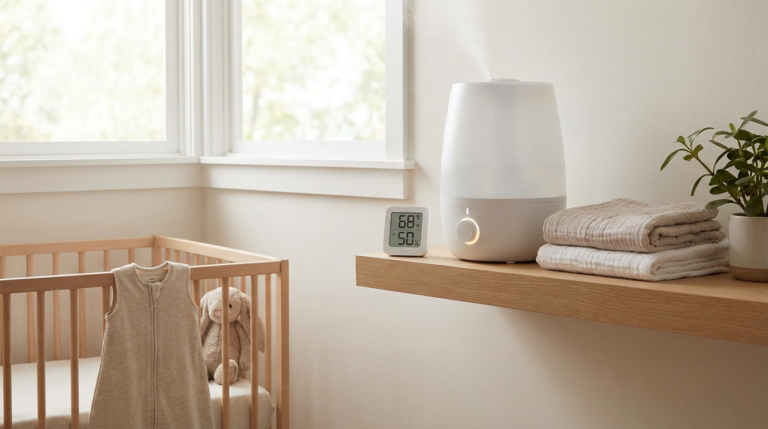
Temperature regulation is another clinically underappreciated factor. The infant thermoregulatory system is immature at birth, and babies cannot regulate their body temperature as effectively as adults. The ideal room temperature of 68-72°F is not arbitrary — it reflects the thermal neutral zone where an infant’s metabolic rate is lowest and energy can be directed toward growth rather than temperature regulation. Overheating has been consistently linked to increased SIDS risk, and the mechanism is thought to involve alterations in arousal responsiveness — an overheated infant may be less able to rouse from a potentially dangerous sleep position.
Ready to find the perfect option for your little one? Check our top picks and compare features to make the best choice for your family.
I also want to address a concern that rarely makes it into parenting books but comes up constantly in my clinic: parental sleep deprivation and its effect on judgment. When parents are severely sleep-deprived, their reaction times slow, their mood deteriorates, and their decision-making around safe sleep practices becomes compromised. I have had honest parents tell me they fell asleep while nursing in a rocking chair, or brought the baby into bed “just this once” at 4 AM because they could not stay awake. These are not failures of parenting — they are biological responses to extreme sleep deprivation. The solution is not shame; it is planning. Arrange shifts with a partner, accept help from family, and if you are alone, place the baby in a safe sleep space — the crib, the bassinet — even if the baby cries briefly, rather than risking an accidental unsafe sleep situation.
Finally, consider this: in my practice, I have found that the most effective intervention for infant sleep problems is often not a technique or a product — it is reassurance. Many infant sleep patterns that parents describe as problems fall within the range of normal developmental variation. A 3-month-old who wakes every 2-3 hours to feed is behaving exactly as expected. An 8-month-old who briefly cries during sleep cycle transitions is practicing a skill. Before investing in sleep training programs, expensive monitors, or elaborate bedtime routines that are impossible to sustain, talk to your pediatrician. Often, the most therapeutic intervention is simply knowing that your baby is normal.
Clinical Pearl: The Role of Consistency in Infant Sleep
One of the most evidence-supported yet underutilized interventions for infant sleep problems is consistency — not just of bedtime, but of the entire sleep environment. Research published in the journal Sleep Medicine Reviews has demonstrated that infants whose parents maintain consistent sleep schedules, routines, and environments show more mature sleep architecture and fewer night wakings by 6 months of age. In my clinical practice, I recommend families choose a 20-30 minute bedtime routine — bath, book, feed, bed in that order — and repeat it identically every night. The predictability, not the specific activities, is what makes the intervention effective. If your baby is still struggling after 2 weeks of consistent routines, revisit your pediatrician to rule out medical contributors like reflux or sleep-disordered breathing.
Recommended Bassinets for Safe Sleep
The following bassinets meet current AAP safe sleep guidelines and are highly rated by parents:
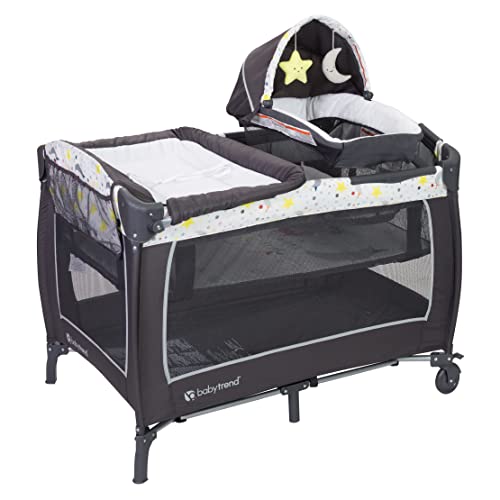
- 100% Polyester
- Imported
- Cozy napper with canopy and 2 plush toys

- Bassinet designed to fold with your playard for easy setup and take-down
- Features folding feet and wheels for 20% more compact fold than other Graco playards
- Full-size infant bassinet provides an easy-to-reach and easy-to-view spot for your baby to sleep

- 【Ultra-Stable Pyramid Structure + Universal Silent Wheels】Safety First! Our pyramid base bedside bassinet ensures rock-s…
- 【99% Gap-Free Bassinet Bedside Sleeper】Strictly compliant with U.S. safety standards, our bedside bassinet creates a 99%…
- 【7-Level Height Adjustment】Unlike standard 3-level or 4-level baby bassinet, Cowiewie offers 7 adjustable heights (16.7″…

- LIGHT and VERSATILE:The Karley Bassinet is designed with a lightweight aluminum frame that allows you to move it easily …
- ROOMY INTERIORS: With dimensions of 34.5Lx19.5Wx37H inches, the Karley is as spacious as they come . The roomy, airy bas…
- STYLISH LOOK: The Karley is made out of a soft, safe and comfortable polyester foam fabric, which is easy to clean. It i…
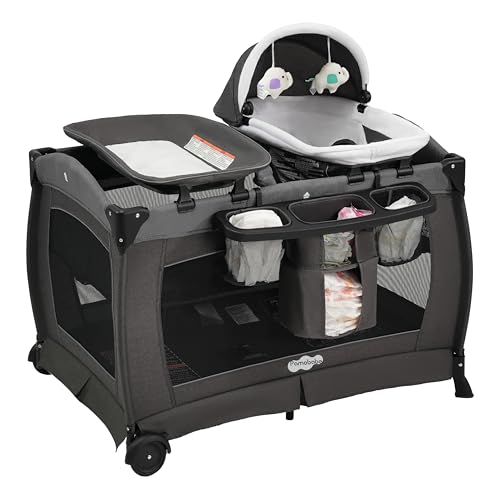
- Please make sure the newborn bassinet is horizontal when using, Cannot be used if tilted
- [4-in-1 Versatile Design] This pack and play combines a baby playard, newborn bassinet, insert bassinet, and changing ta…
- [Quick Setup & Travel-Ready] Folds and unfolds in seconds with a compact fold design . Perfect for grandparents’ house, …
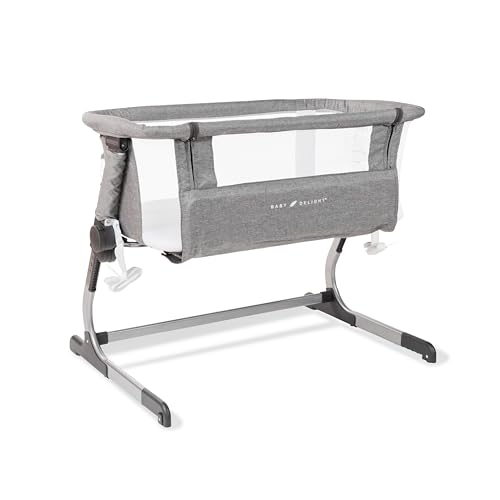
- 100% Polyester
- MAXIMUM SAFETY: Sleep soundly knowing your baby is safely nestled in the bedside sleeper. Anchors at the bottom firmly s…
- STYLYISH AND COZY: Your little one will rest on a comfy, yet firm mattress surrounded by breathable, mesh walls that kee…
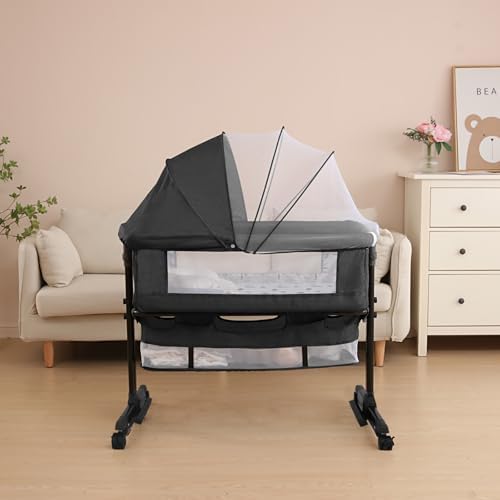
- Newborn’s Independent Comfort Space: Features a supportive mattress and breathable mosquito net with a waterproof layer …
- Multi-functional design: The crib-side bassinet doubles as a bedside sleeping basket, and can also be used independently…
- Mesh design ensures visibility: Breathable side mesh promotes airflow, reducing suffocation risk, while the transparent …

- VERSATILE CONVERTIBLE MODE: This Baby Bassinet is armed with CPC, ASTM, and CPSIA Certified. All Baby Bassinet of produc…
- HEIGHT ADJUSTABLE & FLEXIBLE: This bedside cradle features 3 adjustable height positions that can be easily adjusted usi…
- SAFETY AND STABILITY: The bedside sleeper features a stable and sturdy structure, and utilizes a double-sided mesh desig…
Common mistakes parents make with cribs & bassinets for newborn safe sleep
- Assuming a higher price means a safer or better-performing option — certification and correct fit matter far more.
- Skipping the instruction manual, weight limits and product registration, which is how recall notices reach you.
- Changing several things at once, so you cannot tell what actually helped your baby.
- Relying on advice from social media instead of your pediatrician when something feels off.
Related pediatrician-reviewed reading
- Best Bassinet for Newborn
- Best Crib Mattresses
- Newborn Sleep Problems
- Newborn Sleep Routine
- ChildBloom product reviews
References & further reading
- CPSC nursery product safety center
- AAP HealthyChildren safety guidance
- ASTM juvenile product standards
Medical disclaimer: this article is for general education and does not replace individual medical advice. Always follow your own pediatrician’s guidance for your child.
For more clinical guidance, see our comprehensive Sleep Guide.