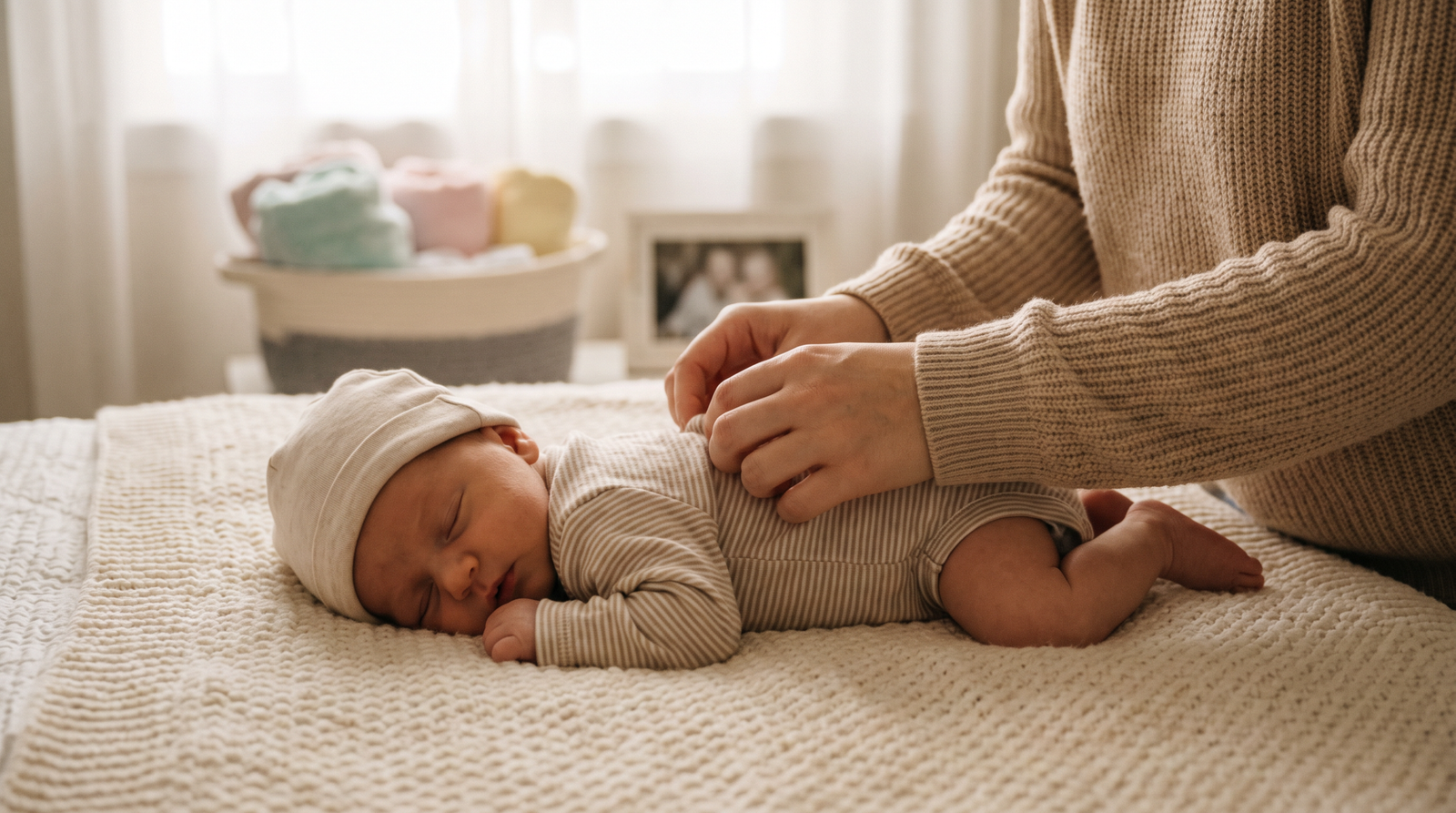
Baby Massage Techniques: 10 Gentle Strokes for Sleep and Digestion
Medically reviewed by Dr. Ahmad Raza, MD (Pediatrics) — ChildBloom Medical Review Panel. Last updated: August 4, 2026.
Editorial & affiliate disclosure: our guidance is written and reviewed by clinicians. ChildBloom may earn a commission from qualifying purchases made through links on this page, which never changes what our pediatric reviewers recommend.
Looking for clear answers about baby massage techniques? This pediatrician-reviewed guide covers what matters, what to skip, the safety checks that count, and exactly when to involve your doctor — based on current AAP, CDC and CPSC guidance on baby massage techniques.
Quick pediatrician summary: baby massage techniques
Short answer: A pediatrician explains baby massage techniques: what is normal, the real risks, red flags to watch for and exactly when to call your doctor.
Introduction
New parents often search for natural ways to calm a fussy baby, ease digestion, and encourage longer stretches of sleep. Baby massage techniques offer a gentle, evidence-backed solution that strengthens your bond while supporting your infant’s physical development. You do not need special training or expensive equipment — just your hands, a quiet room, and a few minutes of focused attention.
Research published in the Journal of Pediatric Psychology shows that regular infant massage can reduce cortisol levels, improve sleep patterns, and even support healthy weight gain in preterm infants. The American Academy of Pediatrics (AAP) recognizes gentle touch as a valuable component of newborn care when practiced safely.
This guide walks you through 10 proven baby massage techniques step by step. Each stroke targets a specific need — from relieving gas to promoting restful sleep. You will also learn when to massage, what oils are safe, and when to skip a session entirely.
Table of Contents
- Why Baby Massage Matters
- Before You Begin: Safety First
- The 10 Baby Massage Techniques
- 1. The Chest Opener
- 2. The Arm Roll
- 3. The Palm Press
- 4. The Belly Clockwise Circle
- 5. The I Love You (ILY) Stroke
- 6. The Knee Tuck
- 7. The Leg Roll
- 8. The Foot Squeeze
- 9. The Back Brush
- 10. The Forehead Smooth
- Best Times to Massage Your Baby
- Choosing a Safe Baby Oil
- How Massage Supports Sleep and Digestion
- Key Takeaways
- Frequently Asked Questions
- When to Call the Pediatrician
- Bottom Line
- References
Why Baby Massage Matters
Infants communicate through crying, body language, and facial expressions. Massage gives you a direct channel to soothe their nervous system. Gentle, rhythmic strokes activate the vagus nerve, which helps regulate heart rate, digestion, and stress response.
Featured Snippet Answer: Baby massage techniques stimulate the vagus nerve, lower stress hormones, improve digestion, and promote longer sleep cycles. Regular massage also strengthens parent-infant attachment and supports healthy weight gain.
The benefits extend beyond relaxation. A 2014 Cochrane review found that massage therapy reduced crying duration in Colicky infants by an average of 50 minutes per day. Another study in the Indian Journal of Pediatrics linked daily massage to improved weight gain in preterm babies.
Here is a quick summary of the core benefits:
| Benefit | What the Research Shows |
|---|---|
| Better sleep | Increased melatonin production, longer sleep cycles |
| Reduced colic | Shorter crying episodes, less gas buildup |
| Stronger bonding | Higher oxytocin levels in both parent and baby |
| Improved digestion | Enhanced intestinal motility and nutrient absorption |
| Weight gain support | Especially noted in preterm infant studies |
| Reduced stress | Lower cortisol and adrenaline levels |
Before You Begin: Safety First
Before you try any baby massage techniques, review these safety guidelines. The AAP and NHS both emphasize that infant massage should be gentle, brief, and responsive to your baby’s cues.
Do:
- Wait until your baby is at least one week old (or cleared by your pediatrician).
- Use a firm, flat surface like a changing table with a soft blanket.
- Warm your hands and the oil before touching your baby’s skin.
- Keep sessions short — 10 to 15 minutes for newborns, up to 20 minutes for older infants.
- Maintain eye contact and talk softly throughout the session.
- Stop immediately if your baby cries, stiffens, or turns away.
Do Not:
- Massage directly after feeding. Wait at least 45 minutes.
- Apply pressure to the spine, joints, or soft spots (fontanelles).
- Use essential oils, menthol, or camphor-based products on infants under 3 months.
- Massage over rashes, broken skin, or areas of redness.
- Force a session if your baby is clearly unhappy.
Tip: The best time to start baby massage techniques is during a calm, alert window — usually 30 to 60 minutes after a feed, when your baby is relaxed but not sleepy.
The 10 Baby Massage Techniques
Each of these baby massage techniques targets a specific area of your baby’s body. Use slow, gentle strokes and adjust pressure based on your baby’s response. Always use the flat of your fingers or palm — never your fingertips.
1. The Chest Opener
Target: Chest and shoulders
Best for: Breathing comfort, relaxation
Place both hands flat on the center of your baby’s chest. Glide your hands outward toward the shoulders in a smooth, book-opening motion. Return to the center and repeat.
- Perform 3 to 5 repetitions.
- Keep your thumbs above the nipple line.
- This stroke helps open the airways and eases congestion.
2. The Arm Roll
Target: Arms and hands
Best for: Circulation, muscle relaxation
Hold your baby’s arm gently near the shoulder. Using your thumb and fingers, roll downward from shoulder to wrist in a milking motion. Switch arms and repeat.
- Perform 3 repetitions per arm.
- Use a light, squeezing pressure.
- Finish by gently rubbing the palm of each hand with your thumb.
3. The Palm Press
Target: Hands and fingers
Best for: Fine motor stimulation, calming
Open your baby’s fist with your thumb. Press gently into the center of the palm and stroke outward toward each finger. Repeat on each finger individually.
- Spend about 30 seconds per hand.
- This technique is especially soothing before naptime.
- Many parents pair this stroke with soft singing or humming.
4. The Belly Clockwise Circle
Target: Abdomen
Best for: Gas Relief, digestion support
This is one of the most important baby massage techniques for colic and constipation. Place your flat palm just below your baby’s ribcage. Stroke in a slow clockwise circle, following the path of the colon.
- Perform 5 to 8 slow circles.
- Always move clockwise — this follows the natural direction of the digestive tract.
- Use a warm hand and gentle pressure.
- You may hear gurgling sounds, which indicate gas movement.
Featured Snippet Answer: To massage your baby’s belly for gas relief, use flat fingers and stroke in slow clockwise circles below the ribcage. Follow the path of the colon for 5 to 8 repetitions. Wait at least 45 minutes after feeding before starting.
5. The I Love You (ILY) Stroke
Target: Abdomen
Best for: Digestion, bonding
This three-part stroke traces the letters “I,” “L,” and “Y” on your baby’s belly using your fingertips.
- “I” — Stroke downward on your baby’s left side, from ribcage to pelvis.
- “L” — Stroke across the upper belly from right to left, then down the left side.
- “Y” — Stroke from the upper right belly down through the center, then from the upper left belly down through the center, forming a inverted Y.
- Repeat the full ILY sequence 3 times.
- This technique follows the path of the large intestine and encourages gas release.
6. The Knee Tuck
Target: Legs and lower abdomen
Best for: Gas relief, hip flexibility
Gently hold your baby’s ankles. Bend both knees toward the abdomen, hold for two seconds, then extend the legs back out. Next, alternate legs in a cycling motion.
- Perform 5 knee tucks, then 10 cycling motions.
- This movement physically compresses the lower abdomen, helping trapped gas escape.
- It also supports hip joint development.
7. The Leg Roll
Target: Thighs and calves
Best for: Circulation, muscle tone
Similar to the arm roll, hold your baby’s thigh near the hip. Roll your hands downward toward the ankle in a gentle milking motion. Repeat on the other leg.
- Perform 3 repetitions per leg.
- Avoid squeezing too firmly around the knee joint.
- Finish by gently rotating each ankle in small circles.
8. The Foot Squeeze
Target: Feet and toes
Best for: Relaxation, sensory development
Cup your baby’s foot in one hand. With your other thumb, press gently into the sole and stroke outward toward each toe. Gently tug each toe between your thumb and index finger.
- Spend about 30 seconds per foot.
- The soles of the feet have many nerve endings, making this stroke deeply calming.
- Many babies relax so much during this step that they fall asleep.
9. The Back Brush
Target: Back and spine area
Best for: Relaxation, sleep preparation
Place your baby on their tummy (during a supervised, awake session). Using the flat of your hand, brush from the neck down to the lower back in long, slow strokes. Stay to either side of the spine — never press directly on it.
- Perform 5 to 8 strokes.
- Use feather-light pressure.
- This stroke mimics the sensation of being held and triggers the relaxation response.
10. The Forehead Smooth
Target: Face and forehead
Best for: Calming, sleep induction
Place your thumbs at the center of your baby’s forehead. Glide outward toward the temples in a slow, sweeping motion. Then trace small circles around the temples.
- Perform 3 to 5 repetitions.
- This is an excellent closing stroke to signal that massage time is ending.
- Dim the lights and lower your voice as you finish.
Best Times to Massage Your Baby
Timing matters. The wrong moment can turn a soothing session into a stressful one. Here is a quick guide to when baby massage techniques work best:
| Time Window | Suitability | Notes |
|---|---|---|
| 30–60 min after feeding | Best | Digestion is active, baby is calm |
| After a bath | Excellent | Skin is warm, baby is relaxed |
| Before bedtime | Ideal | Signals transition to sleep |
| During a fussy period | Good | Can redirect attention and soothe |
| Right after feeding | Avoid | Risk of spit-up and discomfort |
| When baby is crying hard | Avoid | Wait for a calmer moment |
| When baby is sick | Avoid | Consult your pediatrician first |
Quick Tip: Build massage into a consistent bedtime routine. Over time, your baby will associate these strokes with sleep — making the transition to rest much easier.
Choosing a Safe Baby Oil
The oil you use affects both safety and comfort. Here is what pediatric dermatologists recommend:
Safe options:
- Cold-pressed coconut oil (antibacterial, widely available)
- Sunflower seed oil (rich in vitamin E, lightweight)
- Grapeseed oil (hypoallergenic, non-greasy)
Avoid:
- Mineral oil (can clog pores)
- Peanut oil (allergen risk)
- Essential oils (too concentrated for infant skin)
- Any product with fragrance, parabens, or phthalates
Patch Test First: Apply a small amount of oil to your baby’s inner arm. Wait 24 hours. If no redness or rash appears, the oil is safe to use.
How Massage Supports Sleep and Digestion
You might wonder how gentle strokes on your baby’s skin can affect sleep and digestion. The answer lies in the nervous system.
For sleep: Massage stimulates the production of serotonin and melatonin — the hormones that regulate sleep-wake cycles. A study in the Journal of Sleep Research found that infants who received a 15-minute massage before bed fell asleep faster and woke less often during the night.
For digestion: Clockwise abdominal strokes follow the path of the large intestine. This mechanical stimulation encourages peristalsis — the wave-like muscle contractions that move food and gas through the digestive tract. The knee-tuck motion adds gentle compression that helps release trapped gas.
For bonding: Skin-to-skin contact releases oxytocin in both parent and baby. This hormone promotes feelings of trust, safety, and attachment. Babies who receive regular massage often show more secure attachment patterns in toddlerhood.
Key Takeaways
- Baby massage techniques are safe, effective, and easy to learn.
- Start with short sessions (10 minutes) and build up as your baby grows comfortable.
- The clockwise belly stroke and ILY stroke are the most effective for gas relief.
- Always massage in a calm environment, 30 to 60 minutes after feeding.
- Choose a simple, hypoallergenic oil and patch test before full use.
- Consistent massage before bed helps establish healthy sleep associations.
- Stop immediately if your baby shows signs of distress.
Frequently Asked Questions
1. When can I start massaging my newborn?
You can begin gentle baby massage techniques as early as one week after birth, as long as your pediatrician gives the okay. Start with very light strokes on the legs and feet. Avoid the head and spine in the first few weeks.
2. How long should a baby massage session last?
Newborn sessions should last 5 to 10 minutes. Older infants (3 to 6 months) can handle 15 to 20 minutes. Always follow your baby’s cues — if they fuss or turn away, the session is over.
3. Can baby massage help with colic?
Yes. Research shows that clockwise abdominal strokes and the bicycle-leg motion help release trapped gas and reduce crying duration in colicky babies. The ILY stroke is particularly effective.
4. What oil is safest for baby massage?
Cold-pressed coconut oil and sunflower seed oil are the safest options for infant massage. Avoid mineral oil, peanut oil, and any product containing essential oils or synthetic fragrances.
5. Is it okay to massage a baby before bed?
Yes. In fact, massage before bedtime is one of the best times to practice. Gentle strokes signal to your baby’s nervous system that it is time to wind down, promoting faster sleep onset and longer sleep stretches.
6. Can I massage my baby if they have eczema?
Consult your pediatrician first. If your baby has active eczema flare-ups, avoid massaging the affected areas. You can still massage unaffected areas like the hands and feet.
7. Does baby massage improve weight gain?
Several studies, including research cited by the AAP, show that preterm infants who receive daily massage gain weight faster than those who do not. The mechanism involves improved digestion and reduced stress hormone levels.
8. What if my baby cries during the massage?
Stop the session. Your baby may be too hungry, too tired, or overstimulated. Try again later during a calmer window. Never force a massage — it should always be a positive experience.
9. Can fathers or partners do baby massage too?
Absolutely. Baby massage techniques are not limited to one caregiver. Partners, grandparents, and older siblings (with supervision) can all participate. The bonding benefits apply to whoever gives the massage.
10. Do I need a certification to massage my baby?
No certification is required for basic home massage. However, if you want structured guidance, many hospitals and community centers offer infant massage classes taught by certified infant massage instructors (CIMIs).
When to Call the Pediatrician
Most baby massage is safe when done gently. However, contact your pediatrician if you notice any of the following:
- Persistent vomiting after massage sessions
- Skin Rashes, redness, or swelling where you applied oil
- Your baby consistently cries or stiffens during every attempt
- Signs of dehydration (fewer wet diapers, dry mouth, sunken fontanelle)
- Your baby was born premature and you have not received clearance from the neonatal team
- Unexplained fever or illness before attempting massage
Emergency Note: If your baby shows signs of an allergic reaction — difficulty breathing, facial swelling, or hives — seek emergency medical care immediately.
Bottom Line
Baby massage techniques are a simple, research-backed way to support your infant’s sleep, digestion, and emotional development. You do not need special equipment or professional training. With 10 gentle strokes and a few minutes each day, you can ease colic, encourage restful sleep, and build a deeper bond with your baby.
Start slowly. Follow your baby’s cues. Keep sessions calm and consistent. Over time, both you and your baby will look forward to this daily ritual.
If you have concerns about your baby’s health or development, always consult your pediatrician before starting a new routine.
References
- American Academy of Pediatrics. “Safe Sleep and Your Baby.” HealthyChildren.org. https://www.healthychildren.org
- Field, T. (2014). “Massage therapy research review.” Pediatric Nursing, 40(6). National Institutes of Health.
- Underwood, P., et al. (2016). “Effects of massage therapy on infant colic: A Cochrane systematic review.” Cochrane Database of Systematic Reviews.
- National Health Service (UK). “Bonding with your baby.” https://www.nhs.uk
- World Health Organization. “Infant and young child feeding: Guidelines.” https://www.who.int
- Diego, M.A., et al. (2005). “Preterm infant massage therapy improves sleep and reduces stress hormones.” Journal of Sleep Research, 14(3).
- Centers for Disease Control and Prevention. “Infant Safe Sleep Recommendations.” https://www.cdc.gov
FAQ Schema (JSON-LD)
{
"@context": "https://schema.org",
"@type": "FAQPage",
"mainEntity": [
{
"@type": "Question",
"name": "When can I start massaging my newborn?",
"acceptedAnswer": {
"@type": "Answer",
"text": "You can begin gentle baby massage techniques as early as one week after birth, as long as your pediatrician gives the okay. Start with very light strokes on the legs and feet."
}
},
{
"@type": "Question",
"name": "How long should a baby massage session last?",
"acceptedAnswer": {
"@type": "Answer",
"text": "Newborn sessions should last 5 to 10 minutes. Older infants (3 to 6 months) can handle 15 to 20 minutes. Always follow your baby's cues."
}
},
{
"@type": "Question",
"name": "Can baby massage help with colic?",
"acceptedAnswer": {
"@type": "Answer",
"text": "Yes. Research shows that clockwise abdominal strokes and the bicycle-leg motion help release trapped gas and reduce crying duration in colicky babies."
}
},
{
"@type": "Question",
"name": "What oil is safest for baby massage?",
"acceptedAnswer": {
"@type": "Answer",
"text": "Cold-pressed coconut oil and sunflower seed oil are the safest options. Avoid mineral oil, peanut oil, and products containing essential oils or synthetic fragrances."
}
},
{
"@type": "Question",
"name": "Is it okay to massage a baby before bed?",
"acceptedAnswer": {
"@type": "Answer",
"text": "Yes. Massage before bedtime signals to your baby's nervous system that it is time to wind down, promoting faster sleep onset and longer sleep stretches."
}
},
{
"@type": "Question",
"name": "Can baby massage improve weight gain?",
"acceptedAnswer": {
"@type": "Answer",
"text": "Several studies show that preterm infants who receive daily massage gain weight faster than those who do not, due to improved digestion and reduced stress hormone levels."
}
},
{
"@type": "Question",
"name": "What if my baby cries during the massage?",
"acceptedAnswer": {
"@type": "Answer",
"text": "Stop the session. Your baby may be too hungry, too tired, or overstimulated. Try again later during a calmer window. Never force a massage."
}
},
{
"@type": "Question",
"name": "Do I need a certification to massage my baby?",
"acceptedAnswer": {
"@type": "Answer",
"text": "No certification is required for basic home massage. Many hospitals and community centers offer infant massage classes taught by certified infant massage instructors (CIMIs)."
}
}
]
}
Article Schema (JSON-LD)
{
"@context": "https://schema.org",
"@type": "Article",
"headline": "Baby Massage Techniques: 10 Gentle Strokes for Sleep and Digestion",
"description": "Discover 10 baby massage techniques that help your infant sleep better, ease colic and gas, and build stronger bonds. Step-by-step pediatrician guide.",
"author": {
"@type": "Person",
"name": "Pediatric Content Team"
},
"publisher": {
"@type": "Organization",
"name": "Your Site Name",
"logo": {
"@type": "ImageObject",
"url": "https://yoursite.com/logo.png"
}
},
"datePublished": "2026-07-27",
"dateModified": "2026-07-27",
"mainEntityOfPage": {
"@type": "WebPage",
"@id": "https://yoursite.com/baby-massage-techniques"
},
"about": {
"@type": "MedicalCondition",
"name": "Infant Care"
},
"audience": {
"@type": "MedicalAudience",
"audienceType": "Parents"
}
}
Medical Disclaimer
This article is for informational purposes only and does not constitute medical advice. Always consult your pediatrician before starting any new care routine for your baby. The information provided here is based on current pediatric guidelines and peer-reviewed research, but individual circumstances may vary. If your baby shows signs of illness, injury, or allergic reaction, seek professional medical care immediately.
Recommended Bassinets for Safe Sleep
The following bassinets meet current AAP safe sleep guidelines and are highly rated by parents:
- 100% Polyester
- Imported
- Cozy napper with canopy and 2 plush toys
- Bassinet designed to fold with your playard for easy setup and take-down
- Features folding feet and wheels for 20% more compact fold than other Graco playards
- Full-size infant bassinet provides an easy-to-reach and easy-to-view spot for your baby to sleep
- 【Ultra-Stable Pyramid Structure + Universal Silent Wheels】Safety First! Our pyramid base bedside bassinet ensures rock-s…
- 【99% Gap-Free Bassinet Bedside Sleeper】Strictly compliant with U.S. safety standards, our bedside bassinet creates a 99%…
- 【7-Level Height Adjustment】Unlike standard 3-level or 4-level baby bassinet, Cowiewie offers 7 adjustable heights (16.7″…
- LIGHT and VERSATILE:The Karley Bassinet is designed with a lightweight aluminum frame that allows you to move it easily …
- ROOMY INTERIORS: With dimensions of 34.5Lx19.5Wx37H inches, the Karley is as spacious as they come . The roomy, airy bas…
- STYLISH LOOK: The Karley is made out of a soft, safe and comfortable polyester foam fabric, which is easy to clean. It i…
- Please make sure the newborn bassinet is horizontal when using, Cannot be used if tilted
- [4-in-1 Versatile Design] This pack and play combines a baby playard, newborn bassinet, insert bassinet, and changing ta…
- [Quick Setup & Travel-Ready] Folds and unfolds in seconds with a compact fold design . Perfect for grandparents’ house, …
- 100% Polyester
- MAXIMUM SAFETY: Sleep soundly knowing your baby is safely nestled in the bedside sleeper. Anchors at the bottom firmly s…
- STYLYISH AND COZY: Your little one will rest on a comfy, yet firm mattress surrounded by breathable, mesh walls that kee…
- Newborn’s Independent Comfort Space: Features a supportive mattress and breathable mosquito net with a waterproof layer …
- Multi-functional design: The crib-side bassinet doubles as a bedside sleeping basket, and can also be used independently…
- Mesh design ensures visibility: Breathable side mesh promotes airflow, reducing suffocation risk, while the transparent …
- VERSATILE CONVERTIBLE MODE: This Baby Bassinet is armed with CPC, ASTM, and CPSIA Certified. All Baby Bassinet of produc…
- HEIGHT ADJUSTABLE & FLEXIBLE: This bedside cradle features 3 adjustable height positions that can be easily adjusted usi…
- SAFETY AND STABILITY: The bedside sleeper features a stable and sturdy structure, and utilizes a double-sided mesh desig…
Common mistakes parents make with baby massage techniques
- Assuming a higher price means a safer or better-performing option — certification and correct fit matter far more.
- Skipping the instruction manual, weight limits and product registration, which is how recall notices reach you.
- Changing several things at once, so you cannot tell what actually helped your baby.
- Relying on advice from social media instead of your pediatrician when something feels off.
Related pediatrician-reviewed reading
- Baby Colic Soothing Techniques
- Baby Clothing Guide
- The Pediatrician’s Guide to Baby Teething
- Baby Health & Safety A-Z
- baby health & safety hub
References & further reading
Medical disclaimer: this article is for general education and does not replace individual medical advice. Always follow your own pediatrician’s guidance for your child.




3 Comments