Baby Room Temperature & Sleep Clothing: Avoid Overheating
Baby room temperature: the quick answer
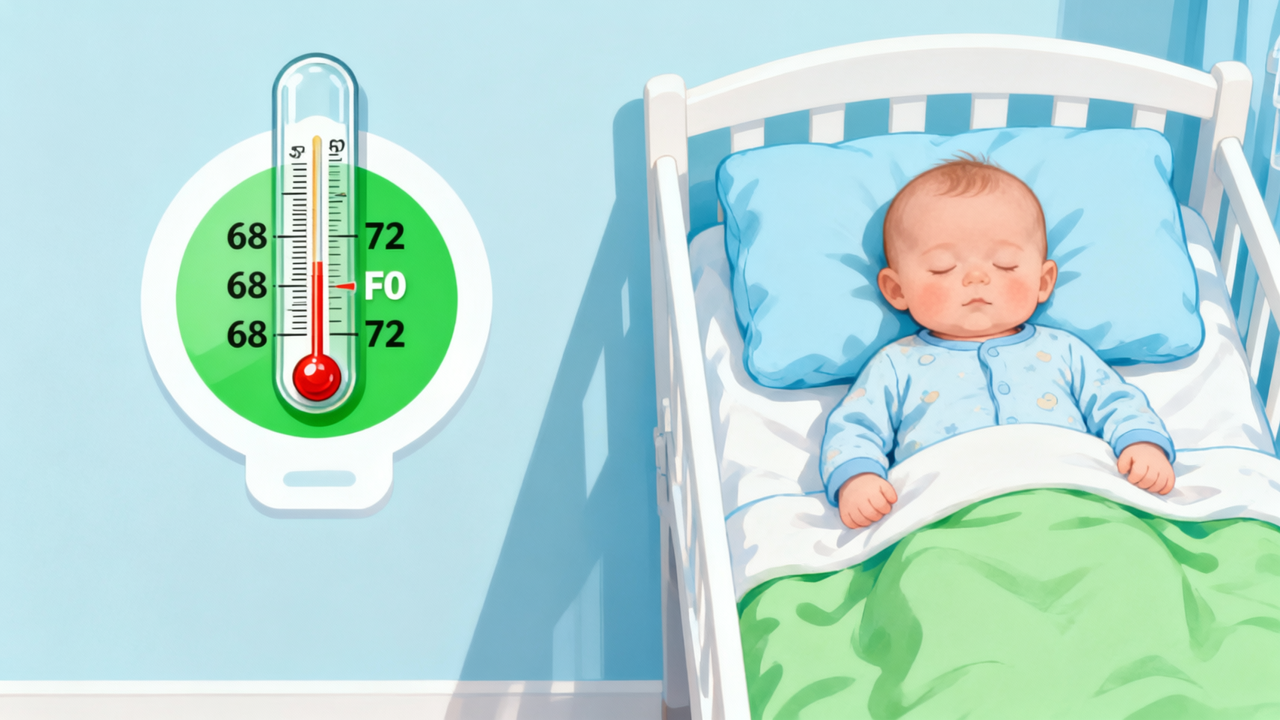
For safe baby room temperature sleep, keep the room between 68–72°F (20–22°C) and dress your baby in about one layer more than you would wear, using a sleep sack instead of loose blankets. Overheating is a known risk factor for unsafe sleep, so skip hats indoors, heavy quilts, and warm rooms. Judge comfort by the chest or back, not the hands or feet.
For the full picture, read our pillar guide on Nursery setup: The Pediatrician’s Complete Nursery Setup Guide: Safe S.
Why baby room temperature happens — the sleep science
Understanding the biology makes the plan easier to follow. Baby sleep runs on two systems. The first is sleep pressure — the natural build-up of a chemical called adenosine during waking hours that makes sleep feel urgent. The second is the circadian rhythm, the internal 24-hour clock that uses light and darkness to decide when the body expects sleep and when it expects wakefulness. Melatonin, the hormone that helps initiate sleep, rises in the evening and fades before dawn.
When these two systems are misaligned — for example, when daytime sleep is too long, bedtime is too early, or light enters the room before the desired wake time — the baby hits their total sleep need too soon and wakes. A baby who falls asleep independently can usually link sleep cycles and return to sleep; a baby who needs feeding, rocking, or holding to fall asleep often cannot recreate that condition at 5 a.m. and calls out. This is why most early waking, short napping, and night fragmentation is a signal about schedule, environment, or sleep associations rather than a fixed trait.
Safe-sleep biology matters too. The risk factors for sleep-related infant death — prone or side sleeping, soft surfaces, loose bedding, overheating, and bed-sharing on a soft surface — are well described by the AAP and CDC. Keeping the baby on the back, on a firm flat surface, in a crib or bassinet free of bumpers, pillows, and positioners directly reduces those risks.
Why temperature matters for sleep
Babies cannot regulate their body temperature as well as adults. They have a larger surface area relative to their weight and less body fat, so they gain and lose heat faster. That makes both overheating and over-chilling real concerns.
When it comes to sleep safety, overheating is the bigger danger. Research has linked a too-warm sleep environment to a higher risk of sleep-related infant death, including SIDS. A comfortable, slightly cool room is safer than a warm one. Under-dressing is far less risky than overheating.
The good news is that you control the two biggest levers: the room temperature and what the baby wears. You do not need fancy gear, just a reliable room thermometer and a sensible layering plan.
The “touch the chest” rule
Parents often worry because a baby’s hands and feet feel cool. That is normal. A baby’s circulation sends warmth to the core first, so hands and feet are usually cooler than an adult’s. Cool extremities are not a sign the baby is cold.
The reliable check is the chest or the nape of the neck:
- Warm and dry: just right.
- Sweaty, flushed, or hot to the touch: too warm — remove a layer and cool the room.
- Cool chest with no other signs of illness: usually fine, but add a light layer if the room is on the cool side.
Do not judge by the hands and feet alone. They will mislead you nearly every time.
Clothing by room temperature
Use this band guide as a starting point, then adjust by the chest check:
- 68–72°F (20–22°C): short- or long-sleeve onesie plus a light-to-standard sleep sack.
- Cooler, about 65°F (18°C): long-sleeve onesie plus a warmer (higher TOG) sleep sack. Still avoid loose blankets under 12 months.
- Warmer, about 75°F (24°C): lightweight onesie plus a thin sack, or a diaper under a thin sack.
- Hot, above 78°F (25°C): a diaper or very light onesie and a minimal sack; use a fan for air movement (not aimed at the baby).
The exact outfit depends on your baby’s build and the sack’s warmth rating, so treat the table as a launch point, not a law.
Sleep sacks beat blankets
For babies under 12 months, a fitted wearable blanket (sleep sack) is the safe choice. It keeps the baby warm without the suffocation risk of a loose blanket that can cover the face.
Sleep sacks are rated by TOG, a measure of warmth:
- 0.5 TOG: warm rooms (around 75°F / 24°C+).
- 1.0 TOG: moderate rooms (around 70°F / 21°C).
- 2.5 TOG: cool rooms (around 65°F / 18°C).
Always follow the label’s room-temperature guide. A sleep sack replaces a blanket; it does not get piled on top of one.
What to avoid
These choices raise risk and should be skipped:
- Hats indoors: they trap heat and are not needed once the baby is home and dressed for the room.
- Heavy quilts or duvets: too warm and a suffocation hazard under 12 months.
- Space heaters blowing on the crib: uneven heat and a burn/fire risk.
- Over-layering “just in case”: extra layers that you would not wear invite overheating.
- Weighted sleep sacks or blankets: not recommended; there is no evidence they are safe for infants.
Room setup for stable temperature
Small changes keep the room in the safe zone:
- Use a thermostat or a room thermometer so you are not guessing.
- In heat, run a fan for air circulation (not directed at the baby) and close blinds during the day.
- In cold weather, avoid heating the nursery too high; dress the baby for the room instead.
- Keep the crib away from radiators, vents, and direct sun.
- Open windows at night when outdoor air is cooler, if it is safe to do so.
A stable, moderate room temperature supports safer, more comfortable sleep than a room that swings hot and cold.
Age-specific guidance
Newborn (0–3 months)
Newborns lose heat quickly, but overheating is still the risk to avoid. Use a sleep sack, skip hats indoors, and keep the room in the 68–72°F range. Premature and low-birth-weight babies need the care team’s specific guidance.
3–6 months
The same rules apply. Babies this age often roll, so a bare crib and a sleep sack (not a loose blanket) stay important. Adjust layers with the seasons.
6–12 months
Continue with room-temperature dressing and a sleep sack. As babies become more active, they generate more heat; watch for sweating during long naps and lighten layers if needed.
Sample overnight checklist
| Check | Safe choice |
|---|---|
| — | — |
| Room thermometer | 68–72°F (20–22°C) |
| Baby’s chest/back | Warm and dry |
| Outfit | Onesie + sleep sack for the room temp |
| Head | Bare indoors (no hat) |
| Crib | Bare: no blanket, bumper, or pillow |
| Air | Fan for circulation if warm, not on baby |
Step-by-step plan
- Set the room to 68–72°F (20–22°C) with a thermostat or thermometer.
- Dress in “you plus one layer” using a sleep sack instead of a blanket.
- Skip hats and loose bedding indoors.
- Place the baby on the back in a bare, firm, flat crib or bassinet.
- Check the chest or neck after 20 minutes, not the hands or feet.
- Adjust by season: lighter sack when warm, warmer sack when cool.
- Recheck during illness, when fever can change temperature needs.
- Keep the home smoke-free, which also protects sleep safety.
Safety reminders
- Always place your baby on the back for sleep.
- Use a firm, flat, level sleep surface that meets safety standards.
- Keep the crib bare: no bumpers, loose bedding, pillows, or positioners.
- Avoid overheating; it is a known SIDS risk factor.
- Do not bed share, especially on soft surfaces.
- Dress for the room and use a sleep sack, not blankets, under 12 months.
- No hats indoors once home.
When to Call Your Pediatrician
Call your pediatrician if:
- Your baby shows signs of overheating with lethargy, flushed skin, or fast breathing.
- There is a fever, especially under 3 months — seek guidance promptly.
- You notice poor weight gain or feeding difficulty.
- There are breathing changes: fast breathing, grunting, pauses, or color change.
- The baby has a high-pitched or weak cry that is new.
- You see signs of dehydration: fewer wet diapers, no tears, dry mouth.
FAQ
What is the best baby room temperature sleep range?
Aim for 68–72°F (20–22°C). Slightly cool is safer than warm. Use a room thermometer and dress the baby in about one extra layer, with a sleep sack instead of a blanket.
How do I know if my baby is too hot?
Feel the chest or the back of the neck. Sweaty, flushed, or hot skin means too warm. Cool hands and feet are normal and not a reliable sign of cold.
Can my baby wear a hat to sleep indoors?
No. Hats indoors trap heat and are not needed once the baby is home and dressed for the room. Overheating is a sleep risk.
Are sleep sacks safer than blankets?
Yes, for babies under 12 months. A fitted sleep sack keeps the baby warm without the suffocation risk of a loose blanket that can cover the face.
What if my nursery runs hot in summer?
Use a fan for air movement (not aimed at the baby), close blinds by day, and dress the baby in a light onesie plus a thin (0.5 TOG) sack. Keep the room as close to the safe range as you can.
Related reading: White Noise for Baby: Placement, Volume, and Safety.
Common overheating myths
Myth: “Cold hands mean my baby is cold.” Fact: cool hands and feet are normal in babies. Judge by the chest or neck.
Myth: “A hat keeps the baby safe at night.” Fact: hats indoors trap heat and raise overheating risk. Skip them once home.
Myth: “A warm room helps a baby sleep better.” Fact: a too-warm room is a known risk factor. A slightly cool room is safer.
Myth: “More layers are always safer.” Fact: over-bundling is the danger. Dress in about one extra layer, not many.
Seasonal room-temperature strategies
In summer, keep blinds closed during the day, run a fan for gentle air movement (never aimed at the baby), and use the lightest TOG sack. If the room stays above 75°F, a diaper under a 0.5 TOG sack may be enough. In winter, avoid cranking the heat; dress the baby for the room with a warmer sack instead. Keep the crib away from radiators and vents so the baby is not in a hot spot.
Illness, fever, and temperature dressing
During illness, temperature needs change. A feverish baby may need lighter layers, while a baby who is eating less may need slightly more. Check the chest or neck more often when your baby is sick, and never add a hat to “break” a fever. If your baby is lethargic, flushed, or breathing fast with overheating, call your pediatrician. Fever in any infant under 3 months should prompt a call right away.
Signs your temperature setup is right
Your setup works when the room holds 68–72°F, the baby’s chest or neck feels warm and dry, the outfit matches the sleep-sack TOG for that temperature, the head is bare indoors, and the crib stays bare. Small adjustments by season keep sleep safe and comfortable year-round.
Quick answers for common questions
Parents often ask whether a fan is safe (yes, for air movement, not pointed at the baby), whether to open a window at night (yes when outdoor air is cooler and it is safe), and whether to check the baby at night (a quick chest check after 20 minutes is enough). None of these replace the core rules: back to sleep, firm flat surface, bare crib, and no overheating.
How to measure and trust your room temperature
A room thermometer removes the guesswork. Wall thermostats can read higher or lower than the baby’s actual sleeping area, especially near radiators or sunny windows. A small standalone thermometer placed near the crib gives a truer number. Aim for 68–72°F (20–22°C), and check it once in the evening and again if the weather shifts.
Trust the thermometer over your own comfort. Adults often keep living rooms warmer than a nursery needs. A baby sleeping in a 72°F room in a sleep sack is comfortable; the same baby in a 78°F room is at higher risk. When in doubt, measure.
Humidity and air quality
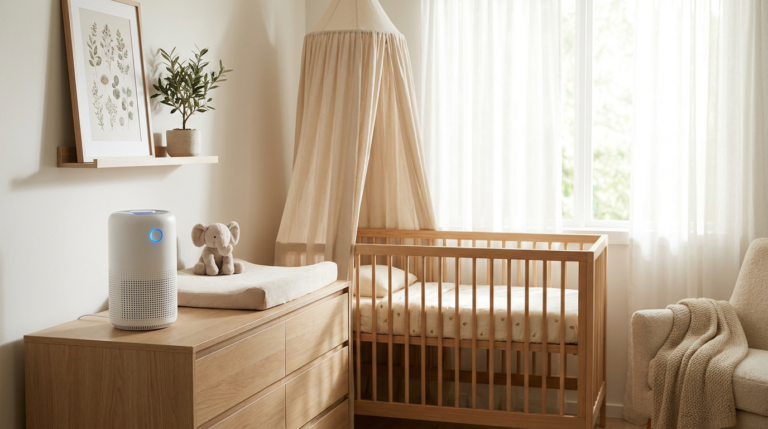
Dry air can irritate a baby’s nose and worsen noisy breathing, while very damp air feels clammy. A relative humidity around 40–60% is comfortable for most homes. A humidifier or dehumidifier can help, but keep it clean to avoid mold. Never place it inside the crib or where the baby can reach the cord.
Fresh air matters too. A brief window opening when it is cooler outside helps cycle stale air. Avoid scented sprays, candles, or vapes near the baby’s room, since inhaled irritants are not helpful for tiny airways.
Moving between seasons without stress
Season changes are easier when you adjust the sleep sack, not the room. In spring and fall, the TOG you need may flip week to week; check the thermometer each night. Keep a 1.0 TOG and a 2.5 TOG sack ready so you can switch without a shopping trip.
See also: How to Dress Baby for Sleep by Room Temperature.
When the heat comes on in winter, the air often dries and warms; lower the thermostat a touch and keep the crib away from the vent. In summer, close blinds by day and use a fan for gentle movement. Small, consistent habits keep the sleep space in the safe zone all year.
What to do during a heat wave
During a heat wave, keep the baby hydrated with normal feeds and dress in the lightest layers—a diaper and a 0.5 TOG sack may be enough. Run a fan for air movement, never pointed at the baby, and consider a cool washcloth on the skin during awake time. If the room cannot be cooled and the baby seems hot, flushed, or lethargic, move to the coolest safe space available and call your pediatrician for guidance.
A 10-second safety check before every sleep
Before each nap and bedtime, run a quick check: room thermometer in range, chest warm and dry, sleep sack right for the temperature, head bare, crib bare. This tiny habit catches most problems—a forgotten blanket, a too-warm room—before they become risks. It takes less time than checking your phone and does far more for safety.
Overheating versus normal warmth
Overheating shows as sweaty skin, flushed cheeks, damp hair, and sometimes fast breathing or irritability. Normal warmth is a chest that feels cozy and dry. The difference matters because overheating is a known risk factor for unsafe sleep. If you are unsure, remove one layer and recheck the chest in a few minutes; it is always safer to err on the side of slightly cool rather than too warm.
Keeping the room safe beyond temperature
Temperature is only one part of a safe sleep space. The surface still must be firm, flat, and bare; the baby still goes on the back; and the crib still stays free of bumpers, pillows, and loose bedding. A perfectly cooled room does not make an inclined sleeper or a couch safe. Think of temperature as one dial among several, all set to the safe position.
Smoke-free air also matters. Secondhand smoke raises SIDS risk and can irritate a baby’s airways. Keep the nursery and the home smoke-free, and ask visitors to step outside. A clean, cool, smoke-free room supports the safest possible sleep.
A note on room-sharing and temperature
Room-sharing—keeping the baby’s sleep space in your room for at least six months—does not change the temperature rules. Your bedroom may run warmer or cooler than the nursery, so measure the actual sleeping room. A bedside bassinet still needs the same bare, flat setup and the same dress-for-the-room logic. If your room tends to overheat, open a window at night when safe or use a fan for gentle air movement. The goal is a stable, slightly cool space wherever the baby sleeps.
Common Myths vs Facts
- Myth: “A tired baby will fall asleep anywhere.” Fact: Overtired babies make more cortisol, which fragments sleep.
- Myth: “A later bedtime always means a longer night.” Fact: Only if anchored to the baby’s true sleep need; too late backfires.
- Myth: “One rough night means failure.” Fact: Judge progress across 1–2 weeks, not a single night.
- Myth: “You must sleep-train.” Fact: Consistency, a dark room, and gentle boundaries resolve many issues without formal training.
If Nothing Works After Two Weeks
- Re-check total daytime sleep (too much or too little both fragment nights).
- Confirm the room is genuinely dark and quiet until your chosen wake time.
- Review the last nap’s timing so it does not steal the night.
- Rule out discomfort: illness, teething, reflux, ear pain, growth spurt.
- Call your pediatrician for a brief check to exclude underlying issues.
- How to Dress Baby for Sleep
- Baby Sleep in a Hot Room
- Is White Noise Safe for Babies?
- American Academy of Pediatrics — A Parent’s Guide to Safe Sleep
- NICHD Safe to Sleep — Safe Sleep Environment
- CDC — About Sudden Unexpected Infant Death
- World Health Organization — Newborn Care
About the author
Dr. Michael Anderson, MD (Pediatrics) is a board-certified pediatrician on the ChildBloom medical panel, focusing on infant sleep, safe sleep environments, and responsive routines. This article was medically reviewed and approved by Dr. Ahmad Raza, MD (Pediatrics) against current AAP safe-sleep guidance. Read our editorial and review standards.
This guide is general education, not a diagnosis. If you are worried about your baby’s breathing, feeding, growth, or sleep, contact your pediatrician. For any breathing emergency, call emergency services immediately.
Baby room temperature: final checklist
Baby room temperature directly affects sleep quality and safety. A room that is too warm increases the risk of overheating, which is a known SIDS risk factor. A room that is too cold causes frequent wakings. The ideal baby room temperature range of 68-72 degrees Fahrenheit balances safety with comfort. Use this baby room temperature checklist before every bedtime: check the thermostat, feel the baby’s chest for warmth, confirm the sleep sack TOG rating matches the baby room temperature, and make sure no loose blankets are in the crib. A quick baby room temperature verification takes ten seconds and gives you peace of mind all night.
Related ChildBloom Guides
- Top White Noise Machines for Babies
- Start here: Nursery setup: The Pediatrician’s Complete Nursery Setup Guide: Safe S
- Nursery Air Quality: VOCs, Formaldehyde & What an Air Purifier Actuall
- Baby Room Temperature: What’s Safe and What’s Dangerous (By Age)
- Nursery glider: Do You Need a Nursery Glider? Ergonomics for Feeding &
- Best air purifier for baby nursery
- Nursery Temperature: The Ideal Range for Safe Sleep & Comfort
- Browse all Sleep & Nursery guides
References & Medical Sources
- NICHD Safe to Sleep: safe sleep environment
- CPSC safe sleep and crib product rules
- EPA on VOCs and indoor air quality
- NIDCD on noise-induced hearing loss
Reviewed by the ChildBloom pediatric panel. Learn about our physicians on the About page. This article is educational and does not replace your child’s clinician.