Crib Bumpers & Weighted Sacks: Not Safe
Unsafe baby sleep products: the quick answer
Unsafe baby sleep products such as crib bumpers, positioners, and weighted sacks should never be in a baby’s sleep space. The only safe space is a firm, flat mattress with a snug fitted sheet and the baby on the back. These items raise suffocation, entrapment, and overheating risks.
For the full picture, read our pillar guide on Safe Sleep Checklist: Room Sharing, Firm Mattresses & SIDS Preventi.
Why unsafe baby sleep products happens — the sleep science
Many unsafe sleep products fail because they change the sleep surface or the air a baby breathes. A baby’s airway is small and the muscles that keep it open are still weak. Anything that lets the head tip forward, traps carbon dioxide near the face, or adds soft material close to the baby raises the chance of a breathing problem.
Crib bumpers and padded positioners crowd the sleep space with padding. A baby can roll against them, and the soft surface can block airflow or trap exhaled air near the face. Weighted sleep sacks and weighted blankets add load to the chest that a small baby should not have to lift against while breathing. None of these items fix the normal waking, reflux, or startle that parents hope they will.
The safest sleep space stays flat, firm, and bare. That is the setup the evidence supports, and it is the reason these add-on products are not recommended for infants.
Why these products are unsafe
To understand why certain products do not belong in a crib, bassinet, or playard, it helps to know what makes an infant sleep space dangerous. Babies under 12 months cannot reliably roll, push away, or free themselves if something blocks their airway. Their necks are weak, their heads are large relative to their bodies, and their breathing control is still maturing. A product that looks cozy or helpful can quietly become a hazard during a single nap.
The main ways unsafe sleep products cause harm are:
Airway obstruction (suffocation). A baby’s face can press into a padded surface — a bumper, a nest, a pillow, or a soft wedge — and the nose and mouth become blocked. Unlike an adult, a young baby may not have the strength or coordination to lift the head and turn away. Even a “breathable” or “mesh” bumper can trap a tiny face against the crib side.
Rebreathing of air. Soft surfaces let a baby sink in slightly and breathe the same pocket of air they just exhaled. That air is lower in oxygen and higher in carbon dioxide. Rebreathing is one of the mechanisms linked to sudden infant death syndrome (SIDS) and is why a flat, firm surface is recommended.
Entrapment and strangulation. Bumpers with ties, positioner straps, and the long cords of some “smart” devices can catch on a baby’s neck or limbs. A baby can also wedge into the gap between a positioner and the crib side.
Overheating. Weighted sleep sacks and heavy blankets add warmth a baby cannot regulate. Overheating is a known risk factor for SIDS. Babies cool themselves mainly through their face and head, so extra weight on the chest and torso works against them.
False sense of medical benefit. Many of these products are marketed for reflux, flat head (plagiocephaly), or “better sleep.” Reflux is managed with feeding and positioning changes while awake, guided by your pediatrician — not by a wedge in the crib. Flat head is addressed with plenty of supervised tummy time and varying the direction the baby lies, not by a padded nest.
The pattern across all of these products is the same: they add something to a sleep space that the safe-sleep evidence says should stay empty.
Product by product: what the evidence says
Crib bumpers. The original idea was to stop a baby’s limbs poking through crib slats. That problem is rare and mild; the hazard is not. A bumper is a padded barrier right where a baby’s face can meet it. “Mesh” or “breathable” bumpers still carry entanglement and suffocation risk and have been restricted or banned for infant sleep in many regions. Remove every bumper, including the “decorative” ones.
Positioners and wedges. These are padded inclines or side supports sold for reflux, congestion, or “keeping baby on the back.” Babies can roll or slide into the padded sides and obstruct breathing. Incline sleepers that hold a baby at an angle are also unsafe for routine sleep because the chin can drop toward the chest and narrow the airway, and a curved surface is not flat. Reflux belongs in your pediatrician’s plan, not the crib.
Weighted sleep sacks and blankets. Added weight on the chest and abdomen can make it harder for a small baby to breathe and to move. There is no pediatric recommendation for weighting an infant sleep garment. A plain sleep sack matched to room temperature does the job of keeping a baby warm without loose blankets.
Baby loungers, pods, and nests. These soft, bordered pads are popular in photos but are made for supervised awake time on the floor — not for sleep. A baby can roll into the padded rim and block the airway. Do not let a lounger become the napping spot.
Inclined sleepers and car-seat-like rockers. Any product that holds a baby at a steep angle for sleep is risky. Flat and firm is the rule. A car seat is for travel; once you arrive, move a sleeping baby to a flat surface.
Crib tents and “crib dividers.” Mesh tents that zip over the crib to “keep baby in” create a strangulation and entrapment hazard and are not safe. A crib with the mattress at the right height and rails that meet standards is enough.
”Smart” monitors and gadgets with cords. Many are not sleep products at all and add cords and batteries near the sleep space. If you use a monitor, keep cords well away from the crib and follow the maker’s safe-placement guidance. A monitor is not a substitute for a safe sleep space.
The step-by-step plan: building a safe sleep space
Follow these steps to set up and maintain a sleep space that meets current pediatric guidance.
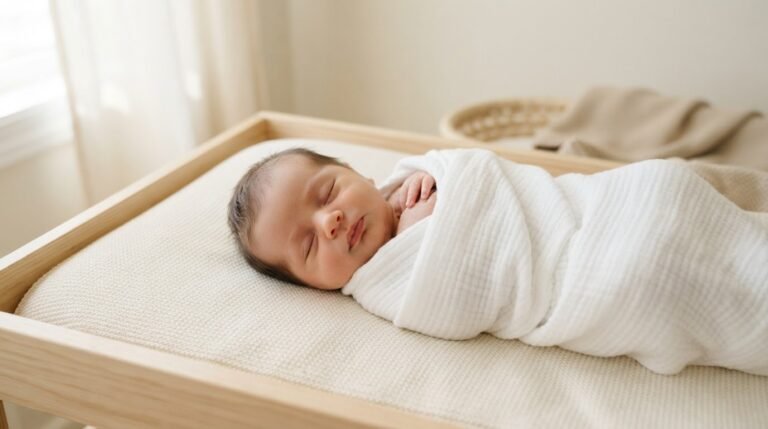
- Start with a firm, flat mattress. Press on it with your hand. It should feel hard and spring back, not soft and yielding. A crib, bassinet, or playard made after the current safety standards will have a firm sleep surface.
- Use one fitted sheet that fits snugly. It should hug the mattress with no slack. A loose sheet can bunch and cover the face.
- Place the baby on the back for every sleep. Back sleeping is the single most protective step parents can take. Side sleeping is not safe because babies can roll to the stomach.
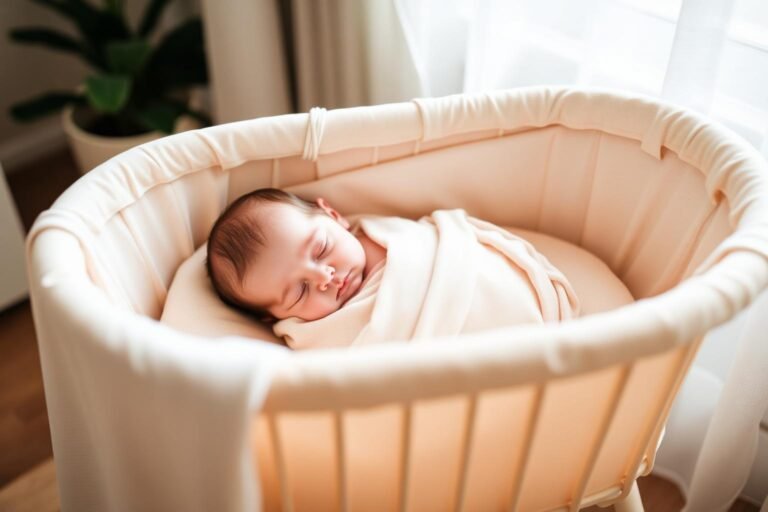
- Keep the space bare. No bumpers, no pillows, no blankets, no positioners, no wedges, no stuffed toys, no sleep positioners.
- Dress the baby for the room, not the bed. Use a sleep sack (wearable blanket) sized to the room temperature instead of loose blankets. Make sure it is unweighted and the right TOG for the season.
- Room-share without bed-sharing. Keep the baby’s crib or bassinet in your bedroom for at least the first 6 months, ideally until 12 months. The adult bed is not a safe substitute.
- Check recalls before and during use. Sign up for recall alerts and re-check products you already own. A product pulled from sale should leave your home.
- Resist “safe-looking” marketing. Unless a product clearly meets current safe-sleep standards and is not recalled, assume it does not belong where the baby sleeps.
Age-specific notes
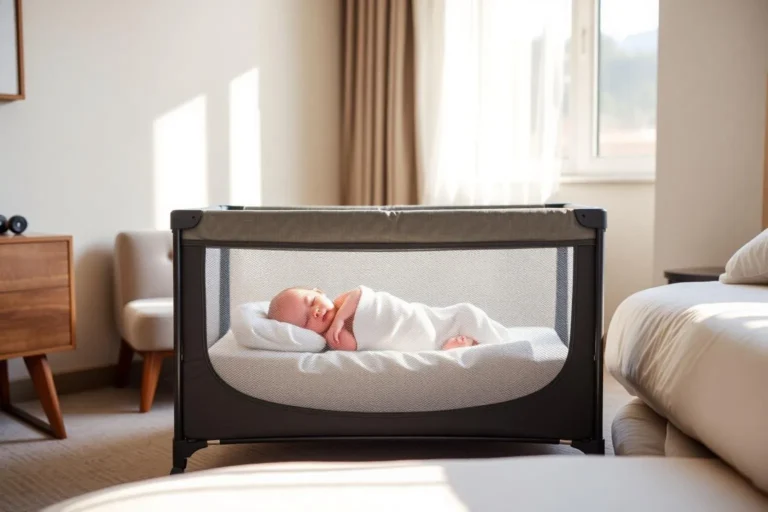
Newborn to 3 months. The baby spends most of the day asleep. A bare bassinet or crib in your room is all they need. Swaddling is fine only until the first signs of rolling, and the swaddle must be arms-out once rolling begins. No bumpers, no wedges.
4 to 6 months. Many babies start rolling. Stop swaddling completely once rolling is seen. A plain sleep sack is fine. Do not add a positioner to “keep them on their back” — rolling is normal and the back-to-sleep rule applies to how you place them down, not to restricting movement.
6 to 12 months. The baby may pull to stand and cruise. The mattress should be at its lowest setting. The crib stays bare. Weighted sleep sacks are never recommended at any age in infancy.
Related reading: Newborn Won’t Sleep in Bassinet? 7 Fixes That Actually Work.
What to use instead (decision checklist)
| Product you were told to buy | Safer choice | Reason |
|---|---|---|
| — | — | — |
| Crib bumpers (even “mesh”) | Nothing in the crib | Removes suffocation and entanglement risk |
| Reflux wedge or positioner | Pediatrician-guided awake positioning; flat sleep | Wedges do not prevent SIDS and can obstruct airway |
| Weighted sleep sack | Plain sleep sack matched to room temp | Avoids chest restriction and overheating |
| Soft nest or lounger for sleep | Firm bassinet or crib | Loungers are for awake holding, not sleep |
| Loose blanket | Sleep sack (wearable blanket) | No loose fabric over the face |
Sample safe-sleep setup
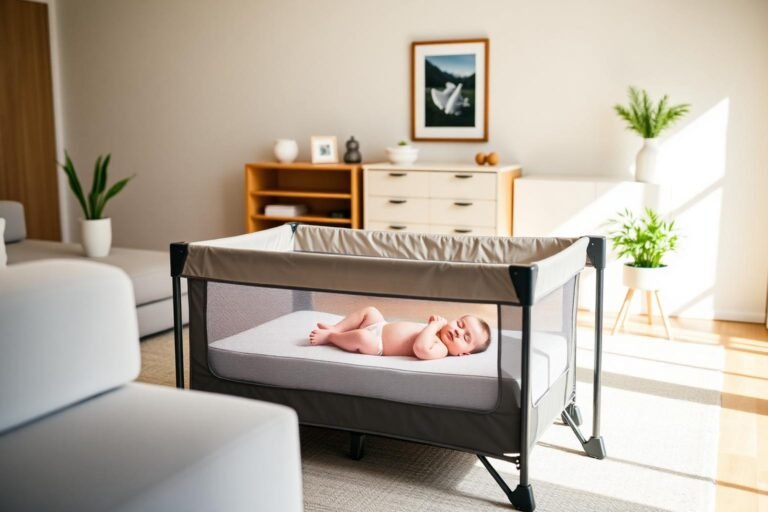
- Firm mattress, fitted sheet, baby on back.
- Room at a comfortable temperature (about 68–72°F / 20–22°C is a common target; dress for the room).
- Sleep sack instead of blanket.
- Crib in the parents’ room, away from windows and cords.
- Nothing else inside.
Myths parents hear about sleep products
”It’s sold in stores, so it must be safe.” Availability is not the same as a pediatric recommendation. Some products are pulled from sale only after injuries are reported. Use the safe-sleep standard, not the shelf, as your guide.
”My grandmother used a bumper and we turned out fine.” We now know more, and back-to-sleep guidance has saved many lives. “Fine before” is not the same as “safe by today’s evidence.”
”A positioner fixed my friend’s baby’s reflux.” Reflux improves with age and feeding changes, not a wedge. Anecdotes are not evidence, and a wedge in the crib adds risk.
”Weighted sacks calm babies.” Some babies seem to settle, but calming is not safety. A plain sleep sack plus a consistent routine is the safer path.
Second-hand, gifted, and borrowed items
Hand-me-down cribs and bassinets are common and can be safe if they meet current standards and have no broken slats, peeling paint, or missing hardware. But borrowed bumpers, positioners, and old inclined sleepers should be declined or set aside. When someone gifts an unsafe item, thank them and explain you are following your pediatrician’s safe-sleep plan; the baby’s bare sleep space is the gift that matters.
Talking with caregivers
Anyone who puts your baby down to sleep — grandparents, a nanny, a daycare — should follow the same bare, flat, back-to-sleep rule. Share a one-line note: “We follow safe sleep: back, bare, firm.” Consistency across caregivers protects the baby and removes confusion.
The evidence behind back-to-sleep
Placing babies on their back for sleep is one of the most studied recommendations in pediatrics. It protects the airway and reduces the chance of rebreathing. The guidance is not a preference; it is the foundation of every safe-sleep list. Nothing you add to the crib improves on it, and several add-ons undo it.
Reading labels and marketing claims
When you shop for nursery items, words like “orthopedic,” “pediatric,” “anti-reflux,” or “approved” can sound official without meaning the product meets current safe-sleep standards. A claim on a box is not the same as a recommendation from your pediatrician. Before adding anything to the sleep space, ask one question: does a leading pediatric body recommend this for infant sleep? If the answer is no, or you are unsure, leave it out.
Certification marks confirm a product met a construction standard, not that it is the best choice for sleep. A crib that meets standards is safe; a bumper that meets a different standard can still be unsafe in the sleep space. Keep the two ideas separate: “well made” is not “safe to sleep with.”
If an item was a gift from a trusted friend, it is still fine to set it aside. You are not rejecting the gift — you are following the sleep plan your pediatrician supports. Most caregivers understand once you explain it in one sentence: “We keep the crib bare and flat for safe sleep.” That simple line prevents most arguments and keeps the baby’s space exactly as the evidence recommends.
Safety reminders
- Back to sleep, every sleep. Naps and nights.
- Firm and flat only. No inclined sleepers, no couches, no armchairs.
- No bumpers, no loose bedding, no positioners, no weighted items. This includes “decorative” pillows and crib skirts that could come loose.
- No bed-sharing on soft surfaces. Sofas and adult beds are especially dangerous when a parent is tired, has used alcohol, or has taken sedating medication.
- Avoid overheating. Feel the baby’s chest or back — it should be warm, not hot or sweaty. Sweaty neck and flushed skin are warning signs.
- Supervised tummy time when awake helps head shape and muscle strength; it does not replace back sleeping for sleep.
- Check the crib for recalls and broken parts regularly, including borrowed or handed-down items.
What to do if you already bought an unsafe product
Many families own a bumper or positioner before they learn the guidance. If that is you, the step is simple: remove it from the sleep space tonight and store it out of reach. You do not need to discard it immediately, but it should not be where the baby sleeps. If it was expensive, the cost is less important than the risk; a bare crib is the safer investment. When friends ask, pass the same rule along.
See also: Baby Rolls in Sleep and Gets Stuck.
When to Call Your Pediatrician
Contact your pediatrician if:
- Your baby has reflux symptoms (frequent spit-up with discomfort, poor weight gain, or refusing feeds) — they will guide safe management rather than a wedge.
- You are unsure whether a product you own is safe or recalled.
- Your baby shows signs of poor weight gain or is not meeting feeding milestones.
- Your baby has a fever, especially under 3 months of age.
- You notice breathing changes — fast, noisy, grunting, or pausing breathing.
- Your baby has a high-pitched or weak cry that is unusual for them.
- You see signs of dehydration (fewer wet diapers, no tears, dry mouth).
- You simply feel unsure about safe sleep and want a walk-through at a visit.
These are not diagnoses. They are prompts to get professional advice early, when a small problem is easier to address.
FAQ
Are unsafe baby sleep products ever okay if the baby seems to sleep better?
No. “Sleeps better” is not a safety signal. Products that keep a baby on an inclined or padded surface can look calming while raising real risk. Comfort comes from a consistent routine and a bare, safe space — not from an add-on product.
What about a sleep sack?
A plain, unweighted sleep sack fitted to the room temperature is recommended instead of loose blankets. It keeps the baby warm without loose fabric near the face. Avoid any sack that adds weight to the chest or torso.
Can I use a bumper “just for the legs”?
No. Remove all bumpers. A baby moves during sleep, and a bumper meant for legs can end up near the face or become a strangulation point with its ties.
My friend lent me a positioner — is that safe?
Do not use it for sleep. Positioners and wedges are not recommended in the sleep space. Return it or set it aside. If your baby has reflux or flat head, ask your pediatrician for safe, evidence-based steps.
How do I know if a product has been recalled?
Check the manufacturer’s site and official recall listings, and re-check items you already own every few months. If a product is recalled, stop using it immediately and follow the recall instructions.
- Baby Lounger Sleep Safety
- If Your Baby Sleeps in a Swing
- Room Sharing With Your Baby
- American Academy of Pediatrics — A Parent’s Guide to Safe Sleep
- NICHD Safe to Sleep — Safe Sleep Environment
- CDC — About Sudden Unexpected Infant Death
- World Health Organization — Newborn Care
About the author
Dr. Michael Anderson, MD (Pediatrics) is a board-certified pediatrician on the ChildBloom medical panel, focusing on infant sleep, safe sleep environments, and responsive routines. This article was medically reviewed and approved by Dr. Ahmad Raza, MD (Pediatrics) against current AAP safe-sleep guidance. Read our editorial and review standards.
This guide is general education, not a diagnosis. If you are worried about your baby’s breathing, feeding, growth, or sleep, contact your pediatrician. For any breathing emergency, call emergency services immediately.
Unsafe baby sleep products: a final safety reminder
The Consumer Product Safety Commission has issued warnings or recalls for many unsafe baby sleep products sold in the last decade. Each unsafe baby sleep product on the market may look harmless, but the evidence consistently shows that soft, inclined, or padded sleep surfaces increase the risk of suffocation and SIDS. Be especially cautious with second-hand unsafe baby sleep products such as hand-me-down crib bumpers, inherited positioners, or borrowed inclined sleepers, because they may not carry current warning labels. Always check the CPSC recall database before using any pre-owned sleep product, because many unsafe baby sleep products were sold legally years before being banned.
Related ChildBloom Guides
- Start here: Safe Sleep Checklist: Room Sharing, Firm Mattresses & SIDS Preventi
- Is a Baby Lounger Safe for Sleep
- Room Sharing vs Separate Nursery
- Safe Sleep for Preterm Babies
- Baby Choking Hazards: Prevention and Safer Mealtimes
- Bassinet Weight and Rolling Limits
- Browse all Sleep & Nursery guides
References & Medical Sources
- NICHD Safe to Sleep: safe sleep environment
- AAP parent guide to safe sleep
- CPSC safe sleep and crib product rules
- CDC data on SUID and SIDS
Reviewed by the ChildBloom pediatric panel. Learn about our physicians on the About page. This article is educational and does not replace your child’s clinician.