Sleep Regression After Travel or Illness
Sleep regression after travel: the quick answer
A sleep regression after travel happens when a new environment, time-zone shift, broken naps, and overstimulation knock your baby off rhythm. Illness adds discomfort and new habits. Recovery is usually quick: return to the home sleep space and routine, stay consistent, and give a few patient days. Most babies recover within three to seven days.
For the full picture, read our pillar guide on Hotel Crib Safety: Is a Hotel Crib Safe for a Baby.
For the full picture, read our pillar guide on Sleep Regressions by Age.
Why sleep regression after travel happens — the sleep science
The two systems that travel disrupts
Baby sleep rests on sleep pressure (adenosine build-up) and the circadian rhythm (the light-driven body clock). Travel hits both. A new bedroom looks, smells, and sounds different, which keeps a baby’s alert brain switched on. Time-zone changes move the light-dark cue that sets the clock, so the baby’s body wants to sleep at the “wrong” local hour. Irregular naps and late bedtimes let sleep pressure spike and crash instead of building smoothly. Overstimulation from new faces, sights, and sounds leaves the nervous system wound up at bedtime.
How illness changes sleep
When a baby is sick, sleep often falls apart for clear reasons. Ear pain, congestion, and fever make lying flat uncomfortable. A stuffy nose forces mouth breathing and light sleep. A baby who is normally content may suddenly need more holding or feeding to settle, and that help becomes a new sleep association fast. Poor nights then shift the whole schedule, so even after the illness passes, the habit remains. Treating the cause and then gently dropping the temporary crutches rebuilds the routine.
Why “regression” is really a blip
The word regression sounds like lost skill, but after travel or illness it is usually a temporary disruption, not a permanent step back. The baby has not forgotten how to sleep. The cues and the space changed. Once the home setup, the light schedule, and the routine return, the old skill comes back. Knowing this helps you stay calm and consistent instead of inventing new fixes that linger.
The role of associations formed on the road
On vacation, many families feed to sleep, co-sleep, or let the baby nap in a stroller because it is practical. These are reasonable for a few days. The risk is only when they continue at home. A baby is a fast learner; three nights of a new habit can stick for three weeks. The recovery plan below is built to unwind exactly those short-term habits.
Step-by-step plan: recovering the routine
- Recreate the home sleep setup on night one. Same crib or bassinet, same sleep sack, same sound machine, same dark room. Familiar sights and smells do a lot of the work.
- Resume the exact bedtime routine. Bath, book, feed, song — in the same order, at the same time. Predictability tells the brain sleep is near.
- Reset wake windows gradually after a time-zone shift. Move toward home time by about 15 minutes a day. A slow shift is kinder than one big jump.
- Drop temporary crutches one at a time. If you started feeding to sleep, first move the feed earlier in the routine; then sit nearby instead of holding; then step out. Change one thing per night.
- Protect daytime sleep. Catch naps at the usual times even if they are short. A badly overtired baby fights bedtime harder.
- Keep light and dark honest. Bright light in the morning, dim light in the evening. This resets the circadian clock faster than anything else.
- Give it a few days. Most babies recover in three to seven days. If you stay consistent, the blip passes.
Age-specific guidance
0–3 months. This age has no fixed clock yet, so travel mainly disrupts by changing the sleep space and feeding rhythm. Focus on the familiar setup and feeding schedule. Jet lag matters less because sleep is already scattered.
3–6 months. The clock is forming. Time-zone shifts show up clearly. Use the 15-minutes-a-day reset and strong light-dark cues. Keep the routine identical so the baby trusts it.
6–12 months. Separation anxiety and teething can pile on top of travel. Expect a little more protest at bedtime. Hold the routine, offer comfort without new sleep props, and the pattern returns.
Sample jet-lag reset schedule
| Day | Shift toward home time | Bedtime action |
|---|---|---|
| —– | ———————— | —————- |
| 1 | 15 minutes | Dim lights 15 min earlier, same routine |
| 2 | 30 minutes | Repeat; morning light 15 min earlier |
| 3 | 45 minutes | Keep naps anchored to new clock |
| 4–6 | Align to home time | Normal routine, drop travel crutches |
| 7+ | Fully aligned | Routine stable, regression resolved |
Decision checklist: normal blip or a problem?
- [ ] Sleep off for under 7 days, baby happy by day → Normal travel blip.
- [ ] Sleep off after illness, but baby eating and playful → Recovery phase, keep routine.
- [ ] New sleep prop (feed/rock to sleep) now needed every night → Unwind one prop at a time.
- [ ] Poor weight gain, fever, or weak cry with the sleep change → Call pediatrician.
- [ ] No recovery after 2 weeks of consistent routine → Check in with pediatrician.
Safety reminders
Safe sleep rules travel too, and they are easiest to break on the road.
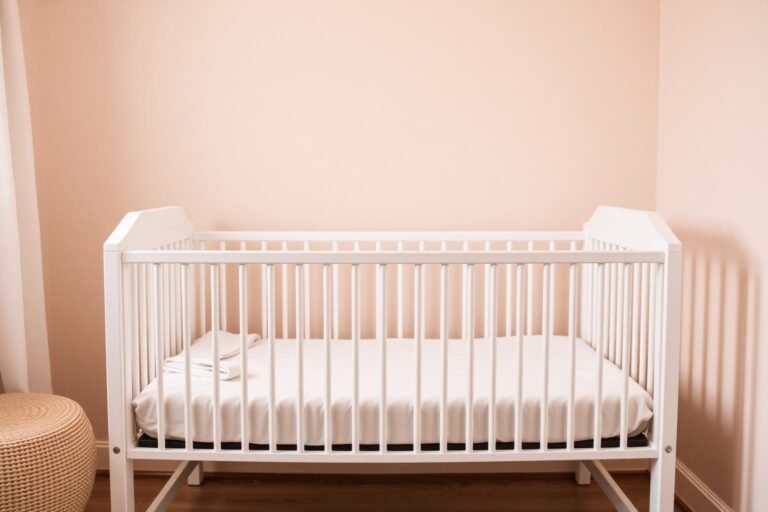
- Pack a portable crib or travel bassinet with a firm bottom and a tight sheet. Use it every night.
- Do not let the baby sleep on a hotel sofa, adult bed with soft bedding, or a makeshift nest of pillows.
- Keep the travel sleep space empty: no bumpers, blankets, or toys.
- Place the baby on the back for every sleep, even naps in a stroller or carrier (move to flat surface when you stop).
- Avoid bed-sharing, especially when a parent is very tired from travel — fatigue raises accident risk.
- Watch room temperature; hotel rooms can be hot. A light sleep sack beats loose blankets.
- If the baby falls asleep in a car seat or swing, move them to the flat surface as soon as you arrive.
When to Call Your Pediatrician
A regression after travel is usually harmless, but call if you see:
- Poor weight gain or a baby who is not feeding well during the day.
- Fever, especially in any infant under three months.
- Breathing changes: long pauses, gasping, grunting, or blue lips.
- A high-pitched or weak cry that is new.
- Signs of dehydration: under six wet diapers in 24 hours after the first week, no tears, sunken soft spot.
- Sleep that does not recover after one to two weeks of a consistent home routine — this may point to an unresolved issue such as an ear infection.
- Illness that lingers or worsens instead of improving.
Practical summary
Recovery is usually steady when you return to the same safe sleep space, the same calm routine, and the same response each night. Travel and illness are common triggers, and the setback is almost always temporary. Hold the bare, flat sleep surface, keep the room dark and quiet at night, and let the baby practice the skill of settling with the least help that is truly needed. If sleep has not improved after two to three weeks back home, or if you notice feeding or weight changes, check in with your pediatrician. Small, consistent steps beat big, rushed fixes.
FAQ
How long does a sleep regression after travel last?
For most babies, three to seven days once you are home and back to the normal routine. A large time-zone change can take up to a week to fully reset. Staying consistent is the fastest path.
Should I let my baby cry it out to fix travel sleep?
Not necessarily. You do not need harsh methods. Gently drop the travel habits one at a time and keep the routine. Comfort your baby when truly awake; just avoid adding new sleep props that will outlast the trip.
What if my baby only naps in the stroller on vacation?
Sleep regression after travel is fine for a few days. Once home, return to the crib or bassinet for naps. Anchor naps to the usual times so daytime sleep protects bedtime.
Can illness cause a regression that lasts longer than travel?
Yes. Discomfort plus new habits can linger. Treat the illness with your pediatrician’s guidance, then unwind any crutches. Once the baby is comfortable, the routine re-establishes faster.
Do I need to keep the exact same room temperature and sound at home?
You do not need a perfect match, but keeping the same sleep sack and sound machine helps. Consistency of routine matters more than the exact decibel level.
What to pack for safe sleep travel
Bring a portable crib or travel bassinet with a firm bottom and a tight-fitting sheet; a small white-noise machine; the baby’s usual sleep sack; and the routine items (the same book or song). Familiar objects and sounds lower the alert response to a new room. Pack the routine itself, not just the gear. A worn parent shirt placed near — not in — the sleep space can comfort, but never inside the crib.
Related reading: 6-Month Sleep Regression.
Related reading: Baby Sleep in a Hotel Room.
Day-by-day recovery after a short trip
- Night 1 home: rebuild the exact setup, same routine, same room. Expect some protest.
- Night 2–3: the clock begins to realign; keep lights dim and resist old travel crutches.
- Night 4–5: most babies sleep closer to baseline.
- By night 7: the routine is usually back. If a time zone shifted, run the 15-minutes-a-day reset alongside this plan.
Mistakes that make the regression last longer
- Adding a new sleep prop (rocking to sleep, feeding to sleep) and keeping it.
- Inconsistent bedtimes that let sleep pressure spike and crash.
- Letting the baby nap only in motion (stroller, car) instead of the crib.
- Skipping the routine on the most tired nights.
- Allowing screen light or bright lamps at the late feed.
Each of these teaches a new habit that outlasts the trip. Consistency, not new tricks, is the cure.
Illness-specific recovery: colds and ear infections
A cold stuffs the nose and flattens sleep; use saline and a bulb syringe before bed per your pediatrician’s advice, and keep the baby upright for a short while after feeds. An ear infection causes pain when lying flat; treat it with your pediatrician. Once comfort returns, drop any extra holding and the routine rebuilds within days. Do not let a few sick-night cuddles become the permanent bedtime.
Calming an overstimulated baby before bed
After travel, lower the lights an hour before bed, speak softly, and avoid new toys or screens. A warm bath and a quiet song signal the brain to wind down. An overstimulated nervous system fights sleep; a calm wind-down shortens the recovery and makes the first nights home smoother.
How jet lag works in a baby’s body clock
The body clock is set mainly by light and feeding. When you cross time zones, the local light tells the baby’s brain one time while the baby’s internal clock says another. The mismatch is jet lag. Babies recover faster than adults because their clock is still flexible, but the rule is the same: shift the light-dark and feed schedule toward the new local time, about 15 minutes a day. Morning light pulls the clock earlier; evening dimness lets melatonin rise. For a trip east (where you “lose” evening), shift bedtime earlier gradually. For a trip west (where you “gain” evening), shift later. Forgiving consistency beats a single hard reset, which only makes everyone overtired.
A sample post-illness recovery week
- Day 1 (well again): return to the normal setup; drop the extra holding used during sickness.
- Day 2–3: the baby may still ask for the old comfort; offer the routine instead.
- Day 4–5: nights lengthen as the association fades.
- Day 6–7: baseline usually returns. If an ear infection was treated, confirm the pain is gone with your pediatrician so you are not fighting silent discomfort.
Travel with a breastfed versus bottle-fed baby
Breastfed babies often settle faster with a parent nearby, which makes room sharing on the trip easier. Bottle-fed babies keep the same prepared bottle routine anywhere. Either way, the key is the same sleep space and the same order of events. Travel is not the time to change the feeding method; keep what works at home so only the room changes, not the whole system.
When the “regression” is actually a leap or teething
At certain ages babies hit developmental leaps (rolling, sitting, standing) that briefly disrupt sleep even without travel. Teething adds fussy naps and night waking. Tell these apart by the timeline: a leap or teething change appears at home with no trip or illness. The recovery is the same — hold the routine — but you may need a little more daytime comfort during the leap. If pain seems strong, check with your pediatrician about safe relief.
Rebuilding trust in the routine after a hard trip
After a rough trip, the baby has not lost the ability to sleep — they have simply learned a few new shortcuts because the environment changed. Rebuilding trust in the routine means showing the baby, night after night, that the home signals are back and reliable. The routine is the signal: same order, same room, same surface. When you hold it without adding new props, the baby re-learns within days that the old way works. Think of recovery as repetition, not repair. The more consistent you are, the faster the blip closes, and the less likely a short trip becomes a long habit.
A note on screens, light, and travel
Travel often means airports, tablets, and bright hotel lobbies — all of which push a baby’s clock the wrong way at the wrong time. In the evenings, dim the lights and skip screens near bedtime, just as at home. If you must use a phone for a booking, keep it away from the baby’s face and use the lowest brightness. Light is the strongest clock-setter we have, so protecting the evening dim period is one of the highest-leverage things you can do to speed recovery once you are home.
See also: 4-Month Regression vs Hunger.
See also: Hotel Bottle Washing: How to Wash Baby Bottles Safely.
Keeping the routine during future trips
The best cure for travel sleep trouble is preventing it next time. Before a trip, practice the routine in the travel crib at home for a few naps so the space is not a surprise on night one. Pack the same sleep sack and sound machine, and keep the bedtime order identical even in a new room.
On the trip, protect at least the bedtime routine even if the room looks different. A familiar song and the same sack signal sleep regardless of the walls. When you return, treat the very first night as the reset, not the exception — rebuild the home setup immediately rather than “easing back” over several nights.
These small steps mean the next trip causes a one-night blip instead of a week-long regression. They also keep the baby’s body clock steadier across the year, because the signals stay consistent even when the location does not. Prevention is easier than recovery, and it protects everyone’s rest.
- Hotel Room Baby Sleep
- Daylight Saving and Baby Sleep
- When Baby Fights Bedtime
- American Academy of Pediatrics — A Parent’s Guide to Safe Sleep
- NICHD Safe to Sleep — Safe Sleep Environment
- CDC — About Sudden Unexpected Infant Death
- World Health Organization — Newborn Care
About the author
Dr. Michael Anderson, MD (Pediatrics) is a board-certified pediatrician on the ChildBloom medical panel, focusing on infant sleep, safe sleep environments, and responsive routines. This article was medically reviewed and approved by Dr. Ahmad Raza, MD (Pediatrics) against current AAP safe-sleep guidance. Read our editorial and review standards.
This guide is general education, not a diagnosis. If you are worried about your baby’s breathing, feeding, growth, or sleep, contact your pediatrician. For any breathing emergency, call emergency services immediately.
- Start here: Sleep Regressions by Age
- 4-Month Sleep Regression
- 9-Month Sleep Regression
- 6-Month Sleep Regression
- 8-Month Sleep Regression Guide
- Sleep Regressions After Age One
- Browse all Sleep & Nursery guides
- AAP healthy sleep hours by age
- AAP guidance on getting your baby to sleep
- NICHD infant sleep research overview
- NICHD Safe to Sleep: safe sleep environment
Reviewed by the ChildBloom pediatric panel. Learn about our physicians on the About page. This article is educational and does not replace your child’s clinician.
Related ChildBloom Guides
- How Often to Stop on a Road Trip With a Baby
- Minimal Baby Travel Gear Checklist for Flying
- Best Newborn Strollers with Bassinets for Safe Use
- International Travel With a Baby
- What Diaper Bag to Bring to Hospital (Checklist 2026)
- Browse all Travel guides
References & Medical Sources
Reviewed by the ChildBloom pediatric panel. Meet our physicians on the About page. This article is educational and does not replace your child’s clinician.