Hotel Bottle Washing: How to Wash Baby Bottles Safely
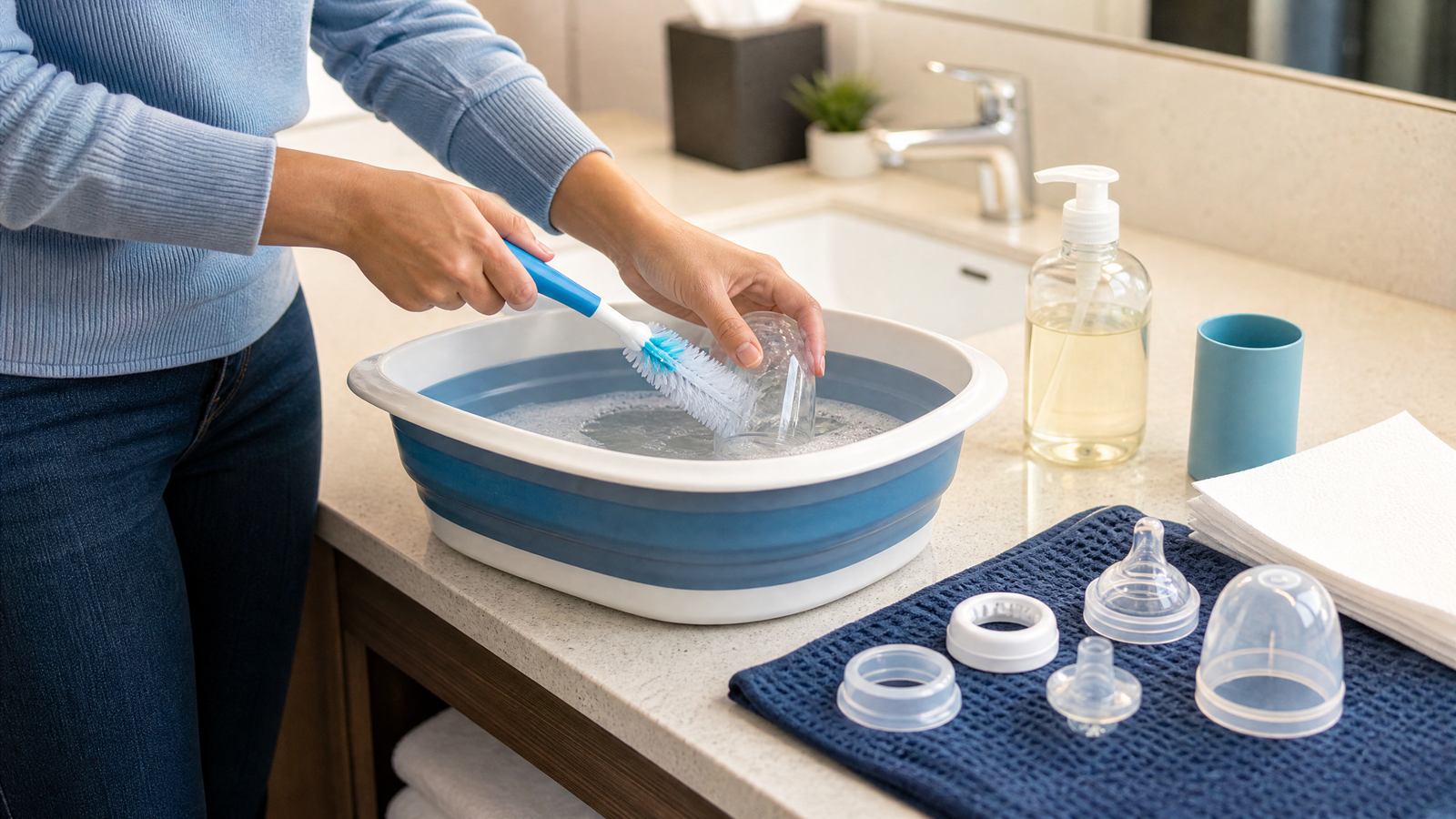
Hotel bottle washing can make family travel easier, especially when the room has no kitchen, dishwasher, or dedicated baby-washing supplies. The safest routine is to wash your hands, take the bottle completely apart, rinse the parts under running water, wash them in a clean basin with hot soapy water, rinse again, and let everything air-dry fully on a clean surface. This routine follows current CDC guidance for cleaning infant feeding items.[1]
For the full picture, read our pillar guide on Hotel Crib Safety: Is a Hotel Crib Safe for a Baby.
Short answer: Bring or request a clean basin, bottle brush, dish soap, clean paper towels or a freshly washed towel, and a drying bag or container. Wash bottle parts after each use. Do not wash them directly in a hotel sink. Rinse under running water, scrub every part, air-dry completely, and store the clean items in a protected place.[1]
This guide is for parents and caregivers washing bottles, nipples, caps, rings, valves, and similar feeding parts in a hotel room. It focuses on cleaning, not on choosing bottles, transporting breast milk through airport security, or preparing a personalized feeding plan. The CDC and FDA instructions for your baby’s age, health, milk, formula, and feeding equipment remain the primary references.[1] [2]
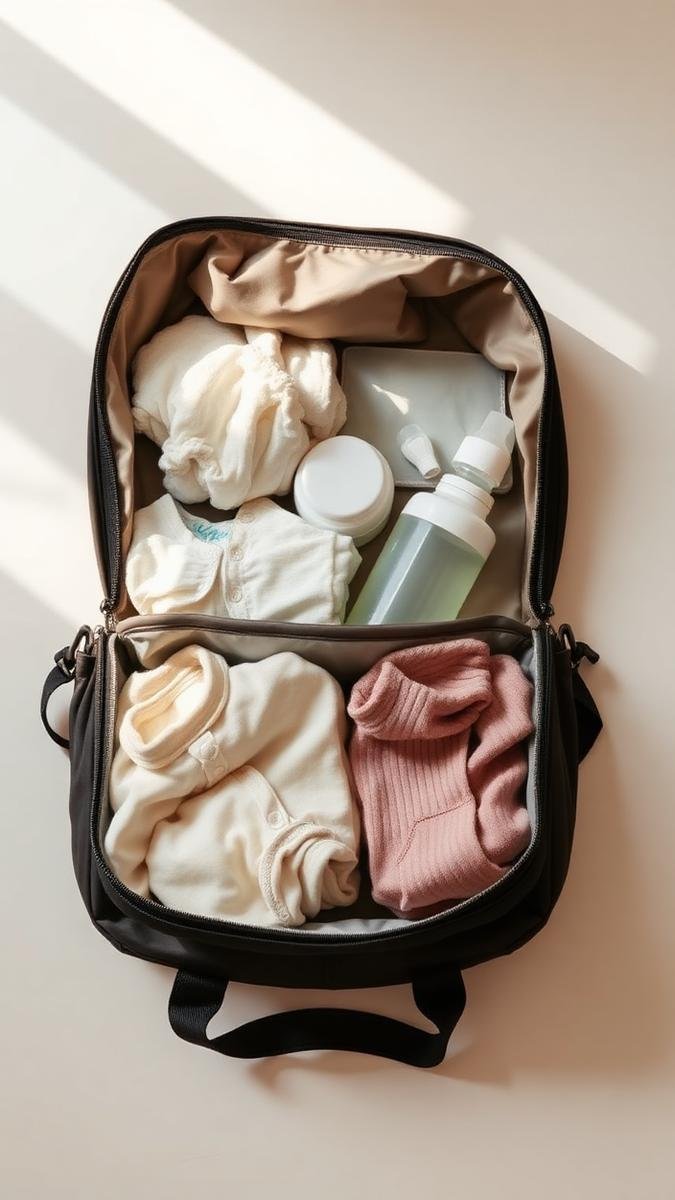
What to pack for washing bottles in a hotel
A small bottle-washing kit prevents parents from improvising with a bathroom sink, an unclean towel, or a shared hotel dish brush. Pack items in a waterproof pouch so wet parts and dry supplies remain separate.
| Item | Why it helps |
|---|---|
| Clean basin or collapsible wash container | Gives bottle parts a separate washing area instead of placing them directly in the sink. |
| Bottle brush used only for feeding items | Reaches the inside of bottles and helps clean nipples and narrow parts. |
| Small amount of ordinary dish soap | Removes milk, formula, and residue during washing. Follow the bottle manufacturer’s instructions if it specifies a particular cleaner. |
| Clean paper towels or a freshly washed towel | Provides a protected surface for air-drying. |
| Waterproof pouch or clean storage container | Keeps dry parts protected after they have completely air-dried. |
| Spare bottle parts | Gives you flexibility if a nipple, ring, or valve is dropped or cannot dry before the next feed. |
| Hand soap or sanitizer | Handwashing is part of the cleaning routine. Use soap and water when available. |
The basin should be clean and used only for infant feeding items. The CDC advises placing bottle parts in a clean basin or container used only for those items rather than washing them directly in the sink, which may contain germs that could contaminate them.[1]
You do not need to pack a large kitchen setup. A compact basin, dedicated brush, soap, and clean drying surface are usually enough for a basic hotel-room routine. If your baby is very young, was born prematurely, or has a weakened immune system, ask the pediatrician whether you need additional cleaning or sanitizing steps before travel.
Step 1: Choose the cleanest washing area
A hotel bathroom may be the only practical place to wash bottles, but the sink itself should not become the washing container. Clear the counter of toiletries, makeup, hair tools, and personal items. Keep the clean basin away from the toilet, trash can, used towels, and luggage.
Wash or wipe the outside of the basin before using it. If you are using a collapsible basin, follow its cleaning instructions. If the hotel provides a container, do not assume it is clean enough for infant feeding parts unless it has been washed and rinsed first.
Use water from a source considered safe for drinking and formula preparation. The FDA advises using water from a safe source when preparing infant formula. Ordinary bottled water is not sterile unless the label says it is sterile and specifically markets it for infants.[2]
If you are unsure whether the hotel’s tap water is safe, ask the hotel and check local public-health advice. Do not rely on the word “bottled” alone to mean sterile water.
Step 2: Wash your hands before touching the bottle parts
Wash your hands with soap and water for at least 20 seconds before cleaning feeding items. Clean the fronts, backs, fingertips, thumbs, and areas between the fingers. Rinse and dry your hands with a clean towel or allow them to air-dry.
Hand sanitizer may be useful when soap and water are unavailable, but it does not replace washing when your hands are visibly dirty or when you are preparing feeding equipment. Keep sanitizer away from the baby’s mouth and allow your hands to dry completely before handling items.
If another caregiver is helping, both adults should clean their hands before touching the washed parts or assembling a bottle.
Step 3: Take the bottle completely apart
Separate the bottle, nipple, cap, ring, valve, straw, collar, and any other components. Milk or formula can remain in seams, vents, nipple holes, and valves even when the bottle looks empty.
The CDC specifically recommends taking apart all bottle parts before cleaning.[1] Use the bottle manufacturer’s instructions if you are unsure how a valve or anti-colic component separates. Do not use a sharp object to poke or scrape a nipple hole because it could damage the material.
Place the disassembled parts in the clean basin or on a clean paper towel. Do not allow them to touch the hotel sink, bathroom counter, floor, or an unwashed towel.
Step 4: Rinse each part under running water
Hold the disassembled parts under running warm or cold water to remove milk and formula residue. The CDC recommends rinsing infant feeding items under running water and not setting them in the sink.[1]
Rinse the inside and outside of the bottle. Run water over the nipple, ring, cap, valve, and other small parts. Squeeze water through nipple holes when the manufacturer’s instructions allow it, and check that residue is not trapped in the valve or vent.
A quick rinse is not the same as cleaning. Milk residue can remain in places that are difficult to see, so continue to the soap-and-brush step even if the parts look clear.
Step 5: Wash the parts in a clean basin
Fill the clean basin with hot water and add dish soap. The water should be hot enough to help remove residue, but avoid a temperature that could burn your hands or damage the feeding items. Follow the bottle manufacturer’s care instructions.
Place the disassembled parts in the soapy water. Scrub the inside and outside of the bottle with the dedicated bottle brush. Clean the nipple, ring, cap, valve, and every small opening with the appropriate brush or by squeezing soapy water through it when permitted.
Do not use the hotel’s shared dish sponge or a brush that has been used for food, bathrooms, shoes, or household cleaning. A dedicated brush reduces the chance of transferring residue or germs to the feeding parts.
If the hotel room has only a sink, keep the bottle parts inside the basin during washing. Do not balance them on the sink edge, place them directly in the drain area, or wash them in standing water that may be contaminated.
Step 6: Rinse away all soap
Rinse each part under running water or completely under fresh water in a separate clean basin. Continue until no visible soap remains. Pay extra attention to nipple holes, valves, threads, and bottle seams.
Do not reuse the same soapy water for rinsing. If you have only one basin, empty it, wash it, rinse it, and refill it with fresh water before the rinse step.
A bottle that still smells strongly of dish soap, feels slippery, or has visible residue needs additional rinsing. Do not assemble it while it is still coated with soap.
Step 7: Air-dry every part completely
Place the rinsed parts on a clean, unused paper towel or a freshly washed towel in an area protected from dirt, dust, splashes, and bathroom traffic. Arrange the parts so air can reach the inside and outside surfaces.
The CDC advises allowing feeding items to air-dry thoroughly and not using a dish towel to rub or pat them dry, because the towel can transfer germs to the items.[1] Air-drying may take longer in a humid hotel bathroom, so begin the routine soon after a feed rather than waiting until the next bottle is needed.
Do not assemble a bottle while the parts are wet. Moisture trapped inside a closed bottle can create conditions that allow germs and mold to grow. Keep the drying area away from an open window, fan that blows dust, used towels, and surfaces that are frequently touched.
If you use a drying rack, reserve it for infant feeding items. The CDC notes that drying racks can trap moisture and may be difficult to clean. Clean the rack regularly and allow it to dry thoroughly.[1]
Step 8: Store the clean parts safely
Once every part is fully dry, put the items in a clean, protected container or a clean resealable bag. Keep the lid open or loosely arranged if moisture remains. Do not store damp parts in a closed toiletry bag.
Keep clean parts separate from used bottles, dirty laundry, shoes, diapers, and personal-care products. Wash your hands before assembling the next bottle. If a clean nipple or valve falls onto the floor or an unclean surface, wash it again rather than assuming it is still clean.
At the end of the trip, clean and dry the basin and brush. The CDC recommends rinsing and air-drying them after each use, with more frequent washing for families with very young, premature, or immunocompromised infants.[1]
Related reading: Baby Sleep in a Hotel Room.
How often should you wash bottles during travel?
Wash bottles and feeding parts after each feeding. A rinse alone is not enough. The CDC warns that germs can grow when a used bottle is only rinsed rather than cleaned.[1]
If your baby does not finish a bottle, do not simply put it back in the cooler and reuse it later. Breast milk and formula handling rules differ, and leftover formula has specific safety instructions. Follow the CDC or FDA guidance that applies to the milk or formula you are using, as well as the product label.[1] [2]
Use enough bottle parts to allow one set to dry fully while another is in use. Extra nipples, rings, caps, and valves can be more useful than trying to rush the drying process.
Parents of babies younger than 2 months, babies born prematurely, or babies with a weakened immune system should ask their pediatrician about sanitizing and cleaning frequency. The CDC specifically calls for additional attention to the basin and brush in these situations.[1]
Do you need to sanitize bottles in a hotel room?
Cleaning and sanitizing are not the same step. Cleaning removes milk, formula, and residue. Sanitizing provides an additional germ-reduction step after cleaning.
The CDC lists boiling, steaming, or a correctly prepared unscented-bleach solution as sanitizing options, and recommends checking the manufacturer’s instructions for the feeding items.[1] Whether you need to sanitize daily depends on your baby’s age, health, the equipment, and the guidance you have been given.
Boiling
If the bottle manufacturer permits boiling and your hotel provides a safe, clean way to do it, place the disassembled parts in a pot, cover them with water, bring the water to a boil, and boil for 5 minutes. Remove the parts with clean tongs and allow them to air-dry.[1]
Do not use a hotel coffee maker, electric kettle, or heating device as a substitute for a clean pot unless the manufacturer and health guidance support that method. Do not boil parts that are not designed to tolerate heat.
Steam
A microwave or plug-in steam system may be an option when the parts and device are compatible. Follow the manufacturer’s instructions for the bottle parts and the sanitizer. Do not place metal components or incompatible materials in a microwave.
Bleach
The CDC provides a bleach sanitizing method for situations when boiling, steaming, or a dishwasher is not available. It uses 2 teaspoons of unscented bleach per gallon of water in a clean basin, requires full submersion for at least 2 minutes, and says not to rinse after removing the parts with clean hands or tongs; the items must then air-dry completely.[1]
Do not improvise the concentration. Use only unscented bleach appropriate for the CDC method, never mix bleach with another cleaner, and follow the product label. If you are not confident that you can prepare the method accurately, ask the pediatrician or use a manufacturer-approved alternative.
What if the hotel room has no kitchen sink?
A bathroom sink can be the water source when the water is safe, but wash the bottle parts inside a clean basin rather than directly in the sink.[1] Keep the basin away from toilet spray, used towels, cleaning chemicals, and the floor.
If you cannot safely clean or dry the parts, use a spare set and ask the hotel for a clean preparation area. Do not use household disinfectant, scented bathroom cleaner, or a shared hotel sponge on bottle parts.
How to prepare formula safely in a hotel room
If your baby drinks formula, wash your hands before preparing it. Use water from a safe source and follow the formula container’s exact water and powder directions.[2] Ordinary bottled water is not sterile unless it is labeled sterile and specifically marketed for infants. If you are unsure about the hotel’s tap water, ask the local health department or your healthcare provider.
Formula does not need to be warmed. Never microwave it because hot spots can burn a baby’s mouth.[2] Do not dilute formula, alter the label directions, or prepare homemade formula. Follow the FDA guidance and product label for storage and leftover rules.
What to do if a bottle part is lost or dirty
Keep spare nipples, rings, caps, and valves in your travel kit. If a part is lost, cracked, sticky, or dropped into an unclean area, replace it or wash it again. Never use tape, glue, rubber bands, or another improvised repair.
See also: Sleep Regression After Travel or Illness.
If the hotel has no clean basin, ask housekeeping for a clean container. A dedicated collapsible basin is more predictable than an ice bucket, coffee pot, glass, or food container. For specialty bottles, pack extra components and the manufacturer’s instructions.
When to call your pediatrician
Ask your pediatrician before travel if your baby was born prematurely, is younger than 2 months, has a weakened immune system, uses specialized feeding equipment, or has a condition that changes feeding or infection risk. Your child may need a more specific cleaning or sanitizing plan.
Contact the pediatrician if your baby develops repeated vomiting, diarrhea, poor feeding, fewer wet diapers, unusual sleepiness, or other symptoms that concern you after a feeding or during travel. Seek urgent medical help for trouble breathing, blue or gray color, unresponsiveness, a serious allergic reaction, or another emergency.
This article cannot determine whether a particular water source, bottle, cleaning product, or sanitizing method is appropriate for your baby. When the manufacturer’s instructions and general guidance appear to differ, ask your pediatrician or the equipment manufacturer before using the item.
Frequently asked questions
Can I wash baby bottles in a hotel bathroom sink?
You can use the sink as the running-water source when the water is safe, but do not wash the bottle parts directly in the sink. Use a clean basin reserved for infant feeding items, then rinse and air-dry the parts on a clean protected surface.[1]
What soap should I use to wash baby bottles while traveling?
Use ordinary dish soap and a brush dedicated to infant feeding items, unless the bottle manufacturer provides different instructions. Rinse thoroughly so no soap remains. Avoid bathroom cleaners, scented disinfectants, and shared hotel sponges.
Can I use hotel towels to dry baby bottles?
Do not rub or pat bottle parts dry with a used hotel towel. The CDC recommends air-drying on a clean, unused dish towel or paper towel in an area protected from dirt and dust.[1]
How do I dry bottles when staying in a hotel?
Arrange the rinsed, disassembled parts on clean paper towels or a freshly washed towel and let them air-dry completely. Keep them away from used towels, dust, toilet spray, and high-touch surfaces. Pack enough spare parts to avoid assembling a bottle while it is still wet.
Do I need to sterilize bottles every day while traveling?
Not every baby has the same sanitizing needs. The CDC gives extra cleaning and sanitizing attention for babies under 2 months, babies born prematurely, or babies with a weakened immune system. Ask your pediatrician about your baby’s situation and follow the manufacturer’s instructions.[1]
Can I use bottled water to make formula in a hotel?
Use water from a safe source. The FDA says ordinary bottled water is not sterile unless it is labeled sterile and specifically marketed for infants. Follow the formula label and ask the local health department or your healthcare provider if you are unsure about the water.[2]
Can I warm a bottle in a hotel microwave?
Do not microwave infant formula. The FDA warns that microwaving can produce hot spots that burn a baby’s mouth. Formula does not need to be warmed; if you choose to warm it, follow safer manufacturer and FDA guidance.[2]
The bottom line
The simplest hotel-room bottle routine is also the safest: wash your hands, take every part apart, rinse under running water, wash in a clean dedicated basin with hot soapy water, rinse again, and air-dry completely. Wash after every feeding, keep clean parts protected, use safe water for formula, and ask your pediatrician about extra sanitizing steps when your baby is very young, premature, or medically vulnerable.
Author and medical review
Written by: ChildBloom Editorial Team
Medically reviewed by: Dr. Ahmad Raza, MD (Pediatrics)
Medical review date: August 26, 2026
This article provides general education about cleaning infant feeding items during travel. It does not replace your pediatrician’s advice, the CDC or FDA guidance, or the manufacturer’s instructions for your specific bottle and feeding equipment.
- CDC: How to Clean, Sanitize, and Store Infant Feeding Items
- FDA: Handling Infant Formula Safely: What You Need to Know
Related ChildBloom Guides
- How Often to Stop on a Road Trip With a Baby
- Minimal Baby Travel Gear Checklist for Flying
- Best Newborn Strollers with Bassinets for Safe Use
- International Travel With a Baby
- What Diaper Bag to Bring to Hospital (Checklist 2026)
- Browse all Travel guides
References & Medical Sources
Reviewed by the ChildBloom pediatric panel. Meet our physicians on the About page. This article is educational and does not replace your child’s clinician.