Toddler Motion Sickness on a Road Trip: What Helps and When to Call
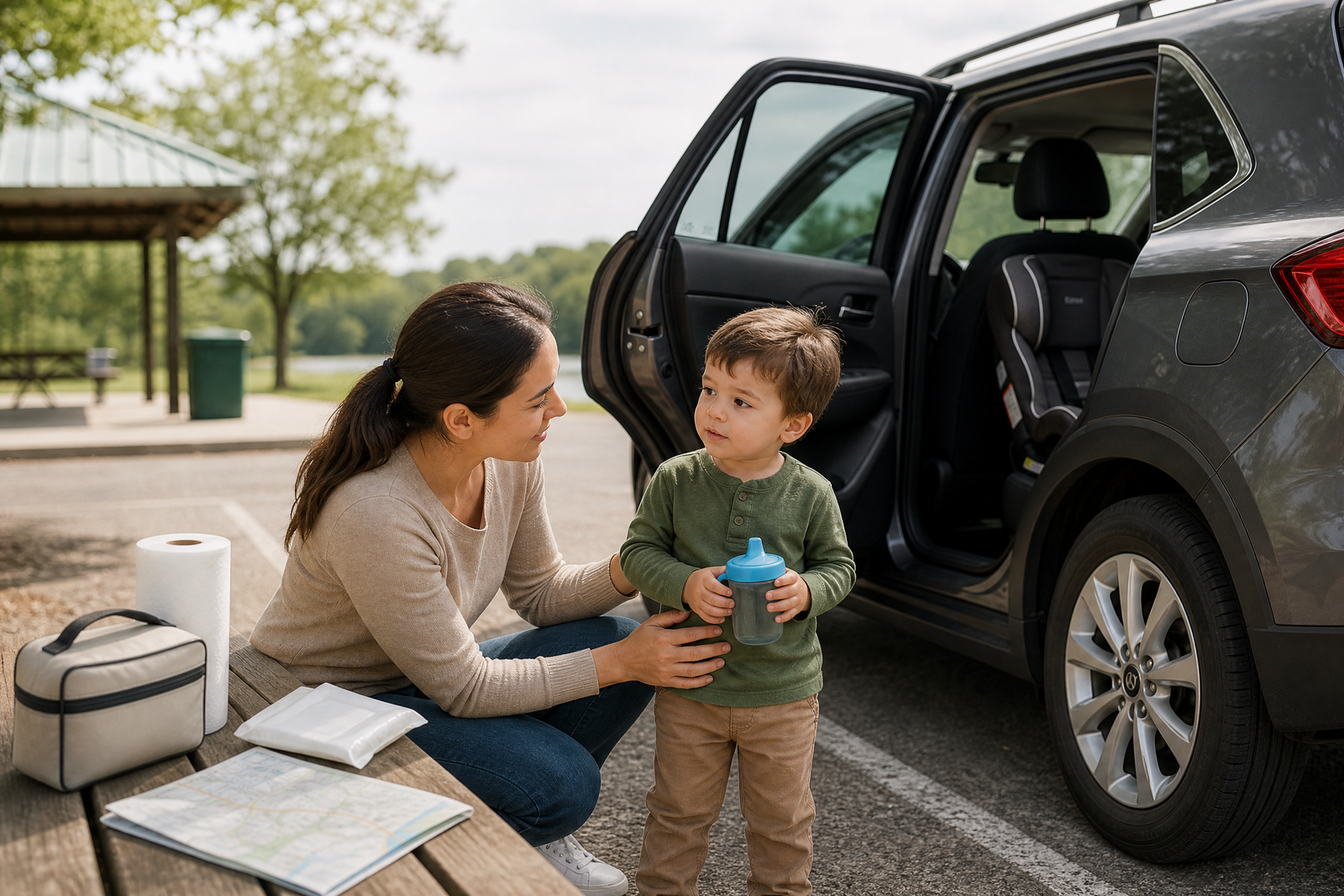
Toddler motion sickness on a road trip can begin with pale skin, yawning, restlessness, crying, a cold sweat, or loss of appetite before vomiting occurs. The best response is to stop the car as soon as it is safe, remove your toddler from the car seat, offer a calm break, and avoid continuing until your child feels better. Looking outside, reducing screens and books, using fresh air, and offering a small snack may help prevent symptoms.[1] [2]
For the full picture, read our pillar guide on How Often to Stop on a Road Trip With a Baby.
Short answer: Plan breaks before your toddler feels sick. Encourage looking outside instead of reading or using a screen, avoid a large meal before travel, keep the car comfortably ventilated, and carry spare clothes and cleanup supplies. If symptoms start, pull over safely, let your toddler get out, and allow a few quiet minutes with the eyes closed. Ask your pediatrician before using motion-sickness medicine.[1] [2]
Motion sickness happens when the brain receives conflicting movement signals from the inner ears, eyes, and body. A toddler may not be able to explain “nausea,” so parents often notice behavior changes first. This article focuses on car sickness during road trips. It does not diagnose vomiting or prescribe medication for an individual child.
How can you tell if a toddler is getting carsick?
Young children may not say that their stomach feels unsettled. Watch for a pattern of early signs, especially when the car is moving or the road becomes winding.
| Possible early sign | What a parent may notice |
|---|---|
| Pale appearance | Your toddler looks unusually pale or washed out. |
| Yawning | Frequent yawning begins without the child being ready for sleep. |
| Restlessness | Your toddler shifts, squirms, or seems unable to get comfortable. |
| Cold sweat | The skin feels clammy or the child appears sweaty despite a comfortable temperature. |
| Crying or irritability | The child becomes upset without an obvious need such as hunger or a wet diaper. |
| Loss of appetite | A favorite snack is refused or the child suddenly loses interest in food. |
| Nausea or vomiting | The child gags, retches, or vomits as symptoms progress. |
The American Academy of Pediatrics notes that motion sickness often starts with queasiness, cold sweat, fatigue, or loss of appetite and may progress to vomiting.[2] A toddler’s behavior is useful information. Do not wait for vomiting if the child already appears pale, clammy, restless, or unusually uncomfortable.
Why do toddlers get motion sickness in the car?
Motion sickness can occur when the inner ears sense movement but the eyes and body send different signals to the brain. A child who looks down at a book or screen may see something that appears still while the rest of the body is moving. This mismatch can contribute to nausea.[1] For route timing and car-seat breaks, see ChildBloom’s road-trip car-seat safety guide.
Road trips can increase the chance of symptoms because of winding roads, hills, stop-and-go traffic, heat, strong odors, and long periods of looking down. Not every uncomfortable car ride is motion sickness, however. Hunger, illness, overheating, anxiety, reflux, migraine-related symptoms, or another problem can look similar.
Keep a simple record if episodes repeat. Note when symptoms begin, whether the car is moving, what your child ate, whether there was a fever or illness, and what helped. This information can help your pediatrician decide whether the pattern fits motion sickness or needs another evaluation.
How to prevent toddler motion sickness on a road trip
No single strategy works for every child. Use several low-risk changes together and adjust the plan based on your toddler’s response.
1. Encourage your toddler to look outside
Ask your child to look at distant objects outside the car rather than focusing on a book, toy, or screen. A view of the road or horizon may reduce the mismatch between what the eyes see and what the inner ears feel.[1] [2]
Do not pressure a child to stare in one direction if the position is uncomfortable or conflicts with the car-seat manufacturer’s instructions. The priority is correct restraint use and a safe, age-appropriate seating position.
2. Take a break from screens and books
Reading, drawing, games, and videos require looking at a nearby object that does not appear to move. For a child prone to carsickness, save these activities for a rest stop or destination.
Replace them with songs, conversation, audio stories, or simple verbal games that do not require looking down. A second adult can lead the activity so the driver remains focused on the road.
3. Avoid a large meal immediately before driving
Mayo Clinic recommends avoiding a large meal immediately before or during travel. If your toddler needs to eat, offer a small, bland snack and a drink instead.[1]
Do not intentionally make your child travel hungry. Hunger can also make a child feel unwell. Use a familiar snack your toddler normally tolerates, and avoid introducing a new food on the day of a long trip.
4. Keep the air comfortable
Fresh air or air conditioning may help prevent car sickness, according to Mayo Clinic.[1] Keep the vehicle at a comfortable temperature and avoid strong odors from food, air fresheners, or cleaning products.
Do not let a child place their head or body outside a window. If the windows are open, use normal vehicle safety precautions and follow the driver’s judgment about traffic, weather, and air quality.
5. Consider the timing of the trip
If your toddler commonly sleeps during part of the journey, traveling around a normal nap may reduce the amount of time spent looking at moving scenery. Sleep is not a guaranteed treatment, but Mayo Clinic lists traveling during nap time as one option to consider.[1]
Do not change a child’s sleep schedule with medication or keep driving when the driver is tired. A rested driver is essential to a safe road trip.
6. Plan short breaks before the trip starts
Map safe stopping locations rather than waiting until the first emergency. Breaks give your toddler a chance to leave the moving vehicle, walk with supervision, get fresh air, and recover before the next stretch.
If your child has been carsick before, plan more flexibility than the navigation app suggests. A short delay is preferable to continuing while your toddler is clearly becoming ill.
What should you do when your toddler starts feeling sick?
Stop as soon as it is safe
Pull over in a legal, safe location. Do not turn around to hand your toddler a container, wipe their face, or adjust their position while the vehicle is moving. The AAP recommends stopping the activity causing the symptoms and stopping the car as soon as safely possible.[2]
Once the vehicle is fully stopped and secured, remove your toddler from the car seat. Never allow a child to ride unrestrained, even for a short distance between stops.
Let your toddler walk or rest briefly
A few minutes outside the vehicle may help. The AAP suggests letting the child get out and walk around; if needed, the child can lie down for a few minutes with their eyes closed.[2]
Choose a clean, safe, supervised location. Do not let your toddler walk near traffic, in a parking-lot lane, or close to the edge of a roadway. If there is no safe stopping location, continue only until you can pull over safely unless the child has an emergency that requires immediate help.
Use a cool cloth if it helps
A cool, damp cloth on the forehead may make your toddler more comfortable.[1] It does not treat the cause of motion sickness, so continue monitoring the child and decide whether the trip should continue.
Clean up calmly
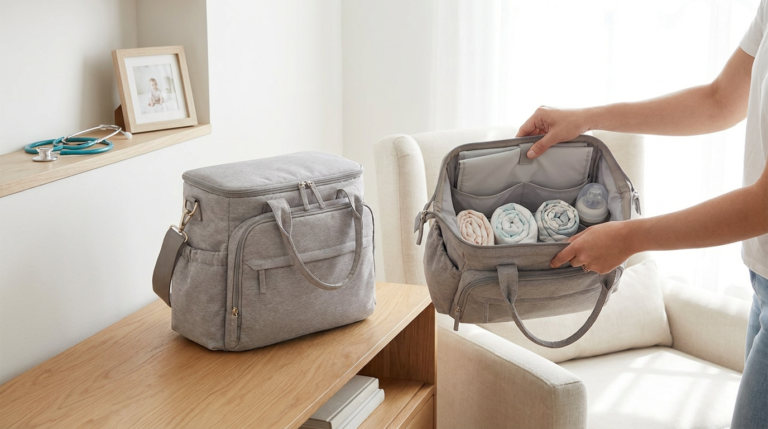
Keep a sealable bag, paper towels, wipes, spare clothes, and a small towel in the passenger area. Speak calmly and avoid making vomiting feel shameful. After cleaning, allow your toddler time to recover rather than immediately restarting the trip.
If vomiting continues, the child cannot keep fluids down, or your toddler seems unusually sleepy or weak, contact a healthcare professional for advice.
What should a toddler eat or drink during the trip?
Offer familiar, small portions rather than a large meal before or during a winding drive. Dry crackers or another bland snack may be reasonable for a child who normally eats them, but there is no single snack that prevents motion sickness for every toddler.[1]
Related reading: Best Baby Car Seats 2024.
Offer fluids according to your child’s usual routine. Avoid turning the trip into a forced-feeding situation. If your child is vomiting, ask your pediatrician how to manage fluids based on the child’s age, health, and symptoms.
Do not give a new food, supplement, herbal product, or essential oil as a motion-sickness treatment without checking that it is appropriate for your child. “Natural” does not automatically mean safe for toddlers.
Can toddlers take motion-sickness medicine?
Some nonprescription antihistamines may be used to help prevent motion sickness in certain children, but parents should ask the child’s healthcare professional before using them. Mayo Clinic gives examples for children age 2 and older and notes that these medicines may cause tiredness.[1]
HealthyChildren.org also advises asking the pediatrician before using medication and describes possible side effects such as drowsiness, dry mouth or nose, and blurred vision.[2]
Medication advice requires care because the correct choice and dose depend on the child’s age, weight, health history, other medicines, and the product label. Do not give an adult product, guess a dose, combine medicines, or use medication to make a child sleep during a road trip.
Ask the pediatrician or pharmacist before the trip if your toddler has previously become carsick, has a chronic condition, takes other medicines, or has had an unusual reaction to an antihistamine. Follow the package instructions and never repeat a dose early because symptoms continue.
Do not use a medicine for the first time immediately before a long trip when there is no opportunity to observe how your child responds. A medicine that causes drowsiness may also make it harder for a caregiver to recognize that the child is becoming unusually sleepy or unwell.
How should the car seat be handled during a carsickness episode?
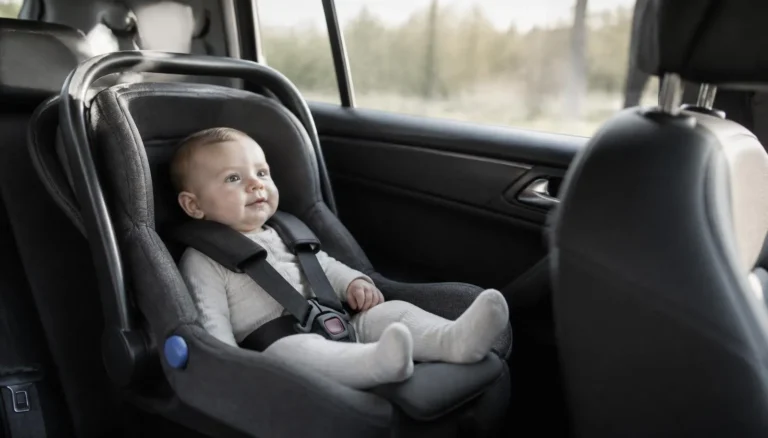
The car seat remains necessary whenever the vehicle is moving. Pull over before removing the harness, cleaning your toddler, changing clothing, or offering food or drink.
After the break, check that the seat is installed and reclined according to the manufacturer’s instructions. Refasten the harness snugly and remove bulky outerwear or wet clothing that affects the fit. Do not place towels, pillows, cushions, or improvised padding behind the child or under the harness.
If vomit has soaked the harness, buckle, padding, or seat shell, consult the manufacturer’s cleaning and replacement instructions. Some parts may not be safe to machine wash, bleach, or replace with generic accessories. Do not use a seat if a crash-related or manufacturer-specific safety component has been damaged.
If your toddler is still ill, do not feel obligated to continue the trip. A safe return home, overnight stop, or medical evaluation may be the better plan.
When should you call the pediatrician?
Call your pediatrician if motion-sickness symptoms happen when your child is not traveling or not experiencing movement. HealthyChildren.org says symptoms outside movement—especially with headache, difficulty hearing, seeing, walking, or talking, or staring spells—may indicate a problem other than ordinary motion sickness.[2]
You should also ask for medical advice when episodes are frequent, worsening, unusually severe, or interfering with normal activities. Contact a clinician if your toddler has repeated vomiting, cannot keep fluids down, is urinating much less than usual, appears unusually sleepy, or has symptoms that do not improve after the car stops.
Seek urgent help for trouble breathing, blue or gray color, unresponsiveness, seizure-like activity, a serious injury, severe sudden headache, or another emergency. Do not assume that every episode of vomiting during travel is motion sickness.
See also: Lightest FAA Approved Car Seat Under 15 lbs.
Road-trip carsickness packing checklist
Prepare the supplies before the trip so the driver does not have to search while moving.
| Pack | Keep it accessible because |
|---|---|
| Spare shirt, pants, socks, and wipes | Vomiting can soil clothing quickly. |
| Sealable bags and paper towels | Cleanup is easier when supplies are contained. |
| Familiar small snack and usual drink | A small snack may be easier to tolerate than a large meal. |
| Cool cloth or small towel | It may help your child feel more comfortable during a break. |
| Child-safe cleaning supplies | Protect the car seat and vehicle surfaces from prolonged moisture. |
| Medical information and medicines | Keep prescribed medicines and emergency contacts with an adult. |
| Navigation plan with safe stops | You can pull over before symptoms become severe. |
Store the kit where an adult passenger can reach it without turning around or blocking the driver’s view. Never place loose objects where they could become projectiles during sudden braking.
Frequently asked questions
What is the best position for a toddler who gets carsick?
Use the child’s correct, properly installed car seat in the seating position allowed by the vehicle and manufacturer. Encourage looking outside instead of down at books or screens. Do not change the restraint position or allow an unrestrained child to improve comfort.
Should I stop the car if my toddler only looks pale?
Paleness can be an early sign of motion sickness. If it appears with yawning, sweating, restlessness, crying, or loss of appetite, plan to stop as soon as it is safe rather than waiting for vomiting.[2]
Does fresh air help toddler motion sickness?
Fresh air or comfortable air conditioning may help some children, according to Mayo Clinic.[1] Keep the child safely inside the vehicle and follow normal precautions for windows, traffic, weather, and air quality.
Can I give Dramamine or Benadryl to my toddler?
Ask your child’s healthcare professional before using any motion-sickness medicine. Mayo Clinic gives age-related examples for some antihistamines, but the correct product and dose depend on the child and the label. Drowsiness and other side effects are possible.[1] [2]
Should my toddler eat before a road trip?
Avoid a large meal immediately before or during travel. If your child needs food, offer a small, familiar snack and usual fluids. Do not intentionally make a toddler travel hungry.[1]
How long should my toddler rest after vomiting in the car?
There is no universal recovery time. Stop the trip, let your child rest in a safe supervised location, and restart only if the child is alert, comfortable, and able to continue safely. Ask a clinician if vomiting continues or fluids cannot be kept down.
Is motion sickness the same as a stomach virus?
Not necessarily. Motion sickness is linked to movement, but vomiting can have many causes. Symptoms when the child is not traveling, persistent illness, fever, diarrhea, severe headache, or neurologic changes need medical attention rather than an assumption of carsickness.[2]
The bottom line
For toddler motion sickness on a road trip, prevention starts with looking outside, taking breaks, avoiding large meals, using fresh air, and planning for early symptoms. If your child becomes pale, sweaty, restless, or nauseated, stop safely before vomiting worsens. Ask the pediatrician before using medicine, and seek care when symptoms occur without movement, become severe, or include concerning red flags. For more family travel guidance, visit ChildBloom’s Travel category.
Author and medical review
Written by: ChildBloom Editorial Team
Medically reviewed by: Dr. Ahmad Raza, MD (Pediatrics)
Medical review date: August 26, 2026
This article provides general education about motion sickness during road travel. It does not diagnose your child or replace individualized advice from your pediatrician, pharmacist, or healthcare professional.
- Mayo Clinic: Car sickness in children: Can I prevent it?
- HealthyChildren.org / American Academy of Pediatrics: Car Sickness
Related ChildBloom Guides
- Best Infant Car Seat for Airplane Travel (FAA 2026)
- Minimal Baby Travel Gear Checklist for Flying
- Baby Sleep in a Hotel Room
- Best Newborn Strollers with Bassinets for Safe Use
- International Travel With a Baby
- Browse all Travel guides
References & Medical Sources
- AAP: long car rides in a car seat
- NHTSA child passenger safety
- AAP family travel safety tips
- CDC motion sickness
Reviewed by the ChildBloom pediatric panel. Meet our physicians on the About page. This article is educational and does not replace your child’s clinician.