
Teething Timeline: Symptoms and What Actually Helps
Medically reviewed by Dr. Ahmad Raza, MD (Pediatrics) — ChildBloom Medical Review Panel. Last updated: August 03, 2026.
Editorial & affiliate disclosure: our guidance is written and reviewed by clinicians. ChildBloom may earn a commission from qualifying purchases made through links on this page, which never changes what our pediatric reviewers recommend.
If you are searching for answers about teething timeline, you are in the right place. This pediatrician-reviewed guide explains what is normal, what the likely causes are, the red flags that mean you should call your doctor, and what you can safely do at home — all based on current AAP, CDC and NIH guidance on teething timeline.
The baby teething timeline is one of the most anticipated — and sometimes confusing — milestones in your child’s first years. For many families, teething brings sleepless nights, drooly smiles, and lots of questions about what’s normal and how to help. As a board-certified pediatrician, I’ll walk you through the stages of teething, common symptoms, and evidence-based ways to ease discomfort for your baby. Always consult your pediatrician with any concerns; this article is for informational purposes only and is not a substitute for professional advice.
Key Takeaways
- The baby teething timeline typically starts around 4–7 months, but every child is different.
- Classic teething symptoms include drooling, gum swelling, and irritability—but not high fever or severe diarrhea.
- Teething order usually begins with the lower front teeth and follows a predictable sequence.
- Safe relief methods include gentle gum massage, teething rings, and cold washcloths—avoid teething gels with benzocaine.
- Contact your pediatrician if your baby has a high fever, inconsolable crying, or other red-flag symptoms.
Understanding the Baby Teething Timeline

The baby teething timeline describes when your child’s primary (baby) teeth erupt and in what order. Most babies start teething between 4 and 7 months, but there’s a wide range of normal. It’s not uncommon for some children to start as early as 3 months or as late as 12 months. Genetics play a major role, so if you or your partner teethed early or late, your child might too.
Teething Stages: What to Expect Month by Month
Here’s a general overview of the typical baby teething timeline:
| Age (Months) | Tooth Eruption | Common Symptoms |
|---|---|---|
| 4–7 | Lower central incisors | Drooling, swollen gums, fussiness |
| 8–12 | Upper central incisors | Chewing, irritability |
| 9–16 | Upper & lower lateral incisors | Sleep disruption, biting |
| 13–19 | First molars | Increased drooling, appetite changes |
| 16–23 | Canines | Ear pulling, mild gum pain |
| 23–33 | Second molars | Crankiness, sleep issues |
By age 3, most children have a full set of 20 baby teeth. For more on early development, see the CDC child development milestones.
Common Teething Symptoms
Recognizing teething symptoms helps distinguish normal discomfort from illness. While every baby is unique, these are the classic signs:
- Drooling: Excess saliva production is common and may cause a mild facial rash.
- Gum swelling and tenderness: Gums may look red or feel puffy where the tooth is coming in.
- Desire to chew: Chewing on hands, toys, or other objects helps relieve pressure.
- Irritability or fussiness: Babies can be crankier during tooth eruption.
- Decreased appetite for solids: Sore gums may make eating less appealing.
- Sleep disturbances: Teething discomfort can disrupt naps or nighttime sleep.
What’s not typical? High fever (>100.4°F/38°C), severe diarrhea, or persistent vomiting are NOT normal teething symptoms. If your baby shows these signs, consult your pediatrician to rule out other causes such as infection. See this guide on newborn cold vs RSV for more on fever in infants.
What Actually Helps: Safe Teething Relief
Simple, safe strategies can make a big difference for a teething baby. According to the American Academy of Pediatrics and HealthyChildren.org, these are the most effective approaches:
- Gentle gum massage: Use a clean finger to rub your baby’s gums with light pressure for a few minutes.
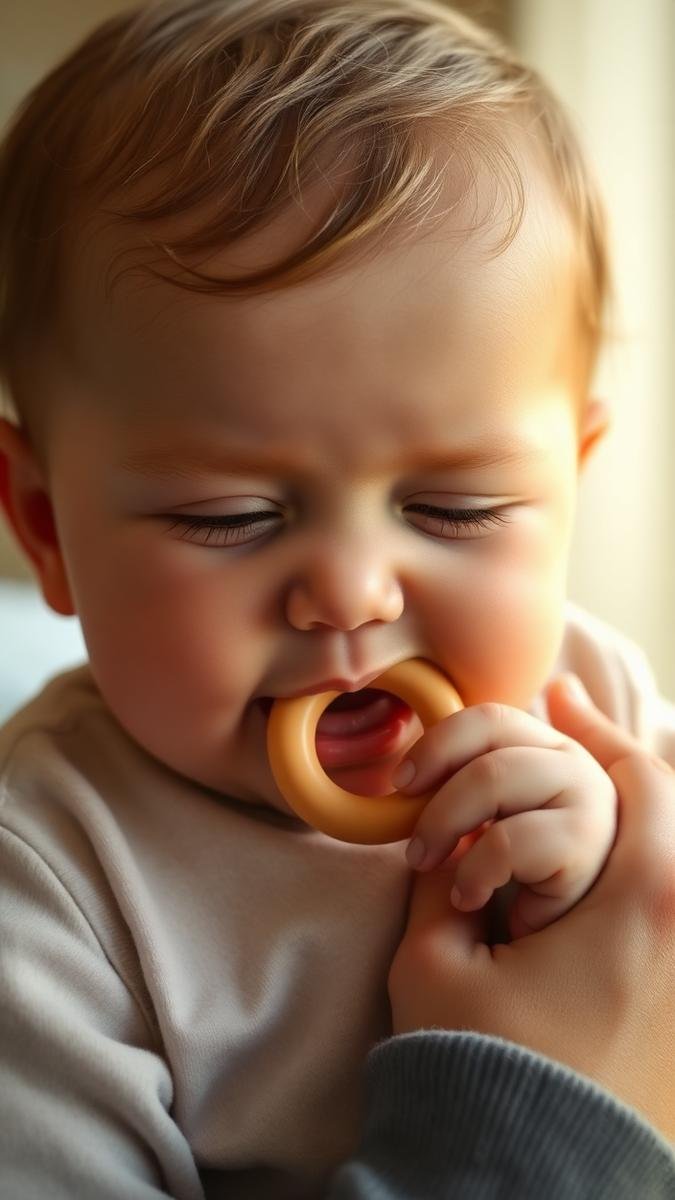
- Teething rings: Choose solid, BPA-free rings. Chilling (not freezing) adds soothing comfort. Avoid fluid-filled or mesh teethers, which can break or harbor bacteria.
- Cold washcloth: A clean, damp washcloth chilled in the refrigerator can be a safe chew toy.
- Breastfeeding or bottle-feeding: Sucking can be soothing. For tips on latch, see our perfect breastfeeding latch guide.
- Distraction and cuddles: Comfort and calming play can help ease baby’s fussiness.
Avoid: Teething gels with benzocaine or lidocaine (can be dangerous), teething necklaces (choking/strangulation risk), and homeopathic tablets (safety concerns). If considering pain relievers like acetaminophen or ibuprofen, always consult your pediatrician for correct dosing.
Teething and Sleep: What Parents Should Know
Teething is a common cause of temporary sleep disruptions. Babies may wake more often or have trouble settling. Consistent bedtime routines, comfort measures, and safe sleep practices help minimize night wakings. For more on infant sleep, read about why newborns sleep so much.
Myths and Facts About Teething
- Myth: Teething always causes fever.
Fact: Mild temperature elevations (<100.4°F) can occur, but significant fever usually signals illness. - Myth: Teething causes diarrhea or severe diaper rash.
Fact: Some babies have looser stools due to swallowing more saliva, but true diarrhea is not caused by teething. - Myth: Teething order doesn’t matter.
Fact: Most babies follow a predictable sequence, but some variation is normal. - Myth: All babies start teething at 6 months.
Fact: There’s a normal range from 3 to 12 months.
When to Call the Pediatrician
While most teething symptoms are mild and manageable at home, contact your pediatrician if you notice:
- Fever above 100.4°F (38°C)
- Persistent diarrhea or vomiting
- Dehydration (very few wet diapers, dry mouth, no tears when crying)
- Inconsolable crying or extreme irritability
- Rash not limited to the chin/face
- Signs of infection (pus, foul odor from gums, swelling spreading beyond the gum area)
- Difficulty breathing (see newborn breathing patterns)
Oral Care During the Baby Teething Timeline
Good oral hygiene should start even before teeth appear. Here’s what the American Academy of Pediatrics and HealthyChildren.org recommend:
- Wipe baby’s gums daily with a clean, damp cloth.
- Once teeth erupt, use a soft-bristled infant toothbrush and a smear (rice-sized) of fluoride toothpaste.
- Brush twice daily—especially before bed.
- No bottles in bed to reduce risk of cavities.
- Schedule baby’s first dental visit by age 1 or within 6 months of first tooth.
FAQ: Baby Teething Timeline
When do babies usually start teething?
Most babies begin teething between 4 and 7 months of age, but it’s normal for teething to start as early as 3 months or as late as 12 months. Genetics can influence timing.
How long does teething last for each tooth?
Each tooth can take a few days to a week to fully erupt, but symptoms may come and go. The entire baby teething timeline typically spans from 6 months to about 3 years.
Does teething cause fever or diarrhea?
No. While mild temperature elevations are possible, significant fever or diarrhea is not a normal part of teething. Consult your pediatrician if your baby is very ill.
What can I safely give my baby for teething pain?
Offer a chilled teething ring, cold washcloth, or gentle gum massage. Avoid teething gels with benzocaine and teething necklaces. Medication should only be used if recommended by your pediatrician.
When should I take my baby to the dentist?
The first dental visit should be by age 1, or within 6 months of the first tooth erupting, per AAP and American Dental Association guidelines.
Teething is a normal developmental process that every baby experiences differently. Focus on comfort, maintain good hygiene as teeth emerge, and trust that this phase will pass. If you have concerns about your babys teething progress, your pediatrician can provide guidance at well-child visits.
Related: The Pediatrician’s Guide to Baby Feeding: From First Bottle to First Solid
Related: Best Baby Food Makers & Storage Solutions for Homemade Meals: A Pediatrician’s Guide
Related: Top 5 High Chairs for Easy Cleanup & Posture Support: A Pediatrician’s Buying Guide
Reference: CDC – Children’s Health
Related Resources
Explore more pediatrician-reviewed guidance from ChildBloom:
- Best Anti-Colic Bottles for Newborns: Pediatrician Picks
- When to Worry About a Baby Cough: Pediatrician’s Guide
Authoritative External Sources
Medical Disclaimer: This article is for informational purposes only and does not constitute medical advice. Always consult your pediatrician for guidance on your child’s specific health needs. If you have concerns about your baby’s health, contact your healthcare provider immediately.
Teething and Feeding: What to Expect
Teething can significantly affect your baby’s feeding patterns. Some babies nurse or bottle-feed more frequently because the sucking motion is soothing on sore gums. Others feed less because the pressure of the nipple or bottle against the gums is painful. If your baby is feeding less due to teething pain, offer pain relief about 20 minutes before a feed. For breastfed babies, try different nursing positions that minimize pressure on the sore areas. For bottle-fed babies, try a different nipple shape or flow rate. Some babies prefer a cooler bottle nipple, which can be briefly chilled in the refrigerator. For babies over 6 months eating solids, offer cold foods like chilled yogurt, pureed fruit, or cold cucumber spears for older babies. Freeze breast milk or formula in a mesh feeder for a soothing, edible teether. Avoid teething biscuits, which often contain sugar and can be a choking hazard. Avoid teething gels that contain benzocaine, which can cause methemoglobinemia, a rare but serious condition that reduces the amount of oxygen in the blood. The FDA recommends against using benzocaine products for children under 2 years old. Most teething-related feeding difficulties resolve within a few days as the tooth breaks through the gum. If your baby refuses to feed for more than 12 hours, or if they show signs of dehydration, call your pediatrician.
Frequently Asked Questions
Q: When should I call the pediatrician?
A: Call immediately for: fever in a baby under 3 months, difficulty breathing, signs of dehydration (no wet diapers for 8+ hours, no tears when crying), lethargy or difficulty waking, a rash that doesn’t fade when pressed, or if your baby seems to be getting worse. For non-urgent concerns, call during business hours.
Q: How do I know if my baby is developing normally?
A: Development varies widely, but babies should show progressive gains in motor skills, social interaction, and communication. If your baby isn’t meeting multiple milestones or is losing skills they once had, discuss with your pediatrician. Early intervention is highly effective if there are delays.
Q: What products do I really need for my baby?
A: The essentials are: a correctly installed car seat, a safe sleep space (crib or bassinet with firm mattress), diapers and wipes, appropriate clothing, and a digital thermometer. Beyond these, focus on products that address specific needs rather than marketing claims. Always prioritize safety certifications over features.
Related Articles
Related Articles
- Wake Windows by Age Chart: Optimizing Your Baby’s Slee
- Crib to toddler bed transition: Transitioning From Crib to T
- Bottle to cup transition timeline: Transitioning From Bottle
- Top food allergens introduction baby: Top 9 Allergens: When
- Toddler tantrums evidence based: Toddler Tantrums: What Work
Related Articles
- Twins baby care guide: Raising Twins or Multiples: A Pediatr
- 3 month: Newborn Milestones at 1, 2, and 3 Months: Complete
- Newborn Cognitive Development: How Your Baby Learns 0–3 Mont
Related: Baby Constipation How To Identify It What Causes It What Actually Helps Evidence
📖 More from the Pediatrician’s Corner Hub: your complete pediatrician-reviewed guide to your baby’s first year — milestones, feeding, sleep, vaccines, common illnesses, and more
Teething Timeline: quick pediatrician summary
Development runs on ranges, not deadlines, and the direction of travel matters more than any single date on a chart. Track what your child does across several weeks rather than any one day, and remember that skills should be added over time and not lost. Bring it up with your pediatrician if a skill disappears, if there is no response to sound or faces, if muscle tone seems very stiff or very floppy, or if your gut says something has changed — early evaluation is low-risk and high-value.
Common mistakes parents make
- Treating a single measurement or one bad day as a trend instead of watching the pattern over several days.
- Trying several remedies at once, so it becomes impossible to tell what helped.
- Waiting for a convenient time to call when a red flag is already present — feeding, breathing and alertness changes are always worth a same-day call.
- Following advice from an unsourced social post rather than your own pediatrician, who knows your child’s history and growth curve.
Related guides from our pediatric team
- Baby Teething Symptoms and Relief: What Works
- When Do Babies Start Teething? Age, Symptoms & Order
- Baby Pulling Ear But No Fever and Not Teething: What Does It Mean?
- Toddler Tantrum Management Strategies: Evidence-Based Techniques for
- More expert answers in Pediatrician’s Corner
References and further reading
- CDC Learn the Signs. Act Early. milestones
- AAP developmental surveillance guidance
- WHO early child development
Medical disclaimer
This article is for general education and is not a substitute for individual medical advice, diagnosis or treatment. Every child is different — talk to your own pediatrician about your baby, and seek urgent care for breathing difficulty, poor feeding, dehydration, unusual sleepiness, fever in an infant under 3 months, or any sudden change in your child’s condition.





One Comment