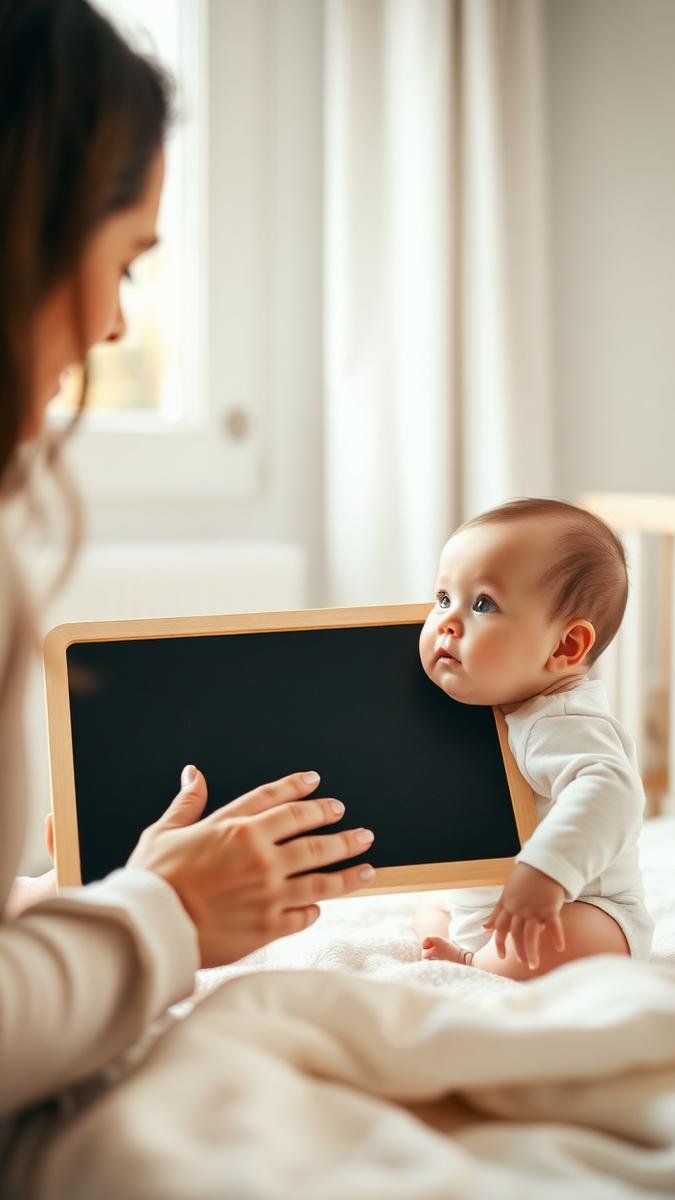
Newborn Cognitive Development: How Your Baby Learns 0–3 Months
Medically reviewed by Dr. Ahmad Raza, MD (Pediatrics) — ChildBloom Medical Review Panel. Last updated: August 03, 2026.
Editorial & affiliate disclosure: our guidance is written and reviewed by clinicians. ChildBloom may earn a commission from qualifying purchases made through links on this page, which never changes what our pediatric reviewers recommend.
If you are searching for answers about newborn cognitive development, you are in the right place. This pediatrician-reviewed guide explains what is normal, what the likely causes are, the red flags that mean you should call your doctor, and what you can safely do at home — all based on current AAP, CDC and NIH guidance on newborn cognitive development.
Your newborn’s brain is growing at an astonishing rate — about 1% per day in the first three months. As a pediatrician, I love helping parents understand what’s happening inside that tiny head and how to support their baby’s cognitive development from day one. This guide covers how to stimulate 1 month old brain development without toys to help parents make informed decisions.
Brain Development in the First 3 Months

Furthermore, at birth, your baby’s brain has about 100 billion neurons — nearly all the brain cells they’ll ever have. What’s happening now is not the creation of new neurons but the formation of connections (synapses) between them. Every experience — every sound, sight, touch, and movement — builds neural pathways. By age 3, your baby’s brain will have formed about 1,000 trillion connections, twice as many as an adult brain.
The most rapid growth occurs in the first three months, with the brain reaching about 55% of its adult size by 3 months. This growth is driven by experience — your interactions are literally building your baby’s brain.
Cognitive Milestones: 0–3 Months
| Age | Cognitive Milestone |
|---|---|
| 0–4 weeks | Turns toward familiar voices, prefers faces over objects, recognizes mother’s voice and smell |
| 4–8 weeks | Begins to track objects with eyes, shows interest in high-contrast patterns, starts to anticipate routines |
| 8–12 weeks | Recognizes familiar faces and objects, imitates facial expressions, shows preference for novel stimuli, responds to social interaction with cooing and smiles |
| 12 weeks | Begins to understand cause and effect (kicking makes mobile move), reaches for objects, shows memory for routines |
How Newborns Learn: The Science
Newborns learn through their senses — every sensory experience builds neural connections. The most important pathways for learning at this age are: visual (looking at faces and high-contrast patterns), auditory (listening to voices and sounds), tactile (feeling different textures and being held), olfactory (smelling familiar scents), and kinesthetic (being moved and experiencing different positions). For expert-reviewed guidance, the American Academy of Pediatrics offers reliable information on this topic.
For example, your baby is also learning through a process called “statistical learning” — they’re detecting patterns in the environment. They learn that your voice is followed by feeding, that a certain sound means you’re approaching, and that the bath routine leads to sleep. This pattern-recognition ability is the foundation for all future learning.
How to Support Cognitive Development
- Talk constantly: Narrate your day, describe what you’re doing, point out objects. Your voice is the most powerful cognitive stimulus for your baby.
- Make eye contact: Face-to-face interaction with eye contact builds social cognition and attachment.
- Read from birth: Board books with high-contrast images engage your baby’s visual system and build early literacy foundations.
- Offer varied sensory experiences: Different textures, sounds (rattles, music, your voice), movements (rocking, swaying), and visual stimuli support brain development.
- Do tummy time daily: This builds not just motor skills but also visual-spatial awareness and problem-solving.
- Respond to your baby’s cues: When your baby coos, coo back. When they look at something, talk about it. This back-and-forth interaction builds the foundation for communication and learning.
- Use infant massage: Gentle touch stimulates the release of oxytocin and supports brain development through tactile stimulation.
- Play music: Gentle music (especially with a consistent rhythm) supports auditory processing and can be calming.
Educational Toys: What Actually Works
You don’t need expensive “educational” products. The best cognitive development tools are simple and interactive: your face (the most engaging stimulus for a newborn), rattles and grasping toys, black-and-white or high-contrast cards, unbreakable mirrors, soft books with different textures, and mobiles with contrasting colors. Avoid screens entirely — the AAP recommends no screens before 18 months, as screen time does not support infant learning and can actually disrupt attention and language development.
Newborn Sleep and Brain Development
Sleep is critical for cognitive development. During sleep, your baby’s brain processes and consolidates the day’s experiences. Newborns spend about 50% of their sleep time in REM (active sleep), compared to 20% for adults — this is when memory consolidation and brain development occur. Ensuring adequate sleep is one of the most important things you can do for your baby’s cognitive development. Follow safe sleep practices (back to sleep, firm surface, no loose bedding) and respond to your baby’s sleep cues.
The Role of Nutrition in Brain Development
As a result, breast milk or formula provides all the nutrients your baby’s brain needs for optimal development. Key nutrients include: DHA (omega-3 fatty acid — critical for brain and eye development), iron (for myelination — the insulation of neural pathways), choline (for memory and learning), zinc (for neural growth), and iodine (for thyroid function, which regulates brain development). If you’re breastfeeding, continue your prenatal vitamin and eat a diet rich in DHA (fatty fish, DHA supplements). Your nutrition directly supports your baby’s cognitive development.
When to Call Your Pediatrician
While every baby develops at their own pace, contact your pediatrician if by 3 months your baby: does not track objects with their eyes, does not respond to loud sounds, does not smile socially, does not coo or make vowel sounds, does not bring hands to mouth, has difficulty feeding, has very stiff or very floppy muscles, or seems unusually unresponsive to social interaction. Early detection of developmental concerns leads to the best outcomes.
Frequently Asked Questions
Do I need to buy educational toys for my newborn?
No — your face, voice, and touch are the most powerful cognitive stimulation tools. Simple household objects, high-contrast cards, and rattles are sufficient. Expensive educational products are not necessary and often overstimulating.
Can I stimulate my newborn too much?
In addition, yes — overstimulation is real. Signs include turning away, fussing, arching back, hiccups, or falling asleep suddenly. Watch your baby’s cues — when they look away or get fussy, give them a break. A quiet, calm environment is just as important for brain development as stimulation.
Does bilingual exposure affect cognitive development?
Positively. Bilingual babies develop enhanced executive function (attention control, mental flexibility) and auditory discrimination skills. Continue speaking all your family languages from birth — your baby’s brain is wired to learn multiple languages simultaneously.
The Senses at Work: How Newborns Experience the World
Each of your baby’s senses develops at a different rate, and understanding this helps you provide the right stimulation at the right time. Vision: Newborns see best at 8-12 inches — the distance to your face during feeding. Their vision is blurry at first but improves rapidly. They prefer high-contrast patterns (black and white, bold shapes) and, above all, human faces. By 2 months, they can track moving objects with their eyes. By 3 months, they can distinguish between colors. Hearing: Your baby recognized your voice and music they heard in the womb.
Specifically, they prefer high-pitched, animated speech (parentese) and will turn toward familiar sounds. Touch: This is the most developed sense at birth. Skin-to-skin contact regulates heart rate, temperature, and stress hormones. Your baby learns about the world through touch — different textures, temperatures, and pressures all provide valuable sensory input.
Smell: By 1 week old, your baby can distinguish your unique scent from another woman’s. This is why breastfeeding and skin-to-skin contact are so powerful — your scent is comforting and familiar. Taste: Newborns prefer sweet tastes (like breast milk) and will reject bitter or sour flavors. Their taste buds are fully functional at birth.
Why Routine Matters for Brain Development
Your baby’s brain is wired to detect patterns. Predictable routines — feed, diaper, play, sleep — help your baby’s brain organize information and build expectations. When a routine is consistent, your baby’s brain releases calming neurotransmitters in anticipation, making transitions smoother. This is why a simple bedtime routine (bath, book, feed, bed) can help even a newborn settle. Routines don’t have to be rigid — a flexible but consistent structure gives your baby’s developing brain the predictability it craves while still allowing for the natural variability of newborn life.
Mirror Neurons: How Babies Learn by Watching
Additionally, your baby’s brain contains mirror neurons — brain cells that fire both when your baby performs an action and when they watch someone else perform that action. This is the neural basis for imitation learning. When you smile, your baby’s mirror neurons activate the same brain regions they use to smile.
When you coo, their brain prepares to coo back. This is why your facial expressions, tone of voice, and actions matter so much — your baby’s brain is literally mirroring everything you do. Stick out your tongue at a newborn, and they may stick theirs out in return. This isn’t just cute — it’s evidence of a sophisticated learning system hard at work.
The Bottom Line
Your newborn’s brain is developing at an extraordinary pace, driven by everyday interactions with you. Talk, sing, read, and engage with your baby — these simple acts build the neural foundation for all future learning. You don’t need expensive products or elaborate activities. Your attention, your voice, and your love are the most powerful brain-building tools your baby will ever have. Trust your instincts, follow your baby’s cues, and enjoy watching their mind blossom day by day.
The Role of Attachment in Cognitive Development
However, attachment theory tells us that a secure attachment relationship with a caregiver provides the foundation for all future learning. When your baby feels safe and secure, their brain is in an optimal state for learning. When they’re stressed, frightened, or insecure, stress hormones (cortisol) flood the brain and inhibit neural growth.
This is why responding to your baby’s cries, providing comfort, and being a consistent, predictable presence is not just about emotional wellbeing — it’s about creating the neurological conditions for learning. A securely attached baby explores more confidently, persists longer at tasks, and shows more curiosity about their environment. Your responsive caregiving is literally building your baby’s capacity to learn.
Floor Time: The Best Cognitive Development Tool
One of the most powerful things you can do for your baby’s cognitive development is simply to give them time on the floor. Floor time allows your baby to move freely, explore their environment, and interact with objects at their own pace. It supports: motor development (reaching, rolling, pushing up), visual-spatial awareness (seeing the room from different angles), problem-solving (figuring out how to reach a toy), and sensory integration (feeling different textures, temperatures, and surfaces).
Moreover, aim for at least 30-60 minutes of supervised floor time daily, spread across the day. A simple play mat with a few age-appropriate toys on a safe, clean floor is all your baby needs. This is far more valuable than any electronic or “educational” toy.
Newborns and Music: What Research Shows
Music has a unique effect on the developing brain. Research shows that exposing infants to music (especially live, interactive music) can enhance: auditory processing (the ability to distinguish between similar sounds — a foundation for language), pattern recognition (music is inherently pattern-based, and pattern recognition is a core cognitive skill), emotional regulation (calming music reduces cortisol and promotes relaxation), and social bonding (shared musical experiences release oxytocin).
You don’t need formal music classes — singing lullabies, playing gentle music during playtime, and dancing with your baby all provide benefits. The key is that the music is age-appropriate (not too loud or fast) and accompanied by social interaction (your voice and presence matter more than the recording).
The Power of Your Voice: Language Nutrition
Furthermore, research from the Harvard Center on the Developing Child shows that the number of words a baby hears in the first three years directly correlates with later academic achievement. But it’s not just about quantity — it’s about quality. “Language nutrition” means talking ”with” your baby, not just ”at” them. Pause after speaking and wait for a response (a coo, a look, a smile).
Follow your baby’s gaze and talk about what they’re looking at. Use a warm, animated tone. This back-and-forth “conversation” — called “serve and return” — builds the neural architecture for language, social skills, and cognitive flexibility. Even in the newborn period, your baby is learning the rhythm of conversation: you speak, they respond, you speak again. This is the foundation of all future communication.
Newborn Vision: What Your Baby Sees
Your newborn’s vision is the least developed sense at birth, but it improves rapidly. Here’s what they see: at birth: blurry vision, can see light, dark, and movement, prefers faces over any other visual stimulus, can focus best at 8-12 inches (the distance to your face during feeding). At 4-6 weeks: can track objects with eyes briefly, begins to show interest in high-contrast patterns (black and white, bold shapes), may prefer curved shapes over straight lines.
For example, at 8-12 weeks: can follow moving objects more smoothly, begins to recognize familiar faces from across the room, shows preference for colorful objects, and can distinguish between some colors. At 3 months: visual acuity improves significantly, can track fast-moving objects, reaches for objects they see, and recognizes faces consistently. Support visual development by providing high-contrast cards, facing your baby outward during carrying (to see the world), making eye contact during feeding, and offering age-appropriate toys with contrasting colors. Avoid overstimulation — too many patterns or fast movements can overwhelm your baby’s developing visual system.
Tummy Time and Cognitive Development
While tummy time is primarily known for building motor skills, it also supports cognitive development. When your baby lifts their head and looks around from a prone position, they’re practicing visual tracking, depth perception, and spatial awareness. They learn to judge distances, shift their gaze between near and far objects, and coordinate vision with movement.
The different perspective — seeing the room from belly-level rather than back-level — provides novel visual input that stimulates brain development. Tummy time also gives your baby practice with problem-solving: “How do I reach that toy?” “How do I lift my head higher?” These small cognitive challenges build neural pathways for executive function, persistence, and goal-directed behavior. Ten minutes of tummy time is also ten minutes of rich cognitive stimulation — one more reason to make it a daily habit.
As a result, Read more: cognitive games for 6 month old
This content is for informational purposes only and does not substitute professional medical advice. Always consult your pediatrician with concerns about your baby’s development.
Related: most important prenatal vitamins for baby brain development
Newborn Cognitive Development: quick pediatrician summary
Most of the time this is a normal newborn or infant variation that settles on its own, and the job of a parent is to know the small number of red flags that change the plan. Watch feeding, breathing, alertness and wet diapers — those four tell you more than the symptom itself. Call your pediatrician the same day for fever in a baby under 3 months, laboured or fast breathing, refusal to feed, fewer wet diapers, unusual floppiness or sleepiness, or a symptom that is clearly getting worse rather than better.
Common mistakes parents make
- Treating a single measurement or one bad day as a trend instead of watching the pattern over several days.
- Trying several remedies at once, so it becomes impossible to tell what helped.
- Waiting for a convenient time to call when a red flag is already present — feeding, breathing and alertness changes are always worth a same-day call.
- Following advice from an unsourced social post rather than your own pediatrician, who knows your child’s history and growth curve.
Related guides from our pediatric team
- Newborn Hearing: From Womb Memory to Early Language
- Newborn Vision Development: What Your Baby Can See Month by Month
- Cognitive Development in Infants: 3–12 Months
- Newborn Stroller Safety: From Bassinet Attachments to Hot Days
- More expert answers in Pediatrician’s Corner
References and further reading
- AAP HealthyChildren: symptoms & when to call the doctor
- CDC child health & development
- NIH MedlinePlus infant and newborn care
Medical disclaimer
This article is for general education and is not a substitute for individual medical advice, diagnosis or treatment. Every child is different — talk to your own pediatrician about your baby, and seek urgent care for breathing difficulty, poor feeding, dehydration, unusual sleepiness, fever in an infant under 3 months, or any sudden change in your child’s condition.





2 Comments