Foods to Avoid Before 12 Months: A Parent’s Safety Guide
Medically reviewed by Dr. Ahmad Raza, MD (Pediatrics) — ChildBloom Medical Review Panel. Last updated: September 27, 2026.
Editorial & affiliate disclosure: our guidance is written and reviewed by clinicians. ChildBloom may earn a commission from qualifying purchases made through links on this page, which never changes what our pediatric reviewers recommend. As an Amazon Associate, we earn from qualifying purchases.
Worried about first foods? Learn the key foods to avoid before 12 months, why each is risky, and when it’s safe. Expert pediatric guidance for confident feeding.
📋 TL;DR — if you read nothing else
Short answer: Several foods wait until 12 months: honey, cow’s milk as a main drink, unpasteurized foods, raw or undercooked items, high-mercury fish, added salt and sugar, and pieces shaped to choke on.
- Honey and corn syrup stay out until the first birthday — they can carry botulism spores.
- Cow’s milk is a cooking ingredient, not a main drink, before 12 months.
- Cut round, firm, and sticky foods lengthwise so choking risk drops.
- Allergens start early: thin peanut butter, one new food at a time, from about 6 months.
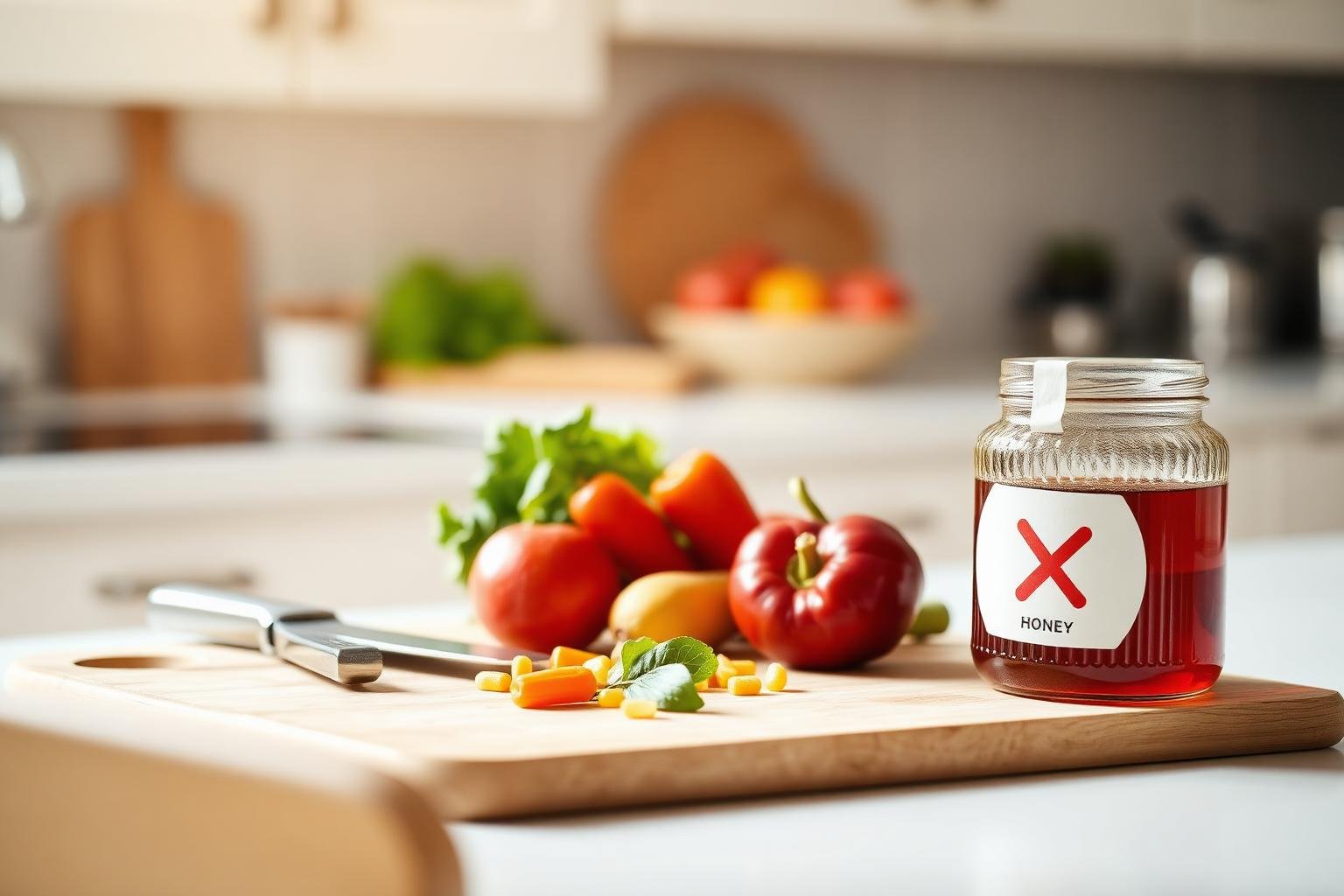
First foods come with a long avoid list, and most of it boils down to four risks: infection, choking, too much salt or sugar, and minerals a small body cannot process yet. The list is also finite. Every item on it clears by the first birthday.
This guide covers which foods genuinely wait, why each one is risky, and what to offer instead. You will find honey and corn syrup, cow’s milk as a main drink, unpasteurized dairy and juice, raw or undercooked eggs and meat, fish high in mercury, and pieces shaped to choke on — plus safe textures to serve.
Do not give honey, cow’s milk as a main drink, unpasteurized dairy or juice, raw or undercooked eggs and meat, high-mercury fish, or round, sticky, choking-sized pieces before 12 months. Most other foods can start around 6 months in safe shapes and sizes. Cook eggs until firm and meat to 165°F. Call your doctor after any honey given before 12 months, or if a new food brings hives, repeated vomiting, or trouble breathing.
Foods Your Baby Should Not Have Before 12 Months
Keep one short list on the fridge until the first birthday. No honey in any form, including honey baked into cookies or granola. No cow’s milk as a main drink. No unpasteurized milk, cheese, or juice. No raw or undercooked eggs, meat, or sprouts. No shark, swordfish, king mackerel, or tilefish. No added salt or sugar, and no juice beyond small sips after 6 months. Skip round or firm pieces — whole grapes, hot dog coins, raw carrot chunks, popcorn, and whole nuts — until you can cut them into safe shapes. Water stays limited to practice sips. Everything else, served in the right texture, is fair game.
Honey and Sweeteners
No honey before 12 months. Not by the spoon, not stirred into tea, and not in baked goods made with honey. Honey can carry Clostridium botulinum spores. A baby’s immature intestines cannot stop those spores from taking hold, and infant botulism follows. Corn syrup and unpasteurized sweeteners raise the same concern, so skip them too. After the first birthday, honey is fine. Other sweeteners can wait longer still: a baby who never learns the taste of sugar does not miss it, and plain food now sets up an easier table later.
Cow’s Milk as a Main Drink
Small amounts of cow’s milk are fine in cooking — a splash in oatmeal, a spoon in a sauce. Whole milk should not replace breast milk or formula before 12 months. It is low in iron, and iron deficiency is the most common nutritional gap in infancy. Large amounts can also irritate the gut and stress kidneys that are still maturing. Milk offers little vitamin D, while the CDC notes that babies need roughly 400 IU a day from formula or supplements. If your baby is older than 6 months, water in small sips from an open or straw cup works better than milk for thirst.
Choking-Hazard Foods
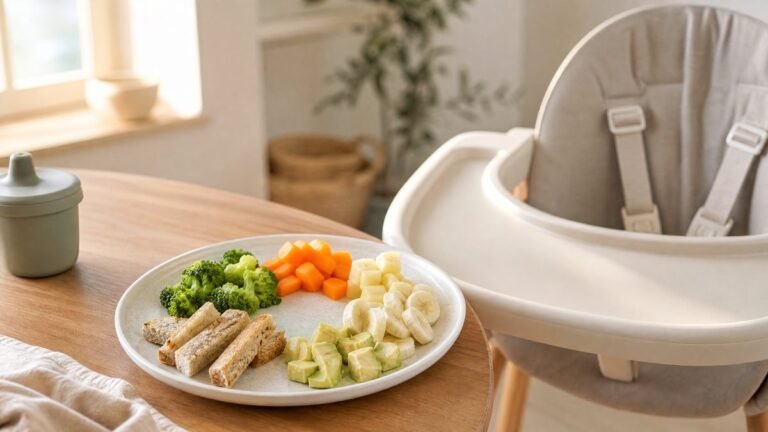
Foods that are small, round, hard, sticky, or slippery raise choking risk: whole grapes, cherry tomatoes, hot dogs, nuts, popcorn, raw carrot chunks, and big spoonfuls of nut butter. Cut round foods into quarter-inch pieces, and quarter grapes and hot dogs lengthwise rather than into coins. Sit your baby upright, stay close, and let them eat without rushing. Choking risk stays higher until about age 4, because a young child’s airway is narrow — roughly the width of a drinking straw. The American Academy of Pediatrics recommends quartering hot dogs lengthwise for exactly this reason.
High-Sodium and High-Sugar Foods
Added salt and sugar stay off the menu for the whole first year. One processed snack or serving of deli meat can top 1 gram of sodium — far more than a baby needs in a day. Watch the quiet sources too: fruit leather, sweetened yogurts, crackers, and takeout food. The WHO feeding guidelines advise no added sugar or salt in the first 2 years. Babies learn the taste of the food they grow up with, so plain flavors early make the transition to family meals much easier.
Fish High in Mercury
Fish gives babies healthy fats and protein, but some types carry too much mercury. Skip shark, swordfish, king mackerel, and tilefish. Safer picks include salmon, offered one to two times a week in toddler-sized portions. Canned light tuna counts in small amounts. If you fish locally, check the advisories for the water you caught it in before sharing the catch with your baby.
Unpasteurized Foods and Raw Items
Unpasteurized milk, cheese, and juice can carry Listeria, Salmonella, and E. coli. Pasteurization kills those bacteria, so choose pasteurized dairy every time, including soft cheeses. Raw or undercooked eggs, meat, and sprouts carry the same risk: cook eggs until firm and meat to 165°F, and pass on raw sprouts. Juice waits too — none before 12 months, and after the first birthday, keep it to 4 ounces a day. The NIH NICHD infant care resources stress safe handling at home: wash produce, refrigerate leftovers within 2 hours, and discard opened jars after 1 to 2 days.
Allergens and Peanut Butter
Common allergens are not on the avoid list. The goal is to introduce them early, not late. Peanut butter and other nut butters can start around 6 months, thinned with water or breast milk and spread thinly across a piece of toast or a soft stick. Never offer a big spoonful — that is a choking risk, not an allergy test. Eggs, dairy, and other common allergens also come early, one new food at a time, so you can watch for a reaction. Ask your pediatrician first if your baby has severe eczema or an existing food allergy.
The Evidence on Food Safety in the First Year
Three concerns drive most of this list. First, infection: a baby’s gut and immune system are still maturing, so bacteria like Clostridium botulinum, Listeria, and Salmonella cause more serious illness than they would in an older child. Second, choking: the airway of a baby under 4 is small and easy to block, and texture is part of the safety story. Third, metabolic load: immature kidneys and low iron stores make large amounts of milk protein or salt a real problem, not a theoretical one. Each concern fades as the child grows, which is why the avoid list ends at the first birthday.
Texture Progression for Safe Eating
Texture matters as much as the food itself. Start with smooth purees around 6 months, then move to mashed and lumpy textures over the next two months. Soft finger foods fit most babies by 8 to 10 months, and by 10 to 12 months, soft spears they can hold themselves work well. A gag reflex that sits far forward is normal in the first months. Gagging is not choking — it protects your baby while they learn to move food to the back of the mouth. Moving texture too slowly makes eating harder later, so progress on schedule.
Pediatrician’s Take
“The avoid list looks long until you see the pattern: no honey, no cow’s milk as a drink, nothing raw or unpasteurized, nothing shaped like a choke hazard. Introduce the rest early, in the right texture, and watch your baby rather than the calendar. Most of the list lifts on the first birthday, and the questions that remain take two minutes to answer at the visit.” — Dr. Ahmad Raza, MD (Pediatrics)
When to Call the Doctor
After a new food, a few signs should not wait for the next appointment.
- hives, swelling of the lips or tongue, repeated vomiting, or trouble breathing after eating
- gagging or choking that does not clear quickly
- any honey given before 12 months — call even if your baby seems fine
- persistent diarrhea, lethargy, or refusing feeds for more than 24 hours
- blood in the stool
- a fever with poor feeding in a baby under 3 months
- any time you are unsure whether a food is safe for your baby
Trust your instincts. You know your baby best, and a quick call is always reasonable. A short note on what and how much your baby ate helps your pediatrician answer faster.
Common Feeding Questions Answered
Can my baby eat yogurt before 12 months? Yes. Plain, pasteurized, whole-milk yogurt is fine from about 6 months. Fermentation breaks down the milk protein, so yogurt is easier to digest than plain cow’s milk. It counts toward calcium but should not replace breast milk or formula as the main nutrition source. Choose unsweetened versions, and wait on honey until the first birthday.
Is it safe to give water instead of these foods? No. Milk feeds your baby, not water. Small sips from about 6 months are fine for practice with an open or straw cup — typically 2 to 4 ounces a day. Water does not provide the fat, protein, or calories a baby needs, and too much can be dangerous. Keep breast milk or formula the main drink until the first birthday.
What about peanut butter and common allergens? Introduce allergens early, one new food at a time, usually from about 6 months. Thin peanut butter with water or breast milk and spread it thinly — never offer a spoonful, which is a choking risk. Watch your baby the first few times, and ask your pediatrician about timing if there is severe eczema or an existing food allergy.
When can I introduce cow’s milk? Small amounts in cooking are fine before 12 months. As a main drink, wait until the first birthday. From 12 months, whole milk typically comes to 16 to 24 ounces a day, and it stays the main milk until age 2. Many babies accept it best mixed into cereal or a bottle at first.
Are homemade baby foods risky? Not if you handle them well. Wash produce, cook thoroughly, and keep hands and surfaces clean. Homemade food needs the same rules as store-bought: no honey before 12 months, go easy on salt, refrigerate leftovers within 2 hours, and discard opened jars after 1 to 2 days. Vary flavors and textures as your baby grows.
How Do I Know If My Baby Is Getting Enough? Weight gain is the most reliable sign — your baby should follow their growth curve. Diaper output matters too: at least 6 to 8 wet diapers a day after the first week. Babies should also seem content and relaxed after feeds, not crying or rooting. If you are worried, your pediatrician can do a weighted feed to measure exactly how much milk your baby takes.
Can I Switch Between Breast and Bottle? Yes, many babies alternate breast and bottle. Establish breastfeeding first, usually for 3 to 4 weeks, before introducing a bottle. Use a slow-flow nipple so the pace stays close to the breast. Have someone else offer the first few bottles when you can, since babies can smell their mother’s milk. If your baby resists, try different nipple shapes, temperatures, and timing.
The Bottom Line
The avoid list before 12 months protects against four clear risks: botulism, choking, foodborne infection, and too much salt, sugar, or milk protein for a small body. Skip honey, cow’s milk as a main drink, unpasteurized and raw foods, high-mercury fish, and choking-shaped pieces. Serve the rest early, in safe textures, and let your baby’s cues lead. Nearly all of it lifts at the first birthday.
References
- CDC infant and toddler nutrition
- American Academy of Pediatrics policy statement on breastfeeding and the use of human milk
- FDA: infant formula guidance for parents
- World Health Organization guidance on sugar and salt in early feeding
- NIH NICHD infant care resources on safe food handling
?? Doctor’s Take
Four risks cover almost the whole list: botulism, choking, infection, and too much salt, sugar, or milk protein. Serve safe shapes, introduce allergens early, and remember the list ends at the first birthday.
This article is general information, not individual medical advice. Every baby is different – talk to your own pediatrician about your child’s feeding, sleep, growth or development, and seek urgent care for breathing difficulty, poor feeding, dehydration, fever in an infant under 3 months, or any sudden change in your baby’s behaviour. When in doubt, call your doctor.
Medical review
Reviewed by Dr. Ahmad Raza, MD, Pediatrics. Last reviewed September 27, 2026. This article provides general education and does not replace individualized advice from your child’s pediatrician. Learn about our physicians on the About page.

2 Comments