Baby False Start at Bedtime: Causes & Fixes
Baby falls asleep then wakes 30 minutes later? Learn why false starts happen and how to fix them with evidence-based timing, feeding, and routine strategies.
Baby falls asleep then wakes 30 minutes later? Learn why false starts happen and how to fix them with evidence-based timing, feeding, and routine strategies.
Baby sleeps with eyes open? Learn when nocturnal lagophthalmos is normal vs. when to call the pediatrician. Evidence-based guidance from board-certified pediatricians.
Understand newborn sleep cycles: active vs. quiet sleep, why babies grunt and twitch, and how to combine sleep-cycle knowledge with safe-sleep guidance.
After illness, travel, or rough nights, how do you help baby recover sleep? Learn safe sleep debt recovery strategies without creating new sleep problems.
Toddler stalling at bedtime with endless requests? Get proven scripts, the bedtime-pass technique, and boundary strategies that actually work. Pediatrician-reviewed.
Baby sleeping with mouth open? Learn when it’s normal congestion vs. mouth breathing that needs attention. Covers adenoids, snoring, and safe sleep positioning.
2-year sleep regression with nightmares and bed resistance? Separate nightmares from night terrors, learn calm scripts, and handle the toddler bed transition safely.
18-month sleep regression driven by separation anxiety? Learn connection-based strategies, predictable boundaries, and when to check for medical causes.
15-month-old refusing naps? Learn why the 15-month sleep regression happens, when to transition to one nap, and how to protect total sleep during the strike.
12-month sleep regression hitting hard? Understand why it happens (mobility, nap transitions, separation) and get a practical plan to get sleep back on track.
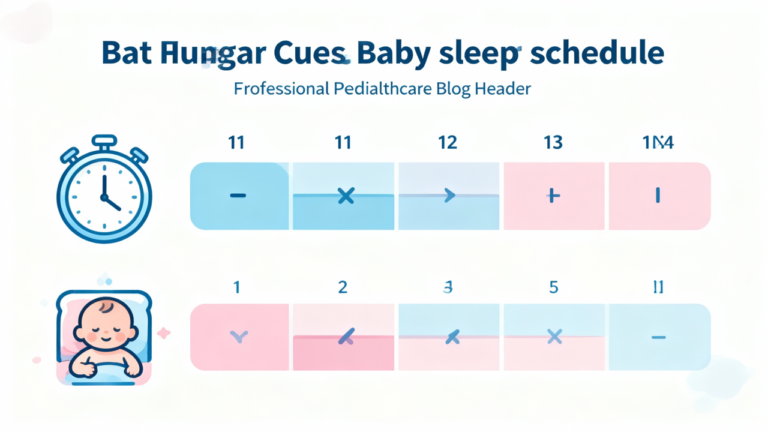
Baby schedule vs cues: the quick answer Balance baby schedule vs cues using approximate wake windows and a predictable routine as a framework, then follow your baby’s signals — eye-rubbing, fussing, looking away — to time sleep. A rigid clock ignores individual needs; pure cue-following can drift into overtiredness. Aim for “rhythm, not rigidity”: same…

Unsafe baby sleep products: the quick answer Unsafe baby sleep products such as crib bumpers, positioners, and weighted sacks should never be in a baby’s sleep space. The only safe space is a firm, flat mattress with a snug fitted sheet and the baby on the back. These items raise suffocation, entrapment, and overheating risks….

Baby room temperature: the quick answer For safe baby room temperature sleep, keep the room between 68–72°F (20–22°C) and dress your baby in about one layer more than you would wear, using a sleep sack instead of loose blankets. Overheating is a known risk factor for unsafe sleep, so skip hats indoors, heavy quilts, and…
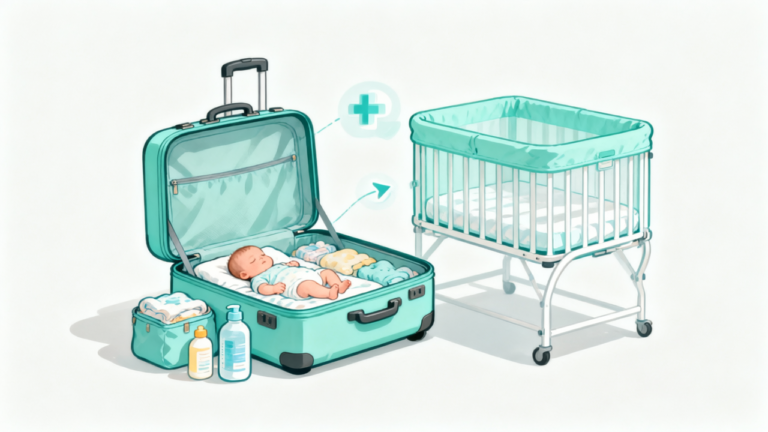
Hotel room baby sleep: the quick answer For hotel room baby sleep safety, bring your own portable crib with a firm mattress and fitted sheet, keep the space away from windows, cords, and heaters, and recreate your home routine. Never use the hotel’s soft bedding or a sofa for sleep. If you share the room,…
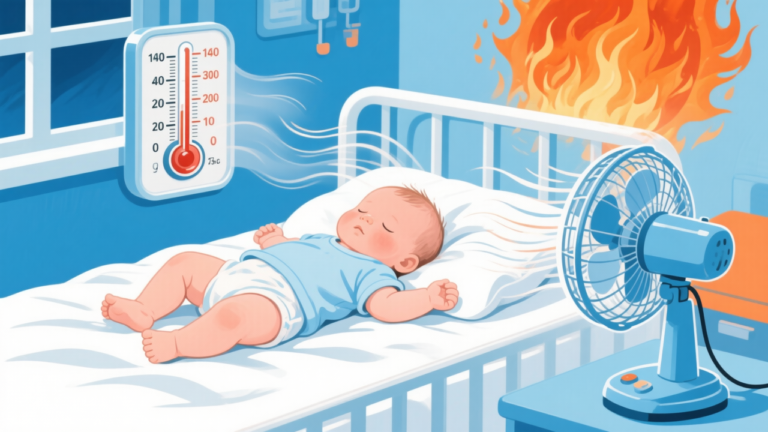
Baby sleep hot room: the quick answer For baby sleep hot room safety, keep your baby cool with light clothing, airflow, and a bare sleep space. Use a fan for circulation and close blinds by day. Watch for overheating signs like a sweaty neck or flushed skin. Move to a cooler space if the room…
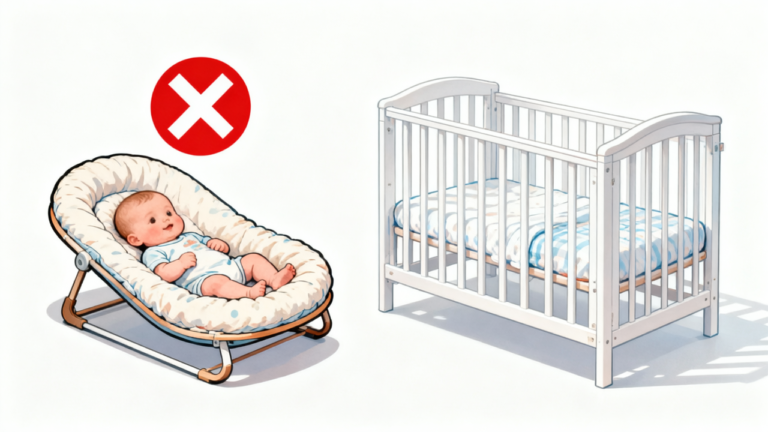
Quick answer No — a baby lounger (a soft, padded, inclined nest) is not a safe sleep surface and should not be used for naps or overnight sleep. Baby lounger sleep safety guidance is clear: loungers lack a firm, flat surface and have padded sides that raise suffocation risk. Use them only for supervised awake…
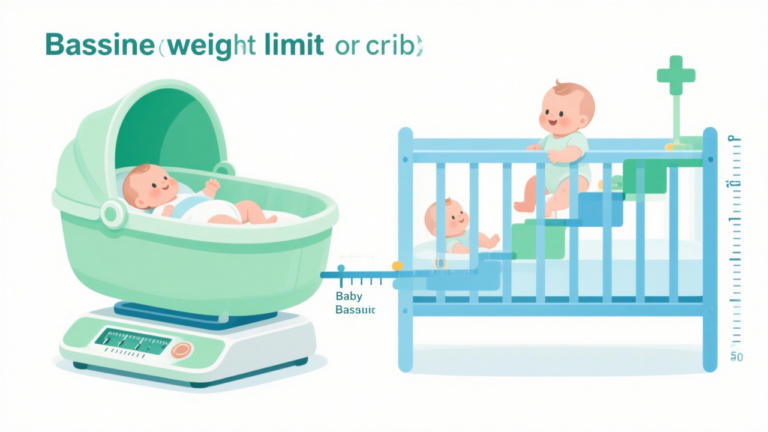
Bassinet weight limit: the quick answer A bassinet weight limit transition is needed when your baby reaches the maker’s weight limit (often 15 to 20 lb / 7 to 9 kg), can roll over, or looks cramped with head and limbs near the sides. At that point, a crib with a firm mattress is the…
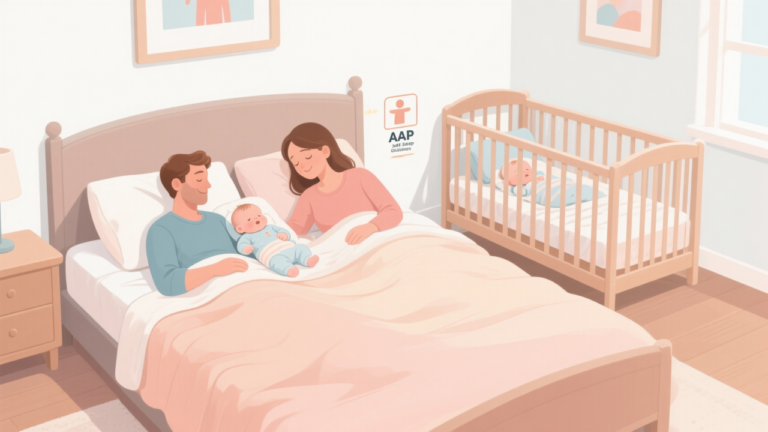
Quick answer For room sharing baby safety, the AAP advises keeping your baby in your room on a separate surface for at least 6 months because it lowers SIDS risk. Room sharing is not bed sharing. A separate nursery is fine after that window if safe-sleep rules are followed. The safest setup is nearby, flat,…

Baby sleep clothing: the quick answer For safe baby sleep clothing temperature choices, dress your baby in about one extra layer compared to what you find comfortable, and use a fitted sleep sack instead of loose blankets. At 75°F (24°C) use a light onesie or diaper under a thin sack; at 70°F (21°C) a short-sleeve…
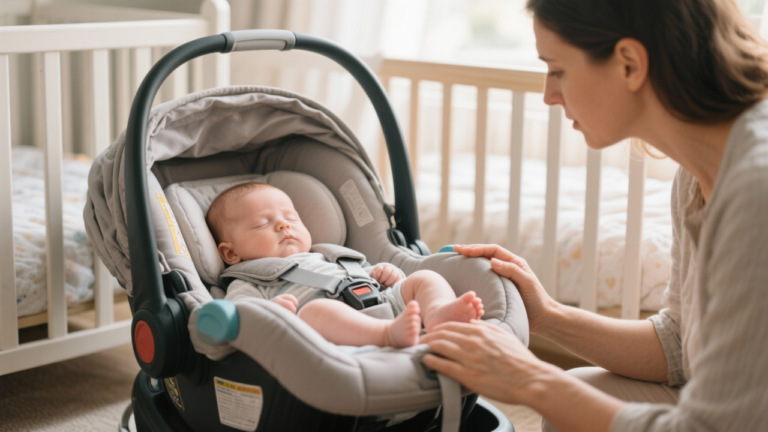
Baby sleeps in swing: the quick answer A swing or car seat is fine for supervised soothing or short travel naps, but it is not a safe regular sleep surface. If your baby sleeps in swing for naps, move them to a flat, firm crib or bassinet on their back. Keep the swing for awake…

Preemie safe sleep: the quick answer For preterm babies, the foundation of preemie safe sleep is the same as for any infant: always on the back, alone, on a firm flat surface, with no bumpers or loose bedding. Base all sleep and developmental expectations on corrected age. Always follow your neonatal team’s discharge plan exactly….

Baby rolls in sleep: the quick answer Once babies roll both ways, leave them in the position they choose if the sleep space is clear — no bumpers, toys, or loose bedding. If they wedge against the crib side, keep the mattress firm and the crib to standard; most learn to reposition within weeks. Stop…

Quick answer Stop swaddling the moment your baby rolls — even once. A swaddled baby who rolls to the stomach cannot use the arms to reposition, raising suffocation risk. Switch to an arms-free sleep sack and always place the baby on the back. The first roll is the hard stop; don’t wait for consistent rolling….

Bassinet to crib transition: the quick answer Move from bassinet to crib when your baby reaches the bassinet’s weight or height limit, starts rolling, or looks cramped — usually 3–6 months. You can go cold-turkey or gradual; keep safe sleep rules: back to sleep, firm mattress, no bumpers or loose bedding. A familiar routine and…

Quick answer Contact naps — a baby sleeping on your chest or in your arms — are normal and comforting, especially under 6 months. To transition, start with one crib nap a day, pre-warm the crib, and build a consistent routine. Never rush; protect total sleep while shifting one nap at a time. For the…
We use cookies to improve your experience on our site. By using our site, you consent to cookies.
Manage your cookie preferences below:
Essential cookies enable basic functions and are necessary for the proper function of the website.
These cookies are needed for adding comments on this website.
Statistics cookies collect information anonymously. This information helps us understand how visitors use our website.
Google Analytics is a powerful tool that tracks and analyzes website traffic for informed marketing decisions.
Service URL: policies.google.com (opens in a new window)