When to Stop Swaddling if Baby Is Rolling
Quick answer
Stop swaddling the moment your baby rolls — even once. A swaddled baby who rolls to the stomach cannot use the arms to reposition, raising suffocation risk. Switch to an arms-free sleep sack and always place the baby on the back. The first roll is the hard stop; don’t wait for consistent rolling.
For the full picture, read our pillar guide on Baby Swaddling Techniques.
Why it happens
Swaddling works because it limits the startle (Moro) reflex and mimics the snug womb, helping young babies sleep. But the same restriction that soothes a newborn becomes dangerous the moment a baby can roll. The mechanism is straightforward and the timing is biological, not optional.
The Moro reflex and why swaddling helps early on
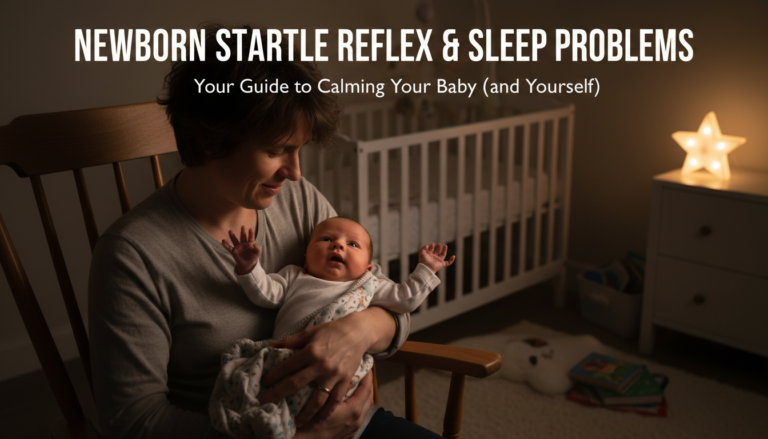
Newborns have an involuntary startle reflex — arms fling out, then curl back — that can wake them. Swaddling wraps the arms snugly so the reflex does not jolt the baby awake. In the first weeks, when sleep is governed mainly by sleep pressure and an immature circadian rhythm, this can mean longer, calmer sleep. Melatonin and self-settling skills are still developing, so the external containment does useful work.
Rolling breaks the safety case for swaddling
Rolling usually begins around 4 months, though some babies roll earlier. Once a baby can roll, the swaddle’s tight arms prevent the very movement that keeps them safe: the ability to push up, turn the head, and roll back. A swaddled baby who ends up on the stomach has reduced ability to lift the head or reposition, which raises the risk of suffocation. This is why the rule is absolute — the first roll ends swaddling.
Why “one time” matters
Parents sometimes wait for rolling to become “consistent,” but a single roll proves the skill exists. Babies practice new motor skills unpredictably, including in sleep. Waiting for repetition means gambling on the night the baby rolls while swaddled and cannot recover. The first observed roll is the trigger.
Sleep pressure still builds
Even after swaddling stops, the same sleep-pressure system drives naps and nights. The difference is that the baby now has free arms to self-soothe and reposition. The transition is about safety, not about removing comfort entirely — a snug sleep sack at the torso still gives a sense of containment.
Step-by-step plan
Stopping swaddling is a safety switch, not a gradual experiment. Here is how to do it cleanly.
1. Stop the arms-in swaddle immediately on first roll
The moment you see any roll — during tummy time, in the crib, or when you find the baby rotated — switch out of the arms-restricted swaddle that night. Do not wait.
2. Move to an arms-free sleep sack
A wearable blanket (sleep sack) with arms out is the simplest, safest swap. The baby stays warm and contained at the torso but can use the arms to push, turn, and soothe.
3. Use a transitional product briefly if needed
Some “transitional swaddles” allow one arm out, then both. These can ease the change for a baby who startles a lot, but they are a short bridge, not a long-term tool. The destination is always arms-free.
4. Keep the routine identical
Use the same sack, sound machine, light, and order of events. Change only the arms. A familiar routine reduces the sleep disruption that sometimes follows.
5. Manage the startle with white noise and a snug torso
A tight sleep sack and steady white noise help dampen the Moro reflex now that the arms are free. Brief adjustment — a few nights of more waking — is normal and expected.
6. Practice rolling by day
Give floor time during waking hours so the baby builds the strength to roll both ways. Daytime practice carries into safer sleep, because a baby who can roll confidently can also reposition at night.
Age-specific subsections
- Under 3 months: Rolling this early is unusual; if it happens, stop swaddling and mention it to your pediatrician, who may check development.
- 3–4 months: The common window. The first roll here is the hard stop.
- 5–6 months: Most babies have rolled; ensure swaddling ended and the baby sleeps arms-free.
Sample first-week plan after the first roll
| Night | Sleep wear | Expectation |
|---|---|---|
| ——- | ———– | ————- |
| 1 | Arms-free sleep sack | More startle, brief waking |
| 2–3 | Arms-free sleep sack | Adjusting to free arms |
| 4–7 | Arms-free sleep sack | Sleep usually stabilizes |
Decision checklist: stop swaddling now?
| Sign | Action |
|---|---|
| —— | ——– |
| Rolled once (any direction) | Stop swaddling tonight |
| Gets to the side intentionally | Stop swaddling tonight |
| Found rotated in bassinet/crib | Stop swaddling tonight |
| Not yet rolling at all | Swaddling still okay |
Safety reminders
- Always place the baby on the back to sleep, for every sleep.
- Use a firm, flat mattress with a fitted sheet; keep the crib bare.
- No weighted blankets, weighted swaddles, or positioners — weighted products are not recommended.
- Once the baby can pull to stand, lower the mattress to the lowest setting.
- Do not bed-share on a soft surface; if you settle the baby in your bed, return them to the crib before you sleep.
- After swaddling ends, the only safe “containment” is a non-weighted, arms-free sleep sack.
- A safe sleep space has no bumpers, pillows, loose blankets, or crib wedges.
When to Call Your Pediatrician
Call your pediatrician if:
- Rolling begins very early (under 3 months) and you want a developmental check.
- You are unsure whether your swaddle or sleep product is safe — bring the label or photo to the visit.
- The baby shows poor weight gain, fever, breathing changes, a high-pitched cry, or dehydration (fewer than six wet diapers in 24 hours).
- Sleep is severely disrupted for more than two weeks after the change, or you suspect reflux or another discomfort is driving unrest.
Why the swaddle helped in the first place
Swaddling works because it limits the Moro (startle) reflex — the involuntary flinging of the arms that can jolt a young baby awake. A snug wrap also recreates the contained feeling of the womb, which many newborns find soothing. In the first weeks, when sleep is governed mainly by sleep pressure and an immature circadian rhythm, this containment can mean longer, calmer sleep and less waking from self-startle. Understanding why it helped makes the end of swaddling easier to accept: you are not taking away comfort cruelly, you are swapping one safe strategy for another as the baby’s needs change.
Common myths about stopping the swaddle
Several myths keep parents swaddling too long. “They’re not rolling consistently” — one roll is enough, because a single roll proves the skill exists. “The swaddle keeps them on the back” — it cannot prevent rolling and then becomes the hazard once the baby turns. “Weighted swaddles are safer” — no, weighted products are not recommended because they can restrict breathing effort. “I’ll just use the swaddle with arms out” — if the arms are out and it is non-weighted, that is a sleep sack, which is fine; the dangerous part was the restricted arms. Clearing these myths protects the baby at the exact moment risk appears.
Troubleshooting rough nights after stopping
Expect a few nights of more waking — the startle reflex is briefly more active with free arms. A snug sleep sack at the torso, steady white noise, and a consistent routine help dampen it. If the baby startles awake, a hand on the chest and a shush usually resettles them. Brief adjustment is normal and expected; it does not mean you made a mistake. If severe disruption lasts more than two weeks, or feeding and weight suffer, check in with your pediatrician to rule out reflux or another discomfort that the swaddle was masking.
Choosing the right arms-free sleep sack
Pick a wearable blanket that is non-weighted, appropriately sized, and rated for the room temperature so you do not over-layer. The sack should allow free arm movement and a full range of shoulder motion for rolling. Avoid products that claim to “hold” the baby or add weight. A simple, well-fitted sleep sack is all most babies need after swaddling. If you used a transitional swaddle with one arm out, move to both arms out within days rather than weeks — the bridge should be short.
What the safety evidence says
Safe-sleep guidance from the American Academy of Pediatrics is clear that once a baby can roll, swaddling with arms restricted must end because a swaddled infant on the stomach has reduced ability to lift the head or roll back, raising suffocation risk. This is a documented threshold, not a preference. The recommendation is consistent across pediatric bodies: stop at the first sign of rolling and move to a bare, back-to-sleep, arms-free environment. Following it removes one of the more preventable sleep hazards in infancy.
A note on early rolling (under 3 months)
Rolling before 3 months is unusual and worth a quick word with your pediatrician, who may simply confirm normal variation or check development. Regardless, the safety rule holds: the moment any roll appears, stop the arms-in swaddle that night. Early rollers need the same arms-free, bare-crib setup as any other baby, and extra vigilance about not leaving them swaddled even for “just one more” nap.
Reassurance for anxious parents
Many parents worry that ending the swaddle will ruin sleep forever. In practice, most babies adjust within days to a week. The startle reflex also fades naturally around 4–6 months, so even without a swaddle the jolts lessen on their own. You are not losing a magic sleep tool; you are moving to the safer, developmentally appropriate stage. Keep the routine constant, stay calm, and the baby will follow your lead.
Related reading: Best hip healthy swaddles.
Sample floor-time plan to build rolling strength
During waking hours, offer several short sessions of tummy time and free play on a safe floor mat: a few minutes after each diaper change, more after feeds when content. Place toys just out of reach to encourage reaching and rolling. This builds the neck, shoulder, and core strength the baby uses to reposition at night. Stronger daytime rolling directly supports safer sleep, because a baby who can roll confidently can also recover from an awkward position.
The first night without the swaddle: a walkthrough
Put the baby down in the usual order — feed, sleep sack (arms free), sound, dim light — but skip the swaddle. Expect more startle and possibly a shorter first stretch. When the baby startles, rest a hand on the chest and shush; most resettle. If the baby fully wakes, a brief pick-up to calm, then back down, is fine. By night three or four the startle usually eases as the baby discovers free arms. Keep the room and routine identical so only the arms changed.
How long does adjustment take, by age
Most babies adjust within three to seven nights. An older baby (5–6 months) who has rolled and built stronger self-soothing may adapt faster; a younger baby who relied heavily on the swaddle may take closer to two weeks. The startle reflex naturally fades around 4–6 months, which shortens the rough patch. If sleep is severely disrupted beyond two weeks with no improvement, or feeding and weight drop, check in with your pediatrician rather than pushing through.
Swaddle alternatives compared
| Option | Arms | Weighted? | Best for |
|---|---|---|---|
| ——– | —— | ———– | ———- |
| Arms-free sleep sack | Free | No | Everyday safe swap |
| Transitional swaddle (one arm out) | One free | Usually no | Brief bridge only |
| Sleep suit (arms free) | Free | No | Babies who like a snug torso |
| Weighted sack | Free | Yes | Not recommended |
The destination is always an arms-free, non-weighted option. Transitional products are a short bridge, not a long-term solution.
The startle reflex will fade on its own
Parents sometimes fear the Moro reflex will keep the baby awake forever. It does not — the reflex naturally diminishes around 4–6 months as the nervous system matures. Free arms let the baby learn to self-soothe the startle, and white noise masks the small noises that trigger it. Within a week or two of stopping the swaddle, most babies link sleep cycles as well as before, often better, because they are no longer fighting a restrictive wrap.
What if rolling starts in the first weeks?
Rolling before about 3 months is uncommon but not alarming; some babies do it early. The rule is unchanged — stop the arms-in swaddle the night you see it. Mention early rolling at the next visit so your pediatrician can confirm development is on track, but do not keep swaddling “until the appointment.” Safety cannot wait for a scheduled check.
Reassurance about the first nights after swaddling
The first one or two nights without the swaddle are often the hardest, then things improve quickly. The Moro reflex is strongest early and naturally fades by 4–6 months, so even without a swaddle the jolts lessen on their own. Keep the room dim, the sound steady, and your responses calm; the baby reads your calm. Within a week most families report sleep is back to its prior pattern, and often better because the baby is no longer fighting a restrictive wrap.
FAQ
Will sleep break when we stop swaddling?
Usually for a few nights, then it recovers. The startle reflex is briefly more active with free arms, but a snug torso sack and white noise help. Safety comes first — the few disrupted nights are worth it.
Can I use a weighted sleep sack?
No. Weighted sleep sacks and weighted swaddles are not recommended by safe-sleep guidance. They can restrict breathing effort and are not proven safe.
What about a sleep suit or wearable blanket?
An arms-free, non-weighted wearable blanket (sleep sack) is acceptable and is the recommended next step after swaddling.
See also: Is Swaddling Safe? Hip Dysplasia Risks & The “Arms-Out” Transition.
Does stop swaddling rolling mean I must also move to a crib?
Not necessarily. You can stop swaddling while still using a bassinet if the baby is under the bassinet’s weight and height limits and not yet rolling out. But once rolling, the crib’s taller sides are the safer choice.
My baby only rolls one way. Is that enough to stop?
Yes. Any roll in any direction means the skill exists. Stop the arms-in swaddle immediately; do not wait for two-way rolling.
Quick reassurance for the first week
The first nights without the swaddle are often the hardest, then things improve. Expect more startle wakes for about three to seven nights as the reflex meets open arms. An arms-free sleep sack and a few minutes of shushing usually settle the baby. You are not doing anything wrong by stopping; you are following the safety rule that protects your baby once rolling begins. Most babies adjust faster than parents expect, and sleep returns to its prior pattern within one to two weeks.
Common Myths vs Facts
Parents hear a lot of conflicting sleep advice. Here is a clear, pediatrician-aligned reality check:
- Myth: “A tired baby will just fall asleep anywhere.” Fact: Overtired babies produce more cortisol, which makes falling asleep and staying asleep harder, not easier.
- Myth: “Keeping the baby up later guarantees a longer night.” Fact: An over-late bedtime often backfires with early waking and night fragmentation. Anchor bedtime to the baby’s total sleep need.
- Myth: “One bad night means the plan failed.” Fact: Sleep habits shift over 1–2 weeks. Judge progress across several nights, not a single rough one.
- Myth: “You must sleep-train.” Fact: Many families resolve issues with consistent schedules, a dark room, and gentle boundaries alone.
If Nothing Works After Two Weeks
If you have held a consistent plan for two weeks and the problem persists:
- Re-check the total daytime sleep — too much or too little both fragment nights.
- Confirm the room is genuinely dark and quiet until your chosen wake time.
- Review the last nap’s timing so it does not steal the night.
- Rule out discomfort: illness, teething, reflux, ear pain, or a growth spurt.
- Call your pediatrician. A brief check can exclude underlying issues and reassure you.
You know your baby best. A quick professional review is always reasonable when something feels off.
- When Baby Rolls in Sleep
- Bassinet to Crib Transition
- Baby Lounger Sleep Safety
- American Academy of Pediatrics — A Parent’s Guide to Safe Sleep
- NICHD Safe to Sleep — Safe Sleep Environment
- CDC — About Sudden Unexpected Infant Death
- World Health Organization — Newborn Care
About the author
Dr. Michael Anderson, MD (Pediatrics) is a board-certified pediatrician on the ChildBloom medical panel, focusing on infant sleep, safe sleep environments, and responsive routines. This article was medically reviewed and approved by Dr. Ahmad Raza, MD (Pediatrics) against current AAP safe-sleep guidance. Read our editorial and review standards.
This guide is general education, not a diagnosis. If you are worried about your baby’s breathing, feeding, growth, or sleep, contact your pediatrician. For any breathing emergency, call emergency services immediately.
Related ChildBloom Guides
- Start here: Baby Swaddling Techniques
- Baby Sleep Sack TOG Guide
- Newborn Won’t Sleep in Bassinet? 7 Fixes That Actually Work
- Best Video Baby Monitors for Peace of Mind
- 6-Month Sleep Regression
- Baby Wakes Every Hour: Is It Hunger, Habit, or Discomfort
- Browse all Sleep & Nursery guides
References & Medical Sources
- AAP on whether swaddling is safe
- IHDI hip-healthy swaddling guidance
- NICHD Safe to Sleep: safe sleep environment
- AAP parent guide to safe sleep
Reviewed by the ChildBloom pediatric panel. Learn about our physicians on the About page. This article is educational and does not replace your child’s clinician.