Ideal Body Weight Calculator
Ideal Body Weight Calculator
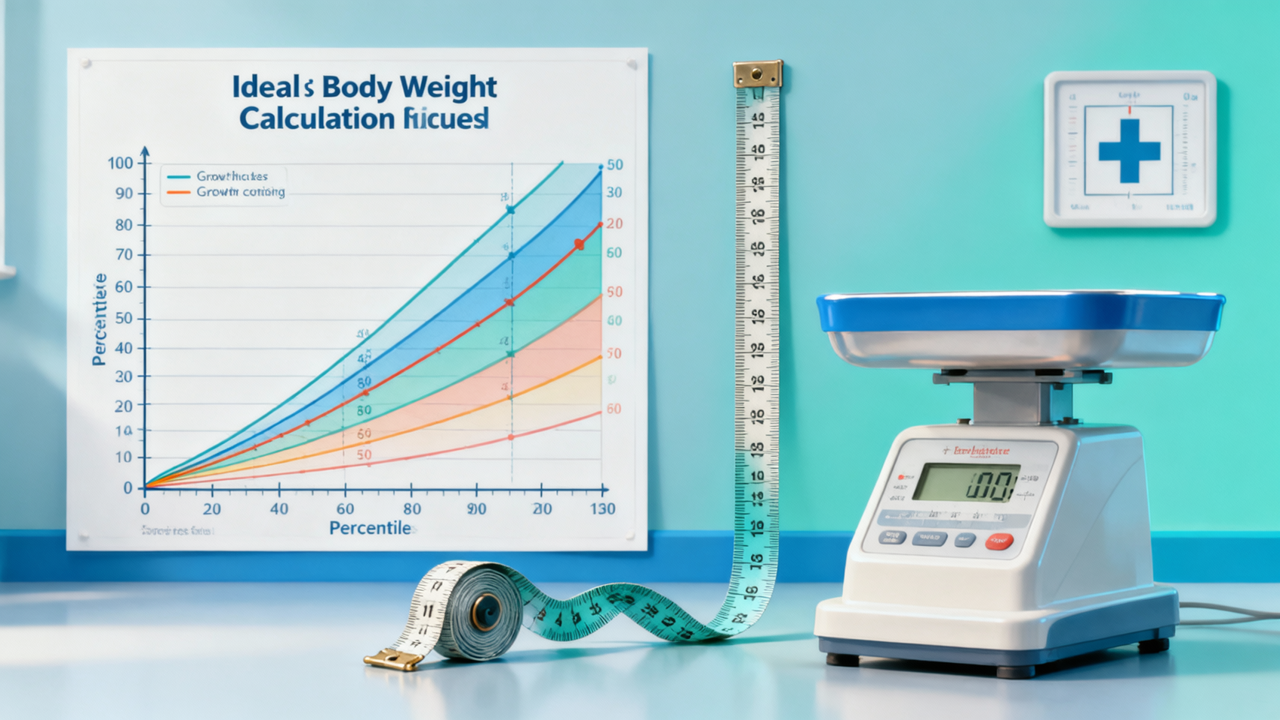
Ideal body weight (IBW) is used in pediatric medicine for medication dosing, nutritional assessment, and clinical calculations. For children, IBW is estimated using the 50th percentile from CDC growth charts. For adolescents, the Devine formula provides an alternative calculation.
Clinical Use: IBW is particularly important for dosing medications that are weight-based, assessing nutritional status, and calculating parameters like tidal volume for mechanical ventilation.
Devine Formula (for Adolescents)
| Sex | Formula |
|---|---|
| Male | 50 kg + 2.3 kg × (height in inches – 60) |
| Female | 45.5 kg + 2.3 kg × (height in inches – 60) |
Calculator
Ideal Body Weight Calculator
50th Percentile Weight by Age
| Age | Male (kg) | Female (kg) |
|---|---|---|
| 2 years | 12.5 | 12.0 |
| 4 years | 16.5 | 16.0 |
| 6 years | 21.0 | 20.5 |
| 8 years | 25.5 | 25.5 |
| 10 years | 32.0 | 32.5 |
| 12 years | 40.0 | 41.5 |
| 14 years | 50.0 | 49.0 |
| 16 years | 60.0 | 54.0 |
| 18 years | 67.0 | 57.0 |
Frequently Asked Questions
What is ideal body weight (IBW)?
Ideal body weight is an estimate of what a person’s weight should be based on their height, age, and sex. In pediatrics, IBW is often estimated using the 50th percentile from CDC growth charts or the Devine formula for adolescents.
How is IBW calculated for children?
For children, IBW is typically estimated using the 50th percentile weight-for-height from CDC growth charts. For adolescents, the Devine formula can be used: Males: 50 kg + 2.3 kg per inch over 5 feet; Females: 45.5 kg + 2.3 kg per inch over 5 feet.
Why is IBW important in pediatrics?
IBW is used for medication dosing (especially for weight-based drugs), assessing nutritional status, determining if a child is underweight or overweight, and calculating other clinical parameters like tidal volume for mechanical ventilation.
What is a healthy weight range for children?
A healthy weight range for children is typically between the 5th and 85th percentiles on CDC growth charts. Below the 5th percentile may indicate underweight, while above the 85th percentile may indicate overweight. Always consult your pediatrician for individual assessment.
Authoritative Resources
Disclaimer: This calculator is for general informational purposes only and is not a substitute for professional medical advice. Always consult your pediatrician.