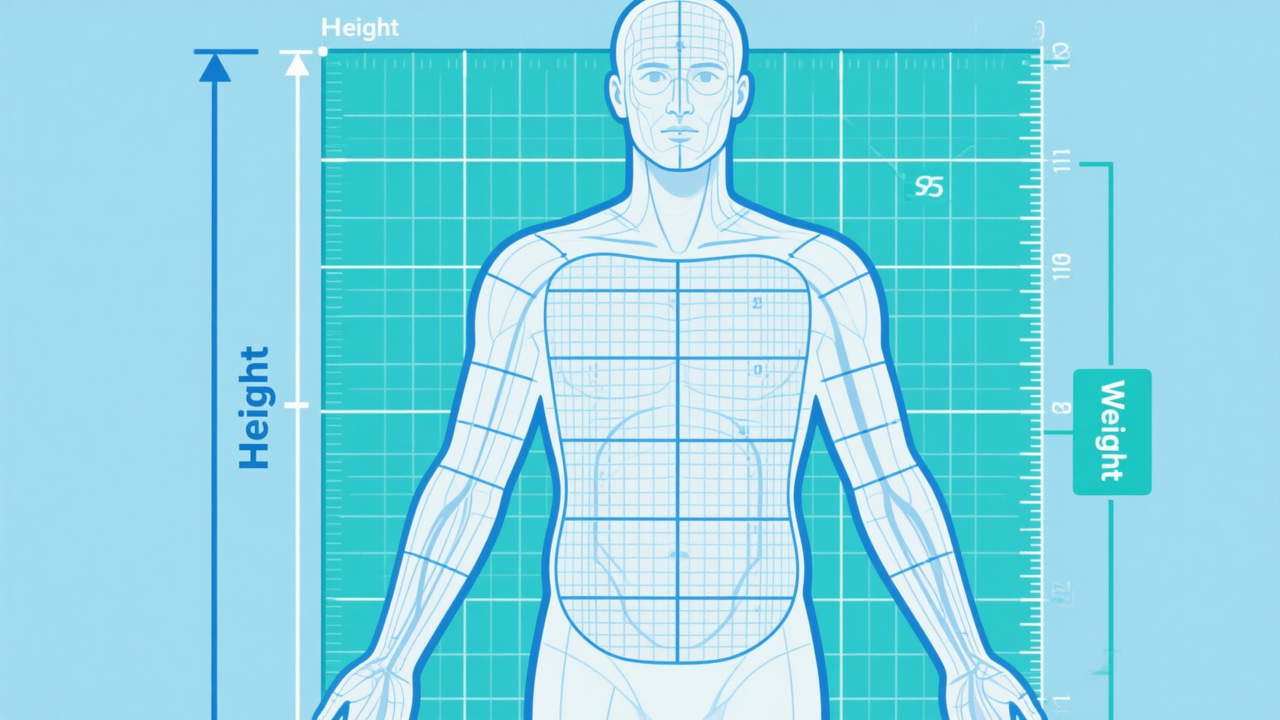
Body Surface Area (BSA) Calculator
Body Surface Area (BSA) Calculator
Body Surface Area (BSA) is used in pediatric medicine for chemotherapy dosing, fluid management, and cardiac output calculations. Unlike adult medicine where BSA is commonly estimated from weight alone, pediatric BSA calculation should include both height and weight for accuracy.
The Mosteller formula is the most widely used BSA formula due to its simplicity and reasonable accuracy across age ranges. Normal pediatric BSA ranges from approximately 0.2 m² in newborns to 1.7 m² in adolescents.
Clinical Use: BSA is used for dosing chemotherapy agents (mg/m²), calculating Glomerular Filtration Rate (GFR), determining fluid requirements in burn patients (Parkland formula), and indexing cardiac output.
BSA Formulas Comparison
| Formula | Equation | Best For |
|---|---|---|
| Mosteller | √(height_cm × weight_kg / 3600) | All ages (most common) |
| Du Bois | 0.007184 × H0.725 × W0.425 | Adults |
| Haycock | 0.024265 × H0.3964 × W0.5378 | Infants and young children |
Calculator
Body Surface Area Calculator
Normal BSA Values by Age
| Age | Approximate BSA (m²) |
|---|---|
| Newborn (0-1 month) | 0.20 – 0.25 |
| 6 months | 0.30 – 0.35 |
| 1 year | 0.40 – 0.50 |
| 3 years | 0.55 – 0.65 |
| 5 years | 0.65 – 0.75 |
| 10 years | 1.00 – 1.20 |
| 15 years | 1.40 – 1.70 |
| Adult | 1.7 – 2.0 |
Frequently Asked Questions
What is Body Surface Area (BSA)?
Body Surface Area is a measure of the total surface area of the human body, expressed in square meters (m²). In pediatrics, BSA ranges from approximately 0.2 m² in newborns to 1.7 m² in adolescents. It is used for chemotherapy dosing, calculating glomerular filtration rate, and determining fluid requirements in burn patients.
Which BSA formula is most accurate for children?
The Mosteller formula is the most widely used due to its simplicity and reasonable accuracy across all age ranges. The Haycock formula is preferred for infants and young children as it was specifically developed for pediatric populations. The Du Bois formula was originally developed for adults.
Why is BSA important in pediatric medicine?
BSA is critical for chemotherapy dosing (most agents are dosed in mg/m²), calculating the Glomerular Filtration Rate (GFR) normalized to body size, determining fluid requirements in burn patients using the Parkland formula, and indexing cardiac output.
What is normal BSA for children?
Normal BSA ranges from approximately 0.2 m² in newborns to about 1.7 m² in adolescents. A full-term newborn has a BSA of about 0.2-0.25 m², a 1-year-old about 0.4-0.5 m², and a 10-year-old about 1.0-1.2 m².

One Comment