PEM Classification Calculator
PEM Classification Calculator
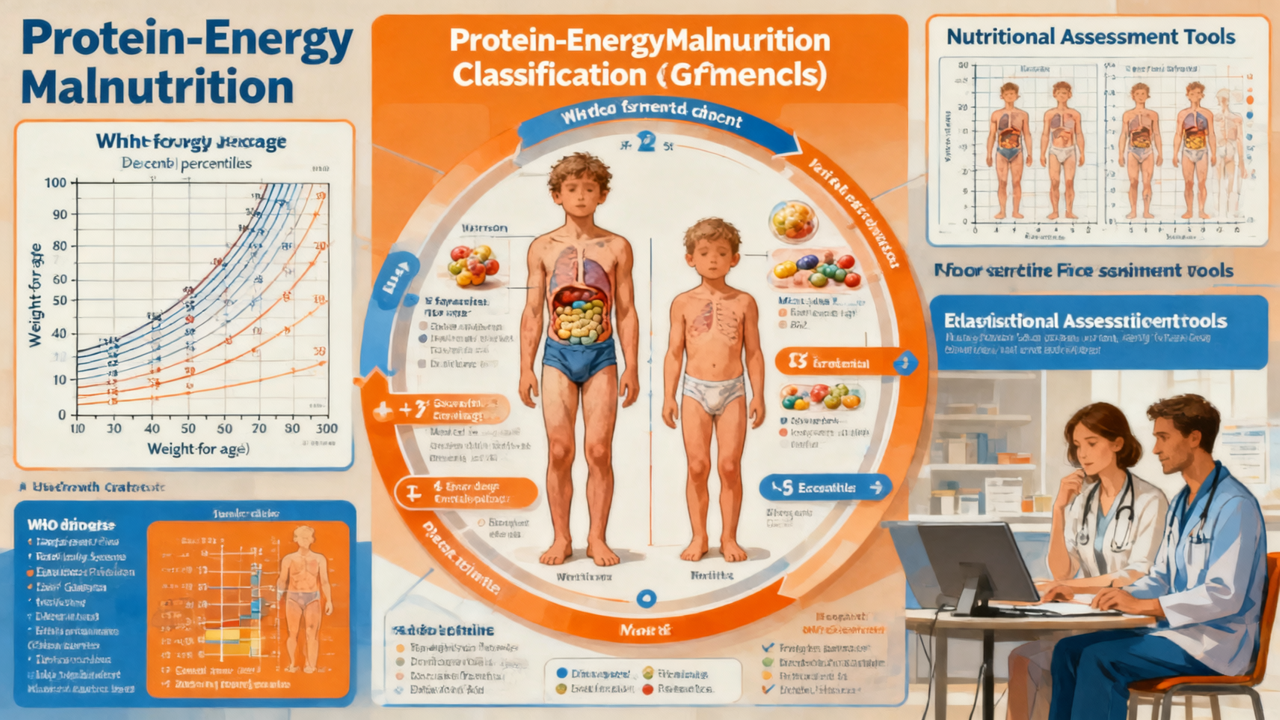
Protein-energy malnutrition (PEM) is classified using the IAP (Indian Academy of Pediatrics) grading system based on weight-for-age percentage, and the WHO classification using Z-scores. This calculator helps classify the severity of malnutrition in children.
Clinical Importance: Early identification and classification of PEM is critical for determining the appropriate level of intervention, from dietary counseling at home to hospital-based nutritional rehabilitation.
IAP Classification of PEM
| Grade | Weight-for-Age (%) | Description |
|---|---|---|
| Normal | > 80% | Adequate nutrition |
| Grade I (Mild) | 75-80% | Mild underweight |
| Grade II (Moderate) | 60-75% | Moderate underweight |
| Grade III (Severe) | 50-60% | Severe underweight |
| Grade IV (Very Severe) | < 50% | Very severe underweight |
Calculator
PEM Classification Calculator
WHO Classification (Z-Score Based)
| Category | Weight-for-Age Z-Score |
|---|---|
| Normal | ≥ -2 SD |
| Moderate Underweight | -3 to -2 SD |
| Severe Underweight | < -3 SD |
Frequently Asked Questions
What is protein-energy malnutrition (PEM)?
Protein-energy malnutrition (PEM) is a form of malnutrition caused by inadequate intake of protein and calories. In children, it leads to weight loss, growth failure, and can progress to severe conditions like marasmus and kwashiorkor.
How is PEM classified in children?
PEM is classified using the IAP classification based on weight-for-age percentage: Normal (>80%), Mild (75-80%), Moderate (60-75%), Severe (<60%). The WHO uses Z-scores: Moderate acute malnutrition (-3 to -2 SD) and Severe acute malnutrition (<-3 SD).
What are the signs of malnutrition in children?
Signs include weight loss or failure to gain weight, visible wasting (thin arms and legs), swollen belly (edema in kwashiorkor), dry skin, hair changes, irritability, fatigue, and delayed development. Severe cases show visible muscle wasting and weakened immunity.
How is PEM treated in children?
Treatment depends on severity. Mild cases may be managed with dietary counseling and supplementation. Moderate to severe cases require medical supervision, nutritional rehabilitation (F-75 and F-100 formulas), micronutrient supplementation, and treatment of underlying infections.
Authoritative Resources
Disclaimer: This calculator is for general informational purposes only and is not a substitute for professional medical advice. Always consult your pediatrician.




2 Comments