
WHO Z-Score Calculator: Pediatric Growth & BMI (2026)
WHO Z-Score Calculator
The WHO Z-score system is the international standard for assessing child growth and nutritional status. Unlike percentiles, Z-scores provide a continuous measure that allows for precise classification of growth at the extremes of the distribution. The WHO Growth Standards, based on the WHO Multicentre Growth Reference Study (MGRS) of 8,440 children from 6 countries, define what constitutes normal child growth under optimal conditions. Z-scores are used to monitor both individual children and population-level nutritional status.
WHO Growth Indicators
- Height-for-age Z-score (HAZ): Measures stunting (chronic malnutrition). < -2 = stunted, < -3 = severely stunted
- Weight-for-age Z-score (WAZ): Measures underweight. < -2 = underweight, < -3 = severely underweight
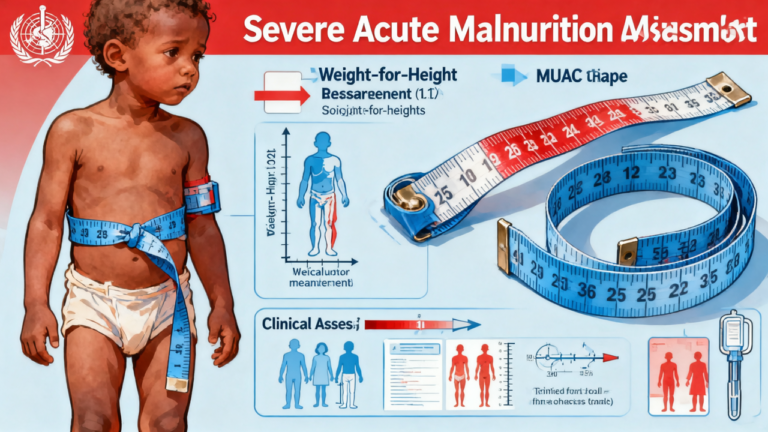
- Weight-for-height Z-score (WHZ): Measures wasting (acute malnutrition). < -2 = wasted, < -3 = severely wasted
- BMI-for-age Z-score (BAZ): Measures thinness/overweight. < -2 = thin, > +1 = at risk of overweight, > +2 = overweight, > +3 = obese
WHO Z-Score Calculator
WHO Growth Z-Score Calculator
Written by Dr. Michael Anderson, MD (Pediatrics) | Medically approved by Dr. Ahmed Raza, MD (Pediatrics) | Updated for 2026
Disclaimer: This calculator is for general informational purposes only and is not a substitute for professional medical advice. Always consult your pediatrician.
Pediatric clinical calculators are essential tools for healthcare providers, but understanding the underlying formulas, clinical context, and safety considerations is equally important. This WHO Z-Score Calculator provides fast, accurate calculations based on validated pediatric reference standards, but effective clinical use requires more than just entering numbers—it requires understanding when and how to apply the results in real patient care.
Clinical background and context
This tool is designed for use in clinical settings including emergency departments, pediatric wards, intensive care units, and outpatient clinics. Pediatric patients differ significantly from adults in pharmacokinetics, fluid requirements, growth patterns, and disease presentation. Reference ranges, formulas, and safety thresholds that work for adults often require adjustment for children based on weight, age, and developmental stage.
How to use this calculator effectively
- Gather accurate patient data: Weight should be measured on a calibrated scale, not estimated.
- Verify the formula being used: Confirm which standard your facility follows.
- Check for contraindications: Some calculations may need adjustment for renal impairment, cardiac disease, or other comorbidities.
- Document the calculation: Record the input values and result in the medical record for transparency and safety.
- Double-check critical values: For high-risk medications or interventions, always verify with a second clinician.
Safety considerations and limitations
While this tool is designed for accuracy, it should be used as part of a comprehensive safety protocol. Always apply clinical judgment, follow institutional protocols, and consult with qualified healthcare professionals when making patient care decisions.
Clinical-use note: This online tool is an educational reference. Confirm inputs, formulas, thresholds, and any consequential decision with a qualified clinician and current official guidance.




2 Comments