Healthy Toddler Snacks: 25 Easy, Nutritious Ideas (1–3 Yrs)
Medically reviewed by Dr. Ahmad Raza, MD (Pediatrics) — ChildBloom Medical Review Panel. Last updated: September 27, 2026.
Editorial & affiliate disclosure: our guidance is written and reviewed by clinicians. ChildBloom may earn a commission from qualifying purchases made through links on this page, which never changes what our pediatric reviewers recommend. As an Amazon Associate, we earn from qualifying purchases.
25 pediatrician-approved healthy toddler snack ideas, portion sizes, and choking-safety rules for ages 1–3 — plus when to call your pediatrician.
📋 TL;DR — if you read nothing else
Short answer: Toddlers need two set snacks a day, not all-day grazing. Keep each snack small — about 100–200 calories, portioned at 1 tablespoon of each food per year of age. Water is the drink; milk stays at meals. Cut round foods lengthwise, and skip sugary pouches and fruit snacks.
- Two snacks a day: one mid-morning and one mid-afternoon, so meals still get eaten.
- Portion guide: 1 tablespoon of each food per year of age — a 2-year-old gets about 2 tablespoons.
- Safety first: seated upright, adult present, round foods cut lengthwise, never whole nuts or a spoonful of nut butter.
- Call your pediatrician if very little eating lasts more than two weeks or weight gain slows.
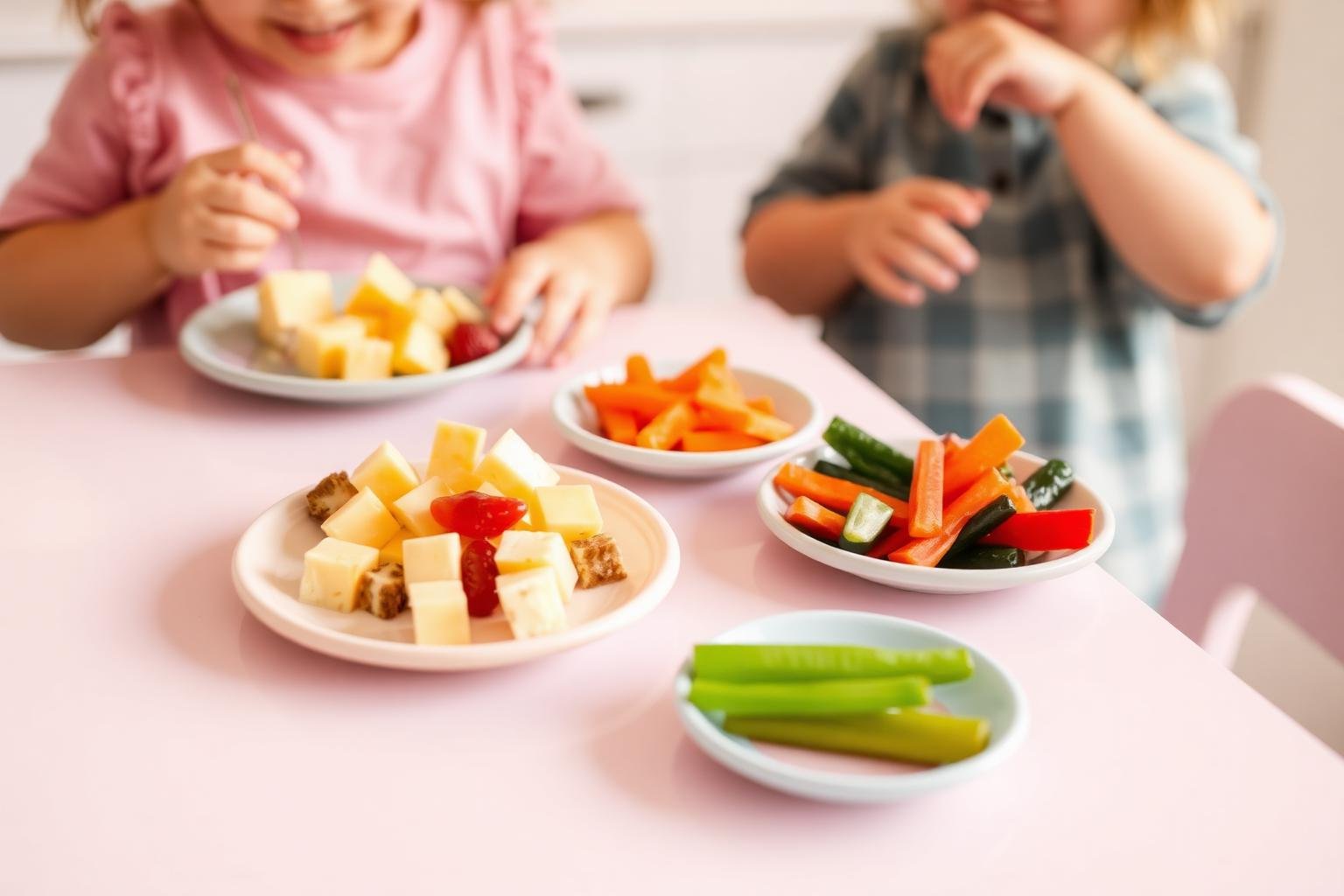
Toddler eating is erratic. One day your child devours a banana; the next day it hits the plate. This is normal — appetite slows after the first year as growth slows, and food preferences shift almost weekly.
Snacks fill the gaps. A 1- to 3-year-old needs roughly 1,000–1,400 calories a day, and small stomachs rarely take that in across three meals. Well-timed snacks keep energy steady between meals, as long as they complement meals instead of replacing them.
This guide gives you 25 pediatrician-approved snack ideas, portion sizes that fit ages 1–3, choking-safety rules, and the signs that mean it is time to call your pediatrician.
Offer two snacks a day — one mid-morning and one mid-afternoon — of about 100–200 calories. Use 1 tablespoon of each food per year of age as your portion guide. Water is the drink at snack time. Cut round foods lengthwise, seat your toddler upright, and stay with them while they eat.
Why Snacks Matter in the Toddler Years
Snacks are mini-meals, not treats. Their job is to carry your child from one meal to the next without hunger moods or dinner-time binges.
Appetite is your child’s to manage. The division of responsibility in feeding holds that parents decide what, when, and where food is offered; children decide whether and how much they eat. That split reduces mealtime battles, and it works just as well for snacks as for dinner.
Expect variation. A toddler who eats well one day and barely touches food the next is behaving normally. So is loving a food for a week, then refusing it. As long as growth stays on track, these patterns need no fix — though day-to-day tactics help, and Picky Eating in Toddlers: Practical Tips That Actually Work covers them.
Snack Basics: Timing, Portions, and Drinks
When to offer snacks
Most 1- to 3-year-olds do well with two snacks a day: one mid-morning and one mid-afternoon, between three meals. Set times keep hunger predictable, and they keep snacks from blunting meal appetite. If your toddler grazes all day and skips meals, tighten to fixed snack times and keep portions small.
How much is enough
Keep a snack in the 100–200 calorie range so it complements rather than replaces a meal. A practical portion guide: 1 tablespoon of each food per year of age. A 2-year-old gets about 2 tablespoons of yogurt or fruit per snack. Stop when your child turns away — fullness cues are reliable at this age.
What to drink
Water is the main drink at snack time. Toddlers 1–2 need about 16–24 ounces of whole milk a day; ages 2–3 shift to low-fat milk at about 12–20 ounces. Offer milk at meals rather than letting a cup ride along all day — constant sipping can dampen appetite and affect teeth. Keep juice to an occasional 4 ounces or less.
25 Snack Ideas by Category
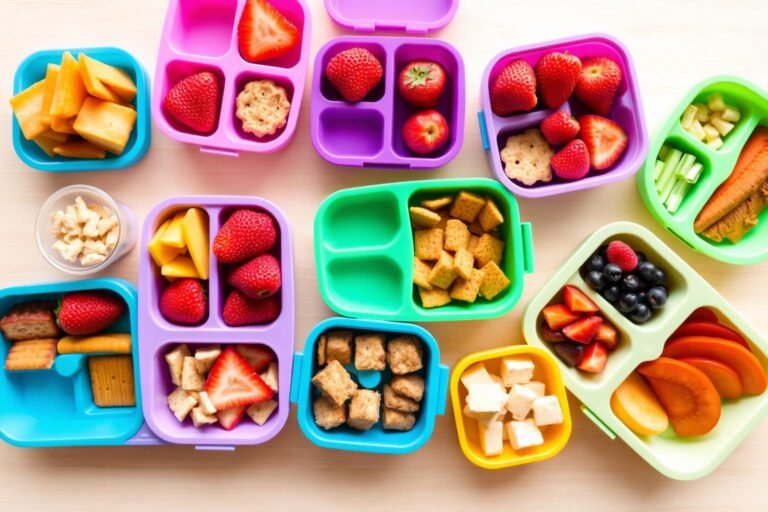
All 25 ideas below fit ages 1–3. Adjust texture and size to your child’s chewing skill, and use the portion guide above.
Fruits (1–5)
- Banana coins. Slice into rounds; halve the rounds for younger toddlers.
- Berries. Blueberries halved, strawberries sliced thin — a small handful.
- Mango sticks. Ripe and peeled, cut into easy-to-grip strips.
- Grated apple. Raw or steamed shreds are safe; large chunks are not.
- Orange segments. Pull segments apart and remove the stringy pith.
Vegetables (6–10)
- Steamed carrot coins. Cooked soft, never crisp; cut coins lengthwise.
- Cucumber sticks. Peeled and cut into lengthwise strips.
- Bell pepper strips. Roasted until soft, then cooled to warm.
- Sweet potato wedges. Baked soft and cut into thick wedges.
- Peas. Slightly mashed for younger toddlers; 1–2 tablespoons.
Protein-rich (11–15)
- Cheese cubes or sticks. Mild cheddar, cut into cubes.
- Plain yogurt. Full fat under age 2; 2 tablespoons per year of age.
- Hard-cooked egg. Chopped fine; quartered for small hands.
- Hummus. A thin spread on toast, or 1–2 tablespoons as a dip.
- Soft beans. Rinsed canned beans, mashed for younger toddlers.
Grains and dairy (16–20)
- Whole-grain crackers. Low-salt crackers paired with cheese.
- Mini oat muffin. A low-sugar recipe; half a mini muffin is plenty.
- Toast soldiers. Whole-grain toast cut into graspable strips.
- Fortified cereal. Low-sugar dry cereal in a small bowl.
- Rice cake quarters. Quartered, with a thin spread of nut butter.
Easy combos (21–25)
- Peanut butter toast. Thinly spread on bread — never a spoonful.
- Cheese quesadilla squares. Cut into small, bite-size pieces.
- Avocado toast strips. Mashed avocado on toast, cut into strips.
- Turkey roll-ups. Thin slices rolled, then cut into small pieces.
- Yogurt and fruit cup. Plain yogurt with soft fruit stirred in.
Choking Safety at Snack Time
- Seat your toddler upright at the table or in a high chair, and stay with them while they eat.
- Cut round foods lengthwise — grapes, cherry tomatoes, and hot dogs are common chokers at this age.
- Skip whole nuts, hard candy, gummy candy, and spoonfuls of nut butter.
- Serve soft, bite-size pieces your child can gum comfortably.
- No eating while running, playing, or riding in the car.
- Know the difference between gagging, which is noisy and effective, and choking, which is silent — and learn basic toddler choking response before you need it.
Store-Bought Snacks, Peanut Butter, and Allergens
Reading labels
Store-bought can be fine. Look for low added sugar — under 5 grams — and a short ingredient list. Plain yogurt, cheese sticks, whole-grain crackers, unsweetened applesauce, and fortified low-sugar cereal all qualify. Skip fruit snacks, sugary pouches, and anything with artificial colors, and check that pieces are small enough to prevent choking.
Peanut butter, done safely
Yes, toddlers can have peanut butter — and the AAP supports early, regular peanut introduction to reduce allergy risk. Serve it thinly spread on bread or stirred into yogurt, never as a spoonful, which is a choking hazard. Start with a small amount and watch for rash, vomiting, or swelling, especially if there is a family allergy history.
Pediatrician’s Take
“Snacks are where good intentions go wrong. Parents panic when a toddler eats little at dinner and respond with endless grazing — then appetite disappears entirely. Structure wins: two set snacks, small portions, water to drink. Hold your side of the division of responsibility. You decide what, when, and where; your child decides whether and how much. Growth charts, not clean plates, tell you how feeding is going.”
When to Call the Doctor
- Your toddler eats very little for more than two weeks
- Weight gain is poor, or your child seems to be losing weight
- Your child seems unusually tired or floppy
- There is trouble swallowing, or coughing and gagging with every bite
- A suspected allergic reaction: rash, vomiting, or swelling after a new food
- Choking that does not clear with coughing — seek emergency care immediately
Trust your instincts. You know your child best, and a quick check is always reasonable. If picky eating has become a daily standoff without weight concerns, what to do when toddler refuses all food has practical next steps.
Frequently Asked Questions
How many snacks, and how big? The American Academy of Pediatrics (AAP) notes that children aged 1–3 need about 1,000–1,400 calories per day. A practical rule of thumb is 1 tablespoon of each food per year of age — so a 2-year-old gets about 2 tablespoons of yogurt or fruit per snack. Keep snacks to roughly 100–200 calories so they complement, not replace, meals.
How many snacks should a 2-year-old have per day? Most 1–3 year olds do well with two snacks a day — one mid-morning and one mid-afternoon — between three meals. This provides steady energy without blunting hunger at mealtimes. If your toddler grazes all day and skips meals, tighten to set snack times and keep portions small (about 2 tablespoons per food).
What are the best store-bought healthy toddler snacks? Look for options with low added sugar (under 5 g) and a short ingredient list: plain yogurt, cheese sticks, whole-grain crackers, unsweetened applesauce, and fortified low-sugar dry cereal. Avoid fruit snacks, sugary pouches, and anything with artificial colors. Always check that pieces are small enough to prevent choking.
Can toddlers have peanut butter as a snack? Yes. The AAP supports early, regular peanut introduction to reduce allergy risk. Serve peanut butter thinly spread on bread or mixed into yogurt — never as a spoonful, which is a choking hazard. Start with a small amount and watch for rash, vomiting, or swelling, especially with a family allergy history.
How much milk should a toddler drink with snacks? Toddlers 1–2 need about 16–24 oz of whole milk daily; ages 2–3 shift to low-fat (12–20 oz). Offer water as the main drink and use milk at meals rather than letting your toddler carry a cup all day, which can dampen appetite and affect teeth. Keep juice to an occasional 4 oz or less.
Are pouches and toddler crackers healthy? They are convenient but often low in protein and fiber and easy to over-consume. Use them as a backup, not a daily staple, and choose versions with no added sugar. Pair a pouch with a protein food like cheese or yogurt so the snack is balanced and keeps your child full.
When should I worry about my toddler not eating snacks? Occasional skipped snacks are normal. Call your pediatrician if your toddler eats very little for more than two weeks, shows poor weight gain, seems unusually tired, or has trouble swallowing. Trust your instincts — you know your child best, and a quick check is always reasonable.
The Bottom Line
Healthy toddler snacks are simple: two set times a day, small portions sized by your child’s age, and foods you would serve at a table — fruit, vegetables, protein, and whole grains. Water to drink, milk at meals, and round foods cut lengthwise cover most of the safety story. When eating patterns change and weight suffers, call your pediatrician.
References
?? Doctor’s Take
Two snacks, set times, small portions — sized at 1 tablespoon per year of age. Water at the table, milk at meals, round foods cut lengthwise. And if eating drops off for more than two weeks or weight slips, that is the call to make.
This article is general information, not individual medical advice. Every baby is different – talk to your own pediatrician about your child’s feeding, sleep, growth or development, and seek urgent care for breathing difficulty, poor feeding, dehydration, fever in an infant under 3 months, or any sudden change in your baby’s behaviour. When in doubt, call your doctor.
Medical review
Reviewed by Dr. Ahmad Raza, MD, Pediatrics. Last reviewed September 27, 2026. This article provides general education and does not replace individualized advice from your child’s pediatrician. Learn about our physicians on the About page.



One Comment