White Noise Apps vs. Dedicated Machines: Which Is Better for Ba
Medically reviewed by Dr. Ahmad Raza, MD (Pediatrics) — ChildBloom Medical Review Panel. Last updated: August 4, 2026.
Editorial & affiliate disclosure: our guidance is written and reviewed by clinicians. ChildBloom may earn a commission from qualifying purchases made through links on this page, which never changes what our pediatric reviewers recommend.
Looking for clear answers about white noise apps vs dedicated machines? This pediatrician-reviewed guide covers what matters, what to skip, the safety checks that count, and exactly when to involve your doctor — based on current AAP, CDC and CPSC guidance on white noise apps vs dedicated machines.
Quick pediatrician summary: white noise apps vs dedicated machines
Short answer: A pediatrician explains white noise apps vs dedicated machines: what matters, safe picks and when to call your doctor.
White noise is one of the most effective tools for helping babies sleep. It masks environmental sounds (traffic, siblings, doorbells), provides a consistent auditory cue that signals sleep time, and mimics the constant sound environment of the womb.
But how you deliver white noise matters more than most parents realize. A phone app running all night is not the same as a dedicated sound machine — and the differences have implications for safety, effectiveness, and your baby’s sleep quality.
PART 1: WHY WHITE NOISE WORKS
Looking for the best options? Check out Best Travel Crib for Babies: 8 Lightweight, Safe Picks.
White noise contains all audible frequencies at equal intensity. This creates a consistent “sound blanket” that:
- Masks sudden environmental sounds that could startle the baby awake
- Provides a predictable auditory environment that signals sleep
- Mimics the constant sound environment of the womb (which is surprisingly loud — approximately 75-90 dB)
Research shows that white noise can:
- Reduce the time it takes for babies to fall asleep
- Increase sleep duration
- Reduce nighttime awakenings
PART 2: APPS vs. DEDICATED MACHINES — THE KEY DIFFERENCES
SOUND CONSISTENCY:
- Dedicated machine: Produces continuous, consistent sound. No interruptions, no quality changes.
- App: Sound quality depends on the phone’s speaker (usually small and tinny). The sound may loop (creating an audible repeat pattern). If the phone receives a notification, call, or system update, the sound may be interrupted.
DECIBEL SAFETY:
- Dedicated machine: Most baby-specific machines have a maximum volume that is within safe limits (typically 50-65 dB at the crib). Many have volume limiters.
- App: Phone speakers can produce sound at levels exceeding 80 dB at close range. There is no built-in volume limiter for baby safety. If the phone is placed near the baby’s ear, the sound level can be unsafe. The AAP recommends keeping sound sources at least 7 feet from the baby’s crib and below 50 dB at the crib.
SCREEN-FREE:
- Dedicated machine: No screen. No light. No temptation to check the phone.
- App: Requires the phone to be on and running. The phone’s screen may emit light (even with the screen off, notification lights may activate). The presence of the phone in the nursery is a temptation for parents to check social media, messages, or work emails during nighttime feedings.
BATTERY AND RELIABILITY:
- Dedicated machine: Plugs into the wall. Runs all night without interruption. Some have battery backup.
- App: Drains the phone’s battery. If the phone dies, the sound stops. If the phone needs to be used for an emergency call, the sound stops.
SOUND VARIETY:
- Dedicated machine: Many offer multiple sound options (white noise, pink noise, brown noise, nature sounds, heartbeat, lullabies).
- App: Often offers more sound options than dedicated machines. However, the quality of these sounds through a phone speaker is inferior.
PART 3: SAFETY CONCERNS WITH APPS
3.1 Volume Risk
The primary safety concern with app-based white noise is volume. A phone’s speaker, placed close to the baby, can produce sound levels that exceed the recommended 50 dB at the crib. Prolonged exposure to sound above 50 dB can potentially affect hearing development in infants.
3.2 Electromagnetic Exposure
While the evidence is not conclusive, some parents prefer to minimize the phone’s proximity to the baby. A dedicated machine does not emit cellular signals, Wi-Fi, or Bluetooth near the baby (unless it is a Wi-Fi-enabled machine).
3.3 Sleep Association
If the baby falls asleep to the sound of an app on your phone, they may become dependent on that specific sound source. If the phone is not available (dead battery, needed for a call), the baby cannot sleep. A dedicated machine is always available.
PART 4: MY RECOMMENDATION
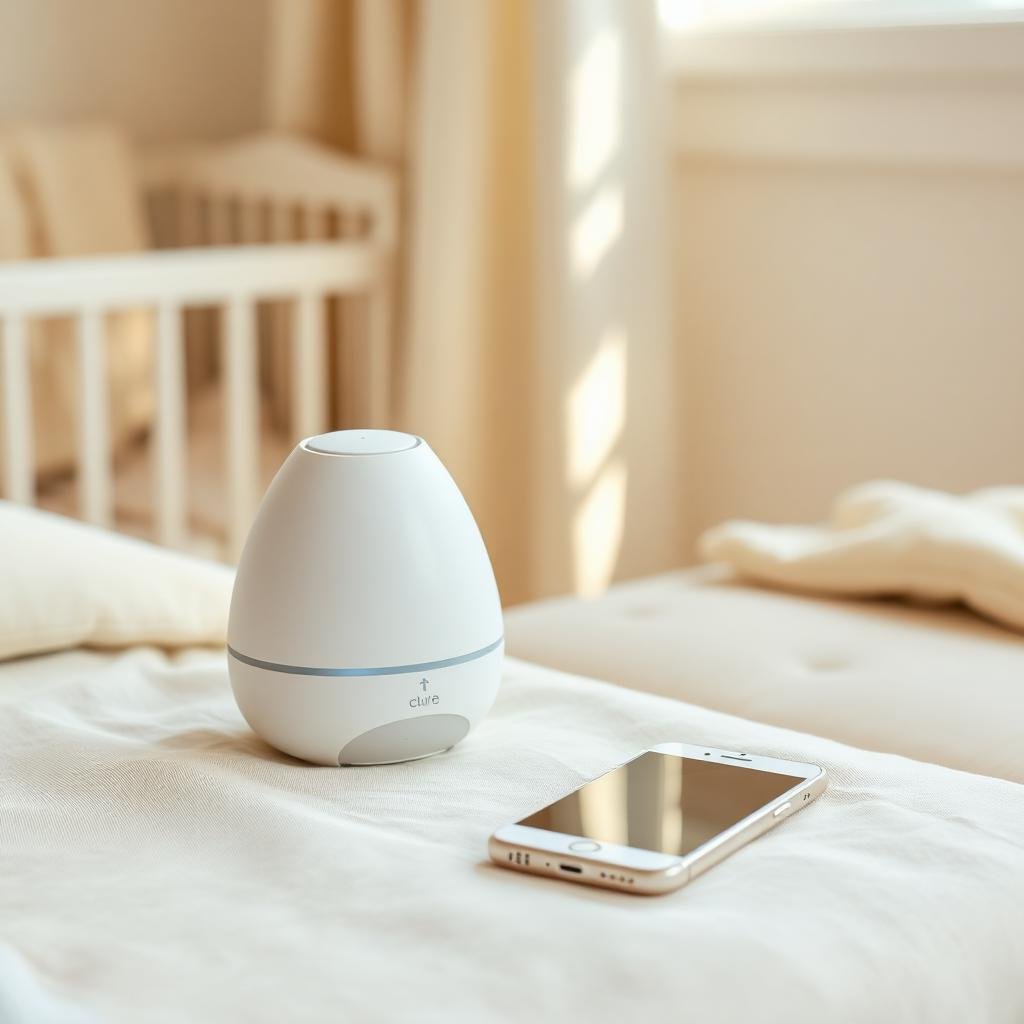
For most families, a dedicated white noise machine is the better choice. It provides consistent, safe, screen-free sound without draining your phone or risking excessive volume.
If you choose to use an app:
- Place the phone at least 7 feet from the baby’s crib
- Set the volume to the lowest effective level (you should barely hear it from across the room)
- Enable “Do Not Disturb” mode to prevent notification interruptions
- Use a dedicated white noise app (not a music streaming app) for continuous, non-looping sound
- Charge the phone outside the nursery if possible (use a dedicated alarm clock for your own alarm)
Pediatrician’s Take
“White noise is a genuinely useful tool for baby sleep. But deliver it properly. A dedicated machine is safer, more reliable, and more effective than a phone app. The phone’s speaker is not designed for continuous sound production, the volume can be unsafe at close range, and the phone’s presence in the nursery is a distraction for parents. Spend $30-50 on a dedicated machine. It is one of the best investments you can make for your baby’s sleep.”
Related Articles
- Baby Camera vs. Full Monitor System
- Smart Socks & Sleep Trackers
- Baby Tech That Actually Helps: A Pediatrician’s Honest Review
Recommended Products
Best White Noise Machines & Apps (Dedicated machines and top-rated apps compared) → See our top picks
Pediatrician’s Take
Pediatrician’s Take: White noise works — and it is one of the few sleep tools I routinely recommend in clinic. But how you deliver it matters more than the brand on the box. A dedicated machine, placed at least 7 feet from the crib, set below 50 dB, is the gold standard for safe, reliable, effective white noise. A phone app on the nightstand — especially at full volume — is not equivalent. The speaker quality, the proximity risk, the missing baby-safe volume limiter, and the temptation to check the phone in the middle of the night all add up. Spend $30-50 on a real machine. It is the single best baby sleep purchase most parents will make, and it will outlast three children.
What Parents Need to Know
White noise is a simple intervention that does a lot of heavy lifting for baby sleep. Before you choose a delivery method, run through the basics below — they are the same points I cover with parents in clinic.
- Decibel limits matter more than brand. The AAP recommends that any sound source in the nursery stay at or below 50 dB at the baby’s ear and be placed at least 7 feet (about 2 meters) from the crib. Above 50 dB for prolonged periods is associated with measurable effects on infant hearing and auditory development.
- Distance is your main safety control. Doubling the distance from the sound source roughly halves the sound level reaching the baby. A machine on a dresser across the room is dramatically quieter at the crib than the same machine clipped to the crib rail. The further away, the safer.
- Apps and machines are not equivalent. A phone speaker is small, tinny, and capable of producing unsafe volume at close range. There is no built-in volume limiter for infant safety, no wall-power reliability, no continuous-sound guarantee, and the phone itself is a sleep-disrupting device in the room.
- Continuous, non-looping sound is what works. A looped track that repeats every 30 seconds can become a learned cue that disrupts sleep at the loop point. Dedicated machines usually produce genuinely continuous sound; apps vary widely and many have audibly short loop lengths.
- White noise is one of many sounds that work. Pink noise, brown noise, and shushing sounds all have some evidence behind them. The most important variable is consistency, not color. Pick one sound and use it every sleep, day and night, for at least the first year.
- There is a developmental time to wean. Many children become dependent on white noise to fall back asleep. By age 2-3, most toddlers no longer need it, and some will not sleep without it if you have not gradually faded the volume. Plan the wean now, even if you cannot start it yet.
- Watch for hearing red flags. If your baby startles at household sounds, does not turn toward your voice by 4-6 months, or is not babbling on schedule, mention your white noise setup to the pediatrician. Excessive volume can mask early hearing concerns and delay diagnosis. The CDC’s noise and hearing safety guidance applies to infants as well as adults.
- Travel and naps count too. The same decibel and distance rules apply for naps and travel. A small portable machine is a better travel investment than relying on a phone app in a hotel room. Consistency across sleep locations is part of why white noise works.
Common Questions From Parents
What decibel level is actually safe for a baby?
The most commonly cited safe level is 50 dB or below at the baby’s ear, based on guidance from the American Academy of Pediatrics and consistent with occupational noise exposure standards for infants. For reference, a quiet bedroom is around 30-40 dB, normal conversation is 60 dB, and a hair dryer is 70-80 dB. Most baby-specific white noise machines, set to mid-volume and placed across the room, land in the 45-55 dB range at the crib. A free decibel meter app on your phone can verify what your baby is actually hearing — but turn it off before the baby arrives, because the meter itself adds to the noise.
Is white noise bad for a newborn’s hearing?
At safe levels (50 dB or less at the ear, placed at least 7 feet from the crib), white noise is not associated with hearing damage in infants. The concern arises at higher volumes, with closer placement, or with prolonged continuous use at unsafe levels. Newborns are not uniquely vulnerable compared to older infants, but their smaller ear canals and ongoing auditory development make the safe-distance and safe-volume rules especially important. If you have a family history of hearing loss, mention the white noise routine to your pediatrician and your audiologist. Otherwise, follow the standard distance and volume guidance and you are in a safe range.
Are phone apps as effective as a dedicated machine?
In terms of whether the baby falls asleep, yes — apps can produce white noise that helps a baby sleep. In terms of safety, reliability, sound quality, and sleep hygiene, no — apps are not equivalent. Phone speakers distort the sound profile, drain the battery, can be interrupted by calls and notifications, do not have a baby-safe volume limiter, and put a phone in the room that disrupts the parent’s sleep and tempts late-night scrolling. A $40 machine outperforms a free app on every dimension that actually matters for sustained use over months and years.
Should I use white noise for naps as well as nighttime?
Yes, for consistency. The benefit of white noise is partly that it becomes a learned sleep cue — over time, the sound itself signals “it is time to sleep.” If you only use it at night, the baby learns two different sleep onset patterns. Using white noise for every sleep period (naps and nights) builds the association faster and tends to produce more reliable naps. The same decibel and distance rules apply. The only exception is if your baby is napping in a louder environment (a sibling’s playroom, a public space) where the ambient noise is already masking the white noise — then turn it off to give the ears a break.
When should I stop using white noise?
There is no single right answer. Most pediatricians and sleep consultants suggest beginning to wean between 18 months and 3 years, depending on the child. The simplest wean is to drop the volume by 10-20% every 1-2 weeks until the machine is silent, then remove it. If your toddler is sleeping well, you can also try removing it cold and seeing what happens. Children who become deeply dependent on white noise and have not been weaned often struggle with sleep in environments where the sound is not available (grandparents’ house, daycare naps, hotel rooms). Plan the wean even if you cannot wean yet — the toddler years come faster than you think.
Is there a difference between white noise, pink noise, and brown noise?
Yes — they differ in which frequencies are emphasized. White noise contains all frequencies at equal intensity and sounds “hissy.” Pink noise rolls off the high frequencies and sounds “softer” or “rain-like.” Brown noise rolls off further and sounds “rumbly” or “ocean-like.” All three have evidence for improving sleep in infants, with pink and brown noise often rated as more pleasant for adult listeners. For babies, consistency and safe volume matter more than color. Pick the sound your baby responds to best and stick with it — switching sounds every few weeks resets the learned-cue benefit.
When to Call Your Pediatrician
White noise is generally very safe, but there are a few situations where you should loop in your pediatrician:
- Your baby does not startle to loud sounds, does not turn toward your voice by 4-6 months, or has not started babbling on schedule (possible hearing concern, which high white noise volume can mask or worsen)
- Your baby wakes crying from white noise, appears distressed by the sound, or seems overly sensitive to normal household noise
- Your baby sleeps with mouth open, snores loudly, or has gasping or choking episodes during sleep (possible obstructive sleep apnea, unrelated to the white noise but worth a same-week call)
- You are using white noise at high volume to mask a noisy environment (apartment next to a busy street, thin walls, loud HVAC) and you cannot get the volume below 50 dB at the crib
- Your baby has been diagnosed with hearing loss, auditory processing differences, or a history of recurrent ear infections, and you want guidance on appropriate white noise use
For context on safe noise levels for infants, the CDC’s noise and hearing safety guidance applies to children as well as adults and is a useful reference for parents setting up a nursery.
Related Articles in This Cluster
This article is part of ChildBloom’s pediatrician-reviewed Baby Tech & Gear cluster. Continue reading:
- Baby Tech That Actually Helps: A Pediatrician’s Honest Review
- Smart Socks & Sleep Trackers: What the Data Actually Tells You
- Baby Camera vs. Full Monitor System: What Do You Actually Need?
- Best Smart Baby Monitors with Health Tracking
- Smart Baby Monitors: Do Oxygen & Heart Rate Alerts Prevent SIDS?
Medical Disclaimer: This article is for informational purposes only and does not constitute medical advice. Always consult your pediatrician for guidance on your baby’s sleep.
================================================================================
================================================================================
Related Articles in This Cluster
This article is part of ChildBloom’s pediatrician-reviewed Baby Tech & Gear cluster. Read the complete series:
- Baby Tech That Actually Helps: A Pediatrician’s Honest Review of Smart Monitors, Socks & Apps
- Smart Baby Monitors: Do Oxygen & Heart Rate Alerts Prevent SIDS?
- Baby Wearable Trackers (Owlet, etc.): Are They Worth the Anxiety?
- Smart Socks & Sleep Trackers: What the Data Actually Tells You
- Baby Camera vs. Full Monitor System: What Do You Actually Need?
- Best Smart Baby Monitors with Health Tracking: Pediatrician-Reviewed Comparison
- Top 5 Baby Sleep Trackers & Wearables: Pediatrician-Reviewed Accuracy Guide
- Best Wi-Fi Baby Cameras for Remote Monitoring: Security & Quality Reviewed
Related Pediatrician-Reviewed Resources
This article is part of the pediatrician-reviewed Baby Tech & Gear series. Continue reading:
- Baby Camera vs. Full Monitor System: What Do You Actually Need?
- Smart Socks & Sleep Trackers: What the Data Actually Tells You
- Baby Wearable Trackers (Owlet, etc.): Are They Worth the Anxiety?
- Smart Baby Monitors: Do Oxygen & Heart Rate Alerts Prevent SIDS?
Trusted Authority Sources
Frequently Asked Questions
Q: How much sleep does my baby need?
A: Newborns (0-3 months) need 14-17 hours per day. Infants (4-11 months) need 12-15 hours. Toddlers (1-2 years) need 11-14 hours. These are totals including naps. Every baby is different, but consistency in schedule and sleep environment matters more than hitting exact numbers.
Q: When will my baby sleep through the night?
A: Most babies start sleeping longer stretches (5-6 hours) around 3-4 months, but “sleeping through the night” (10-12 hours) typically doesn’t happen consistently until 6-9 months or later. Night wakings are normal and developmentally appropriate even after your baby can sleep longer stretches.
Q: What is the safest sleep position for my baby?
A: Always place your baby on their back for every sleep (naps and nighttime). This is the single most important step to reduce SIDS risk. Once your baby can roll independently (usually 4-6 months), they may roll to their stomach during sleep—this is okay if they got there on their own, but always start them on their back.
📖 More from the Health & Safety Hub: your A-Z pediatrician guide to baby health, common illnesses, fevers, rashes, allergies, safety
Common mistakes parents make with white noise apps vs dedicated machines
- Assuming a higher price means a safer or better-performing option — certification and correct fit matter far more.
- Skipping the instruction manual, weight limits and product registration, which is how recall notices reach you.
- Changing several things at once, so you cannot tell what actually helped your baby.
- Relying on advice from social media instead of your pediatrician when something feels off.
Related pediatrician-reviewed reading
- Baby Poop Color Guide
- Baby Clothing Guide
- The Pediatrician’s Guide to Baby Teething
- Baby Health & Safety A-Z
- baby health & safety hub
References & further reading
Medical disclaimer: this article is for general education and does not replace individual medical advice. Always follow your own pediatrician’s guidance for your child.
One Comment