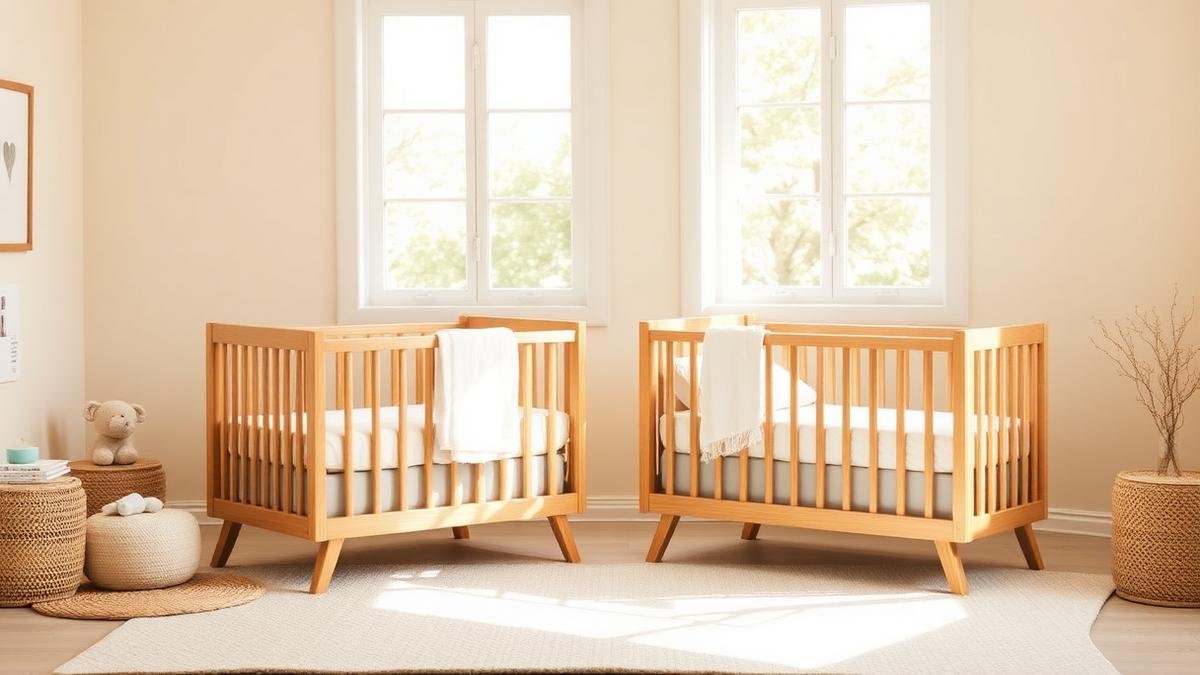
Do Twins Need Separate Cribs? Safe Sleep Guidelines for Multipl
Medically reviewed by Dr. Ahmad Raza, MD (Pediatrics) — ChildBloom Medical Review Panel. Last updated: August 03, 2026.
Affiliate disclosure: ChildBloom may earn a commission from qualifying purchases made through links on this page. It never changes which products our pediatric reviewers recommend.
This pediatrician-reviewed guide to can twins sleep in same crib safely keeps things practical: what genuinely affects your baby’s safety and comfort, what marketing you can ignore, and how to decide quickly. Our guidance on can twins sleep in same crib safely follows current AAP, CDC and CPSC recommendations.
Twin parents often wonder: can my twins share one crib? The short answer from pediatricians: not in the first year, and generally not recommended until your twins can roll over independently and are at least 6 months old. Here’s the detailed guidance.
Why Separate Sleep Spaces Are Recommended
AAP Safe Sleep Guidelines (SIDS prevention) are based on evidence from large-scale studies. The primary reasons for separate sleep spaces for multiples:
- Suffocation risk: Young infants lack the motor ability to reposition themselves if one twin rolls toward the other or if bedding covers a face
- Thermal sharing: Two babiesgenerate more heat together — one crib with two babies risks overheating, which increases SIDS risk
- Entrapment: Between the two babies, the walls of a standard crib, or between a baby and the mattress — entrapment hazards increase with two bodies
- CPS safe sleep rules: Child Protective Services standards for foster care or adoption require separate sleep spaces — following expert recommendations protects your family legally
When It Might Be Considered
In some specific situations, parents and healthcare providers may discuss co-sleeping arrangements for twins:
- Both babies are healthy, full-term, and over 6 months corrected age
- Both babies can independently roll both directions and lift their heads
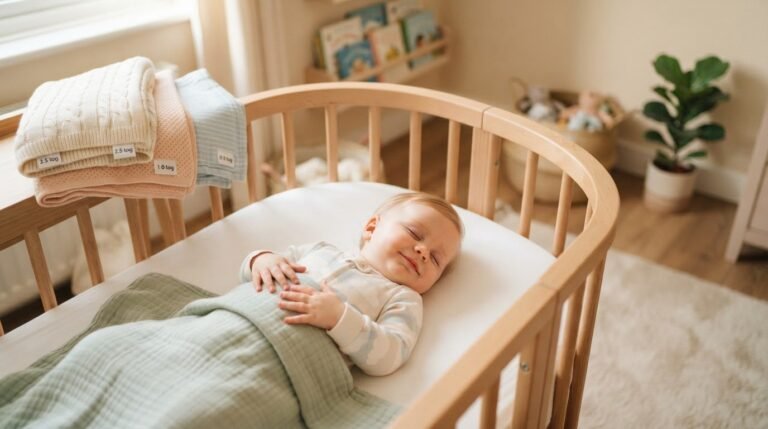
- No soft bedding, pillows, or loose blankets in the sleep space
- Placing both babies feet-to-foot at opposite ends of the crib
- Pediatrician has reviewed and approved the arrangement
Even under these conditions, most twin parents eventually choose separate sleep spaces for practicality (transferring one sleeping baby without waking the other).
Recommended Sleep Setups for Twins
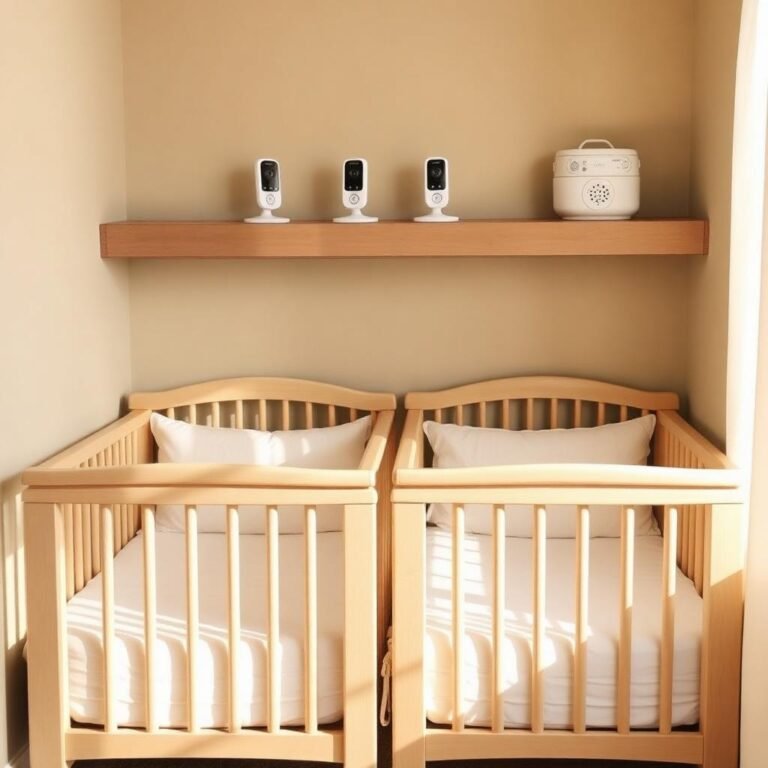
- Two separate cribs: Standard recommendation. Can be placed side-by-side once babies are older.
- Two pack ‘n plays: Practical for travel, smaller footprint. Standard safe sleep surface.
- Bassinet + crib: In the early weeks, having one baby in a bassinet next to each parent’s side and transitioning to cribs at 3-4 months works well.
- Double bassinet: Some parents use a double-bassinet (like the Halo DualNest) in the early 3-4 months. Note: these are not considered safe once babies exceed the weight limit (usually 20 lbs) or can roll.
Early Weeks: Room-Sharing vs. Separate Rooms
AAP recommends room-sharing (not bed-sharing) for all babies for at least the first 6 months — this means the baby’s sleep space is in the same room as the parent, but in a separate surface. For twins:
- Two separate sleep surfaces (two cribs, two pack ‘n plays) in the parents’ bedroom is considered room-sharing for both babies
- This arrangement is associated with reduced SIDS risk for both babies
- Many parents find that having the twins in the same room makes nighttime management easier
Managing Two Crying Babies at Night
When both twins cry simultaneously (before one can self-soothe), it can feel overwhelming. Practical tips:
- Triage: which baby needs attention first? (Signs of illness, dirty diaper, etc.)
- If both are hungry at the same time: tandem feeding if breastfeeding, or bottle-feeding simultaneously
- Check on the quiet(er) baby first to rule out anything urgent, then address the crying one
- Accept that in the early weeks, sometimes one or both will cry — this is not a parenting failure
The safest answer for the first year: separate sleep spaces for twins. As your twins grow and develop motor skills, you can reassess. Until then, two cribs, two peaceful nights (eventually). You can do this.
Related: Twins Baby Care Guide
Related: Twin Baby Sleep Schedule: Sync or Separate
Related: Can Twins Sleep in the Same Crib?
📖 More from the Parenting Tips Hub: evidence-based parenting guidance on toddler behavior, feeding, potty training, screen time
Parenting Twins: Practical Tips
Managing the Logistics
Having twins requires organization. Create a feeding and diaper log to track each baby individually — twins can have very different needs. Set up multiple diaper changing stations (one on each floor of your home if possible). Stock each station with diapers, wipes, and a change of clothes. Use a twin nursing pillow for simultaneous feeds. Accept that you cannot do everything at once — prioritize tasks and let go of non-essentials.
Finding Support
Connecting with other parents of multiples can be invaluable. Join a local or online twin parent group, where you can share tips, vent, and celebrate milestones with people who understand. Many areas have Mothers of Multiples (MOM) clubs. Organizations like the Twiniversity offer resources, classes, and support specifically for parents of twins. Do not be afraid to ask for help — family, friends, and neighbors often want to support you but may not know how to offer.
Pediatric Sleep Science: What Every Parent Should Know
Sleep is one of the most misunderstood aspects of infant development. In my clinical practice, I find that parents are often given conflicting advice about sleep expectations, sleep training, and what constitutes a “normal” sleep pattern. Let me offer a evidence-based framework that will help you navigate the first years of your child’s sleep journey with confidence.
The first thing to understand is that infant sleep is not a problem to be solved — it is a developmental process to be supported. A newborn’s brain is fundamentally different from an adult’s brain in how it regulates sleep. The circadian rhythm — the internal clock that tells the body when to be awake and when to sleep — does not begin functioning until approximately 6-8 weeks of age and does not fully mature until 3-4 months. Before that, a newborn’s sleep is distributed evenly across the 24-hour day in 2-4 hour cycles, driven by the need to feed rather than by light-dark cues. This is normal, and it is not a sign that something is wrong with your baby or with your parenting.
Wake windows — the amount of time a baby can comfortably stay awake between naps — are a useful tool, but they are often applied too rigidly in popular parenting advice. A wake window is not a strict rule; it is a range that varies by individual baby and by developmental stage. A 2-month-old typically has a wake window of 45-60 minutes, while a 6-month-old can manage 2-2.5 hours, and a 12-month-old may be awake for 3-4 hours at a stretch. The key is to watch your baby’s sleepy cues — eye rubbing, yawning, fussiness, glazed or unfocused eyes — rather than strictly following a clock. A baby who is put down for a nap too early will fight it; a baby who is put down too late will be overtired and have difficulty settling. The “sweet spot” is when your baby is showing early sleepy cues but is not yet overtired, and finding that sweet spot is a skill that improves with practice and observation.
Sleep regressions are another concept that generates enormous anxiety. The term “regression” is misleading because it implies a backward step when, in fact, these periods represent significant neurological progress. The 4-month sleep regression, as I mentioned in earlier sections, coincides with the maturation of adult-like sleep architecture. The 8-10 month regression often coincides with the development of object permanence and the onset of separation anxiety. The 12-month regression may coincide with the transition to one nap and the explosion of language development. Understanding the developmental context of these difficult sleep periods can transform them from a source of frustration into a source of insight — your baby is not sleeping poorly because something is wrong; they are sleeping poorly because their brain is working hard on an important developmental leap.
Sleep training is a personal decision that should be made based on your family’s values, your baby’s temperament, and your pediatrician’s guidance. The research on sleep training outcomes is reassuring: multiple randomized controlled trials have demonstrated that behavioral sleep interventions, including graduated extinction methods (commonly known as Ferber or modified Ferber), do not cause harm to the parent-child attachment relationship, do not increase cortisol levels in the long term, and do improve sleep quality for both infants and parents. However, these interventions are not appropriate for every family, and there are many gentle alternatives — including the fading method, the chair method, and no-tears approaches — that can be effective for families who prefer a gradual approach. The common thread across all successful sleep interventions is not the specific method, but the consistency with which it is applied. Inconsistent sleep training is worse than no sleep training at all, because it teaches the baby that crying longer and harder eventually produces a response.
Finally, I want to address the role of parental sleep in the equation. Sleep deprivation in new parents is not a badge of honor; it is a health risk that deserves attention and intervention. Chronic sleep deprivation impairs cognitive function, emotional regulation, and immune function, and it increases the risk of postpartum mood disorders and relationship conflict. If you are the primary overnight caregiver and you are struggling, consider dividing the night into shifts with your partner, accepting help from family or a trusted friend, or — if you are a single parent — exploring safe alternatives like a night nurse or postpartum doula. Your sleep matters, not just for your well-being, but for your ability to be the parent your baby needs during the day.
Clinical Pearl: The Science of Infant Sleep Cycles
Understanding your baby’s sleep cycles can transform how you approach sleep challenges. An infant sleep cycle is approximately 45-60 minutes long, compared to 90 minutes in adults. Each cycle includes a period of light sleep, deep sleep, and REM sleep, and at the end of each cycle, the baby briefly awakens — this is called a “partial arousal.” Adults typically sleep through these partial arousals, but infants do not yet have the ability to connect sleep cycles independently. This is why a baby who falls asleep in your arms may wake up crying 45 minutes later — they are not waking up because something is wrong; they are waking up because they have completed a sleep cycle and do not know how to start the next one. Sleep training, in its various forms, is essentially teaching the baby the skill of transitioning between sleep cycles independently. Understanding this can help you approach the process with patience and perspective.
If you have specific concerns about your child’s health, development, or behavior that are not addressed in this article, please bring them to your next pediatrician visit. Every child is unique, and personalized medical advice — based on your child’s individual history, examination findings, and family context — is always more valuable than generalized guidance. Your pediatrician is your partner in navigating the complex and rewarding journey of raising a healthy, happy child.
The Clinical Reality of Infant Sleep: What the Research Tells Us
Infant sleep is one of the most researched topics in pediatric medicine, yet it remains one of the most misunderstood by parents. The disconnect between what the research shows and what parenting culture tells us about sleep is enormous, and bridging that gap is one of the most important things I do in my clinical practice. Let me share what the evidence actually says about several common sleep beliefs.
One of the most persistent myths in parenting culture is that “good” babies sleep through the night by 3 months of age. The research tells a very different story. A landmark study published in Pediatrics followed over 6,000 infants and found that only 38% of 3-month-olds and 57% of 6-month-olds were sleeping 6 hours or more without waking. By 12 months, just over 70% of infants were sleeping through the night. This means that nearly one in three healthy, typically developing 12-month-olds is still waking at least once per night. The range of normal infant sleep is far wider than popular culture acknowledges, and the pressure to achieve “sleeping through the night” by a specific age creates unnecessary anxiety for parents whose babies are simply following a different developmental trajectory.
Another common belief is that sleep training is either universally necessary or universally harmful. The evidence supports neither extreme. Multiple randomized controlled trials have demonstrated that behavioral sleep interventions, when implemented consistently and in the context of a warm, responsive parent-child relationship, are effective at reducing night wakings and improving sleep quality for both infants and parents. The same research has found no evidence of harm to the parent-child attachment relationship, no evidence of increased stress in the long term, and no evidence of negative effects on child development. However, these interventions are not necessary for every family, and they are not appropriate for every infant. The decision to sleep train should be made based on the family’s values, the infant’s temperament, and whether the current sleep pattern is causing significant distress for the parent or the infant.
The evidence on the duration of night wakings is also illuminating. Many parents report that their baby is “awake for hours” at night, but when they are asked to track the actual duration of night wakings, the average is 15-30 minutes. The perception of time when you are sleep-deprived and listening to your baby cry is not accurate — a 10-minute crying episode can feel like an hour. I recommend that parents who are concerned about night wakings keep a simple sleep log for 3-5 days, noting the time of each waking, the duration of the waking, and how they responded. This log often reveals a pattern that is less severe than the parent believed, and it provides concrete data that can help guide the approach to addressing the wakings.
The relationship between sleep and feeding is another area where clinical guidance has evolved. In the past, parents were often told to stop night feeds at a specific age, but the current evidence supports a more individualized approach. Night feeds are appropriate as long as the baby is gaining weight appropriately and the parent is comfortable with the arrangement. The decision to night wean should be based on the baby’s growth and development, not on a calendar. That said, after 6 months of age, most healthy, thriving infants do not need night feeds for nutrition — they may continue to wake for comfort, habit, or because they have learned to rely on feeding to fall asleep. If you are ready to night wean, the evidence supports a gradual approach: reducing the amount of milk in the bottle by 1-2 ounces per night, or reducing the duration of breastfeeding by 1-2 minutes per night, over the course of 1-2 weeks.
Can twins sleep in same crib safely: quick pediatrician summary
If you read nothing else about can twins sleep in same crib safely: choose the option that meets current safety standards, fits your baby’s current age and weight, and that you can use correctly every single time without shortcuts. Consistency beats features. When two products are close, pick the simpler one — fewer parts means fewer ways to use can twins sleep in same crib safely unsafely.
Common mistakes parents make
- Buying for the baby your child will be in six months rather than the baby in front of you today.
- Adding extra padding, inserts or accessories the manufacturer did not test.
- Skipping the manual — most safety failures we see are correct products used incorrectly.
- Reusing older hand-me-downs that predate current safety standards or have been recalled.
Related ChildBloom guides
- Best Baby Carrier for New Dads: 7 Ergonomic Picks
- Managing Twin Sleep Schedules: Sync or Follow Individual
- Twin development milestones: Twin Milestones: Should You Expect Them to Develop at the Same Rate?
- Healthy Toddler Snacks: 25 Easy, Nutritious Ideas (1–3 Yrs)
- Picky Eating in Toddlers: A Pediatrician's Playbook (2026)
- More Parenting Tips guides from our pediatric team
- Pediatrician’s Corner: evidence-based parenting answers
References and further reading
- AAP HealthyChildren.org parenting guidance
- CDC developmental milestones
- CPSC recalls and product safety alerts
Medical disclaimer
This article is general information, not individual medical advice. Every baby is different — talk to your own pediatrician about your child’s feeding, sleep, growth or development, and seek urgent care for breathing difficulty, poor feeding, dehydration, fever in an infant under 3 months, or any sudden change in your baby’s behaviour.


One Comment
Comments are closed.