Feeding During Teething: Soothing Foods & Comfort Tips
Feeding During Teething: Soothing Foods & Comfort Nutrition
Your baby suddenly spits out the spoon, drools through every outfit, and wakes at night — and you’re wondering if they’re getting enough to eat. This is a rough phase; you’re not failing. Feeding during teething soothing foods means offering comfort nutrition that respects sore gums while keeping safety front and center.
In this article you’ll learn which cold textures are safe for sore gums, how to soften or mash foods when chewing feels impossible, and what hydration looks like when solids drop off. You’ll also see the choking-risk foods to avoid or modify by age, and the clear thresholds — fever, diarrhea, vomiting, or an appetite dip lasting more than two to three days — that mean it’s time to call your pediatrician. No invented doses, no honey under twelve months, and no frozen items hard enough to bruise gums. Here’s your next step: read on, then offer one chilled soft food today and watch what happens.
Looking for expert guidance on feeding during teething soothing foods? This comprehensive guide covers everything you need to know, from understanding the basics to making informed decisions for your family.
Why Do Teething Babies Suddenly Refuse Solids?
Babies often refuse solids during feeding during teething because sore gums make chewing painful, and this appetite dip is typical between 6 and 15 months. If your baby is baby not eating teething or pushing the spoon away, the discomfort is real — you’re not failing.
What’s happening in those gums
Teething inflammation pushes fluid and immune cells into the gum tissue, creating pressure and tenderness that peaks right before a tooth erupts. That discomfort can last several days, making hard or crunchy textures unbearable. Cold, soft pressure soothes; chewing on anything rigid aggravates it. Swollen gums may also make your baby refuse liquids if the sucking motion increases pressure.
Milestone flux that overlaps
The same 6–15 month window brings sitting, crawling, and early walking distractions. A baby who once focused on the spoon now wants to explore the room. That developmental leap compounds the appetite drop, making feeding during teething feel like a bigger setback than it is.
Most babies compensate with milk or formula during a short dip. If solids stay refused for more than two to three days, or come with fever, diarrhea, or vomiting, call your pediatrician.
ChildBloom Medical Disclaimer: This information is for general education and does not replace individualized medical advice. Always consult your pediatrician for concerns about your child’s feeding, pain, or hydration.
What Cold Foods Are Safe for Sore Gums?
Cold, soft pressure is the safest way to soothe sore gums — but frozen items that are too hard can bruise delicate tissue. Chill, don’t freeze, and always supervise.
6–9 months: chilled, not frozen
- Mashed banana on a chilled spoon
- Cold purees (refrigerated, not ice-cold)
- Chilled teething-safe silicone feeders with soft fruit inside
At this age, everything must dissolve or mash easily under gentle pressure. Nothing hard, nothing small and round — the same safety-first mindset that guides choices like ‘Acne Options Pregnancy Safe’ applies here: if you’re unsure, leave it out.
9–12 months: firmer chilled picks
- Large chilled cucumber sticks (you hold them, baby gums them — remove before they break off)
- Cold teething-safe melts that dissolve
- Chilled soft-cooked veggie sticks
Still no honey. Still no whole grapes, nuts, or hard raw veg. You stay within arm’s reach — choking risk rises as baby grabs independently. For broader feeding ideas, see ‘Feeding During Teething Soothing Foods.’
12–15 months: wider safe list
- Chilled plain yogurt
- Fruit pops made with breastmilk/formula or juice (no honey)
- Cold pasta shapes
Honey remains off the table until after the first birthday because of botulism risk. The CDC and AAP are clear on this.
One guardrail across every age band: if a food can’t mash between your fingers, it’s too hard for a teething baby’s gums. Supervise every cold offering — choking doesn’t announce itself.
If solids stay refused more than two to three days, or come with fever, diarrhea, or vomiting, call your pediatrician.
ChildBloom Medical Disclaimer: This information is for general education and does not replace individualized medical advice. Always consult your pediatrician for concerns about your child’s feeding, pain, or hydration.
How Do I Adapt Textures When Baby Won’t Chew?
Swap harder solids for softer, cooler options that need minimal chewing. On sore-gum days, this simple downgrade keeps nutrition coming without forcing bites your baby isn’t ready for. These teething nutrition tips help you work around refusal instead of battling it.
Try these texture steps:
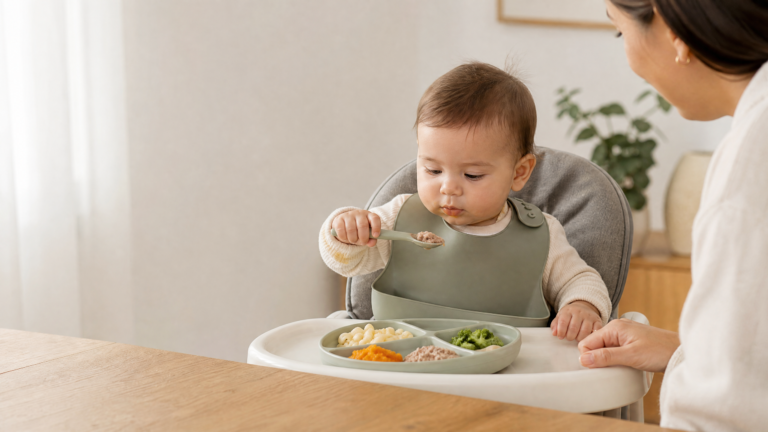
- Mashed banana, avocado, or cooked sweet potato — smooth enough to eat with gums alone
- Dissolvable teething melts or puffs that melt on contact
- Chilled soft foods: plain yogurt, mashed pear, or cooled oatmeal
- Thin smoothies with breastmilk or formula, served cold in a spoon
For babies under 12 months, skip honey entirely — botulism risk is real at this age. If you need broader ideas, see ‘Feeding During Teething Soothing Foods’ for age-by-age options.
Watch for gag or tongue-thrust; stop if your baby turns away repeatedly. Offer fluids alongside solids — water in a sippy cup or extra breastmilk/formula prevents dehydration when intake drops.
If refusal lasts more than two to three days, or comes with fever, diarrhea, or vomiting, contact your pediatrician. For support beyond feeding, ‘After Baby Bonding Delivery’ covers soothing routines that help babies settle during teething nights.
How Do I Keep Baby Hydrated When Feeding Drops?
What Choking Risks Come With Teething Foods?
Feeding during teething requires strict avoidance of whole grapes, nuts, and hard raw vegetables—these are top choking hazards per AAP and CDC guidance. Cut grapes and cherry tomatoes lengthwise into quarters; serve nut butters thinly on soft bread, never by the spoonful. Hard raw carrots, apples, and popcorn remain off-limits until your pediatrician clears chewing skills, usually around age 4.
Safe serving rules for feeding during teething:
- Soft, dissolvable textures only; watch for tongue-thrust or gag
- Supervise every feed; baby sits upright in a high chair
- Avoid frozen items that are too hard—chilled soft only, never rock-solid
- Honey forbidden under 12 months (botulism risk)
If your baby turns away repeatedly, stop. Offer fluids alongside solids—water in a sippy cup or extra breastmilk/formula prevents dehydration when intake drops.
Call your pediatrician if refusal lasts more than two to three days, or comes with fever, diarrhea, or vomiting. Fewer wet diapers, no tears, or dry mouth signal dehydration needing urgent eval.
This is general information, not individualized medical advice. Consult your pediatrician for your child’s specific needs.
When Should I Worry That Fussiness Isn’t Just Teething?
Fussiness from teething typically stays mild and local — if your baby not eating teething coincides with a fever over 100.4°F (38°C), diarrhea, or vomiting, teething is likely not the whole cause.
Teething may nudge temperature slightly up, but it does not produce high fever. A rectal reading above 100.4°F in a baby under 3 months, or above 102°F at any age, needs same-day pediatric evaluation.
Red flags that mean “call now” rather than “wait it out”:
- Fever lasting more than 24 hours in a baby under 6 months
- Diarrhea or vomiting more than a few episodes
- Refusal to eat or drink for over 8 hours
- Fewer wet diapers than usual, no tears, dry mouth
If your baby not eating teething dips for 2–3 days but otherwise acts like themselves, track intake and wet diapers closely. If the drop stretches past 3 days or energy dips, contact your pediatrician. Dehydration can sneak up fast when a sore mouth slows drinking.
Feeding During Teething Soothing Foods
This is general information, not individualized medical advice. Consult your pediatrician for your child’s specific needs.
When to Seek Medical Care
Seek medical care when feeding during teething drops come with danger signs rather than just fussiness. A sore mouth can slow eating, but some symptoms need same-day evaluation.
Call your pediatrician or go to triage if:
- Baby under 3 months has a fever of 100.4°F or higher
- Fever lasts more than 24 hours in a baby under 6 months
- No wet diaper for 8+ hours, no tears, or dry mouth
- Vomiting or diarrhea more than a few episodes
- Refusal to eat or drink for over 8 hours
- Lethargy or inconsolable crying
If your baby is alert, drinking some, and has normal wet diapers, track intake for 24–48 hours. Appetite dips from sore gums often improve as the tooth breaks through. If the drop stretches past 3 days or energy dips, contact your pediatrician even without fever. Dehydration can sneak up fast when a sore mouth slows drinking. Trust your gut—if something feels wrong, call the office.
The bottom line
Appetite dips are common in the 6–15 month teething window and usually temporary — sore gums make chewing unpleasant, not dangerous. Offer cold (not frozen), soft, supervised foods appropriate to your baby’s age band, and downgrade textures to mashes or dissolvable melts on rough days. Milk or formula stays the nutrition priority; small, frequent meals work better than forcing solids. Honey is a botulism risk under 12 months — avoid it entirely.
Call your pediatrician if feeding drops last more than 3 days, or if you see fever, no wet diaper for 8+ hours, vomiting, lethargy, or refusal to drink. Trust your gut — you know your baby’s normal better than any chart.
This is general information, not individualized medical advice. Always consult your pediatrician for concerns about your child’s feeding, hydration, or symptoms.
Related Reading on ChildBloom
- Bottle refusal teething quick fixes
- Solids reflux baby refuses textured foods
- Silicone teether cleaning mold prevention
References and Resources
Frequently asked questions
Can I give teething biscuits or rusks?
Teething biscuits and rusks can work for babies who are already picking up objects and bringing them to mouth, but they dissolve slowly and can leave sticky residue — so stay within arm’s reach the whole time. Offer them after a meal, not as a filler when appetite is low, and check the label for added sugar. If your baby isn’t chewing yet or is under about 6 months, skip them and stick with chilled soft foods instead.
Are popsicles safe for babies?
Plain-fruit popsicles or frozen breastmilk/formula pops can soothe sore gums once your baby is eating solids comfortably, usually around 6 months. Watch for choking as the popsicle shrinks, and avoid store-bought versions with added sugar or artificial sweeteners. For babies under 9 months, keep pieces large enough to hold and never leave them unattended with one.
Do I need to supplement nutrition during teething dips?
Short appetite dips — a few days to a week — usually don’t require supplements if your baby is still taking milk and staying hydrated. Don’t force high-calorie “teething foods” or start a new formula without checking with your pediatrician. If the dip stretches beyond a week or wet diapers drop, that’s a signal to call your provider rather than supplement on your own.
How long do teething appetite dips typically last?
Most babies bounce back to normal eating within a few days to about a week per tooth eruption wave. If the drop in intake lasts longer than 7–10 days, or your baby is losing weight rather than just slowing gains, it’s worth a visit to rule out illness. Track wet diapers and mood more than ounces — they’ll tell you if it’s truly a teething dip or something else.
What if my baby only wants milk and refuses everything else?
Offer milk first to keep hydration and calories up, then try chilled soft foods in tiny amounts without pressure. Rotate textures — a chilled spoon, mashed banana, or yogurt on a tray — so your baby can explore even if they won’t eat much. If all-solid refusal lasts more than a day or two and milk intake is dropping too, contact your pediatrician.
Can I use teething gels or numbing products before meals?
Topical numbing gels are generally not recommended before feeding — they can numb the mouth too much and increase choking risk, and many contain ingredients that aren’t safe for young babies. Stick with chilled foods or a clean cold teething ring instead, and ask your pediatrician before using any gel or medication. If mouth pain is severe enough that your baby won’t eat at all, that’s a reason to call your provider rather than self-treat.
This FAQ is for general information and does not replace personalized medical advice. If your baby has a fever over 100.4°F (38°C) under 3 months, refuses all liquids, has fewer than 4 wet diapers a day, or you sense something is seriously wrong, seek care promptly.