Bottle Nipple Flow Stage by Stage: Complete Parent Guide
Bottle Nipple Flow Stage by Stage: A Parent’s Progression Guide
You’re watching milk pour too fast down your baby’s chin, or your little one is tugging the bottle away and fussing — and you wonder if the nipple flow is wrong. The anxiety is real, and you’re not the only one who’s lost sleep over it. Understanding bottle nipple flow stage by stage helps you match the pace to your baby’s actual ability instead of guessing.
This guide walks you through each flow level, what to expect at every stage, and the concrete signs that tell you it’s time to upgrade — or slow down. You’ll learn to distinguish normal gagging from true choking, spot when a flow mismatch is affecting weight or feeding tolerance, and know exactly when to call your pediatrician. By the end, you’ll have a clear plan for your baby’s current stage and confidence to move forward.
Looking for expert guidance on bottle nipple flow stage by stage? This comprehensive guide covers everything you need to know, from understanding the basics to making informed decisions for your family.
What bottle nipple flow stages actually are
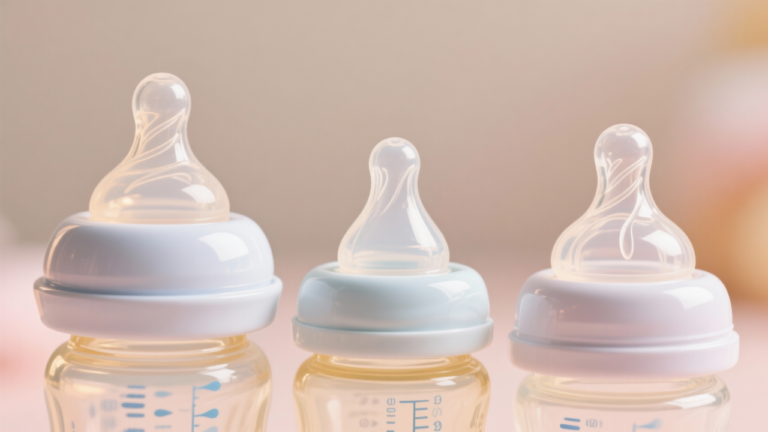
Bottle nipple flow stages are numbered categories manufacturers use to describe how fast milk flows through the nipple hole at each level. Think of them as a baby bottle flow rate guide — each stage corresponds to a different hole size and shape that changes the pace of the feed. Understanding bottle nipple flow stage by stage helps you match the flow to your baby’s sucking and swallowing ability instead of guessing.
How nipple holes work (slow, medium, fast)
The physics is simple: a larger hole lets milk flow faster; a smaller hole slows it. Holes can be cross-shaped, round, or slit-shaped, and the shape affects whether milk drips steadily or flows in a more continuous stream.
- Slow flow: small hole, milk drips or flows with strong suction
- Medium flow: larger hole, milk flows more freely with less suction
- Fast flow: largest hole, milk flows readily with minimal sucking
Manufacturers measure flow in drops per minute or milliliters per minute in lab settings, but those numbers vary widely between brands. There is no universal standard — so a “Stage 1” from one brand may flow differently than a “Stage 1” from another.
Why manufacturers use numbered stages
Stage numbers (1, 2, 3, etc.) are marketing conventions, not medical standards. They give parents a rough starting point based on age, but they don’t account for individual sucking strength, oral development, or milk viscosity.
The AAP and CDC do not publish nipple-flow stage guidelines — age ranges on packaging are manufacturer recommendations. Your baby’s readiness matters more than the number on the box.
ChildBloom Medical Disclaimer: This information is for educational purposes only and does not replace professional medical advice. If your baby shows signs of true choking (cannot breathe, lips/face turning color, high-pitched sound), call 911. Persistent coughing during feeds, poor weight gain, or feeding refusal — contact your pediatrician within 24 hours.
Bottle nipple flow stage by stage: what to expect at each level
How to tell your baby is ready to advance to the next flow
Your baby signals readiness through feeding behavior, not a calendar date. Watch for consistent patterns over several days before you consider upgrading — the “when to upgrade bottle nipple stage” decision is behavioral, not chronological.
Cues baby is ready for a faster flow
- Chewing or biting the nipple during feeds
- Pulling away from the bottle then re-rooting eagerly
- Taking noticeably longer than usual to finish a standard bottle
- Fussing or restlessness mid-feed, then calming once flow increases
- Finishing bottles faster than expected and still showing hunger cues
- Milk flow seems slow compared to previous feeds
These behaviors suggest the current flow no longer matches your baby’s sucking strength or pace. A baby who works too hard for milk may tire, swallow air, or develop feeding aversion — so recognizing the “signs baby needs faster flow nipple” early helps you respond before mealtime becomes a battle.
Cues baby isn’t ready yet
- Coughing or choking during the feed
- Milk leaking from the corners of the mouth
- Turning head away from the bottle repeatedly
- Gagging or swallowing air (clicking sounds, fussiness after feeds)
- Refusing the bottle entirely or eating significantly less
- Milk draining too fast with baby unable to keep up
If you see these signs, stay at the current stage or even step back one level. Pushing a faster flow too early can cause overspill, gas, and feeding aversion.
A note on brand differences
Stage numbers vary between manufacturers — a “Stage 2” from one brand may flow differently than another’s. When you do upgrade, test the new nipple during a calm feed, not a hungry-cry moment. Watch whether baby coordinates suck-swallow-breathe without pausing to gasp.
Manufacturer age ranges are rough guides — your observation matters more. The AAP and CDC do not publish nipple-flow stage guidelines, so age-based upgrade timelines on packaging are manufacturer suggestions, not medical standards.
ChildBloom Medical Disclaimer: This information is for educational purposes only and does not replace professional medical advice. If your baby shows signs of true choking (cannot breathe, lips/face turning color, high-pitched sound), call 911. Persistent coughing during feeds, poor weight gain, or feeding refusal — contact your pediatrician within 24 hours.
Signs the flow is wrong: too slow vs too fast
You’ll know the flow is off when feeding feels like a fight — either baby works too hard or milk overwhelms them. A reliable baby bottle flow rate guide starts with watching your baby, not the number on the box. Parent forums and feeding-care resources cite flow-rate observations from NICU-trained nurses, but every baby is different.
Flow too slow — what you’ll see
Baby shows frustration cues:
- Long feeds that drag past 30-40 minutes
- Falling asleep at the bottle then waking hungry soon after
- Pulling off, fussing, or biting the nipple
- Weak sucks with little milk transferred
These signs baby needs faster flow nipple often look like “not hungry” or “picky” when the real issue is effort. If baby consistently drains a bottle and still searches, the flow may be limiting intake. Check the package age range, but remember manufacturer guidelines are rough — observe actual transfer, not just the label.
Flow too fast — what you’ll see
Milk overwhelms baby’s coordination:
- Gulping, gasping, or chugging with milk leaking from mouth
- Coughing, sputtering, or milk running down chin
- Belly bloating or fussiness after feeds
- Turning head away, refusing the nipple mid-feed
A fast flow can also cause too much air swallowing, which links to discomfort that sometimes overlaps with concerns like Organ Pelvic Postpartum Prolapse in the parent — if you’re experiencing pelvic pressure or leakage yourself, that’s a separate issue worth checking with your provider.
Quick comparison
| Too slow | Too fast |
|---|---|
| Long feeds, fatigue | Gulping, leaking |
| Biting nipple | Coughing, sputtering |
| Falls asleep hungry | Belly bloating, refusal |
When to seek care
True choking — cannot breathe, lips/face turning color, high-pitched sound — call 911. Persistent coughing during feeds, poor weight gain, or refusal — contact your pediatrician within 24 hours.
ChildBloom Medical Disclaimer: This information is for educational purposes only and does not replace professional medical advice. If your baby shows signs of true choking (cannot breathe, lips/face turning color, high-pitched sound), call 911. Persistent coughing during feeds, poor weight gain, or feeding refusal — contact your pediatrician within 24 hours.
Choking vs frustration: how to tell in the moment
A crying, red-faced baby during a feed is usually frustration, not an airway emergency — but the distinction matters because the two need opposite responses. Knowing baby choking first aid basics helps you act calmly instead of guessing.
Frustration signs (not an emergency)
Your baby is still breathing if you see:
- Face turning red or purple from crying
- Pulling off the bottle repeatedly
- Fussing, arching, or clamping mouth shut
- Gagging or sputtering then calming
These are flow-mismatch signals, not airway blockages. The baby can cry, cough, and breathe. Try pausing, burping, or checking the nipple flow before assuming something is wrong. A nipple that flows too slowly may cause biting and fatigue; one that flows too fast may cause gulping and leaking. Both look alarming but resolve with a flow change, not emergency care.
Choking signs (act immediately)
Call emergency services or begin baby choking first aid if the baby:
- Cannot breathe or is silent
- Makes a high-pitched sound or no sound at all
- Cannot cry
- Has blue or gray lips/face
- Is limp or unresponsive
Do not pat the back if the infant is conscious and coughing forcefully — let them cough first. If coughing stops or the baby turns color, call 911 and start back blows/chest thrusts per current infant first aid guidance. Keep the baby’s head lower than the chest during thrusts.
When to seek care: True choking — cannot breathe, lips/face turning color, high-pitched sound — call 911. Persistent coughing during feeds, poor weight gain, or refusal — contact your pediatrician within 24 hours.
ChildBloom Medical Disclaimer: This information is for educational purposes only and does not replace professional medical advice. If your baby shows signs of true choking (cannot breathe, lips/face turning color, high-pitched sound), call 911. Persistent coughing during feeds, poor weight gain, or feeding refusal — contact your pediatrician within 24 hours.
When to seek care for bottle nipple flow issues
Knowing when to intervene separates normal adjustment from a real problem. If your baby shows signs of distress during feeds, trust your instinct and check the flow against their age
How to handle bottle nipple flow at home
You can check and adjust bottle nipple flow at home with a simple drip test, better positioning, and careful watching for your baby’s cues — and that’s exactly what “how can I help at home with bottle nipple flow stage by stage” comes down to.
Testing flow at home (the invert test)
Hold the bottle upside down with the nipple fully filled; a Stage 1 should drip about 1 drop per second, and faster stages drip more steadily. If milk streams without pauses, the flow is too fast for your baby’s current age. If nothing comes out or only an occasional drop, it may be too slow. Do this before each feed, especially with a new nipple lot.
Positioning and pacing tips
- Hold baby more upright (~30–45°), not lying flat.
- Keep the nipple full of milk to reduce air swallowing.
- Pause every 1–2 minutes for a burp and to check cues.
- Watch for turning away, splayed fingers, or milk leaking at the mouth — signs the flow is outpacing your baby.
If you’re combo feeding (pump + bottle)
Pumped milk flows differently depending on pump suction and bottle setup, so a nipple that worked with formula may feel fast with your pump output. Try a slower stage and pace the bottle — slow strokes, upright hold, frequent pauses. For storage and pumping guidance, see the ChildBloom pumping & storage guide.
When to seek care: True choking — cannot breathe, lips/face turning color, high-pitched sound — call 911. Persistent coughing during feeds, poor weight gain, or refusal — contact your pediatrician within 24 hours.
ChildBloom Medical Disclaimer: This information is for educational purposes only and does not replace professional medical advice. If your baby shows signs of true choking (cannot breathe, lips/face turning color, high-pitched sound), call 911. Persistent coughing during feeds, poor weight gain, or feeding refusal — contact your pediatrician within 24 hours.
The bottom line
Stage numbers are manufacturer conventions — watch your baby’s behavior, not just the age on the box. Frustration and choking look very different; know the difference in the moment. Test flow at home with the invert drip test before every feed. Call your pediatrician for repeated choking, poor weight gain, or any fever under 3 months. Flow progression isn’t linear — some babies stay on one stage longer, and that’s normal. If you’re unsure which stage fits, slow is safer than fast; you can always move up, but you can’t undo a too-fast feed. Trust what you see at the bottle more than what the packaging promises.
ChildBloom Medical Disclaimer: This information is for educational purposes only and does not replace professional medical advice. If your baby shows signs of true choking (cannot breathe, lips/face turning color, high-pitched sound), call 911. Persistent coughing during feeds, poor weight gain, or feeding refusal — contact your pediatrician within 24 hours.
Related Reading on ChildBloom
- Paced bottle feeding medically complex infants
- Bottle refusal teething quick fixes
- Feed baby cleft palate bottles cups
References and Resources
Frequently asked questions
Can I skip a flow stage if my baby seems ready?
Most babies move up one stage at a time, but skipping isn’t harmful if your baby consistently shows readiness cues for a faster flow. Watch for chewing on the nipple, long feeding times, or frustration — those are signs the current flow isn’t keeping up. If you skip a stage, do the invert test on the new nipple first and supervise the first few feeds closely.
How often should I check if the nipple flow still fits my baby?
Reassess every 4–6 weeks or anytime you notice feeding taking longer than 30 minutes, baby pulling off repeatedly, or gulping with coughing. Growth spurts and developmental leaps (like starting solids) are natural times to re-evaluate. There’s no fixed calendar — follow your baby’s cues more than a schedule.
What if my baby refuses the next stage nipple?
Try the new nipple for one or two feeds before reverting to the old one — some babies need a few tries to adjust to the faster flow. Check that the nipple isn’t too firm or too wide at the base, since shape differences between brands can also cause refusal. If refusal persists with coughing or distress, go back a stage and try again in a week or two.
Is a faster flow nipple linked to earlier weaning?
There’s no strong evidence that flow rate directly causes earlier weaning — babies wean based on readiness, not nipple speed. A very fast flow can sometimes cause overfeeding or gagging, which may create negative associations with the bottle. If you’re aiming to extend bottle feeding, pacing and a slower flow tend to support that better than forcing a fast flow.
Can flow stage affect tooth decay or ear infection risk?
Faster flow doesn’t directly cause tooth decay, but milk pooling in the mouth from prolonged or rushed feeds can increase cavity risk over time — especially with bedtime bottles. Ear infection risk is more about feeding position than flow speed; lying flat while feeding can encourage milk toward the Eustachian tubes. Keep baby semi-upright during feeds and avoid putting them to bed with a bottle regardless of flow stage.
This FAQ is for general information and does not replace personalized advice from your pediatrician. If your baby shows choking, persistent coughing, poor weight gain, or you’re unsure about the right flow stage, contact your healthcare provider.