10-Month Feeding Schedule: Milk, Meals & Snacks
Medically reviewed by Dr. Ahmad Raza, MD (Pediatrics) — ChildBloom Medical Review Panel. Last updated: September 27, 2026.
Written by Dr. Ahmad Raza, MD, Pediatrics.
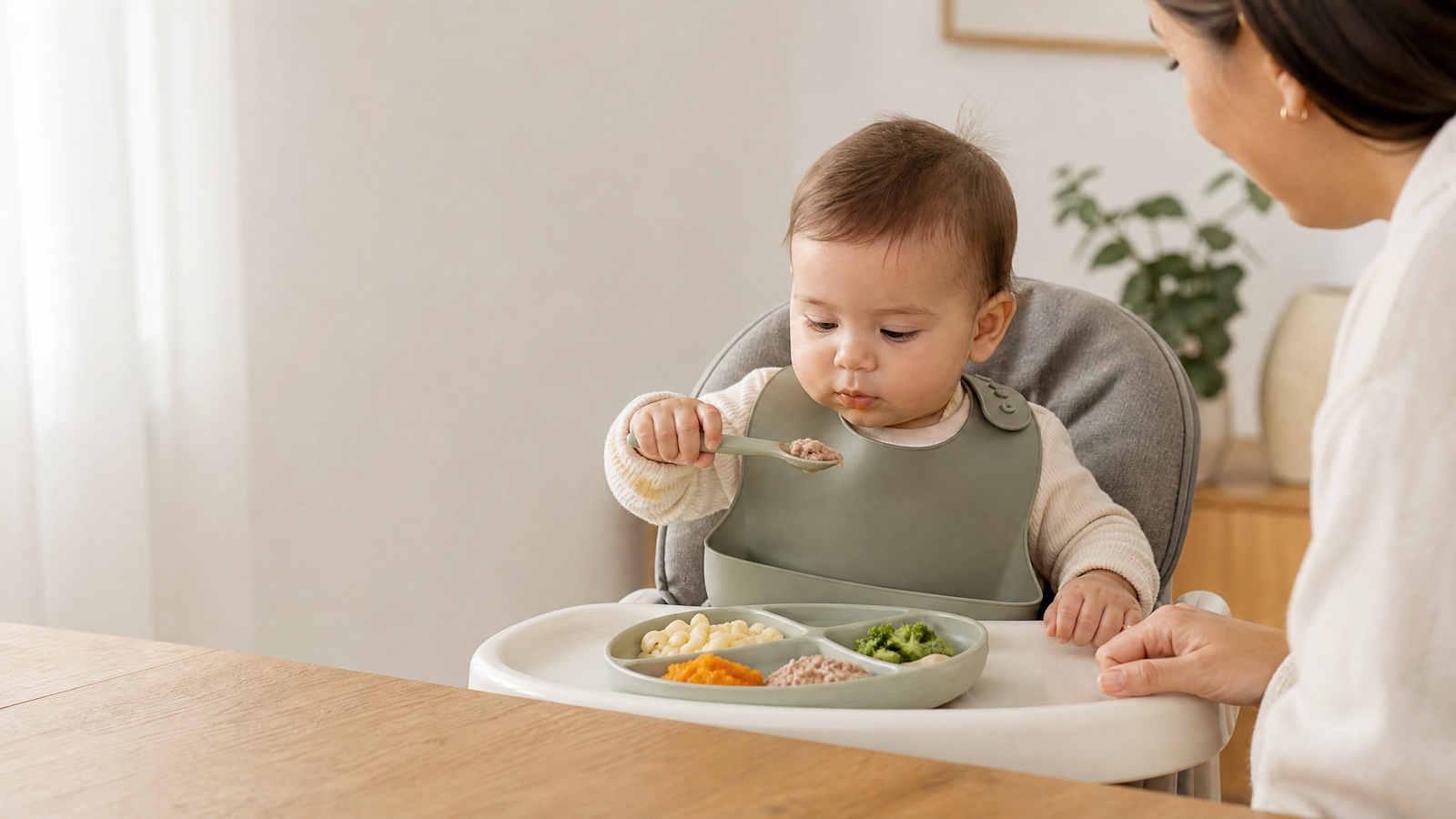
A flexible 10-month feeding schedule: about three meals plus two or three snacks, milk in the lead, iron-rich foods, and safe textures — with sample times, a balanced-plate table, and when to call your pediatrician.
📋 TL;DR — if you read nothing else
- Milk still leads through 12 months — no universal ounce target, and never restrict milk to force solids.
- About three meals plus two or three snacks, roughly every 2–3 hours — follow cues, never force. [1]
- Each day: iron-rich foods with vitamin C, soft supervised textures, water from a cup, no juice or main cow’s milk before 12 months.
- Introduce allergens early, make formula at label strength, and call your pediatrician for intake, diaper, growth, or breathing worries.
Quick Answer
Short answer: Most 10-month-olds are offered about three meals and two or three small snacks or milk opportunities across the day. The exact timing and amount vary. Continue breast milk or formula, offer soft iron-rich foods, and avoid forcing bites.
Sample 10-month feeding schedule
Use this as a starting framework. Move the times to fit your baby’s sleep, childcare, and milk-feeding pattern — a baby may eat more at one meal and less at another, and that variation is normal.
| Approximate time | Feeding opportunity | Examples |
|---|---|---|
| 6:30 a.m. | Breast milk or formula | Follow your baby’s usual milk cues |
| 8:00 a.m. | Breakfast | Soft egg, iron-fortified cereal, mashed fruit, or yogurt |
| 10:00 a.m. | Milk or small snack | Breast milk/formula, soft fruit, or a soft cooked food |
| 12:30 p.m. | Lunch | Shredded chicken, beans, tofu, soft vegetables, or tender pasta |
| 3:00 p.m. | Milk or snack | Breast milk/formula, yogurt, mashed avocado, or soft fruit |
| 5:30 p.m. | Dinner | Flaked fish, lentils, soft rice, cooked vegetables, or family food modified for safety |
| 7:30 p.m. | Breast milk or formula | Offer the usual bedtime feed if your baby wants it |
The table is not a prescription — use it to organize opportunities, not to force a volume. Sleep, night nursing, and bottle patterns vary by baby.
How often should a 10-month-old eat?
The CDC suggests offering something to eat or drink about every 2–3 hours, which often works out to three meals and two or three snacks or milk opportunities. Appetite changes from day to day. [1]
Start small and watch your baby: a few spoonfuls one day, more another. Familiar foods may be refused during teething, illness, fatigue, or a developmental change.
Responsive feeding puts the caregiver in charge of what, when, and where food is offered, while the baby decides whether to eat and how much. This supports hunger and fullness awareness without pressure. [2] [3]
How much milk does a 10-month-old need?
There is no reliable universal ounce target for every 10-month-old. Breast milk and/or infant formula remains a main source of nutrition through 12 months. Formula-fed babies should receive properly prepared iron-fortified infant formula on their own hunger cues and clinician guidance.
Breast milk intake cannot be measured accurately by minutes at the breast or an equivalent bottle volume. Instead consider feeding behavior, wet diapers, growth, energy, and your pediatrician’s assessment. A breastfed baby may feed for comfort as well as nutrition, and both can be normal.
Do not restrict milk to make a baby eat more solids, and do not replace breast milk or formula with water, juice, or diluted formula. If you are concerned about low intake, frequent vomiting, growth, or dehydration, contact your pediatrician.
A balanced 10-month plate
Offer food from several groups across the day — no need for every group at every meal or precisely measured portions.
| Food group | Soft, age-appropriate examples | Preparation reminder |
|---|---|---|
| Iron-rich foods | Meat, poultry, fish, egg, beans, lentils, tofu, iron-fortified cereal | Cook until tender; mince, shred, mash, or flake as needed |
| Vegetables | Sweet potato, broccoli, peas, carrots, squash | Cook until soft enough to mash between your fingers |
| Fruits | Banana, pear, peach, avocado, berries prepared safely | Mash or cut into soft, manageable pieces |
| Grains and starches | Oatmeal, soft rice, pasta, potato, soft bread | Avoid hard crusts and tough pieces |
| Dairy foods | Plain yogurt, cottage cheese, or soft pasteurized cheese | Avoid hard cubes and unpasteurized products |
The CDC recommends iron-containing foods once complementary foods begin. Heme iron from meat, poultry, fish, and eggs is absorbed more easily; non-heme iron comes from fortified cereal, tofu, beans, lentils, and leafy greens, and vitamin C-containing foods help the body absorb it. [4]
Do not prescribe iron supplements from a schedule found online. Some babies — including babies born prematurely or with specific medical conditions — may need an individualized plan.
A practical day of meals
Breakfast
Offer iron-fortified infant cereal mixed with breast milk, formula, or water, plus a soft egg, mashed avocado, or ripe fruit. Keep the texture smooth, mashed, or soft enough for your baby’s skill level.
Lunch
Try shredded chicken, flaked fish, mashed beans, lentils, or tofu with a soft vegetable and a tender starch. Remove bones and tough pieces, and keep salt and added sugar low.
Dinner
Serve a modified family meal when possible, setting aside your baby’s portion before extra salt or spicy ingredients go in. Soft pasta, tender rice, cooked vegetables, and finely shredded meat work well.
Snacks
Some babies need snacks between meals; others prefer an additional milk feed. Offer plain yogurt, mashed fruit, soft cooked vegetables, avocado, or a soft grain food. Avoid continuous grazing — regular meal and snack times help a baby notice hunger and fullness. [1]
Water and drinks at 10 months
A small amount of water in an open, straw, or sippy cup can support cup practice and may be offered with meals, but it should not displace breast milk or formula. Babies under 12 months do not need juice. [2]
Do not add water to prepared formula beyond the label instructions — over-diluting reduces calories and nutrients and may be unsafe. Prepare powdered formula exactly as directed on the container or by your baby’s clinician.
Textures and self-feeding at 10 months
Many 10-month-olds can practice with soft finger foods, though readiness varies. Seat your baby upright and supervised, with food soft enough to mash easily and cut to a size your baby can manage.
A whole-hand grasp usually comes before a precise pincer grasp, and perfect utensil use or clean meals are not the goal — dropping food, smearing it, and picking it up are all part of learning.
Offer soft-cooked vegetable strips, ripe banana, tender pasta, scrambled egg, soft toast without hard crust, or finely shredded meat. Avoid hard, round, sticky, or chewy foods. Common choking hazards include whole grapes, nuts, popcorn, raw vegetables, hard candy, chunks of meat or cheese, hot dogs, and spoonfuls of nut butter. [2]
Gagging can be noisy, with coughing or retching. Choking can be silent, with an inability to breathe, cry, or cough effectively. Learn infant choking first aid from a qualified course, and never perform a blind finger sweep. If your baby cannot breathe, becomes blue or gray, or becomes unresponsive, call emergency services immediately and follow trained first-aid instructions.
Introducing common allergens
Current guidance does not support delaying baby-safe allergenic foods solely to prevent allergy. Offer them in safe textures and small amounts once your baby is ready for complementary foods: smooth peanut or tree-nut butter thinned into a puree, well-cooked egg, plain yogurt, wheat, soy, and fully cooked fish.
If your baby has severe eczema, an existing food allergy, or another high-risk condition, ask the pediatrician how to introduce peanut and other allergens. Never smear a thick spoonful of nut butter into the mouth — thin it and offer a small amount in a safe texture instead.
Watch for hives, facial swelling, repeated vomiting, coughing, wheezing, or breathing difficulty. Seek emergency help for breathing difficulty, blue or gray coloring, collapse, or a severe allergic reaction.
Formula preparation and food hygiene
Use the water-to-powder ratio on the formula label unless your child’s clinician gives exact instructions, and store and discard prepared formula per the label and local public-health guidance.
Wash hands before preparing food, cook foods thoroughly, use pasteurized dairy, avoid honey before 12 months, and refrigerate leftovers promptly. Discard food that has sat in your baby’s mouth or on the feeding tray too long.
When to call your pediatrician
Contact your pediatrician if your baby:
- Takes much less breast milk or formula than usual.
- Has fewer wet diapers, repeated vomiting, persistent diarrhea, or signs of dehydration.
- Coughs, chokes, wheezes, or develops a wet or gurgly voice during or after meals.
- Has difficulty swallowing, recurrent chest infections, or distress with feeding.
- Is not gaining weight as expected or has a concerning change in growth.
- Has a suspected food-allergic reaction.
- Was born prematurely or has a condition affecting nutrition, swallowing, or development.
Seek emergency help for breathing difficulty, blue or gray coloring, collapse, severe swelling, or unresponsiveness.
🩺 Doctor’s Take
Parents hand me a clock and ask whether they are doing it right. Ignore the clock. At 10 months my checklist is short: milk still leads and growth decides how much is enough; every day carries something iron-rich, paired with vitamin C; textures stay soft, lumpy, and supervised; allergens arrive early rather than late; and nobody waters down formula or pours juice in a sippy cup. Watch wet diapers and growth, not spoonfuls — and call me when intake, breathing, or growth worries you.
Frequently Asked Questions
Can I follow this 10-month feeding schedule exactly?
No. Use it as a flexible example — sleep, childcare, breastfeeding, formula intake, appetite, culture, and development all affect the right routine for a baby.
Should a 10-month-old eat three meals and two snacks?
Many babies are offered three meals and two or three snacks or milk opportunities. Some need more frequent milk feeds, and others eat less at a particular meal. Follow cues and discuss concerns with the pediatrician. [1]
Does a 10-month-old need 20–24 ounces of milk?
Not every baby needs the same amount, and a universal target can be misleading — especially for breastfed babies. Continue breast milk or properly prepared iron-fortified formula, and ask the pediatrician about intake if growth or hydration is concerning.
Can a 10-month-old drink cow’s milk?
Cow’s milk should not be the main drink before 12 months. Small amounts in foods may be appropriate, but ask the pediatrician if your baby has an allergy, anemia risk, or another medical condition.
How can I help my baby eat more iron?
Offer iron-rich foods regularly — meat, poultry, fish, egg, beans, lentils, tofu, and iron-fortified infant cereal — and pair plant-based sources with vitamin C foods when practical. Ask the pediatrician about supplements or anemia testing when indicated. [4]
What should I do if my baby refuses a meal?
Stay calm and end the meal without pressure, then offer the food again at another opportunity. One missed meal matters less than the overall pattern of intake, growth, hydration, and energy.
When can I stop using purees?
There is no single deadline. Gradually offer thicker, mashed, lumpy, and soft finger-food textures as your baby shows readiness. If your baby repeatedly coughs, chokes, or cannot manage textures, ask for a feeding assessment.
The bottom line
A good 10-month feeding schedule provides regular opportunities for milk, meals, and snacks without turning the clock into a prescription. Continue breast milk or iron-fortified formula, offer iron-rich foods and safe textures, introduce water in small amounts, and follow hunger and fullness cues. When feeding or growth seems concerning, call your pediatrician.
References and further reading
This article is for general information only and is not a substitute for professional medical advice, diagnosis, or treatment. Always consult your own pediatrician about your child’s individual health needs. If you believe your child is having a medical emergency, call your local emergency number immediately.
Medical review
Reviewed by Dr. Ahmad Raza, MD, Pediatrics. Last reviewed September 27, 2026. Reviewed against CDC’s How Much and How Often to Feed and Iron pages (re-verified this date) and the AAP HealthyChildren sample-menu and starting-solids pages (live). It is educational information and does not replace individualized advice from a qualified clinician.
Learn about our physicians on the About page.