Safe Sleep During a Power Outage or Heat Wave
Baby sleep hot room: the quick answer
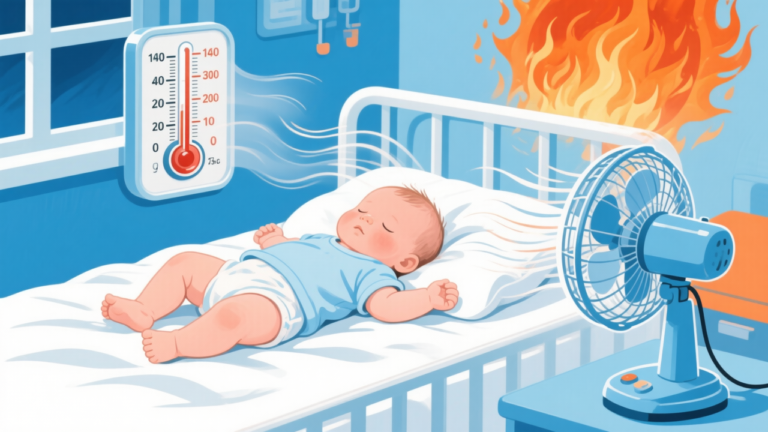
For baby sleep hot room safety, keep your baby cool with light clothing, airflow, and a bare sleep space. Use a fan for circulation and close blinds by day. Watch for overheating signs like a sweaty neck or flushed skin. Move to a cooler space if the room is dangerously hot.
For the full picture, read our pillar guide on Evidence-Based Baby Sleep Solutions.
Why baby sleep hot room happens — the sleep science
Babies are less able to control their body temperature than older children and adults. They have a larger surface area relative to their body weight, they sweat less efficiently, and they cannot move themselves to a cooler spot or remove a blanket. That is why a hot room affects a baby faster and why overheating is treated as a real safety concern, not just a comfort issue.
The overheating–SIDS link. Research has consistently shown that overheating is a risk factor for sudden infant death syndrome (SIDS). A baby who is too warm during sleep breathes in a way that, in a small number of infants, can become unsafe. The safe-sleep guidance to “dress the baby for the room, not the bed” exists for this reason. A hot room pushes the baby toward overheating unless you actively manage clothing and airflow.
Why a fan helps (but not directly). Moving air speeds evaporation from the skin and keeps the room from becoming stagnant. A fan should circulate the room’s air, not blow a stream onto the baby’s face or body, which can chill one spot or dry the air unevenly. Placing the fan across the room or near a window works better than aiming it at the crib.
Circadian rhythm and heat. A baby’s internal clock (circadian rhythm) is shaped by light, darkness, and a slight drop in body temperature at night. Melatonin, the sleep-promoting hormone, rises in the evening. Heat interferes with the natural temperature dip that helps sleep come, so a hot room can make falling asleep and staying asleep harder — on top of the safety concern.
Dehydration risk in heat. Babies lose fluid through sweat and faster breathing. An infant under 6 months needs only breast milk or formula (not water) for hydration, but in heat they may need more frequent feeds. Signs of dehydration — fewer wet diapers, no tears, dry mouth — mean it is time to call your pediatrician.
Understanding these mechanisms helps you act early: cool the room, lighten clothing, and keep the sleep space bare, rather than waiting until the baby is visibly distressed.
The step-by-step plan: keeping the sleep space safe and cool
- Check the room temperature. Aim for a comfortable nursery range, commonly about 68–72°F (20–22°C). You cannot “feel” it reliably once you are acclimated, so use a room thermometer.
- Dress for the room. In heat, a single light layer or just a diaper plus a thin sleep sack may be enough. Avoid multiple layers and hats indoors.
- Keep the sleep space bare. No loose blankets, even when it is hot. A light sleep sack (low TOG) is safer than a blanket and avoids fabric over the face.
- Create airflow. Use a fan for circulation, placed away from the crib. Open windows at night if outside air is cooler; close blinds and curtains during the day to block heat.
- Plan for power loss. Charge a battery fan, keep a hand fan ready, and know where the coolest spot in the building is (often a lower floor or a shaded room).
- Move if needed. If the room is dangerously hot and will not cool, relocate to a cooler space such as a public cooling center, a library, or a friend’s air-conditioned home. Bring your portable crib.
- Offer feeds often in heat. More frequent breast milk or formula helps with fluid loss. Do not give water to an infant unless your pediatrician says so.
- Re-check the baby, not just the thermostat. Feel the chest or back: warm is right, hot or sweaty is too warm. Adjust a layer.
Age-specific notes
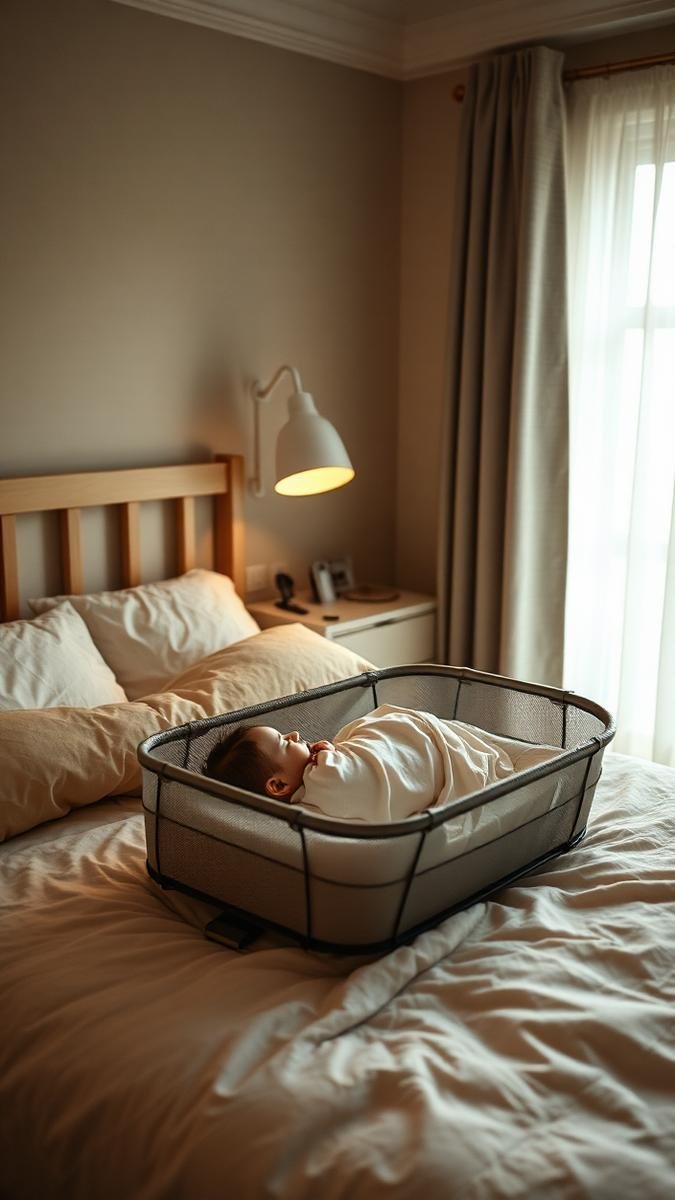
Newborn to 3 months. Newborns have the least mature temperature control. Keep them in your room on a bare bassinet, lighten clothing early, and watch the neck and ears for heat. Feed on demand; heat can increase thirst.
4 to 6 months. The baby may roll, so stop swaddling and switch to a light sleep sack. Continue frequent feeds in heat. A battery fan is useful if power fails.
6 to 12 months. Some babies begin solids, but breast milk or formula remains the main fluid. Offer extra milk in heat. Keep the crib bare and the room ventilated. A familiar routine helps sleep even when the environment is unusual.
Dressing-by-temperature table
| Room temp | Suggested sleep clothing | Notes |
|---|---|---|
| — | — | — |
| 75°F / 24°C and up | Diaper + thin 0.5 TOG sack, or diaper only | Watch for sweat; remove a layer |
| 72–75°F / 22–24°C | Light onesie + 0.5–1.0 TOG sack | Common warm-room choice |
| 68–72°F / 20–22°C | Onesie + 1.0 TOG sack | Comfortable baseline |
| Below 68°F / 20°C | Add a layer or use 2.5 TOG sack | Avoid hats indoors |
Overheating decision checklist
- [ ] Neck sweaty or chest hot to touch?
- [ ] Skin flushed or ears hot?
- [ ] Breathing faster than usual?
- [ ] Lethargic, hard to wake, or unusually quiet?
- [ ] Fewer wet diapers than normal?
If you check any box, cool the room, remove a layer, and if the baby is hard to wake or unresponsive, seek emergency care.
Sample schedule
Heat changes how you dress the baby, not the basic shape of the day. Here is a sample warm-weather rhythm for a baby around six months. Move the times to fit your baby’s own wake-up.
- 7:00 a.m.: Light feeding, change, and time near a shaded open window for morning light.
- 9:00 a.m.: Nap in a cool, dark room; diaper only plus a cotton singlet if the room is warm.
- 11:30 a.m.: Feed, floor play in the coolest part of the home.
- 1:00 p.m.: Second nap; keep the sleep space clear and the room ventilated.
- 4:00 p.m.: Short catnap only if cues show tiredness.
- 6:30 p.m.: Calm bedtime routine; dress for the room temperature, not the calendar.
- Night: Check the room temperature once; adjust a layer, not the safe sleep rules.
Follow your baby’s cues and keep the sleep surface bare and flat in every room.
Safe sleep still applies in the heat
A hot room does not change the safe-sleep rules. Keep the baby on the back, on a firm flat surface, with nothing in the crib but a fitted sheet. A light sleep sack beats a loose blanket every time because it cannot ride up over the face. Do not remove the baby from the crib to a soft sofa or adult bed “to cool off” — soft surfaces add a different danger.
Myths about babies and heat
”A fan blowing on the baby cools faster.” Direct airflow can chill one area and dry the skin unevenly. Circulate the room instead.
”Babies need a hat indoors.” Hats trap heat and should be used outdoors in cold, not indoors in a warm room.
”If I’m hot, the baby is fine in more layers.” Babies overheat more easily than adults. Dress them lighter than you would dress yourself in the same room.
”A little water will hydrate an infant.” Under about 6 months, extra water is not recommended and can be harmful. Use breast milk or formula and ask your pediatrician.
Cooling without power
When the electricity is out, focus on moving air and reducing heat gain. Close curtains and blinds on sun-facing windows. Open windows at night if the outside air is cooler. Use a battery or hand fan. Wet a washcloth and place it (not on the baby’s face) near airflow to aid evaporation. Spend the hottest hours in the coolest part of the building. If the home becomes unsafe, leave for a cooling center with your portable crib.
Hydration note
Infants under 6 months usually need only breast milk or formula; do not give water unless your pediatrician advises. Offer more frequent feeds in heat. For older babies, continue milk as the main fluid and follow your pediatrician’s guidance on small sips of water alongside solids.
Keeping sleep on track during a hot spell
Heat does not just raise safety risk; it can disrupt sleep timing. A baby who is too warm may doze in short, restless stretches and then be overtired the next day, which makes the next night harder. The fix is not a colder room alone but a steady routine plus active cooling. Keep the same wind-down order you use in any season: dim the lights, lower the noise, and put the baby down on the back in the bare crib. The routine signals sleep even when the room feels unusual.
Related reading: Baby Wakes Every Hour: Is It Hunger, Habit, or Discomfort.
If naps shorten in the heat, treat them as normal for the weather and protect bedtime rather than adding a late nap that pushes bedtime later. An overtired baby sleeps worse, not better, so an earlier bedtime on a hot day is often the right move. Watch the chest and neck; if they feel warm, remove a layer before the next sleep rather than after the baby is already restless.
Special situation: a power outage with an infant
A blackout removes your air conditioning and sometimes your fan. The first step is to know the coolest place in the building — usually a lower floor, a shaded interior room, or a basement. Move the portable crib there. Close blinds on sun-facing windows so the room does not heat through the day, and open windows at night only if the outside air is cooler than inside.
Battery fans and hand fans keep air moving when the power is out. A damp washcloth placed near (not on) the baby, combined with airflow, helps cooling through evaporation. Offer breast milk or formula more often, because heat increases fluid loss and infants cannot drink water safely on their own under about 6 months. If the home becomes unsafe — temperatures that will not drop and a baby who is sweaty, flushed, or hard to settle — leave for a cooling center or an air-conditioned relative’s home, bringing the portable crib.
When heat affects the whole family’s sleep
Parents lose sleep in a heat wave too, and a tired parent is more likely to bed-share “just once” on a soft surface, which is the highest-risk scenario. Protect the baby’s safe space first, then your own rest in shifts if needed. A partner taking the early morning feed in a cooler room, or a grandparent helping by day, can keep everyone safer. The point is not perfection; it is keeping the baby on a firm, flat, bare surface through the hot stretch.
Signs you may be missing early overheating
Families often wait for crying before acting, but overheating shows up quietly first. Touch the chest or back — warm is right, hot or sweaty is too warm. Look at the neck: a sweaty neck is an early, reliable sign. Flushed cheeks and hot ears follow. Fast, light breathing is the body trying to lose heat. Catching these early lets you remove a layer or cool the room before the baby becomes truly distressed. Make the check a habit at every sleep, not just when the baby seems upset.
Dressing for the room, not the season
A common mistake is dressing the baby for the calendar (“it’s winter, so a thick sack”) while the heating runs high. Dress for the actual room temperature you measure, not the month. A room thermometer removes guesswork. If the nursery reads 72°F in January because the heat is on, the baby needs the same light clothing as a 72°F night in July. Checking the thermometer at the start of each sleep keeps you honest and prevents the overheating that comes from dressing for the season instead of the room.
Safety reminders
- Back to sleep, every sleep, even in heat.
- Firm, flat surface; bare crib. No loose blankets.
- Light clothing only. Remove layers if the neck is sweaty.
- Fan for circulation, not on the baby. Keep it across the room.
- Avoid overheating. It is a known SIDS risk factor.
- No bed-sharing on soft surfaces, even when the room is uncomfortable.
- Watch hydration. Frequent feeds; call if wet diapers drop.
Preparing for heat before it arrives
The easiest hot night is the one you prepared for. In spring, check your fan, charge the battery fan, and note the coolest room in the building. Teach every caregiver the “dress for the room” rule so a grandparent does not overdress the baby in July. A little preparation means that when a heat wave hits, you act instead of scrambling — and the baby stays safe and asleep. Make the room thermometer part of your routine so the decision to lighten clothing is based on data, not guesswork.
A note on air conditioning
Air conditioning is the most reliable way to keep a room safe in extreme heat. If you do not have it, plan a backup before you need it: a cooling center, a relative’s home, or a hotel with power. Do not wait until the baby is already hot. Use the thermometer, not your own comfort, to decide when to leave. A safe, cool room beats a familiar hot one every time, and bringing the portable crib makes the move simple.
When to Call Your Pediatrician
Contact your pediatrician if:
- Your baby is lethargic, hard to wake, or unusually quiet.
- Your baby won’t feed or is refusing milk in heat.
- The skin feels very hot and does not cool after you lighten clothing and the room.
- You see signs of dehydration: fewer wet diapers, no tears when crying, dry mouth.
- Breathing is fast or looks like work.
- There is a fever, especially under 3 months of age.
- The cry is high-pitched or weak and unlike usual.
- You are unsure whether the room is safe and want guidance.
Heat illness in infants is an emergency. When in doubt, cool the baby and get help.
See also: Baby Crying in Sleep But Not Awake at Night.
FAQ
How should I handle baby sleep hot room nights during a heat wave?
Lighten clothing to a diaper plus a thin sleep sack if needed, circulate air with a fan placed away from the crib, close blinds by day, and keep the sleep space bare. If the room stays dangerously hot, move to a cooler space with your portable crib.
Can the baby sleep without a sleep sack?
In real heat, a diaper alone may be enough. The point is to avoid loose blankets and overheating, not to force a sack.
Is a fan safe?
Yes, for room circulation, as long as it is not directed at the baby.
Should I give my infant water in the heat?
Usually no — offer more breast milk or formula and ask your pediatrician before giving water to a baby under 6 months.
When is the room too hot?
If you cannot keep it in a comfortable range and the baby shows sweat, flushed skin, or fast breathing, treat it as too hot and cool or relocate.
- Best Baby Room Temperature for Sleep
- How to Dress Baby for Sleep
- Is White Noise Safe for Babies?
- American Academy of Pediatrics — A Parent’s Guide to Safe Sleep
- NICHD Safe to Sleep — Safe Sleep Environment
- CDC — About Sudden Unexpected Infant Death
- World Health Organization — Newborn Care
About the author
Dr. Michael Anderson, MD (Pediatrics) is a board-certified pediatrician on the ChildBloom medical panel, focusing on infant sleep, safe sleep environments, and responsive routines. This article was medically reviewed and approved by Dr. Ahmad Raza, MD (Pediatrics) against current AAP safe-sleep guidance. Read our editorial and review standards.
This guide is general education, not a diagnosis. If you are worried about your baby’s breathing, feeding, growth, or sleep, contact your pediatrician. For any breathing emergency, call emergency services immediately.
Baby sleep in hot room: power outage and overheating guide
When managing baby sleep in hot room conditions, start by lowering the room temperature as much as possible with fans, cross-ventilation, and closed blinds during the day. Baby sleep in hot room situations requires extra vigilance because infants cannot regulate their body temperature as efficiently as adults. A power outage makes baby sleep in hot room conditions significantly harder. Without fans or air conditioning, move the baby to the coolest room in the house, use battery-powered fans for air circulation, and dress the baby in minimal clothing. Baby sleep in hot room during a power outage requires checking the baby’s chest and neck every hour for signs of overheating.
Baby sleep in hot room: dressing guide by temperature
Dressing your baby correctly for baby sleep in hot room conditions is critical. At 75-78 degrees Fahrenheit, use a short-sleeve onesie and a 0.5 TOG sleep sack. Above 78 degrees, a single layer such as a lightweight cotton onesie may be sufficient. Always check the baby’s chest and the back of the neck for sweat, as hands and feet are not reliable temperature indicators. Baby sleep in hot room conditions also requires attention to humidity: high humidity makes overheating more likely even at moderate temperatures. Use a hygrometer alongside your thermometer to monitor both baby sleep in hot room temperature and moisture levels.
Baby sleep hot room: when to call the pediatrician
Contact your pediatrician about baby sleep hot room concerns if your baby shows persistent overheating signs despite your cooling efforts, including a hot chest that does not cool after removing layers, unusual lethargy, or fewer wet diapers than normal. Baby sleep hot room conditions during extended heat waves may require temporary relocation to a cooler part of the house or a air-conditioned space. Never place the baby directly in front of a fan or air conditioning vent, as this can cause rapid cooling. Baby sleep hot room safety means balancing airflow with gentle, gradual temperature management throughout the night.
Related ChildBloom Guides
- Start here: Evidence-Based Baby Sleep Solutions
- Baby Cries in Sleep but Is Calm When Awake
- 8-Month Split Nights: What Causes Them and What Helps
- Night Feeding and Sleep
- Baby Wakes Every Hour but Is Not Hungry
- Baby Wakes at 5 a.m. Every Day
- Browse all Sleep & Nursery guides
References & Medical Sources
- AAP guidance on getting your baby to sleep
- AAP healthy sleep hours by age
- NICHD Safe to Sleep: safe sleep environment
- NICHD infant sleep research overview
Reviewed by the ChildBloom pediatric panel. Learn about our physicians on the About page. This article is educational and does not replace your child’s clinician.