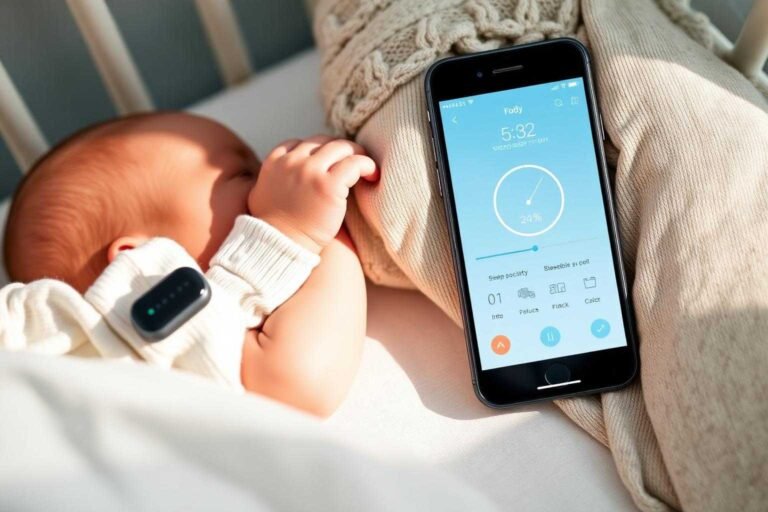
Baby Wakes Every Hour but Is Not Hungry
Baby wakes hourly: the quick answer
When a baby wakes hourly but is not hungry, the usual cause is a sleep association: the baby needs the exact same condition present at bedtime to fall back asleep between sleep cycles. Most babies rouse briefly every one to two hours. If they learned to fall asleep only while fed, rocked, or held, they cry for that help at each rouse. The fix is teaching independent sleep gently and safely.
For the full picture, read our pillar guide on Evidence-Based Baby Sleep Solutions.
Why it happens: the cycle mismatch
Sleep is built in cycles. A baby’s sleep cycle lasts about 45 to 60 minutes. At the end of each cycle, every baby moves into a light stage and may open their eyes for a few seconds. This is normal and happens to adults too, though grown-ups usually roll over and go right back to sleep without noticing.
The problem is not the waking itself. The problem is what the baby expects. If your baby always falls asleep while nursing, with a bottle, while being rocked, or while you are lying next to them, then their last memory before sleep is that condition. When they surface at the end of a cycle, the condition is gone. They are now in a crib, alone, in the dark. Their brain says, “This is wrong,” and they cry until the condition returns.
Baby wakes hourly is called a sleep-onset association. It is the most common reason a baby who is fed, dry, and healthy still wakes every hour. It is not a sign of illness. It is not a sign you did something wrong. It is a habit that formed because the help worked in the moment.
Other common contributors include:
- An overtired baby. When a baby stays awake too long, stress hormones like cortisol rise. That makes falling asleep and staying asleep harder, which shortens cycles.
- A bedroom that is too bright or too noisy during the night, so each rouse becomes a full wake.
- A schedule with too much or too little daytime sleep for the age, throwing off the pressure to sleep.
- Learning a new skill, such as sitting or pulling to stand, which can cause brief practice wakes.
- Travel, illness, or a change in caregivers that broke the usual routine for a few nights.
Teething, growth spurts, and “wonder weeks” are often blamed, but these rarely cause true hourly waking for weeks on end. If the pattern is night after night, the association is the more likely driver.
Step-by-step plan
This plan keeps night feeds if your pediatrician says they are still needed, and builds independent sleep during the day first.
- Confirm your baby is healthy and fed. Weigh the plan against your pediatrician’s advice. If your baby is underweight, under 6 months, or your doctor wants night feeds kept, do not cut them yet.
- Set a fixed wake time. Choose a morning wake time and open the curtains, even if the baby woke at 4 a.m. A moving wake time drifts the whole schedule.
- Watch awake windows. At 3 to 4 months, about 1.5 to 2 hours; at 6 months, about 2 to 3 hours; at 9 to 12 months, about 3 to 4 hours. An overtired baby wakes more.
- Build a calm, short bedtime routine. Bath or wipe, dim lights, a song, then into the crib awake. Keep it the same every night so the baby learns the signal.
- Put the baby down drowsy but awake. This is the key step. The baby must experience the crib while still partly awake, so they learn the crib is where sleep happens.
- Pause before you rush in. At a night wake, wait one to two minutes. Many babies resettle on their own if given the chance. Rushing in teaches them you always come at the first sound.
- Respond with less help over time. If you used to feed to sleep, first try a hand on the chest, then a shush, then just a check-in. Lower the level of help slowly across a week or two.
- Keep nights dark and days bright. Use a dim red nightlight if you need one. Feed in low light. Make daytime feeds and play bright and active.
- Protect the nap schedule. A baby who is badly overtired from short naps will wake more at night, not less.
- Stay consistent for two weeks. New habits need repetition. Change one thing at a time so you can tell what works.
Age-specific notes
3 to 4 months. Sleep cycles are maturing. Some night waking is expected. Focus on putting down drowsy but awake and a fixed wake time. Night feeds may still be needed; check with your pediatrician.
5 to 6 months. Most healthy babies can begin longer stretches. You can lower sleep associations while keeping one or two feeds if your doctor agrees.
7 to 9 months. Separation anxiety can appear. Keep the routine steady. A lovey is not safe in the crib under 12 months, so comfort with voice and presence, not objects.
10 to 12 months. Many babies drop to one or two feeds. Practice pulls to stand can cause wakes; keep the crib clear and lay them down awake.
Sample schedule (6-month example)
| Time | Activity |
|---|---|
| — | — |
| 7:00 a.m. | Wake, feed, bright room |
| 9:00 a.m. | Nap 1 (crib, about 1 hour) |
| 10:00 a.m. | Feed, play |
| 12:30 p.m. | Nap 2 (crib, about 1 to 1.5 hours) |
| 1:30 p.m. | Feed, play |
| 3:30 p.m. | Short nap 3 if still on 3 naps |
| 5:00 p.m. | Feed, calm play |
| 6:30 p.m. | Bedtime routine, into crib awake |
| 10:30 p.m. | One dream feed if pediatrician-approved |
| 7:00 a.m. | Wake again |
Adjust the number of naps to your baby’s age. The point is a predictable rhythm, not a rigid clock.
A helpful checklist
- [ ] Baby goes into the crib awake at bedtime most nights
- [ ] Bedroom is dark, cool, and quiet at night
- [ ] Same routine before every sleep
- [ ] Night feeds happen in low light and back in the crib after
- [ ] You wait a minute or two before responding to small sounds
- [ ] Awake windows match your baby’s age
Safety reminders
Safe sleep rules do not change while you work on night waking.
- Always place your baby on the back to sleep, on a firm, flat surface made for infants.
- Use a crib or bassinet with a tight-fitting sheet. No bumpers, no loose blankets, no pillows, no positioners, no crib wedges.
- Keep the sleep space empty. Stuffed toys, sleep positioners, and inclined sleepers are not safe for routine sleep.
- Do not bed-share on a soft surface such as a couch or adult mattress with soft bedding. Room-sharing in a separate bassinet or crib is the safer choice for the first months.
- Avoid any product that claims to reduce the risk of SIDS while holding the baby at an incline.
- Dress the baby for the room temperature; overheating is a risk factor.
Baby wakes hourly: when to call your pediatrician
Contact your pediatrician if you see any of these red flags:
- Poor weight gain or fewer wet diapers than expected for age.
- Fever in a baby under 3 months, or any fever with other sick signs.
- Breathing changes: fast, noisy, grunting, pauses, or blue lips.
- A high-pitched, weak, or unusual cry that is new.
- Signs of dehydration: dry mouth, no tears, sunken soft spot, few wet diapers.
- Extreme sleepiness during the day that is new, or you cannot wake the baby to feed.
These are not normal sleep-association signs. They need medical review.
FAQ
Why does my baby wakes hourly even after a full feed?
A baby wakes hourly because of a sleep association, not hunger. If they fall asleep only while feeding, they expect the same help at each natural cycle rouse. Filling the belly does not teach them to link cycles alone.
Will letting my baby cry hurt our bond?
Brief, attended pauses and a gentle, gradual plan are not the same as leaving a baby alone for hours. You can check in, comfort with voice, and lower help slowly. If crying is intense or goes on far longer than a few nights, pause and review with your pediatrician.
How long until it gets better?
Most families see some change in 3 to 7 nights and clearer results by two weeks of steady routine. Illness, travel, or teething can reset progress; just return to the plan.
Can I still feed at night?
Yes, if your pediatrician says your baby needs night feeds. Keep the feed in low light, then back in the crib awake. The goal is to separate feeding from falling asleep, not to drop needed calories.
What if my baby stands up in the crib?
Lay them down awake and leave. Do not rock them to sleep. Practice pulling to stand during the day so the skill is less novel at night.
What NOT to do
A few common moves make hourly waking worse or create unsafe sleep.
Related reading: Baby Wakes Every Hour: Is It Hunger, Habit, or Discomfort.
- Do not add formula to a bottle to “fill them up” without your pediatrician’s guidance. Extra calories do not teach independent sleep and can cause other issues.
- Do not let the baby fall asleep with a bottle propped. This is a choking and tooth-decay risk and builds a strong feed-to-sleep link.
- Do not bed-share on a soft surface to get more rest. It raises SIDS and suffocation risk. A separate sleep space beside your bed is safer.
- Do not introduce a new sleep prop each time the baby cries, such as a swing, a car ride, or a phone video. These are hard to keep up all night and do not build skills.
- Do not change the plan every single night. The baby cannot learn a new expectation if the expectation keeps moving.
Troubleshooting common setbacks
The baby cries the moment you put them down. This is normal at first. Keep the routine the same, place them down, and use a calm hand-on-chest or shush for a minute, then step back. Over a week, lower how much you stay.
You dropped the feed but they still wake at 2 a.m. hungry. Some babies do need a feed at this age. Offer it in low light, then back in the crib awake. If hunger wakes are truly frequent and the baby is not gaining well, call your pediatrician.
Progress worked, then stopped. Travel, illness, teething, or a developmental leap can reset things for a few nights. Return to the same plan once the disruption passes. Do not add a new prop.
The baby only naps in the stroller or car. Use motion naps when you must, but practice one crib nap a day. Good daytime sleep lowers night waking, so this matters.
The role of daytime sleep
Night sleep and day sleep are linked. A baby who takes very short, broken naps builds pressure that backfires: they become overtired, and overtired babies wake more, not less. Aim for age-appropriate naps in the same safe sleep space. If naps are a struggle, work on the first nap of the day first, because it is the easiest to anchor.
A simple way to think about it: sleep begets sleep in babies. Protecting one good nap often improves the next sleep period. That is why the schedule above keeps naps in the crib and predictable.
More parent questions
Is hourly waking a sign of a medical problem?
Usually not, when the baby is growing, feeding, and happy by day. If waking comes with poor weight gain, breathing trouble, or fever, treat it as medical, not habit.
My partner and I are exhausted. Is it okay to take shifts?
Yes. Many families take turns so one parent gets a solid block of sleep. The baby can room-share in a bassinet; the off-duty parent sleeps elsewhere. Safe sleep rules still apply on every shift.
Should I use white noise?
Soft, steady background sound at a low volume can mask household noise and help some babies. Keep the device away from the baby’s head and below the level of a normal voice. It is a comfort tool, not a cure for sleep association.
When will my baby sleep through the night?
“Sleep through” is often defined as a stretch of about 6 to 8 hours, which many babies reach by 6 to 9 months if healthy and fed. Brief rouses still happen; the goal is that the baby links them without your help.
See also: Baby Crying in Sleep But Not Awake at Night.
Reading your baby’s tired signs
Catching sleep cues early is one of the simplest ways to cut hourly waking. A baby who is rocked to sleep when already overtired fights rest. Learn the early signs for your child:
- Looking away from faces or toys
- Rubbing eyes or pulling ears
- A slight glassy stare or fussiness that comes and goes
- Brief arches or turning the head down
The late sign is a full cry. By then the baby is often past the easy window. Aim to start the routine at the first sign, not the last.
A second sample schedule (10 months)
| Time | Activity |
|---|---|
| — | — |
| 6:30 a.m. | Wake, feed, bright room and play |
| 9:30 a.m. | Nap 1 in crib, about 1 to 1.5 hours |
| 11:00 a.m. | Feed, lunch, active play |
| 2:00 p.m. | Nap 2 in crib, about 1 to 1.5 hours |
| 3:30 p.m. | Feed, play |
| 5:30 p.m. | Calm wind-down, bath or wipe |
| 6:30 p.m. | Bedtime routine, into crib awake |
| 6 to 7 a.m. | Morning wake |
At 10 months many babies take two naps. If the second nap pushes bedtime too late, shorten it. The aim is a bedtime that is not too late, because an overtired toddler-to-be wakes more at night.
Signs your plan is working
You do not need perfection to know the approach is helping. Look for small shifts:
- The baby settles in the crib with less help than the week before.
- At least one stretch of the night gets longer.
- Mornings start with a calmer, more rested baby.
- You are able to put the baby down drowsy but awake more often than not.
If none of these appear after two consistent weeks, or the baby seems unwell, check in with your pediatrician. Sometimes a hidden issue such as reflux, ear pain, or a feeding problem is part of the picture.
A note on room-sharing and twins
Room-sharing is recommended for the first months and is safe when the baby has their own separate sleep space. If you share a room, the same plan applies: put the baby in the crib awake, keep nights dim, and avoid bringing them into your bed to finish the night. For twins, stagger the routines so each baby gets calm one-on-one time, and treat the room light as a shared signal you keep low at night.
- 8-Month Split Night
- Baby Wakes at 5 a.m. Every Day
- When Baby Fights Bedtime
- American Academy of Pediatrics — A Parent’s Guide to Safe Sleep
- NICHD Safe to Sleep — Safe Sleep Environment
- CDC — About Sudden Unexpected Infant Death
- World Health Organization — Newborn Care
About the author
Dr. Michael Anderson, MD (Pediatrics) is a board-certified pediatrician on the ChildBloom medical panel, focusing on infant sleep, safe sleep environments, and responsive routines. This article was medically reviewed and approved by Dr. Ahmad Raza, MD (Pediatrics) against current AAP safe-sleep guidance. Read our editorial and review standards.
This guide is general education, not a diagnosis. If you are worried about your baby’s breathing, feeding, growth, or sleep, contact your pediatrician. For any breathing emergency, call emergency services immediately.
Related ChildBloom Guides
- Start here: Evidence-Based Baby Sleep Solutions
- Safe Sleep During a Power Outage or Heat Wave
- Baby Cries in Sleep but Is Calm When Awake
- 8-Month Split Nights: What Causes Them and What Helps
- Night Feeding and Sleep
- Baby Wakes at 5 a.m. Every Day
- Browse all Sleep & Nursery guides
References & Medical Sources
- AAP guidance on getting your baby to sleep
- AAP healthy sleep hours by age
- NICHD Safe to Sleep: safe sleep environment
- NICHD infant sleep research overview
Reviewed by the ChildBloom pediatric panel. Learn about our physicians on the About page. This article is educational and does not replace your child’s clinician.