Baby-Led Weaning Food Sizes by Stage
Medically reviewed by Dr. Ahmad Raza, MD (Pediatrics) — ChildBloom Medical Review Panel. Last updated: September 27, 2026.
Written by Dr. Ahmad Raza, MD (Pediatrics) and the ChildBloom Pediatric Panel.
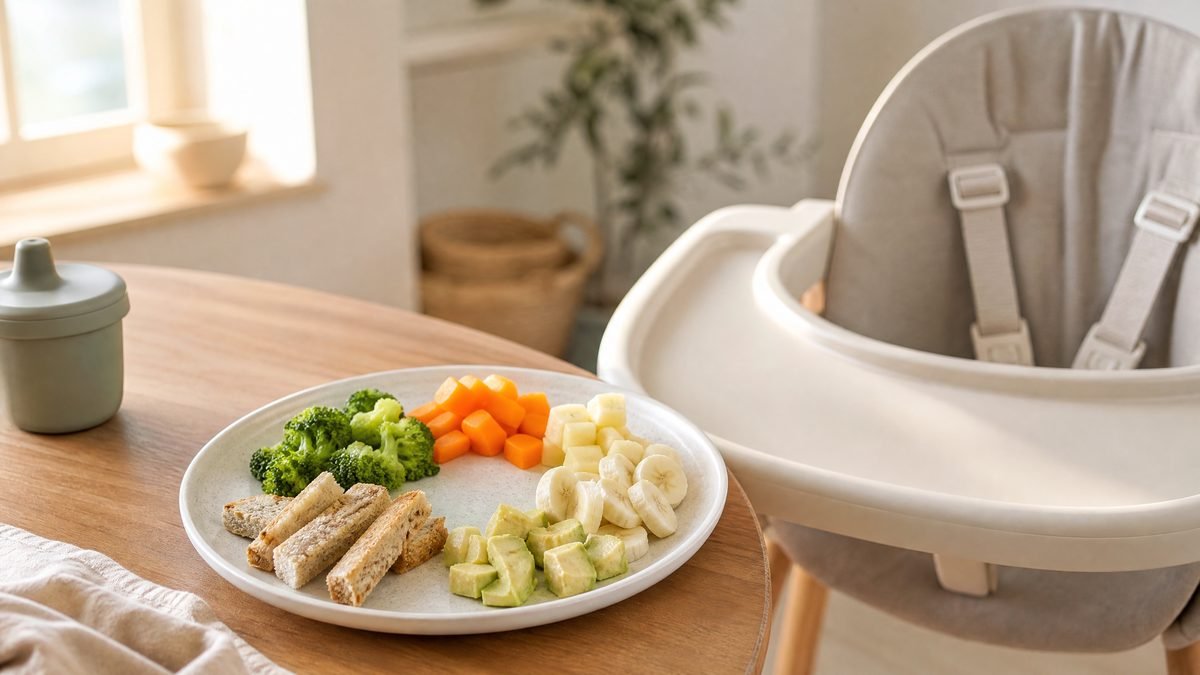
There is no magic inch: long, soft strips early, small soft pieces once the pincer grasp arrives — with softness checks, supervision, and infant first-aid training throughout.
📋 TL;DR — if you read nothing else
- No fixed inch rule. Match size, shape, and texture to your baby’s developmental readiness — sitting, head control, interest in food.
- Early self-feeders: long, soft strips or wedges a whole-hand grasp can hold. With pincer grasp: smaller soft bite-sized pieces.
- Always: thumb-and-forefinger softness test, cut round foods lengthwise, seat upright, supervise every bite, learn infant CPR.
- Gagging is normal and loud; choking is silent. If the baby cannot cry, cough, or breathe, call emergency services and start trained first aid.
Quick answer: Baby-led weaning food sizes are best approached with developmentally appropriate, responsive guidance rather than a rigid rule. Long, soft strips that leave food sticking out for a grip suit new self-feeders around six months; smaller, soft pieces suit babies who have developed a pincer grasp. Safety checks beat measurements: mash-test every piece, cut round foods lengthwise, seat upright, watch every bite.
Why Size and Shape Matter More Than an Exact Measurement
Baby-led weaning (BLW) is about letting babies self-feed while caregivers adapt foods to each child’s skills. Development varies: some infants begin reliably grasping and chewing sooner, others later. Use developmental readiness — sitting, head control, interest in food — and safe food preparation to guide size and shape, rather than a fixed inch or centimeter rule.
Current guidance from the CDC on when and how to introduce solids and the AAP on choking prevention puts it the same way: match texture and shape to your baby’s developmental skill, and supervise constantly.
Quick Decision Framework: Match Food to Your Baby
| Readiness & age clues | Recommended shapes | Safety checks before serving |
|---|---|---|
| New self-feeder (around first tastes; ~6 months when ready) — sits with little support, good head control, shows interest | Long, soft strips or wedges that a baby can grasp with a whole hand (leave some food sticking out for grip) | Mashes easily between thumb and forefinger? Not a round plug? Supervise closely. |
| Emerging fine motor control (pincer grasp starting, more coordinated chewing) | Smaller, soft bite-sized pieces or finely shredded textures baby can pick up with fingers | Cut round foods lengthwise; continue the softness check; avoid whole round or hard pieces. |
| Older infant or toddler practicing family foods | Appropriately sized, biteable family pieces adapted for softness and chewing ability | Keep offering variety; watch chewing and swallowing changes; adjust size by observation. |
Practical Examples (Adapt to Your Baby’s Skills)
- Bananas and avocado: early — lengthwise wedges a baby can hold; later — small soft chunks.
- Cooked carrot or sweet potato: early — long, very soft sticks or wedges; later — small cubes or mash.
- Grapes, cherry tomatoes, blueberries: always modify — remove skins or seeds if needed and cut lengthwise into quarters rather than serving whole.
- Cheese and cooked meat: soft, moist, shredded or thin strips early; finely chopped pieces later.
- Peanut butter and other nut spreads: thin or spread very thinly on bread or mixed into other soft foods; never thick globs on a spoon.
For evidence-based first-food lists including iron-rich options, see our first foods guide and iron-rich foods guide.
Gagging vs. Choking: What to Know
- Gagging is common and protective. Babies may cough, retch, or make noise while learning to move food. It is usually loud, and the baby can still breathe. Stay calm, monitor, and let them work through it while remaining ready to help.
- Choking is an emergency: the baby cannot cry, cough effectively, or breathe. Immediate action is needed.
The CDC choking guidance and the AAP emphasize that matching texture and shape to developmental skill plus constant supervision are central to choking prevention.
Basic Safety Rules Every Meal
- Supervise at all times and keep eye contact.
- Keep baby seated upright in a high chair or other safe, stable seat; avoid feeding in car seats or strollers.
- Prepare food soft and appropriately shaped; do a thumb-and-forefinger softness test.
- Cut round foods lengthwise; avoid whole nuts, hard candies, popcorn, and large spoonfuls of sticky spreads.
- Learn infant CPR and choking first aid from a certified instructor — one of the most helpful preparations for families. See the British Red Cross infant first-aid guidance.
Also review our safety checklist: baby-led-weaning safety guide.
Red Flags: When to Call Your Pediatrician
Contact your child’s clinician if you notice: frequent gagging at every meal after a few weeks, persistent difficulty swallowing, coughing or breathing trouble during feeds, poor growth or weight gain, known severe eczema or a prior severe food reaction (discuss early allergen introduction with your clinician), or if your baby was born very premature and developmental age is in question. For clinical details on allergen introduction and timing, see the AAP allergen guidance.
If your baby cannot breathe, cough, or cry, call local emergency services immediately and begin trained infant choking first aid while help is on the way.
How to Adapt If Skills Lag
If your baby struggles to pick up food, manage textures, or shows oral-motor concerns, you can combine responsive spoon-feeding with BLW-style offering. For a balanced view, see our baby-led weaning versus purees guide, plus sample rhythms in the 6-month feeding schedule and 9-month feeding schedule.
👩⚕️ Doctor’s Take
Parents ask me for an exact measurement and I refuse to give one, because development beats rulers: a strip of cooked sweet potato as long as two adult fingers works at six months, a chickpea-sized soft piece works at nine months, and the thumb-and-forefinger mash test outranks any chart. Two rules I never bend — round foods (grapes, hot dogs, cherry tomatoes) get cut lengthwise, and the baby stays upright and watched in a high chair, never a car seat. Loud retching while you sit there? That is the gag reflex doing its job; silent stillness is what ends the meal and starts the call. Take a certified infant CPR class before the first solid, not after your first scare.
The Bottom Line
- Match food size, shape, and texture to your baby’s readiness and skills rather than rigid measurements.
- Early self-feeding: long, soft sticks easy to grasp; later, smaller soft bite-sized pieces as fine motor and chewing skills develop.
- Always soften foods, cut round foods lengthwise, seat the baby upright, supervise, and learn infant first aid.
References and further reading
This article is for general information only and is not a substitute for professional medical advice, diagnosis, or treatment. Always consult your own pediatrician about your child’s individual health needs. If you believe your child is having a medical emergency, call your local emergency number immediately.
Medical review
Reviewed by Dr. Ahmad Raza, MD, Pediatrics. Last reviewed September 27, 2026. This page was reviewed for choking-prevention accuracy against current CDC choking-hazard and solids guidance (both pages re-verified this date), AAP choking and allergen-introduction links (both live), and the developmental-readiness framing. It is educational information and does not replace individualized advice from a qualified clinician.
Learn about our physicians on the About page.



2 Comments