Severe Acute Malnutrition (SAM) Assessment
Severe Acute Malnutrition (SAM) Assessment
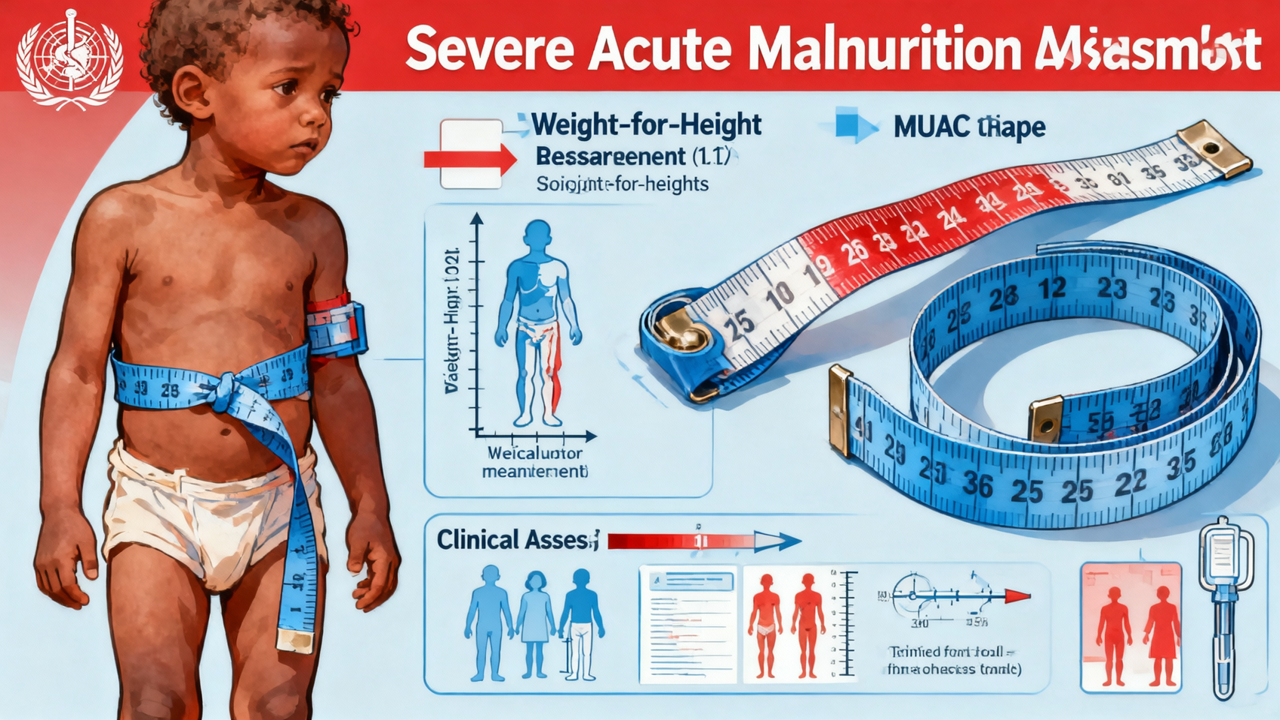
Severe acute malnutrition (SAM) is the most life-threatening form of malnutrition. The WHO defines SAM using three criteria: weight-for-height Z-score below -3 SD, MUAC less than 115mm, or bilateral pitting edema. This tool helps screen for SAM using these criteria.
Emergency: SAM is a medical emergency. Children with SAM have significantly increased mortality risk and require urgent nutritional rehabilitation and medical treatment. If you suspect SAM, seek immediate medical care.
WHO SAM Criteria
| Criterion | SAM | MAM | Normal |
|---|---|---|---|
| Weight-for-Height Z-Score | < -3 SD | -3 to -2 SD | ≥ -2 SD |
| MUAC (6-59 months) | < 115 mm | 115-125 mm | ≥ 125 mm |
| Bilateral Edema | Present | – | Absent |
Assessment Tool
SAM Assessment Calculator
MUAC Color Codes
| Color | MUAC (mm) | Classification |
|---|---|---|
| Red | < 115 | SAM – Urgent treatment needed |
| Yellow | 115-125 | MAM – Supplementary feeding |
| Green | ≥ 125 | Normal – Continue monitoring |
Frequently Asked Questions
What is severe acute malnutrition (SAM)?
Severe acute malnutrition (SAM) is the most life-threatening form of malnutrition in children. It is defined by WHO as weight-for-height below -3 Z-scores, mid-upper arm circumference (MUAC) less than 115mm, or the presence of bilateral pitting edema.
How is SAM diagnosed in children?
SAM is diagnosed using three criteria: weight-for-height Z-score below -3 SD (severe wasting), MUAC less than 115mm (for children 6-59 months), or bilateral pitting edema (kwashiorkor). Any one criterion is sufficient for diagnosis.
What is MUAC and how is it measured?
MUAC (Mid-Upper Arm Circumference) is measured at the midpoint between the shoulder and elbow on the left arm. A MUAC less than 115mm indicates SAM, 115-125mm indicates MAM (moderate acute malnutrition), and greater than 125mm is considered normal.
What is the treatment for SAM?
SAM treatment follows WHO protocols: initial stabilization phase (F-75 formula, treat infections, correct electrolytes), rehabilitation phase (F-100 formula, catch-up growth), and follow-up. Ready-to-use therapeutic foods (RUTF) are used for uncomplicated SAM. Complicated SAM requires hospitalization.
Authoritative Resources
Disclaimer: This tool is for general informational purposes only and is not a substitute for professional medical advice. SAM is a medical emergency — seek immediate care if suspected.