Newborn Losing Hair in Patches: Normal or Red Flag?
Medically reviewed by Dr. Ahmad Raza, MD (Pediatrics) — ChildBloom Medical Review Panel. Last updated: August 4, 2026.
Editorial & affiliate disclosure: our guidance is written and reviewed by clinicians. ChildBloom may earn a commission from qualifying purchases made through links on this page, which never changes what our pediatric reviewers recommend.
Looking for clear answers about newborn losing hair in patches? This pediatrician-reviewed guide covers what matters, what to skip, the safety checks that count, and exactly when to involve your doctor — based on current AAP, CDC and CPSC guidance on newborn losing hair in patches.
Newborn hair loss in patches: what to document
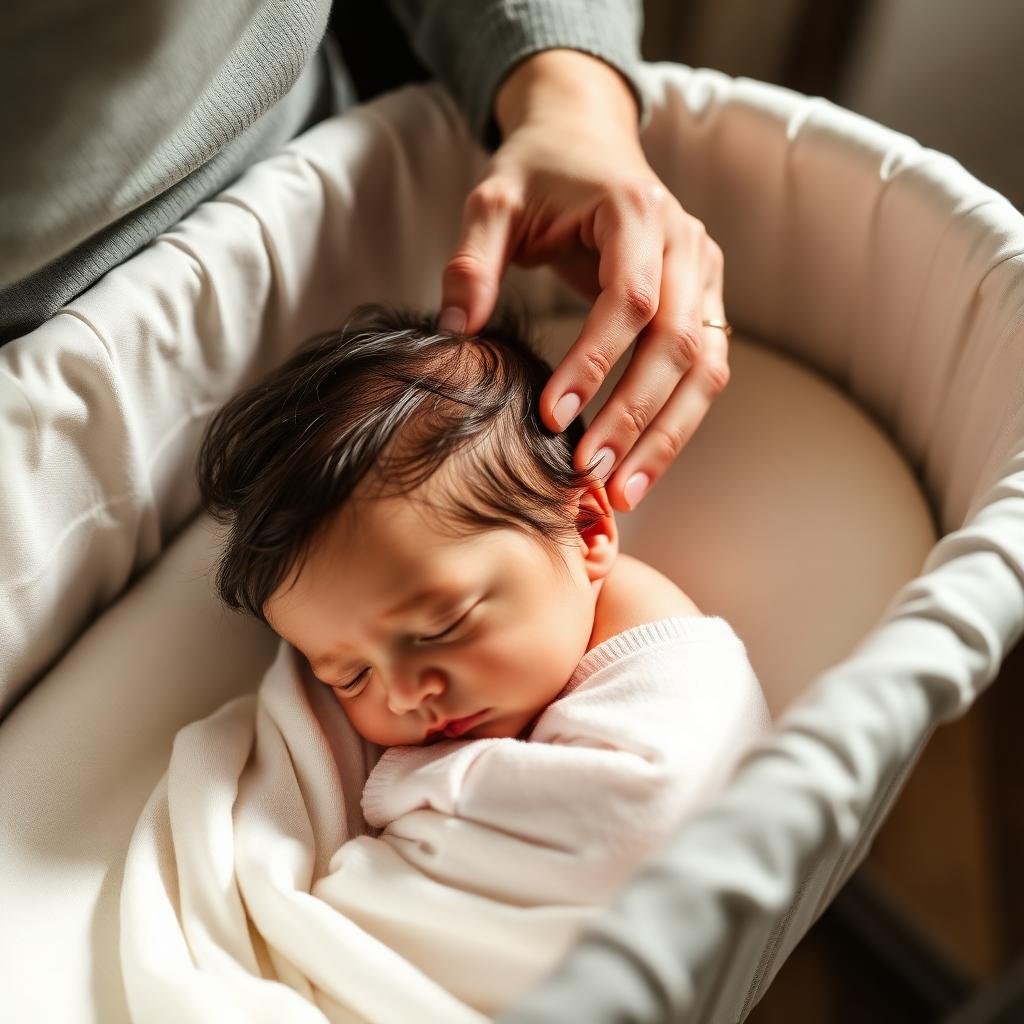
Note when the change began, whether the scalp skin looks normal, and whether hair is breaking or shedding. Avoid pulling, harsh products, or repeated changes while arranging pediatric advice.
Quick pediatrician summary: newborn losing hair in patches
Short answer: A pediatrician explains newborn losing hair in patches: gentle routines, ingredients to avoid, product picks and the skin signs that need a doctor.
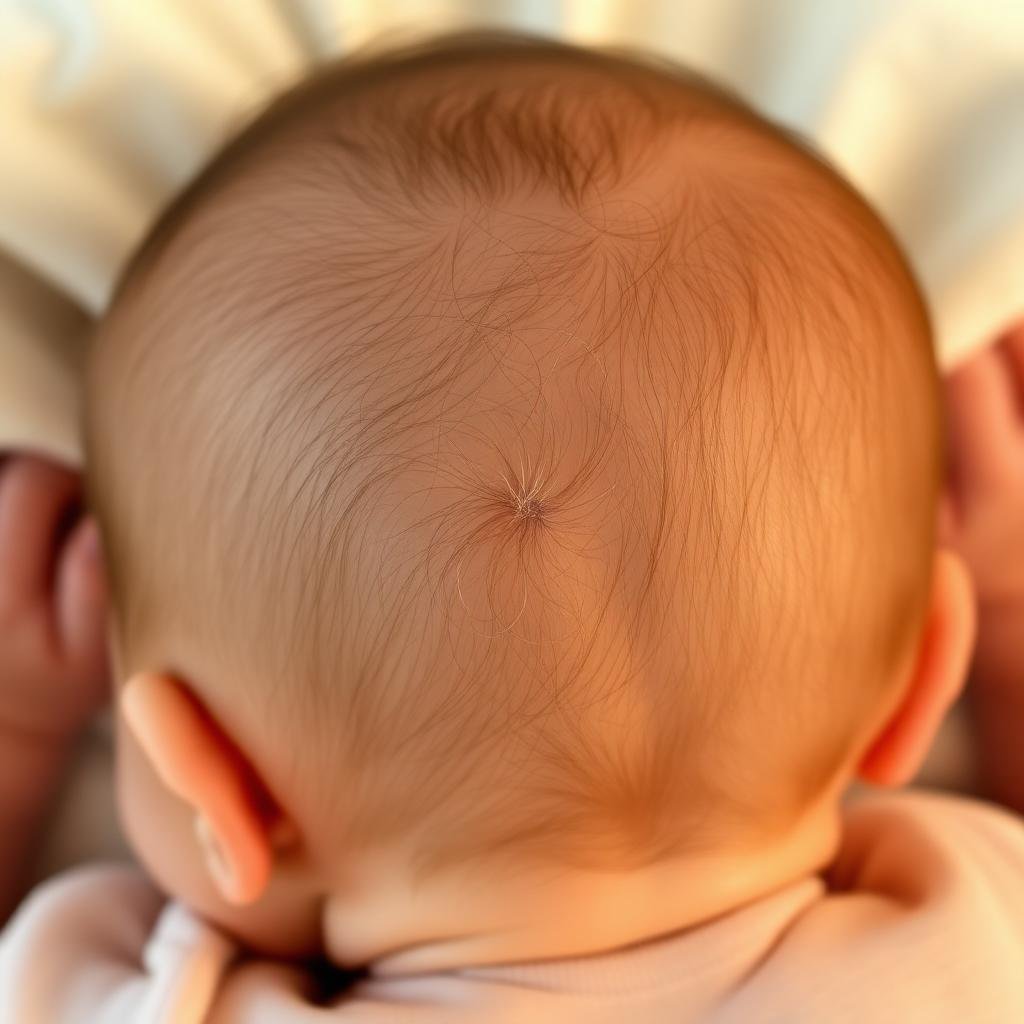
Short answer: Patchy hair loss in the first 6 months is almost always normal. Newborn hair enters a resting phase (telogen) after birth and sheds between 8 and 16 weeks, often unevenly, and a friction bald spot on the back or sides of the head is common from time on the back for safe sleep. New hair fully regrows by 6–12 months and may come in a different color or texture. See the pediatrician if you also see scaly rings, redness, broken hairs, hair loss with weight loss or fatigue, or bald patches with clear skin borders (possible alopecia areata).
Why newborn hair falls out
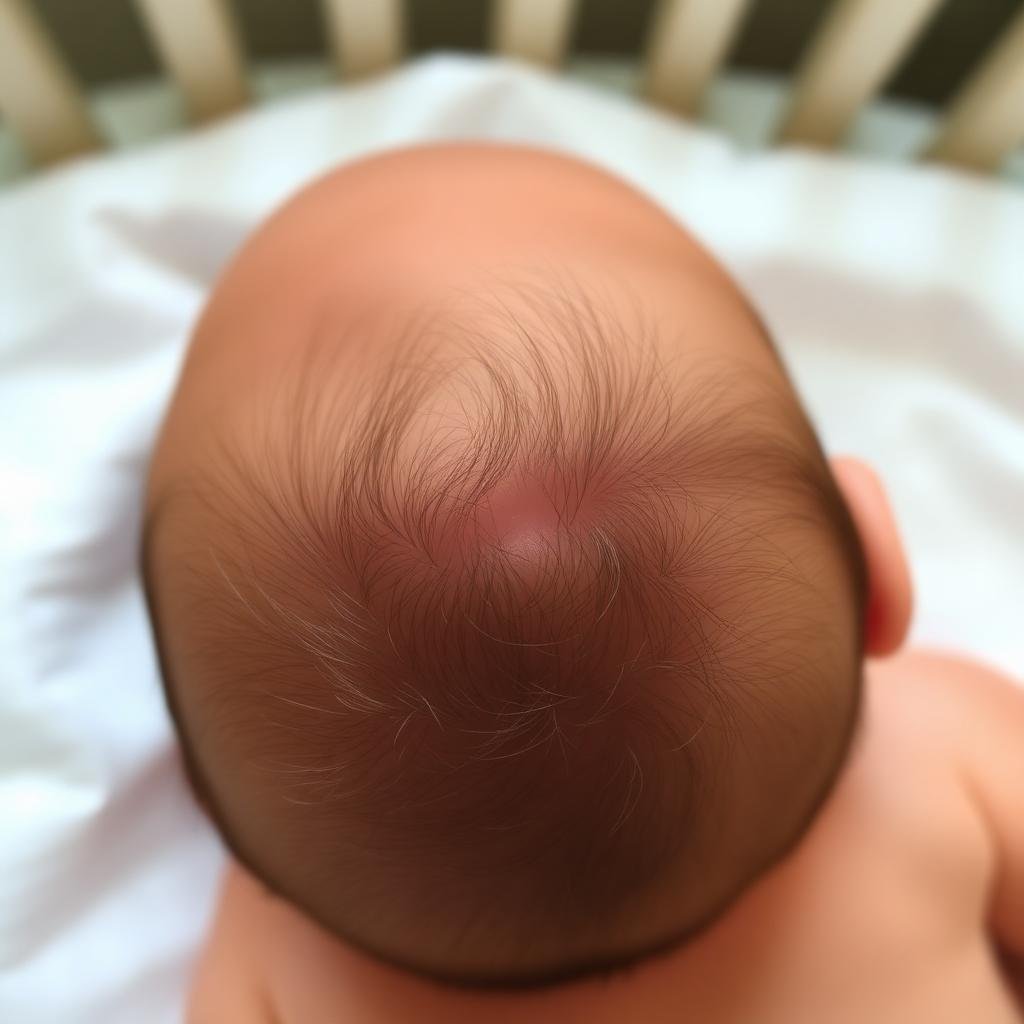
Every hair on the scalp cycles through three phases: growing (anagen), transition (catagen), and resting/shedding (telogen). In utero, high maternal estrogen keeps most hairs stuck in the growing phase. After birth, hormones crash and a large number of hairs shift to telogen at the same time. Around 8–16 weeks, they shed together — telogen effluvium.
Because the pattern is not uniform, some babies lose hair evenly, some lose the front, some lose the back, and some develop a bald ring where the head rests on the crib mattress.
The normal timeline
| Age | Typical hair pattern |
|---|---|
| Birth – 4 weeks | Full birth hair; may include lanugo (fine body hair) that sheds |
| 4 – 8 weeks | Bald ring may appear at the back from friction |
| 8 – 16 weeks | Peak shedding — often looks patchy |
| 3 – 6 months | Regrowth begins; may be different color/texture |
| 6 – 12 months | Most babies have a full head of “final” infant hair |
Patchy loss in this window is normal. The baby is not sick, not deficient, and does not need shampoo changes.
Friction bald spots — the most common “patch”
Because babies sleep on their backs (the AAP-recommended safe sleep position) and spend car-seat and floor time on their heads, the back or sides of the scalp rub the most. Hair in the telogen phase falls out there first.
How to tell it is friction, not disease:
– The bald patch is at the back or on one side, where the head contacts surfaces
– Skin underneath looks normal (no redness, scale, or scarring)
– Regrowth begins as the baby spends more time upright and sitting
Do not switch to tummy sleeping to prevent this. The bald spot resolves on its own; SIDS risk does not.
Increase awake tummy time and hold the baby upright more when awake — see our guide on tummy time when the newborn hates it.
When patchy loss is NOT normal
| What you see | Consider |
|---|---|
| Round smooth patch with clear border, skin looks normal | Alopecia areata |
| Scaly, red ring with broken hairs | Tinea capitis (ringworm) |
| Patch with pustules or yellow crust | Bacterial infection |
| Broken hairs of uneven length in one area | Traction alopecia (hats, headbands) or trichotillomania (rare in infants) |
| Hair loss with weight loss, poor feeding, or lethargy | Nutritional, thyroid, or medical illness |
| Widespread thinning past 12 months | Endocrine, nutritional, or genetic evaluation |
| Patchy scale beyond the scalp (eyebrows, ears, folds) | Extensive seborrheic dermatitis — see cradle cap in newborns |
| Very sparse hair from birth that never grows in | Congenital hair-shaft disorders (rare) |
The 6 red flags
Call the pediatrician for:
- Scaly, red, or ring-shaped patch with broken hairs (possible ringworm)
- Pustules, yellow crust, oozing, or foul smell on the scalp
- Bald patch with completely smooth skin and a sharp border (possible alopecia areata)
- Hair loss with poor weight gain, unusual sleepiness, cold intolerance, or constipation (possible thyroid or nutritional issue)
- Broken hair in a specific pattern matching a headband, hat, or bow (traction)
- Hair not regrowing by 12 months or continued patchy loss
What to do at home
- Leave it alone. Do not apply oils, lotions, or growth serums.
- Wash the scalp with plain water and, if used, a fragrance-free baby shampoo 2–3 times a week.
- Rotate head position during awake time. Rotate the baby’s head end of the crib weekly (feet stay at the same end).
- Increase upright and tummy time during waking hours — helps prevent both bald spots and positional flat head.
- Skip headbands, tight hats, and bows — they can cause traction hair loss on top of normal shedding.
- Do not switch formulas or breastfeeding to fix hair loss. Newborn hair loss is hormonal, not dietary.
Regrowth: what to expect
The second wave of hair can look completely different:
- A dark-haired newborn may regrow blond hair (and vice versa)
- Straight hair may come in curly
- Bald spots fill in unevenly for weeks before catching up
Final “toddler” hair color and texture is usually set by 2 years old.
Special situations
- Preemies have thinner, sparser hair and often shed more visibly. Regrowth follows corrected age, not birth age.
- Twin comparisons: siblings can shed on completely different timelines. It does not mean one is healthier.
- Cradle cap plus patchy shedding: usually two separate normal processes; the cradle cap is not causing the loss unless you are removing scales aggressively.
- After illness or hospitalization: acute telogen effluvium can occur 6–12 weeks after a significant illness, fever, or surgery. Regrowth follows.
When to Call Your Pediatrician
Same-day for:
– Scalp lesions with pustules, oozing, or spreading redness
– Fever ≥100.4°F (38°C) rectally under 3 months plus scalp findings → ER
Routine visit for:
– Ring-shaped scaly patches (possible tinea)
– Smooth bald patches with sharp borders (possible alopecia areata)
– Hair loss combined with poor growth, feeding problems, or fatigue
– No regrowth by 12 months
– Concerns about traction from hats, headbands, or bows
Frequently Asked Questions
These answers are general educational guidance and not a substitute for evaluation by your baby’s physician.
Why is my newborn losing hair in patches?
Most patchy loss is normal newborn shedding (telogen effluvium) combined with friction from back-lying for safe sleep. New hair regrows by 6–12 months.
Is it normal for a 3-month-old to have a bald spot at the back of the head?
Yes. A friction bald spot at the back is very common in babies who sleep on their back per AAP safe-sleep guidance. It fills in as awake, upright time increases.
Should I stop back-sleeping to prevent the bald spot?
No. Back-sleeping is the safest position and lowers SIDS risk. The bald spot is cosmetic and temporary.
Could my baby’s hair loss be from vitamin deficiency?
Very unlikely in a well-fed, growing baby. Widespread thinning combined with poor growth, unusual sleepiness, or constipation deserves a pediatrician evaluation for thyroid or nutritional issues.
What does infant ringworm look like?
A round, scaly, red patch with broken hairs, sometimes with small pustules. It is uncommon in newborns but can occur if there is contact with an infected child or pet.
Is it OK to put oil on my baby’s scalp to grow hair?
No. There is no evidence oils speed regrowth, and applying them can worsen cradle cap and clog pores. Plain water washes are enough.
Will the new hair look like the old hair?
Often not. The second wave can be different color, texture, or thickness. Final hair character is usually set by age 2.
Can breastfeeding or formula changes cause hair loss?
No. Newborn hair loss is driven by hormone changes after birth, not by feeding method.
When does regrowth start?
Regrowth usually begins by 3–6 months and is well established by 6–12 months.
What is alopecia areata and how is it different from normal shedding?
Alopecia areata is autoimmune hair loss producing coin-sized, smooth bald patches with a sharp border and normal skin underneath. It is uncommon in newborns and should be evaluated by a pediatrician or pediatric dermatologist.
Medically reviewed by Dr. Sarah Williams, MD — Pediatrician & Neonatologist. Reviewed July 2026. About the author.
Internal links: Health & Safety pillar · Cradle Cap in Newborns · Tummy Time When Newborn Hates It · Baby Soft Spot Pulsing Rapidly · Safe Room Temperature for Newborn Sleep
Citations: AAP HealthyChildren – Baby Hair Loss · AAD – Hair Loss in Children · Cleveland Clinic – Telogen Effluvium · NIH – Tinea Capitis Overview · PMC – Pediatric Alopecia Areata Review
Neonatal Telogen Effluvium — Why Newborns Shed Hair
Almost all babies experience some hair loss in the first 3–6 months. The mechanism is neonatal telogen effluvium: hormone withdrawal after birth pushes a large percentage of hair follicles from the growth (anagen) phase into the resting (telogen) phase, and those hairs shed together over several weeks. The result is often patchy — parents notice a bald ring on the back of the head where the baby rests during sleep, or thin patches at the temples.
Pressure Alopecia vs Pathological Hair Loss
The classic bald spot on the occiput (back of the head) is pressure alopecia, a benign consequence of safe supine sleep. It always regrows once the baby begins spending more time upright and rolling. It is not caused by the crib mattress, and does not indicate any deficiency.
Red-Flag Patterns That Need Evaluation
- Discrete round bald patches with clean edges (possible alopecia areata).
- Scaly, red, broken hairs suggesting tinea capitis (fungal infection — uncommon under 6 months but possible).
- Diffuse thinning combined with poor weight gain, chronic diarrhea, or pallor (evaluate for iron, zinc, or thyroid dysfunction).
- Hair loss with skin excoriation from the baby pulling their own hair (trichotillomania is rare in infants but seen in developmental disorders).
Regrowth Timeline and Texture Changes
New hair typically begins to reappear by 4–6 months and fills in by the first birthday. It is completely normal for the regrown hair to be a different color, thickness, or curl pattern than the newborn hair — this is the true genetic hair type expressing itself for the first time. There is no vitamin, oil, or shampoo shown in randomized studies to accelerate regrowth in healthy infants. Avoid tight ponytails, headbands, and rubber bows that add traction to fragile follicles.
Related Pediatrician Guides
Explore more evidence-based, physician-authored resources from ChildBloom:
Nutrition, Iron Stores, and Infant Hair Growth
Full-term infants are born with roughly 4–6 months of iron stores. Preterm infants, or exclusively breastfed babies past 6 months without iron-fortified foods, can develop iron deficiency, which is one of the few reversible medical causes of diffuse infant hair loss. The AAP recommends universal hemoglobin screening at 12 months and, for at-risk infants, elemental iron supplementation of 1 mg/kg/day from 4 months until iron-fortified solids are established (AAP guidance).
Cradle Cap and Hair Loss — The Connection Parents Miss
Seborrheic dermatitis (cradle cap) can lift patches of hair as the scales come loose. This is not true alopecia; the follicles are intact underneath and hair regrows normally once the scaling clears with gentle brushing and a mild antifungal shampoo. If you see thick yellow scales plus hair loss, treat the cradle cap first and reassess in 4 weeks.
Safe Hair Care Practices for the First Year
- Use a soft-bristled baby brush once daily — stimulates scalp circulation, distributes natural oils, loosens cradle cap.
- Wash hair only 2–3 times per week with a fragrance-free, tear-free baby shampoo.
- Skip elastic headbands and clips before 12 months; they cause traction alopecia at the temples.
- Avoid coconut oil, castor oil, and heated styling — no evidence of benefit and real risk of folliculitis and contact dermatitis.
Cultural and Family Concerns
Many cultures have traditions around shaving a baby’s head to encourage thicker regrowth. Studies have consistently shown that shaving does not change follicle density, hair thickness, or eventual texture — the perception is due to blunt-cut regrown hair feeling thicker than tapered original hair. If you choose to shave for cultural reasons, wait until after 3 months, use clippers rather than a razor, and never shave over cradle cap.
Pediatrician-Picked Products
Fragrance-free shampoos safe for delicate newborn scalps
- Best Fragrance-Free Shampoos for Cradle Cap — pediatrician-reviewed picks
- Top 5 Gentle Baby Body Washes — pediatrician-reviewed picks
Affiliate disclosure: ChildBloom may earn a small commission on qualifying purchases at no extra cost to you.
Common mistakes parents make with newborn losing hair in patches
- Assuming a higher price means a safer or better-performing option — certification and correct fit matter far more.
- Skipping the instruction manual, weight limits and product registration, which is how recall notices reach you.
- Changing several things at once, so you cannot tell what actually helped your baby.
- Relying on advice from social media instead of your pediatrician when something feels off.
Related pediatrician-reviewed reading
- Newborn Peeling Skin
- Best Moisturizers for Newborn Dry Skin
- Baby Hair Care
- When Can You Bath a Newborn? Umbilical Cord Care & the Sponge Bath Rule
- baby bath & skincare hub
References & further reading
Medical disclaimer: this article is for general education and does not replace individual medical advice. Always follow your own pediatrician’s guidance for your child.




One Comment