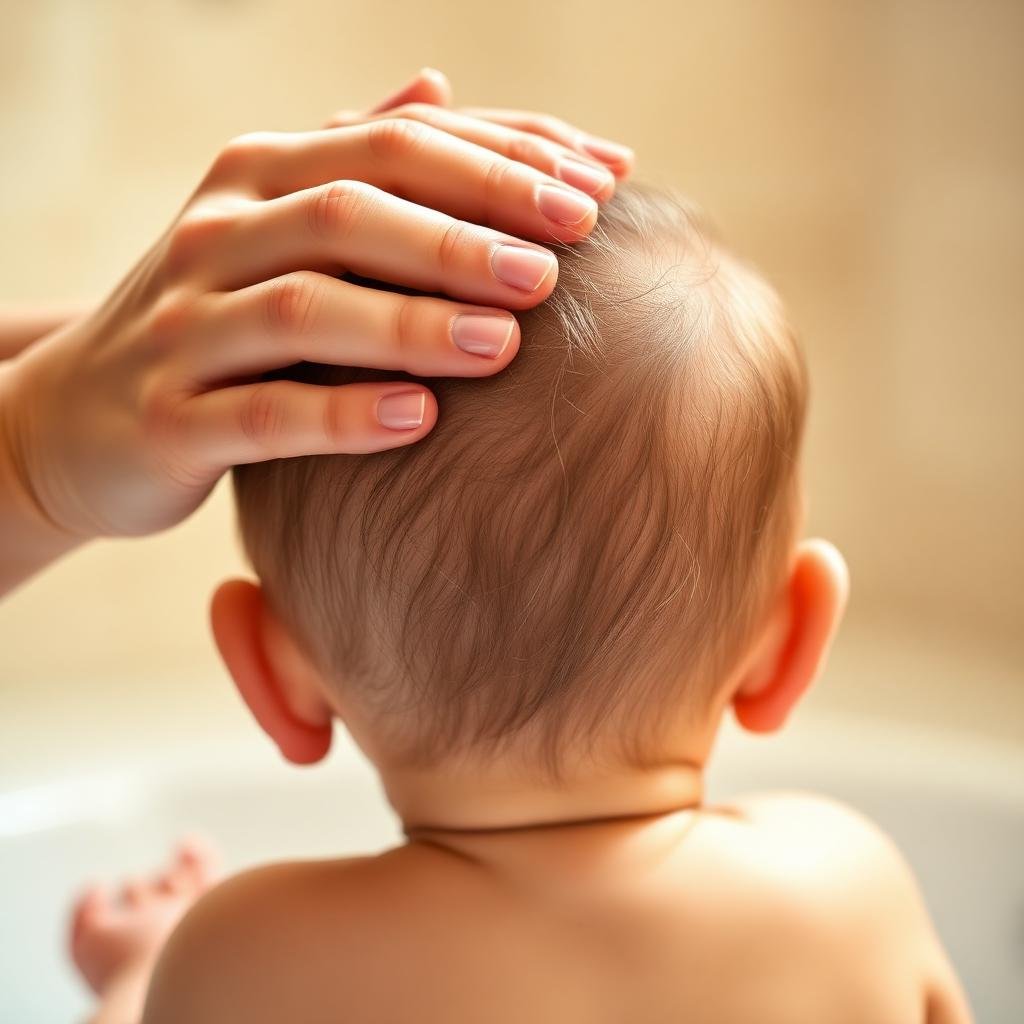
Gentle Cradle Cap Care for Your Newborn
Medically reviewed by Dr. Ahmad Raza, MD (Pediatrics) — ChildBloom Medical Review Panel. Last updated: August 03, 2026.
Editorial & affiliate disclosure: our guidance is written and reviewed by clinicians. ChildBloom may earn a commission from qualifying purchases made through links on this page, which never changes what our pediatric reviewers recommend.
If you are searching for answers about gentle cradle cap care for your newborn, you are in the right place. This pediatrician-reviewed guide explains what is normal, what the likely causes are, the red flags that mean you should call your doctor, and what you can safely do at home — all based on current AAP, CDC and NIH guidance on gentle cradle cap care for your newborn.
Short answer: Cradle cap (infantile seborrheic dermatitis) is common, harmless, and usually clears on its own by 6–12 months. For newborns, the safest treatment is a 3-step loosen–wash–brush routine once daily using a bland emollient (mineral oil, petroleum jelly, or plain coconut oil), a gentle baby shampoo, and a soft-bristled brush. Skip medicated shampoos, tea tree oil, and hydrocortisone unless your pediatrician prescribes them. Call the doctor if scales spread beyond the scalp, weep, bleed, smell foul, or the baby develops fever.
What cradle cap actually is
Cradle cap is a form of seborrheic dermatitis driven by three things:
- Maternal hormones still circulating in the newborn overstimulate oil (sebaceous) glands on the scalp.
- Malassezia yeast, a normal skin resident, feeds on those oils and triggers mild inflammation.
- Immature skin turnover traps dead skin cells in the oil, forming greasy yellow scales.
It is not an allergy, not caused by poor hygiene, and not contagious. Roughly 70% of babies get some form of cradle cap in the first 3 months.
What it looks like
- Greasy or waxy yellow scales on the scalp, sometimes thick and plaque-like
- Flaky white or brown patches that stick to hair
- Occasionally extends to eyebrows, behind the ears, in skin folds, or on the diaper area (then called seborrheic dermatitis)
- Skin underneath is usually not red, not itchy, and does not bother the baby
If the baby is scratching, the patches are bright red, oozing, or the baby is fussy — think eczema, infection, or ringworm instead. See our fragrance-free baby lotion for eczema guide.
The safe 3-step newborn protocol
Do this once a day for 5–7 days, then 2–3 times a week until clear.
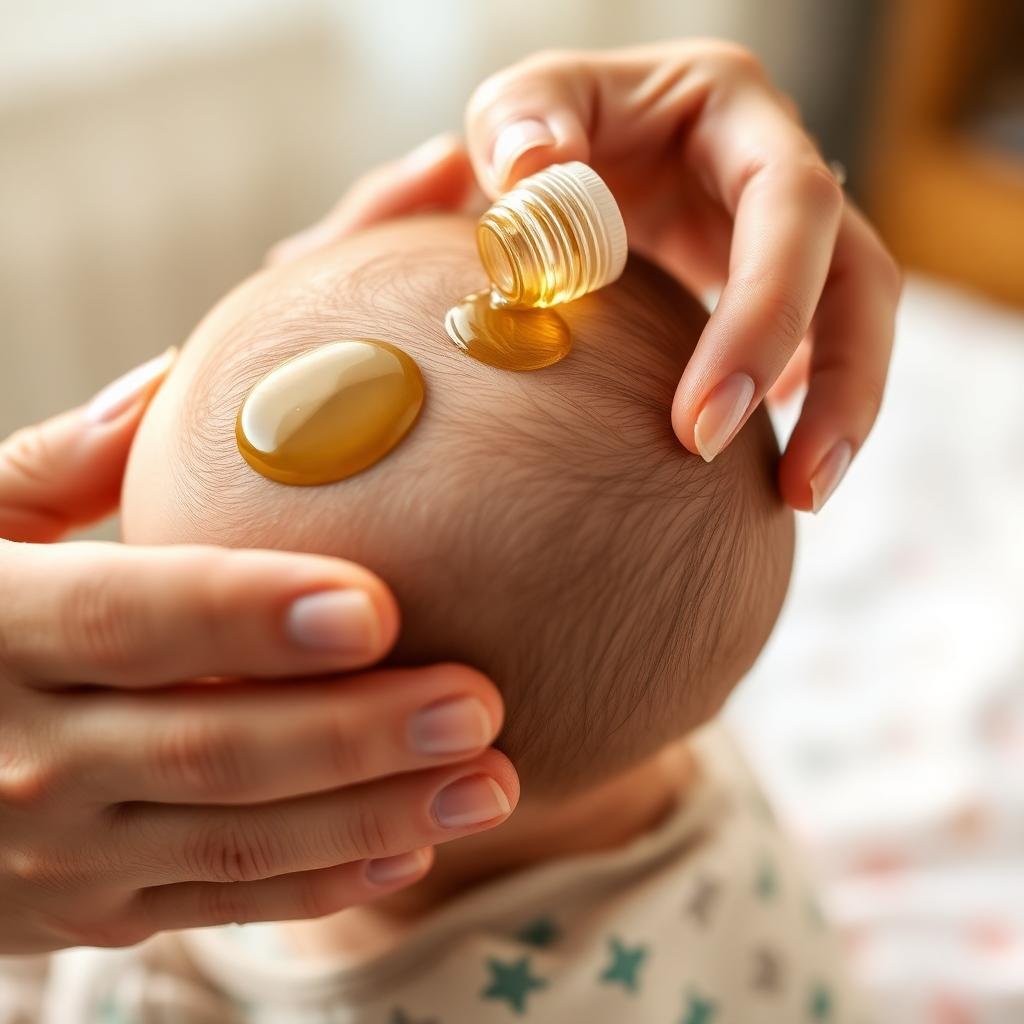
Step 1 — Loosen (10–15 minutes before bath)
Apply a thin layer of any of these to the scaly areas:
- Plain mineral oil (fragrance-free)
- Petroleum jelly (Vaseline)
- Plain refined coconut oil (patch-test first)
- Baby oil without fragrance
Massage gently with a fingertip. Do not scrub, do not pick.
Step 2 — Wash
Use a fragrance-free baby shampoo (e.g., Cetaphil Baby, Aveeno Baby, Mustela Foam Shampoo). Lather, leave on for 1–2 minutes to emulsify the oil, then rinse thoroughly. Leftover oil traps more scale — a full rinse matters.
Step 3 — Brush
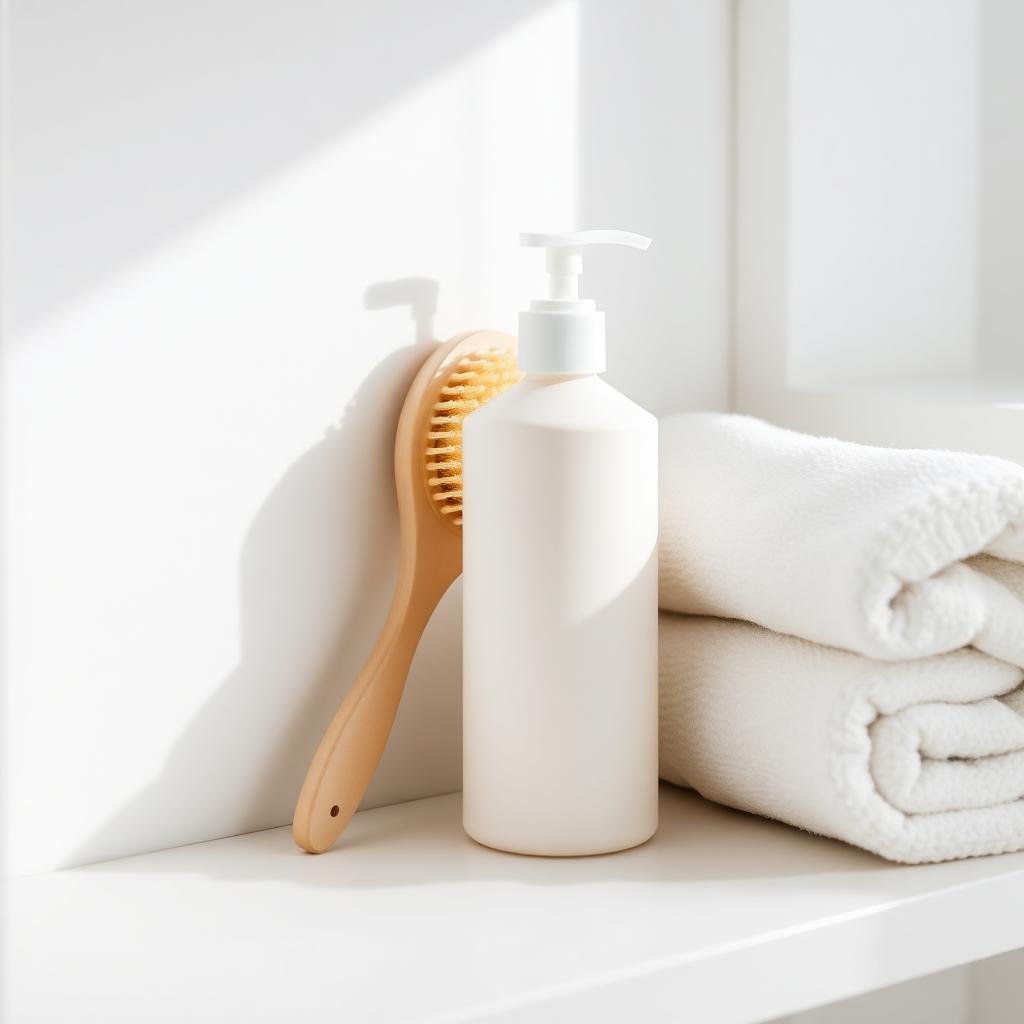
With a soft-bristled baby brush or a soft toothbrush, sweep gently in one direction to lift loosened scales. Stop at any resistance. Never use a fine-tooth comb, fingernail, or tweezers.
Pat dry with a soft towel. Skip lotion on the scalp afterward.
What to avoid on a newborn scalp
| Product | Why to avoid |
|---|---|
| Tea tree oil | Skin irritant and endocrine concerns in infants |
| Adult anti-dandruff shampoo (selenium sulfide, coal tar) | Too harsh; not studied in newborns |
| Ketoconazole shampoo | Prescription only in this age group |
| Hydrocortisone cream | Only if the pediatrician prescribes for confirmed inflammation |
| Apple cider vinegar rinses | Irritating, disrupts skin barrier |
| Olive oil | Recent studies show it may worsen barrier function — prefer mineral oil |
| Picking or scraping | Breaks skin, opens door to bacterial infection |
Timeline: what to expect
| Age | Typical course |
|---|---|
| Birth – 4 weeks | Scales may already be present at birth or appear in the first month |
| 1 – 3 months | Peak thickness — daily loosen-and-wash usually clears within 2 weeks |
| 3 – 6 months | Most cases resolved; may flare mildly during growth spurts or teething |
| 6 – 12 months | Nearly all cases gone; persistent patches warrant a pediatrician visit |
When cradle cap is on the face or body
Seborrheic dermatitis in newborns can involve:
- Eyebrows — apply a rice-grain amount of mineral oil at night, wipe with a warm damp cloth in the morning.
- Behind the ears — clean gently with a fragrance-free cleanser; keep dry.
- Neck and armpit folds — dry thoroughly after baths; do not use powder.
- Diaper area — often mistaken for diaper rash. If greasy scales rather than raw redness, treat with a bland barrier cream (zinc oxide) and mention to the pediatrician.
Newborn-specific safety rules
- Under 2 weeks old: use only plain water and a soft cloth. Skip shampoo entirely. Cradle cap that appears this early usually resolves without treatment.
- Preterm babies (before 37 weeks corrected): skin barrier is thinner. Use petroleum jelly only, no medicated products, no essential oils. Follow NICU discharge skincare plan.
- Around the fontanelle: normal handling is safe. See baby soft spot pulsing rapidly for anatomy.
- Around the eyes: never apply oil directly to lashes or lid margins.
When to Call Your Pediatrician
Same-day call for:
- Redness, swelling, or warmth under the scales
- Oozing, weeping, or crusty yellow fluid (possible bacterial infection)
- Foul smell from the scalp
- Scales spreading rapidly to face, trunk, or diaper area
- Bleeding after gentle care
- Baby scratching or clearly uncomfortable
- Hair loss in patches beyond the scale area
- Fever ≥100.4°F (38°C) rectally under 3 months — always an ER visit
Routine visit for cradle cap that has not improved after 2–3 weeks of the home protocol, or that persists past 12 months.
Cradle Cap and Baby Grooming: A Complete Routine
Managing cradle cap is easiest when it is part of a consistent baby grooming routine. Start by gently brushing your baby’s hair with a soft baby brush before bath time to loosen any scales. During bath time, apply a small amount of baby oil, coconut oil, or mineral oil to the scalp and let it sit for 5 to 10 minutes to soften the scales. Then wash the scalp with a gentle baby shampoo, using your fingertips or a soft silicone brush to gently massage the scalp in circular motions. Rinse thoroughly and pat dry. After the bath, use a soft baby brush or a clean, soft toothbrush to gently brush the scalp, which will help lift and remove the loosened scales. Do not pick at the scales with your fingernails or a comb, as this can damage the delicate scalp and introduce infection. Repeat this routine daily for stubborn cradle cap. Most cases improve significantly within 1 to 2 weeks of consistent treatment. If the cradle cap spreads to the face, neck, or diaper area, or if the skin becomes red, cracked, or oozing, your baby may have seborrheic dermatitis that needs a medicated shampoo or cream prescribed by your pediatrician.
Frequently Asked Questions
These answers are general educational guidance and not a substitute for evaluation by your baby’s physician.
Can I remove cradle cap in one wash?
No, and trying can damage the scalp. Softening scales over 3–5 days and letting them lift naturally is safer. Aggressive removal often causes bleeding and can leave temporary bald patches.
Is coconut oil safe for newborn cradle cap?
Plain refined coconut oil is generally safe. Patch-test a small area first — a small number of babies react. Mineral oil and petroleum jelly are less allergenic.
Does cradle cap cause hair loss?
Sometimes hairs come out with the scale when it lifts. Hair regrows normally. True patchy hair loss with scaly skin can be tinea capitis (ringworm) — see the pediatrician.
Can breastfeeding diet fix cradle cap?
No. Cradle cap is driven by infant hormones and yeast, not by what the mother eats. Elimination diets do not help.
Is cradle cap the same as eczema?
No. Cradle cap is usually greasy, yellow, and painless. Eczema is dry, red, itchy, and the baby is uncomfortable. They can coexist.
Can I use dandruff shampoo on my baby?
Not without a pediatrician’s OK. Adult anti-dandruff formulas (selenium sulfide, zinc pyrithione, coal tar, ketoconazole) are not studied for routine use in newborns.
Why does cradle cap come back?
Because the yeast is a normal skin resident and hormones don’t clear overnight. Maintenance washing 2–3 times a week keeps it in check until infant sebaceous glands quiet down around 6–12 months.
Should I moisturize the scalp after washing?
Usually not. Extra moisture feeds the yeast. If the scalp looks dry after treatment, a very thin layer of petroleum jelly on dry patches only is fine.
Is it OK to comb out flakes with a fine-tooth comb?
Skip fine-tooth combs and lice combs — they scrape skin. Use a soft-bristled baby brush after oil and washing have loosened the scale.
Does cradle cap mean my baby will have skin problems later?
Not usually. Most children outgrow it completely. A small subset develop seborrheic dermatitis or dandruff as teens, but the two conditions are not tightly linked.
Medically reviewed by Dr. Zeeshan Salam, MD — Pediatrician & Neonatologist. Reviewed July 2026. About the author.
Internal links: Bath & Skincare pillar · Fragrance-Free Baby Lotion for Eczema · Baby Soft Spot Pulsing Rapidly · Baby Acne: How Long Does It Last · Health & Safety pillar
Citations: AAP HealthyChildren – Cradle Cap · Cleveland Clinic – Seborrheic Dermatitis in Infants · NIH – Infantile Seborrheic Dermatitis Review · PMC – Malassezia and Seborrheic Dermatitis · AAD – Cradle Cap
📖 More from the Pediatrician’s Corner Hub: your complete pediatrician-reviewed guide to your baby’s first year — milestones, feeding, sleep, vaccines, common illnesses, and more
📖 More from the Health & Safety Hub: your A-Z pediatrician guide to baby health, common illnesses, fevers, rashes, allergies, safety
Gentle Cradle Cap Care for Your Newborn: quick pediatrician summary
Most of the time this is a normal newborn or infant variation that settles on its own, and the job of a parent is to know the small number of red flags that change the plan. Watch feeding, breathing, alertness and wet diapers — those four tell you more than the symptom itself. Call your pediatrician the same day for fever in a baby under 3 months, laboured or fast breathing, refusal to feed, fewer wet diapers, unusual floppiness or sleepiness, or a symptom that is clearly getting worse rather than better.
Common mistakes parents make
- Treating a single measurement or one bad day as a trend instead of watching the pattern over several days.
- Trying several remedies at once, so it becomes impossible to tell what helped.
- Waiting for a convenient time to call when a red flag is already present — feeding, breathing and alertness changes are always worth a same-day call.
- Following advice from an unsourced social post rather than your own pediatrician, who knows your child’s history and growth curve.
Related guides from our pediatric team
- Baby Scalp Rash Yellow Crust: Is It Cradle Cap or Something Else?
- Newborn Umbilical Cord Care: Healing, Cleaning, and Infection Signs
- Pet safety: Bringing Baby Home to a Dog or Cat: Pet Safety with Newborns
- When to Worry About a Baby Cough: Pediatrician’s Guide
- More expert answers in Pediatrician’s Corner
References and further reading
- AAP HealthyChildren: symptoms & when to call the doctor
- CDC child health & development
- NIH MedlinePlus infant and newborn care
Medical disclaimer
This article is for general education and is not a substitute for individual medical advice, diagnosis or treatment. Every child is different — talk to your own pediatrician about your baby, and seek urgent care for breathing difficulty, poor feeding, dehydration, unusual sleepiness, fever in an infant under 3 months, or any sudden change in your child’s condition.






One Comment